REVIEW · CóRDOBA TOURS FROM SEVILLE
Cordoba: 2.5-Hour Guided Jewish Quarter and Alcazar Tour
Cordoba’s past is walking distance. In 2.5 hours, you’ll move from the Mezquita area into the Jewish Quarter and use skip-the-line access to the Alcázar complex. It’s a compact route through layers of Cordoba’s religious history, with a guide who keeps the story clear.
I also like how the pacing stays human. You get time at each stop to look closely at buildings and symbols, not just hurried snapshots. One big consideration though: the Alcázar of the Christian Monarchs is partially closed during restoration, so you will only see the areas currently open, like the Alcázar Gardens and the Arab Baths.
If you want your tour to feel focused, this one is built for that. The guide stays in one language (English or Spanish) rather than switching back and forth, which makes the explanations easier to follow. And because you’re ending at the Alcázar of the Catholic Monarchs, you’re not just studying ruins, you’re closing the loop on how Cordoba’s power changed over time.
Key highlights at a glance

- Skip-the-line entry, so you spend more time inside and less time queuing
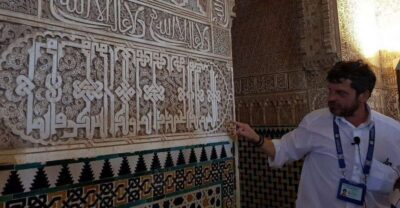
- Jewish Quarter route with real architectural details, not a generic overview
- A 14th-century medieval synagogue that still makes you pause for a second
- Calleja de la Hoguera and old mosque context, including the idea of Cordoba’s thousand-mosque past
- Monolingual guiding (English or Spanish), which keeps the narration smooth
- Alcázar Gardens and Caliphal Arab Baths are included, with the rest affected by restoration
Where this walk starts: Puerta del Perdón and the orange umbrella

This tour begins right by the Mezquita-Catedral area, at Puerta del Perdón, on Calle Cardenal Herrero, 1. Find the orange umbrella and you’ll know you’re in the right place. That matters because the meeting point is tucked into a maze of historic streets, and you do not want to waste time hunting right when the tour starts.
I like that the starting location makes instant sense. You’re already in Cordoba’s heavyweight zone, where the city’s Moorish and Christian stories overlap physically. Starting near the Mezquita-Catedral also helps you understand why the Jewish Quarter later feels like a separate neighborhood, but still part of the same shifting city.
Plan on a lot of footwork. The experience is designed as a straight walk from the old streets into the Jewish Quarter, then onward to the Alcázar complex.
You can also read our reviews of more tours and experiences in Cordoba.
Calleja de la Hoguera: the mosque street that sets the stage

Your first walk goes to Calleja de la Hoguera, a narrow street with Arabic-era roots. The guide points out a historic mosque here, and that opening matters, because it frames everything that comes next.
One detail you’ll hear is the belief that Cordoba hosted over a thousand mosques in the 10th century. Even if you treat that number cautiously, it gives you a gut-level sense of how dense religious life was in the city. With that context, later stops in the Jewish Quarter feel less like random monuments and more like chapter headings in the same story.
This early segment is also a chance to get your bearings. Narrow lanes, changing facades, different building materials. If you’re the type who likes to understand how neighborhoods feel before you look closely, this part sets you up well.
Plaza Cardenal Salazar: Algafequi, an old hospital, and a clue to the city’s mindset

Next up is Plaza Cardenal Salazar. You’ll see the statue of Algafequi, often described as the first doctor to operate on eyes in Europe in the 12th century. It’s a bold way to start a Jewish Quarter tour, because it reminds you that medieval Cordoba was not only religious, it was also scientific and practical.
Right in the same area, the old hospital from the 18th century still stands, and it now functions as a university. That kind of layered reuse is a big deal in Andalusia. Buildings do not always get erased when power changes. Sometimes they just get repurposed, which means the city keeps teaching you.
If you like history that includes real people, not just dates, this stop works. It gives you a memorable character, then connects the past to something you can still see in use today.
Capilla Mudejar de San Bartolomé: a converted chapel with hidden layers
From there, you walk to Capilla Mudejar de San Bartolomé, a Christian chapel built in an old arabesque style by a Jewish convert. The name alone hints at the blend, but the guide’s job is to make it feel understandable.
This stop is where I’d expect most people to slow down. The point isn’t just that the building looks Moorish-influenced. It’s that architecture becomes a record of conversion, social pressure, and identity shifts, all folded into stone and ornament.
The tour description also calls out hidden history. That’s your cue that you should watch for details, not just look for a nice photo spot. If the guide mentions a specific feature, it’s worth focusing on, because the story behind it is the whole value here.
The souk break: crafts, local products, and a calmer pace
After the more serious religious and architectural stops, the tour heads to the souk, a craft work market with local products typical of Cordoba.
I like a market stop in a walking tour because it changes the tempo. Your eyes have been trained on windows, arches, and inscriptions. Now you can reset by browsing textures, ceramics, leather goods, and the kind of small souvenirs that feel tied to place rather than stamped from a factory shelf.
This isn’t about shopping for the sake of shopping. It’s about letting the group exhale while still staying in the old-city zone. If you’re picky about gifts, this is also one of the few times during a tour where you can compare items calmly.
The medieval synagogue: a rare survivor you can still stand in front of
Then comes one of the most important moments on the route: a breathtaking medieval synagogue. It’s built in the 14th century and is described as one of the few Jewish monuments to survive a tumultuous history.
That word choice is not just dramatic marketing. Cordoba’s Jewish story was not steady or safe, so when a synagogue like this remains visible, it becomes more than architecture. It becomes evidence that community life was here, it mattered, and it left traces strong enough to last.
I’d treat this stop as your “take it in” moment. Read what you can. Look up. Notice the structure and the shapes. Even if you don’t know every term, you’ll feel the intention in the design.
The guide ties this back to the neighborhood origins, which are described as starting from the 14th century. That helps you place the synagogue as part of a living community, rather than an isolated monument.
Alcázar of the Catholic Monarchs: what you will see during restoration

The tour ends at the Alcázar of the Catholic Monarchs, where you’ll learn about the Catholic Monarchs and the role the Alcázar played in the city’s past.
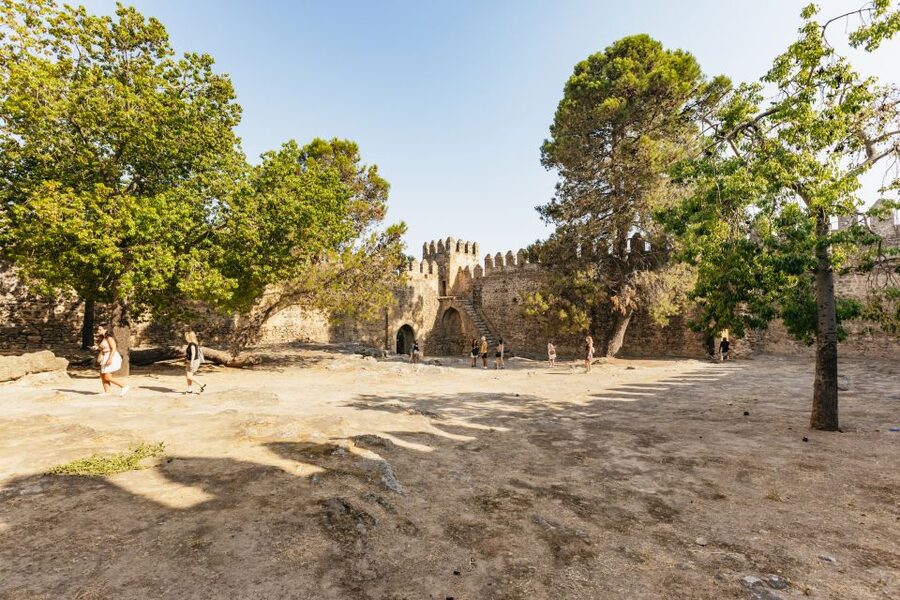
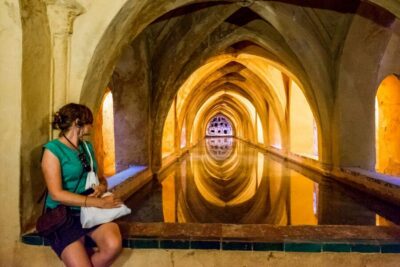
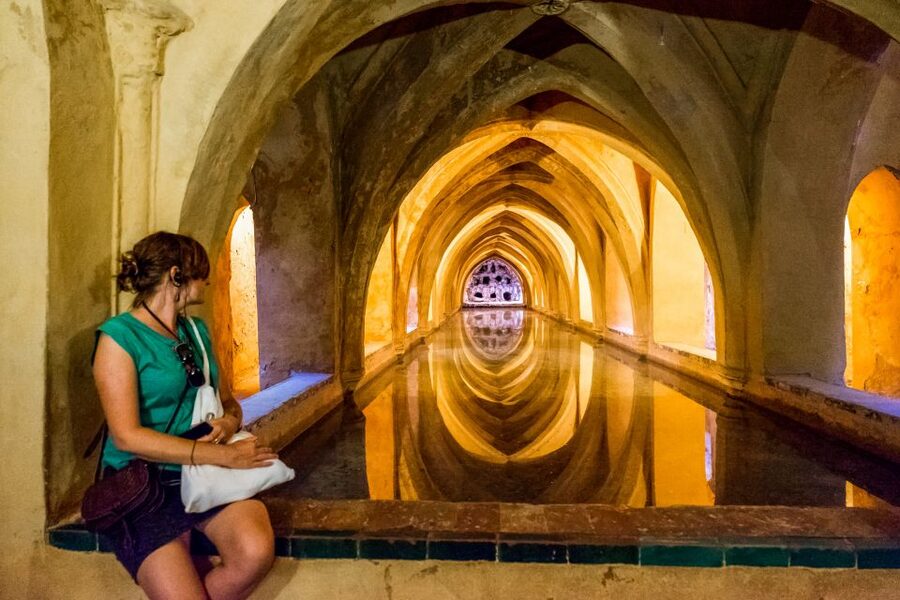
Now for the key practical note: restoration works mean the tour cannot take place as usual. During your visit, you will only be able to access and explore the areas currently open to the public. Specifically, you can see the Alcázar Gardens and the Arab Baths of the Caliphal Alcázar, both part of the same monumental complex.
This is important for expectations. If you arrive hoping for the full Alcázar tour experience, you might feel shortchanged. But if you show up knowing you’re seeing the open sections, the visit still makes sense. Gardens and Arab Baths are not filler areas. They’re exactly the kind of spaces where atmosphere and design do the talking.
Also, note that this tour does not include visits to the towers. So if towers are the main thing you want, you’ll need a different option.
Skip-the-line value: why $34 feels fair when you add it up
At $34 per person for a 2.5-hour guided walk, this can be good value, mostly because of what is included. Entrance fees are part of the price, and you also get skip-the-line access.
Time has a cost in old cities. Cordoba’s popular monuments can mean slow queueing. When the price includes guided entry plus entrance access, you can spend more of the 2.5 hours looking and listening, not waiting. And since you’re paying for a guide, you’re also buying context. The difference between seeing a synagogue and understanding why it is rare is huge.
One more reason it feels fair: the tour is tightly packed. You go from historic mosque context into the Jewish Quarter, then finish at the Alcázar complex. That’s a lot of stops for a half-morning pace without feeling like a marathon.
Just be aware that the Alcázar situation can affect the actual time and what is accessible. In a few cases, timing may feel slightly shorter than the posted duration, especially if outdoor gardens are closed at the moment of your visit.
Monolingual guide energy: smoother explanations, fewer lost moments
One standout feature is the guide style. This tour offers a live guide in English or Spanish, and the guide will not switch between languages during the tour. That may sound like a small detail, but it affects your entire experience.
If you’ve ever been on tours where the guide bounces between languages, you know how quickly the story gets chopped up. Here, you get steady narration, steady pace, and fewer “Wait, what did they say?” moments.
Some specific guide experiences mentioned include friendly, strong explanations. You might encounter guides like Raphaël or Patricia on the day, and people note how well they connect history with stories that land for both adults and younger listeners. You should still expect a mix of focus and walking, but the narration is treated like the main event.
What to wear and how to pace yourself on old-street stairs
This is a walking tour with stairs. It is not recommended for people with limited mobility, and it is also listed as not suitable for people with back problems. The reason is simple: older Cordoba is not flat, and this route includes multiple stair climbs.
Comfortable shoes are the big must. You’ll be on uneven old paving and in narrow lanes where your footing matters. I also suggest carrying water if you’re visiting in warm months, even though the tour does not include food.
Also, stroller info is specific: babies trolleys must be left at the entrance. If you’re traveling with a child, plan accordingly so you’re not trying to figure it out on the spot.
Finally, remember what is not included. The tour does not visit the towers, so you won’t spend your time climbing them.
Who should book this Jewish Quarter and Alcázar tour
This tour is a great fit if you want a guided way to understand Cordoba’s layered identity: Islamic-era influence, Jewish Quarter surviving monuments, and the Christian monarchy-era story ending at the Alcázar.
It suits you best if:
- You like guided architecture and want the “why” behind the building details
- You prefer a focused route that covers major highlights in about 2.5 hours
- You value skip-the-line access and included entrance fees
- You want a guide who stays in one language for clarity
It may not be your best choice if:
- You need step-free routes or have mobility limitations
- You have back issues that make stairs hard to manage
- You specifically want Alcázar towers, since this tour does not include them
- You need the full Alcázar complex, since restoration means you will see only the currently open areas
So, should you book it?
If your goal is a high-signal introduction to the Cordoba Jewish Quarter plus a real finish at the Alcázar complex, I think booking makes sense. The $34 price works well when you consider entrance fees and skip-the-line access, and the route is built to connect neighborhoods, not just list monuments.
Just go in with the right expectation about the Alcázar: restoration limits what you can see, and the tour focuses on the Alcázar Gardens and the Arab Baths of the Caliphal Alcázar. If that matches what you want, you’ll likely feel satisfied with what you get in the time you have.
If stairs are a concern for you, pick another format. Cordoba rewards curiosity, but this route is not designed for easy mobility.
FAQ
Where is the meeting point?
You meet at Puerta del Perdón, Mezquita Catedral, Calle Cardenal Herrero, 1. Look for the orange umbrella.
How long is the tour?
The tour duration is 2.5 hours.
Is skip-the-line access included?
Yes, skip-the-line access is included.
What part of the Alcázar will I be able to visit during restoration?
Because of ongoing restoration works, you will only be able to access the areas currently open to the public, including the Alcázar Gardens and the Arab Baths of the Caliphal Alcázar.
Are entrance fees included?
Yes, entrance fees are included.
Does the tour include visits to the towers?
No, this tour does not include visits to the towers.
What languages are available?
The tour is offered with a live guide in English and Spanish.
Is the tour suitable for people with mobility issues or back problems?
No. The tour is not recommended for people with limited mobility, and it is also not suitable for people with back problems because there are many stairs.
Do I need to pay right away, and can I cancel for a refund?
The activity offers reserve now and pay later, and free cancellation is available up to 24 hours in advance for a full refund.
More Tour Reviews in Cordoba
Not for you? Here's more nearby things to do in Cordoba we have reviewed
More Córdoba Tours from Seville worth a look.
★ 4.6Córdoba: Skip-the-Ticket-Line Mosque-Cathedral Guided TourFrom $319,634 reviews
★ 4.7Cordoba Mosque-Cathedral: Skip-the-Line Guided TourFrom $356,610 reviews
★ 4.7Córdoba: Jewish Quarter, Mosque, and Alcázar TourFrom $504,279 reviews
★ 4.5Cordoba: Equestrian Show General EntryFrom $212,333 reviews
★ 4.1Cordoba: Mosque-Cathedral E-Ticket with Audio GuideFrom $212,124 reviews
★ 4.6Cordoba Mosque & Jewish Quarter Tour with TicketsFrom $401,996 reviews
★ 4.2Cordoba: Alcazar Guided Tour and Skip-the-Line TicketFrom $231,792 reviews
★ 4.7Córdoba: Skip-the-Line Great Mosque-Cathedral History TourFrom $381,690 reviews
Continue by place or experience