Cultural Walking Tour of Seville Monumental

REVIEW · HISTORIC SEVILLE WALKING TOURS

Cultural Walking Tour of Seville Monumental

5.0 · 861 reviews 2 hours (approx.) From $8 Operated by Sevilla Free Tours · Bookable on Viator
Book on Viator →

Seville clicks into place on foot. In just about 2 hours, I love how the guides like Ferdinand and Lidia map the Monumental center, then you end at Plaza de España ready to keep exploring.

I also like the value, because most stops are explained outside the big-ticket interiors, so you get context without rushing to buy entrances for every stop. One drawback: in busy squares, it can be harder to hear, and I’d plan for some crowd noise.

Key highlights worth knowing

Cultural Walking Tour of Seville Monumental - Key highlights worth knowing

  • Small-group feel (maximum 35) and a guided route that works well for a first visit
  • English tour with a mobile ticket that keeps things simple at check-in
  • Cathedral plus Giralda explained as part of Seville’s layered Islamic and Gothic story
  • Real Alcázar and the Indies-era power network put into clear, human terms
  • Torre del Oro and the Guadalquivir waterfront story connect monuments to trade and control
  • Plaza de España finale gives you space to wander after the walking portion

Entering Seville’s Monumental Center (in about 2 hours)

Cultural Walking Tour of Seville Monumental - Entering Seville’s Monumental Center (in about 2 hours)
This is a straight shot into Seville’s most important historic zone. If you’ve got limited time, it’s a smart way to get oriented fast: you’ll see the main landmarks, but the real goal is understanding how they link together over centuries. It feels less like ticking off buildings and more like hearing a guided explanation of why each place matters.

The walking time is about 2 hours, and the route is designed to keep you moving between major points of interest. The pacing is usually comfortable, which makes it a good fit for many fitness levels. It also helps that the end point is Plaza de España, a wide open area where it’s easy to continue your day without instantly getting stuck in traffic.

One more practical point: this tour is offered in English and uses a mobile ticket. That means less scrambling to find paper confirmations, and more time to meet the guide and start walking. If you’re arriving in Seville and want a quick, shared starting point, this checks a lot of boxes.

You can also read our reviews of more tours and experiences in Seville.

Plaza Nueva meet-up and how the tour keeps groups manageable

Cultural Walking Tour of Seville Monumental - Plaza Nueva meet-up and how the tour keeps groups manageable
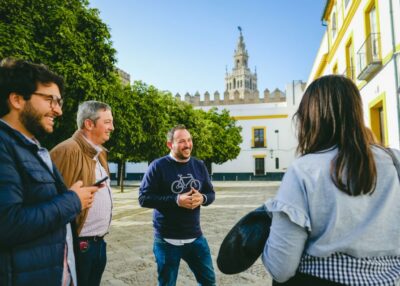
You start at Ayuntamiento de Sevilla, Plaza Nueva area (Pl. Nueva, 1). This matters more than it sounds, because Plaza Nueva is a natural launch point into the historic core. After meeting, the guides present the visit and divide groups by language and guide. That can make a difference in how smoothly the tour runs, especially if you’re in an English group.

In my experience with city walking tours, the first 10 to 15 minutes set expectations. Here, you get that early orientation and a clear sense of what you’re about to see: the Catedral zone, Giralda, key squares, and then the walk pushes toward Real Alcázar, the Indies Archive area, the river defenses, and finally Plaza de España.

Tour size is capped at 35 people, which usually helps keep the group easier to manage. It also affects how well you can hear the guide. In smaller groups, questions get answered better and the guide can slow down when someone needs clarification. In larger crowds around the monuments, you still have to deal with street noise, so come ready to lean in when needed.

Catedral de Sevilla and Torre Giralda: Gothic icons with Islamic roots

Cultural Walking Tour of Seville Monumental - Catedral de Sevilla and Torre Giralda: Gothic icons with Islamic roots
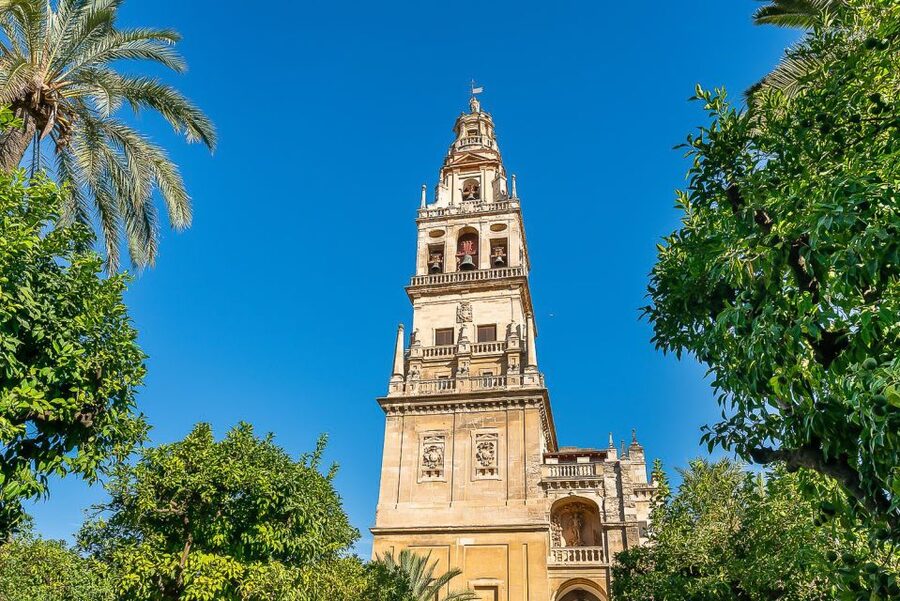
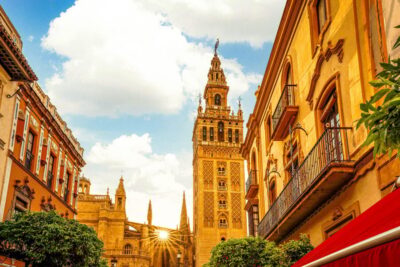
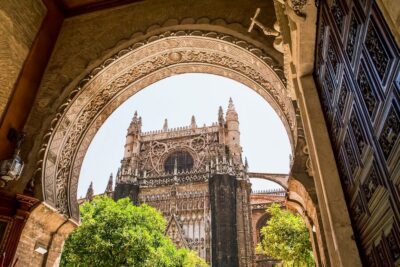
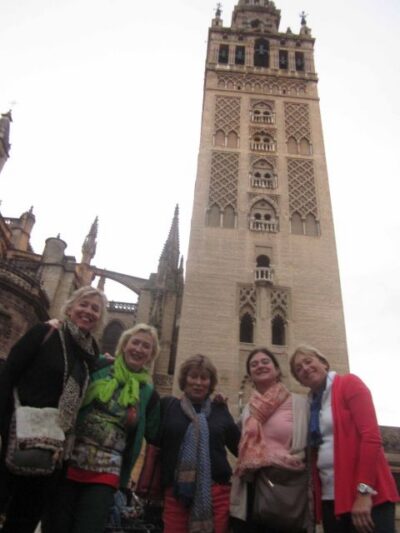
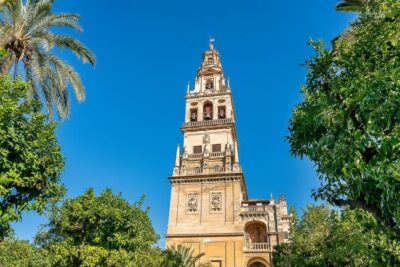
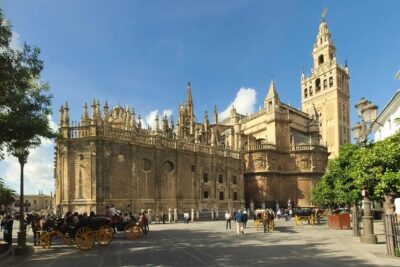
The first big theme you’ll hit is the Cathedral de Sevilla and the Giralda tower. The tour frames the Cathedral as the largest Gothic cathedral in the world, but it doesn’t stop at the facts. You’ll get the story behind why this place looks the way it does, including what survives from the earlier Islamic period.

The Giralda stop is especially useful because it’s iconic from a distance. You’ll also be connecting it back to the Cathedral complex, so you aren’t looking at a tower in isolation. Instead, you learn how Seville’s layers of faith and power shaped what you see today.

A practical note for your expectations: admission tickets for the Cathedral and Giralda are not included. That doesn’t make the tour disappointing. It means the guide is focusing on the exterior experience and context while you’re near these monuments. If you want to go inside later, you’ll know exactly what to prioritize.

The Cathedral squares: where Seville’s story plays out in public space

Between the major landmark stops, you’ll spend time at some of the city’s most significant squares around the Cathedral area. This is where Seville’s history becomes less about a single building and more about daily movement: people gathering, authority showing itself, and the city’s changes made visible through architecture and urban layout.

This part of the walk is valuable because it teaches you how to read the city. When you understand which square connects to which monument, you navigate better later. You also notice details you might otherwise miss, like how different structures relate to one another in space.

One thing to keep in mind: these areas can be crowded. Even with a good guide, street noise can swallow quieter explanations. If you’re sensitive to that, position yourself where you can see the guide and not get trapped behind a group that keeps turning their heads.

Real Alcázar and the surrounding complex: power, prestige, and age

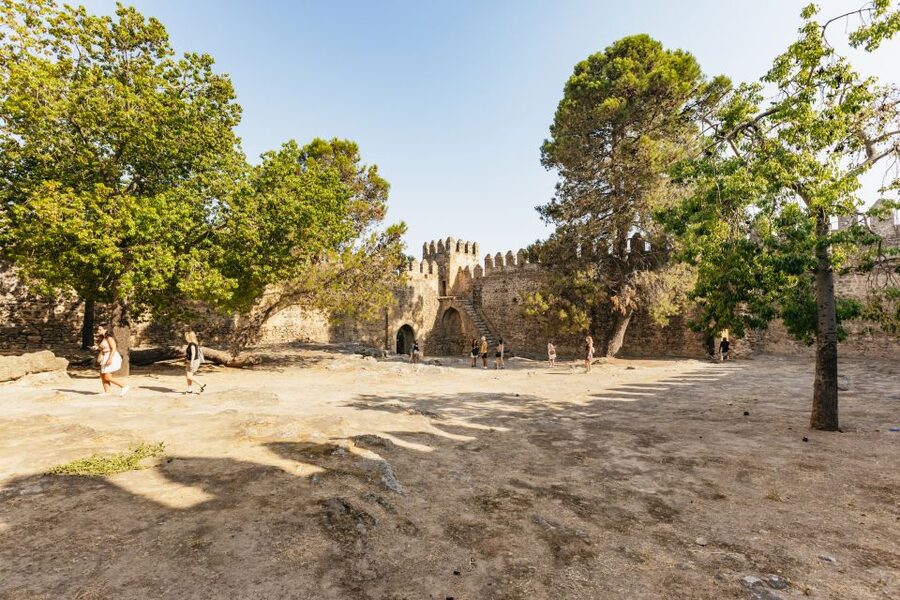
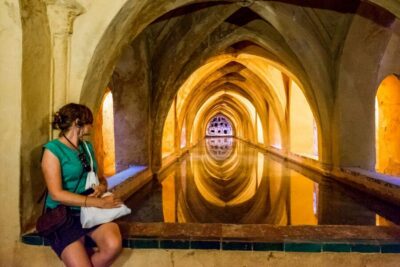
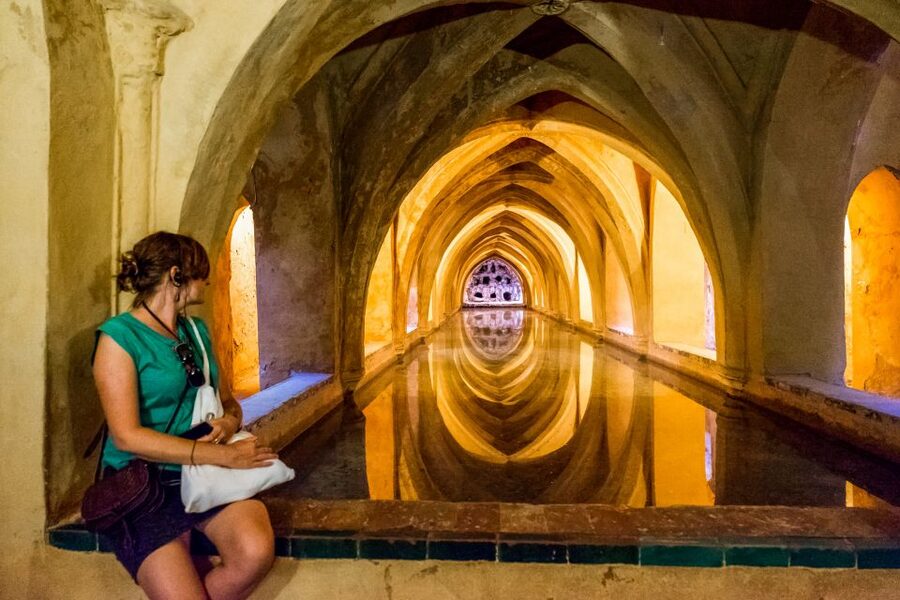
Next up is the Real Alcázar de Sevilla. It’s described as the most visited and oldest monument in Seville, and the guide’s job is to connect that age to what the monument represents. The Alcázar isn’t only about pretty courtyards and elegant rooms. It’s also about how rulers projected control, taste, and legitimacy.

You’ll be brought into the broader picture by the way the walk links it with the Cathedral area and other historic anchors in that same zone. The stop emphasis is on understanding the place as part of an integrated historic district, not as a standalone attraction.

As with the Cathedral, the Alcázar’s admission ticket is not included. Again, that’s not a deal-breaker. It’s actually a strength for time-strapped travelers. You get the big-picture story right where the buildings live, then you can decide later if you want the indoor experience and where to spend your money.

If you’re the type who likes to plan intelligently, this is a good moment to mentally list what you want to re-visit. The guide’s explanation helps you choose based on interest rather than just hunger for photos.

Archivo General de Indias and Puerta de Jerez: empire, records, and routes

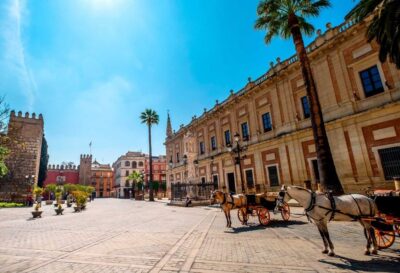
The Archivo General de Indias stop is one of the most thought-provoking parts of the walk. The tour frames it as the largest collection of documents preserved from the colonial period, spanning more than 400 years of history of American colonization. That’s a big claim, but it’s also the point: this archive represents power made durable through paperwork.

Even if you don’t go inside (tickets are not included), the guided context can change how you view the building. Instead of seeing another stone facility in a historic neighborhood, you understand it as the paperwork engine behind voyages, governance, and administration. It’s not just the glamour of empire. It’s the systems that kept everything running.

You also pass the Puerta de Jerez area, linked to city walls and access and exit points toward Jerez de la Frontera. This connects travel routes to physical infrastructure. In other words, you learn how movement through and out of the city was controlled and organized.

This is where a good guide earns their tip. Guides like Francisco and Fernando are often praised for making these connections feel clear, not like a dry timeline. You walk away knowing what to look for on your own, like how streets and walls reflect power.

Torre del Oro and the Guadalquivir: control along the water

Cultural Walking Tour of Seville Monumental - Torre del Oro and the Guadalquivir: control along the water
Then the tour shifts attention to the river. Torre del Oro, Puerta and Puerto de Indias, and the surrounding idea of navigation, control, and surveillance along the Guadalquivir River show you Seville’s maritime and trading side.

Even from outside, it’s helpful to hear how the tower fits into the larger system. Instead of thinking of it only as a picturesque landmark, you understand its role as part of a defensive and monitoring network. That makes the skyline and riverbank feel less random.

This stop also works well for photographers because you’re often moving from tight historic streets into wider views. Just remember it’s still an urban environment, so you may need to wait a moment for a clear angle.

As with other indoor sites, admission tickets are not included here. But the payoff is interpretive: you understand the monument’s job in the city’s economic life.

Hotel Alfonso XIII and Real Fábrica de Tabacos: luxury and industry together

The walk includes two very different Seville landmarks, and that contrast is useful. Hotel Alfonso XIII, a Luxury Collection Hotel, is a famous name and an easy one to recognize visually once you’re close. The point on this tour is less about checking into a hotel and more about understanding how Seville’s grand spaces became part of modern prestige.

Right after that comes the Real Fábrica de Tabacos, described as an economic engine of Seville in the 18th century. This is industrial history, placed right inside the same city map. When you see luxury and industry in sequence, the city stops feeling like one mood and starts feeling like an economy with different eras layered on top.

This pairing also helps you avoid a common mistake. Many visitors only focus on religious and palace architecture. Here, the tour nudges you to notice how Seville made and managed wealth, not just how it celebrated power.

If you love history, this is a good spot to ask questions. Guides such as Valentin and Fernando are repeatedly noted for holding attention and explaining connections in a way that feels lively.

Plaza de España finale: your open-space landing zone

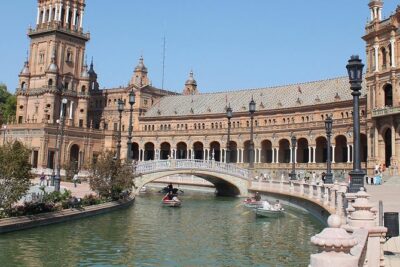
The tour ends at Plaza de España, and this is a strong finish. It’s described as the jewel in the crown of Seville, and it was the pavilion of Spain during the Expo 1929. You get a guided lead-in to what makes it special, then you’re free to wander.

A key benefit of ending here: the plaza is wide and forgiving. After the tight cluster of monuments around the Cathedral and Alcázar, Plaza de España gives you room to breathe. You can linger, take photos without shoulder-to-shoulder pressure, and plan the rest of your day.

The stop is marked as admission ticket free. That’s ideal after a walking tour because you don’t feel like you must buy more tickets immediately to justify the time.

If you’re arriving on your first day, this is a great place to reset your plan. You can easily spot what you want to revisit, and you can choose your next neighborhood based on what you found most interesting during the guided walk.

Price and value: where $8.45 really goes

At $8.45 per person, this tour sits in the budget-friendly category. But the value is not just the low price. It’s the concentration of key landmarks into a two-hour format, plus the fact that you gain context without paying admission for every site along the way.

Most of the major stops are marked as admission ticket not included. That means the tour is doing something smart with its time: it explains the big ideas and the connections, then leaves the paid entry decisions up to you. For a first visit, that can save money and prevent choice fatigue.

Also, you can book far enough in advance because it’s commonly booked about 15 days ahead on average. If you’re traveling in peak season or on a weekend, book early so you’re more likely to get a time slot that matches your schedule.

One more detail that matters for value: the guides have a reputation for clarity and enthusiasm. Names you might hear include Ferdinand, Fernando, Francisco, Lidia, and Valentin. Different people, same outcome: they tend to make the history feel connected to what you’re seeing right now.

Logistics that affect your day (and how to handle them)

This is a walking tour in central Seville, with a maximum of 35 people. That means it’s not a private slow stroll, but it’s also not so large that you’re lost in the crowd. It’s near public transportation, which is handy because you end in a different area than where you start.

The tour requires good weather. If skies turn bad, you can usually expect the operator to offer a different date or a full refund. That’s worth considering in any season when rain can surprise you.

Hearing is the only real “watch-out” theme I see from practical experiences: noise can drown out explanations in busy spots, and if the group is large, you might miss small details. I’d recommend you:

  • Bring your best listening position near the guide
  • Don’t hesitate to ask a question when it’s quiet enough
  • Wear comfortable shoes, since you’re walking between major points

Who should book this walking tour of Seville Monumental?

This tour is a great fit if:

  • You want orientation fast on your first day
  • You like history that connects buildings to how people lived and governed
  • You prefer a short, guided route before choosing which sites to pay for later
  • You’re traveling with teens or friends and want one structured plan that doesn’t feel heavy

It also works well for people who don’t want a packed day of museum interiors. The tour emphasizes exterior context at major monuments and ends in a place where you can continue on your own at your pace.

If you’re the type who loves spending hours inside major attractions, you’ll still enjoy it, but you might use it as a planning tool. Go in with the mindset: learn the story now, choose the deeper visit next.

Should you book it?

I’d book this if you want a smart first-pass tour that threads Seville’s Cathedral zone, the Alcázar area, the Indies Archive, the river defense story, and the Expo-era finale in about two hours. At $8.45, it’s hard to beat as a money-saving way to understand the city before you start paying for individual entrances.

Book it early if your dates are set, and keep an eye on weather since the tour depends on good conditions. If your plans change, you can cancel up to 24 hours in advance for a full refund, which gives you some breathing room.

If your goal is simply to do one guided activity and then spend the rest of your day wandering with better instincts, this is an easy yes.

FAQ

What is the price of the Cultural Walking Tour of Seville Monumental?

The tour costs $8.45 per person.

How long does the tour last?

The duration is approximately 2 hours.

Is the tour offered in English?

Yes, it is offered in English.

Do I need to bring a printed ticket?

No, the tour uses a mobile ticket.

Where does the tour start and end?

It starts at Ayuntamiento de Sevilla, Pl. Nueva, 1, Casco Antiguo, 41001 Sevilla, Spain. It ends at Plaza de España, 41013 Sevilla, Spain.

Are admission tickets included for the major sights?

Admission tickets are not included for most of the major monuments on the route. Some parts are marked as admission ticket free.

What group size should I expect?

The tour has a maximum of 35 travelers.

Is this tour weather dependent and what happens if it’s canceled?

It requires good weather. If it’s canceled due to poor weather, you’ll be offered a different date or a full refund.

Are service animals allowed?

Yes, service animals are allowed.