REVIEW · CATHEDRAL, GIRALDA & ROOFTOPS
Cordoba City Tour with Mosque-Cathedral from Seville
Córdoba in a single day feels like time travel. This full-day tour from Seville pairs a guided walk through UNESCO streets with skip-the-line entry to the Mezquita-Catedral, then leaves you time to wander on your own. I also like that you get curated stops like the Roman Bridge area and the Patios of San Basilio, not just a rushed photo stop. One catch to plan for, it is a long day with a lot of walking on older streets.
You start in the morning by air-conditioned coach with live onboard commentary that frames Córdoba’s role as a major power in the 10th century on the River Guadalquivir. The payoff is you arrive already oriented, then the guide connects the dots across Roman, Moorish, and Christian layers. If you are picky about hearing every word in English, build in patience, some reviews mention accent and multilingual pacing can vary by guide and group mix.
Key things I’d circle before you book

- Skip-the-line Mezquita-Catedral so you spend time inside, not queuing outside.
- Los Patios de San Basilio gives you a taste of Córdoba’s courtyard culture without hunting for tickets.
- Roman Bridge and Calahorra Tower set the tone with the best postcard view plus context.
- La Judería and the Córdoba Synagogue focus on the Jewish Quarter story, including Mudejar plasterwork at the synagogue.
- Free time in Córdoba lets you control your pace for lunch, shopping, and extra sights.
- A guided, structured day with transfers means less hassle than DIY by train.
From Seville to Córdoba, the coach ride that sets you up

Most day trips fail at the start, because you arrive already tired. This one tries to fix that. You depart your Seville hotel at 9:00 am in an air-conditioned vehicle, and you get live commentary on the drive eastward through Andalusia. The narration gives you a mental map of what you are about to see, like how Córdoba was Europe’s largest city in the 10th century, with around 500,000 people, and how its fortunes shaped the Islamic architecture you still recognize today.
You also avoid a lot of decision fatigue. With round-trip transfers handled for you, you do not have to juggle train schedules, station transfers, or figuring out local directions right after arrival. You do lose a bit of flexibility, of course, because you are following a set day plan, but that trade-off often pays off with a full schedule.
On a practical level, this is roughly a 10-hour day. That is enough time to see the big hits, but it is also enough time to feel it in your feet if you do not pace yourself. Bring comfy walking shoes, and keep water handy during free time.
You can also read our reviews of more tours and experiences in Seville.
UNESCO streets around the Roman Bridge and Calahorra Tower

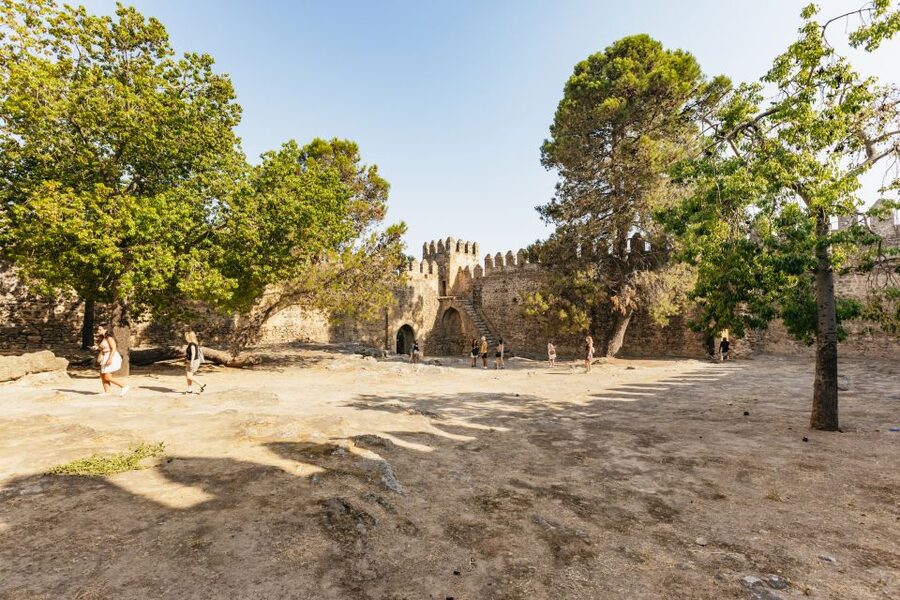
The first big payoff comes early, with a 2-hour walking tour through Córdoba’s historic center, an area recognized as UNESCO World Heritage. You start with the Roman Bridge and the Calahorra Tower, which anchor your orientation before you head into the older inner streets. It is one of those “see it once, get it forever” moments, because Córdoba’s river setting is part of the whole story.
The Calahorra Tower is a good place for the guide to explain why this spot mattered over centuries, since Córdoba developed as a major trading and cultural hub along the Guadalquivir. Even if you only remember one thing from the start, remember this: the city’s geography helped shape its power.
One small note for your expectations. The early portion is not a sit-down museum experience. You are on your feet and moving. Reviews also hint that some people felt the day moved at a good clip in crowded areas, so if your mobility is limited, plan for slower pacing or consider a shorter option.
Royal stables and the route toward La Judería

As you head toward the Jewish Quarter, the tour threads in details that make the neighborhoods feel less like separate attractions and more like one connected city. You pass by the royal stables built in 1570 by King Philip II. They are tied to horses and court life, and they work as a reminder that Córdoba’s layers were not only religious, they were political and everyday too.
Then you move into the area that shaped one of the most important Jewish communities in medieval Iberia. The walk is narrow-street style, the kind where you notice textures and turns more than you notice signage. That is fun if you like strolling. If you get flustered easily in tight spaces, keep your bearings while the guide is leading, and do not wait until you are lost to start asking questions.
Los Patios de San Basilio: flowers and courtyard competition energy

Córdoba’s patios are a personality trait. You get to see them up close at Los Patios de San Basilio. This is one of the stops where the tour adds value beyond “pointing at buildings,” because patios are not just architecture, they are a living tradition.
The tour includes admission to some of these famous courtyards, decorated with flowers and hanging pots. If you have ever seen photos of Córdoba’s patios during the annual courtyard competition, this is your chance to see how that look is created, and why people care so much that whole communities show up for the season.
The timing is about 20 minutes here, which means you get a focused look without turning the courtyard into a long sit. You will likely want more time once you spot your favorite details, like how the light lands on white walls and colored ceramics. The good news is you get free time later in the day, so you are not stuck only with what the guide picks.
La Judería and the Córdoba Synagogue: more than a stroll

This is the most story-heavy part of the day. You walk through La Judería, described as the largest former Jewish Quarter in Europe, and the guide explains the people and prosperity that came from a community that helped drive Córdoba’s medieval wealth.
You will also hear about famous names tied to Córdoba’s history, including Maimonides. The streets around Tiberiades Square and along the quarter’s narrow lanes are perfect for understanding why this place feels layered. You can almost imagine daily life happening right where you are standing.
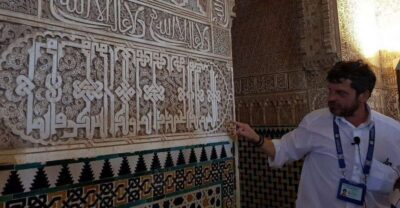
Then comes the key stop: the Córdoba Synagogue. The tour includes admission and focuses on the fact that it is the only original synagogue preserved in Andalusia. You get to see original plasterwork in Mudejar style, which is a big deal because it is both decorative and historically specific.
There is one timing detail you should know: the synagogue is closed on Mondays. If your trip date lands on a Monday, your day plan may shift, and you should expect the guide to adapt. It is worth checking your calendar before you decide on this exact tour date.
Albolaifa water wheel, a reminder that Córdoba ran on systems

Between the Jewish Quarter and the Mezquita-Catedral, you have a stop to see the restored Albolaifa water wheel on the Guadalquivir. This is one of those “quietly important” moments because it connects city life to infrastructure.
A water wheel sounds like a small sightseeing checkbox, but it gives you a sense of how water management supported gardens, industry, and daily needs. It also helps you understand why a city that looked like a marvel also functioned like a machine. In other words, the architecture did not appear out of nowhere, it came with practical systems behind it.
You may not spend long here, but it adds texture. It breaks the day up so the next stop, the Mezquita-Catedral, hits even harder.
Entering the Mezquita-Catedral: seeing the Islamic architecture plus the Christian layers

If you only plan to care about one stop, plan for this one: the Mezquita-Catedral. You get included skip-the-line tickets and the tour covers the site’s major features with just enough structure to keep it meaningful.
What you should picture before you go in:
- red-and-white archways designed to mimic a palm grove
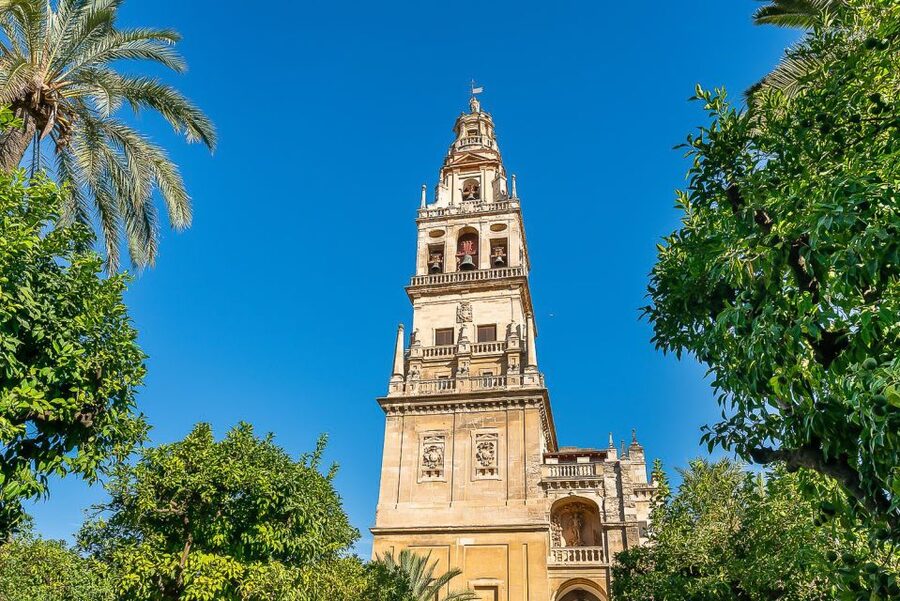
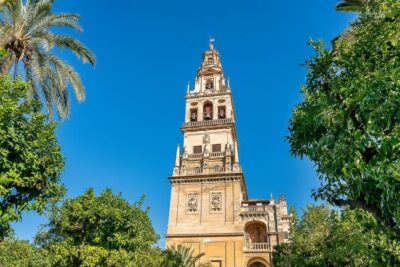
- the courtyard and bell tower
- a horseshoe-shaped mihrab, the prayer niche
- and the later Christian additions that layered new meaning onto the older Islamic space
This monument dates to the 10th century, and it is famous as a landmark of medieval Islamic architecture in Spain. Part of its power is that it does not feel like one single style froze in time. Instead, it reads like multiple eras talking to each other in stone.
The tour also offers an option inside. You can choose an audio or self-guided approach for the mosque interior experience. That matters because this place is huge, and a good guide can teach you how to look, but you still need a little time to slow down and absorb.
Not every day trip handles this portion equally well, based on reviews. The most positive feedback focuses on guides who explain the building’s evolution clearly, and who give you enough “you are here now” time to notice key architectural features. On the flip side, a few criticisms mention that some groups felt the mosque portion was rushed or that guides showed only minimal parts. My practical advice: if the Mezquita is the main reason you booked, keep an eye out for how much time you are actually given inside, and do not rely only on the first pass through a few highlights.
If you are lucky enough to get a guide like Carlos or Antonio, reviews describe the mosque explanation as a standout. Another set of comments specifically praises Juanra’s mosque/cathedral guidance for exceptional detail about the building’s evolution and its place in Andalusian history. Even without those exact names, you want a guide who can translate architecture into story, so you do not end up staring at it confused.
Free time in Córdoba: how to use it without getting lost

After the guided stops and the Mezquita-Catedral visit, you get time to explore and relax independently. Lunch is on your own, and shopping and extra sights are part of the likely plan.
This is where the day trip becomes worth it for many people. The guide builds the framework, then you steer your own experience. You can slow down for a long drink, walk into side streets off the main flow, or simply take a breather when your brain feels overloaded.
Córdoba’s older lanes can be a little tricky, especially if it is busy. Use the free time to do three things in this order:
1) eat somewhere easy to find again
2) walk to a couple of obvious viewpoints or landmarks you were pointed to
3) shop for souvenirs only after you feel your way around
If you get the sense your group is moving quickly, use the free time to regain control. Several reviews praise the structure plus the independent time as a winning combo, because you are not forced to keep a nonstop pace all day.
Price and logistics: what you really pay for at $119.47
At $119.47 per person, this is not the cheapest way to reach Córdoba. But day trips from Seville often cost time and money even before you buy attractions, especially if you are doing it DIY with train transfers and timed tickets.
Here is what you are paying for, in plain terms:
- round-trip coach transfers that remove planning stress
- live onboard commentary that helps you arrive oriented
- a guided walking route that covers key neighborhoods without you researching every turn
- included admission for Los Patios de San Basilio
- included admission for the Córdoba Synagogue
- included skip-the-line entry to the Mezquita-Catedral
If you were to buy tickets one by one and spend time organizing transport, the cost can quickly feel less surprising. Also, the skip-the-line piece matters here because the Mezquita is a major draw. Your time inside is the whole point, and queuing is wasted effort.
Where the value can drop is when the group language mix affects pacing. Some reviews mention that multi-language handling stretched explanations, which can shorten sightseeing time. Others mention accents that were hard to follow. If you are strongly English-focused, it is worth mentally budgeting for some level of multilingual reality. The tour does say English is offered, but in mixed groups the delivery can still vary.
Who this tour suits best, and who might want a different plan
This day trip works best for you if:
- you want a structured overview in one day
- you like walking tours but still want someone to pick the highlights
- you care about the Mezquita-Catedral and want help noticing the right details
- you appreciate Córdoba’s Jewish Quarter and courtyard traditions, not just the most famous photos
It may be less ideal if:
- you need low walking or step-free routes, because the day includes multiple walking segments and older cobbled streets
- you do not handle crowds well, since the main sights are popular and the group can be up to 55 people
- you need very clear English at all times, because reviews point out that accents and multilingual switching can affect understanding
One review also mentioned that the day felt long and tiring, and that older participants struggled with the pace and cobbled areas. That is the kind of feedback you should take seriously. If your priority is comfort over volume, consider a shorter tour or a slower-paced option where you can spend more time in fewer places.
Should you book the Córdoba Mosque-Cathedral day trip from Seville?
I think you should book this tour if Córdoba is a must for your trip and you want the high-impact highlights handled for you: Roman Bridge and Calahorra Tower, the Patios of San Basilio, La Judería and the Synagogue, and the Mezquita-Catedral with skip-the-line entry.
I would hold off if you have strong concerns about language clarity or you know you struggle with long walking days. In that case, you might get more satisfaction from either a smaller group version, a tour that stays single-language, or even a slower DIY day where you can control pacing.
If you do book, go in with the right mindset: treat the guided portion like your map, then use free time to breathe. That mix is what turns a checklist day into a real memory.
FAQ
What time does the tour start?
The start time is 9:00 am.
About how long is the day trip?
It is listed at about 10 hours.
Is English available on this tour?
Yes, it is offered in English.
What attractions have admission included?
Admission is included for the Mezquita-Catedral (skip-the-line ticket), Los Patios de San Basilio, and the Córdoba Synagogue.
Is the synagogue visit always included?
The Córdoba Synagogue is included except on Mondays, when the monument is weekly closed.
Will I have time to explore Córdoba on my own?
Yes. After the main guided sights, you get time to explore and relax independently, including lunch on your own.
What should I bring since food is not included?
Food and drinks are not included, so plan for lunch expenses during the independent time. Also wear shoes that work for walking.
More Tour Reviews in Seville
Not for you? Here's more nearby things to do in Seville we have reviewed
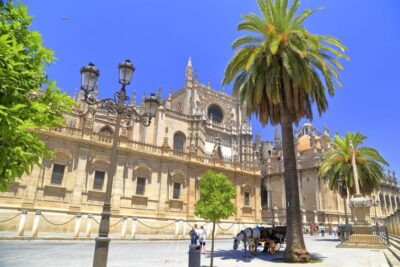
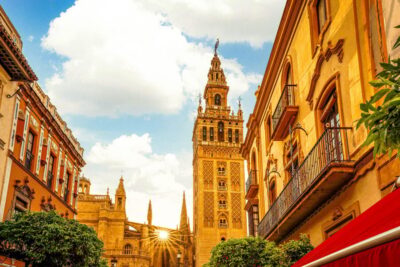
More Cathedral, Giralda & Rooftops worth a look.
★ 4.5Cathedral and La Giralda Entry TicketFrom $2024,592 reviews
★ 4.7Cathedral, Giralda, and Royal Alcázar Guided TourFrom $699,165 reviews
★ 4.6Cathedral, Giralda & Alcazar Entry With Guided TourFrom $658,560 reviews
★ 4.8Priority Access Cathedral, Giralda & Alcázar TourFrom $647,563 reviews
★ 4.6Alcázar and Cathedral Entry Ticket and Guided TourFrom $785,056 reviews
★ 4.5Alcazar and Cathedral of Seville Tour with Skip the Line TicketsFrom $714,579 reviews
★ 4.5Seville Cathedral and Giralda Tower Guided Tour and TicketsFrom $422,429 reviews
★ 4.5Cathedral Guided Tour with Priority AccessFrom $442,305 reviews
Continue by place or experience