Sevilla Daily Bike Tour

REVIEW · SEVILLE BIKE & E-BIKE RIDES

Sevilla Daily Bike Tour

5.0 · 83 reviews 2 hours 40 minutes to 3 hours (approx.) From $36 Operated by All Of Seville · Bookable on Viator
Book on Viator →

Seville moves better on a bike. This ride links major sights like Triana and the Cathedral zone into one smooth loop that’s easy to understand and hard to forget. You’ll also get practical pointers for the rest of your trip, not just photo stops.

I love that you can cover major sights without spending your whole day in shuffle mode. I also like that the group stays small, so the pace can match your fitness, since this is limited to a maximum of 15. One consideration: the tour needs good-weather conditions, and Seville heat can turn an outdoor ride into a sweat session, so come prepared.

Key Points Worth Knowing Before You Pedal

  • Small-group cap (15 max) means you are not lost in a crowd, and the guide can adjust the pace.
  • English guided storytelling helps you understand what you are looking at, from Moorish roots to Ibero-American history.
  • A smart mix of big monuments and parks keeps the route from feeling like a checklist.
  • One paid admission included (Archivo General de Indias), while key areas like Maria Luisa Park and Plaza de España are free.
  • Short, efficient stop times (often 10 to 15 minutes) are ideal for first-day orientation, not for deep museum time.
  • Guides vary by day, but the program has a strong reputation for fun, humor, and clear explanations, with names like Emilio, Fernando, and Milena showing up in past groups.

Why a Sevilla Bike Tour Works So Well for First Timers

Seville is beautiful, but it is also big, and the center can feel like it has ten different directions at once. A bike tour gives you a way to connect the dots fast. In under three hours, you hit the Cathedral area, the Alcázar zone, the river-side viewpoints, and the major park blocks without turning every turn into a mini adventure.

I also like how the format supports your curiosity. You are not sprinting between buildings, because the stops are planned and time-boxed, so you can actually look up, read the details you would otherwise miss, and ask questions when something catches your attention. For me, that makes it feel like sightseeing with a local translator.

You can also read our reviews of more tours and experiences in Seville.

The Route, the Pace, and What You Can Expect on the Bike

Sevilla Daily Bike Tour - The Route, the Pace, and What You Can Expect on the Bike
This is an about 2 hours 40 minutes to around 3 hours experience. The schedule is built around short visits, typically 10 minutes for neighborhood or exterior stops, and about 15 minutes for heavyweight monuments. That timing matters, because it tells you what kind of day this is: orientation plus highlights, not a slow, sit-down tour.

The route is designed so most travelers can participate, and multiple past guests have specifically described it as not strenuous and flat. Still, use common sense. If you are new to bikes, it helps to arrive a little early so the guide can set you up correctly and go over the basics before you get rolling.

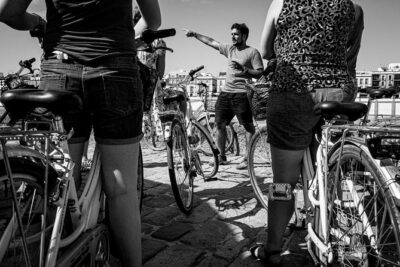
Small groups are a big part of the experience. With a maximum of 15, you get less waiting and more flexibility, and the guide can tailor the pace to your comfort level.

Price and Value: What $36.20 Gets You in Real Terms

Sevilla Daily Bike Tour - Price and Value: What $36.20 Gets You in Real Terms
At $36.20 per person for roughly three hours, the headline number looks simple. The real value comes from what you pack into that time.

You are combining multiple UNESCO World Heritage linked areas and major landmarks in one guided circuit, and you get at least one admission ticket included: the Archivo General de Indias. You also get free access for stops like Maria Luisa Park and Plaza de España. So you are not paying full entry fees for everything, which keeps the cost more reasonable compared to buying tickets one-by-one.

Also, you are paying for the ability to move between neighborhoods efficiently. Seville’s highlights are spread out enough that on foot you would likely lose time to route-finding and long walks. Here, the bike does that legwork for you.

Start Point in Casco Antiguo, and Why That Location Helps

Sevilla Daily Bike Tour - Start Point in Casco Antiguo, and Why That Location Helps
You start at C. Arjona, 8, in the Casco Antiguo area. That’s a smart base because it puts you close to the older heart of the city and sets you up for an efficient loop through Triana, the Cathedral district, and out toward the big park blocks.

You also get a mobile ticket, and you should receive confirmation at booking. The meeting area is listed as near public transportation, which is useful if you are planning around your hotel location.

Stop 1: Iglesia de Santa Ana in Triana, Old Roots and Real Atmosphere

Sevilla Daily Bike Tour - Stop 1: Iglesia de Santa Ana in Triana, Old Roots and Real Atmosphere
Your first stop is the Iglesia de Santa Ana, described as the oldest church in Seville, founded in the 13th century by King Alfonso. What makes this stop more than a quick photo is the surrounding neighborhood feel. Triana has its own rhythm, and the church sits right in the mix.

You’ll spend about 10 minutes here, and admission is not included. That said, even a brief look at the altarpieces and the mood around the church gives you a sense of how Seville’s stories go back far beyond the modern postcard version.

Stop 2: Palau de San Telmo, a Port Neighborhood Story

Sevilla Daily Bike Tour - Stop 2: Palau de San Telmo, a Port Neighborhood Story
Next up is Palau de San Telmo, tied to the old port neighborhood. You’ll hear about the cult of San Pedro González Telmo, which appeared around the year 1600, and how it connected to the convent of Santo Domingo.

This is another short stop, about 10 minutes, and admission is not included. It’s a good “context” pause. Instead of only seeing architecture, you learn why this area mattered, and how religious life and maritime identity overlapped in Seville’s past.

Stop 3: Real Fábrica de Tabacos, When Industry Built the City

Sevilla Daily Bike Tour - Stop 3: Real Fábrica de Tabacos, When Industry Built the City
The Royal Tobacco Factory of Seville is a standout if you like history that’s not only about palaces. This was the headquarters of the first tobacco factory established in Europe, and it’s identified as a major industrial warehouse from the 18th century. It’s also been classified as an Asset of Cultural Interest since 1959, listed as a Historical Monument.

You get about 15 minutes here, admission not included. The practical value is that it expands your mental map. Seville is not just religious and royal. It was also a working hub tied to trade and production, and buildings like this show how the city grew through industry.

Stop 4 and 5: Catedral de Sevilla, Giralda, and the Story You’ll Carry in Your Head

Sevilla Daily Bike Tour - Stop 4 and 5: Catedral de Sevilla, Giralda, and the Story You’ll Carry in Your Head
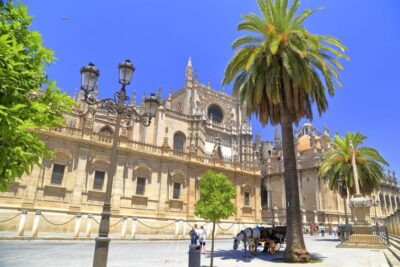
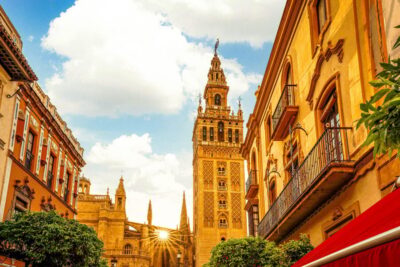
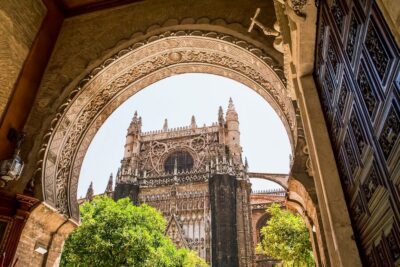
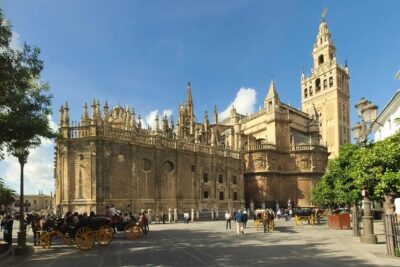
The Cathedral of Seville is one of the headline moments. It is considered the largest Gothic cathedral in the world and was declared a UNESCO World Heritage Site in 1987. You’ll have about 15 minutes for this stop, and admission is not included.

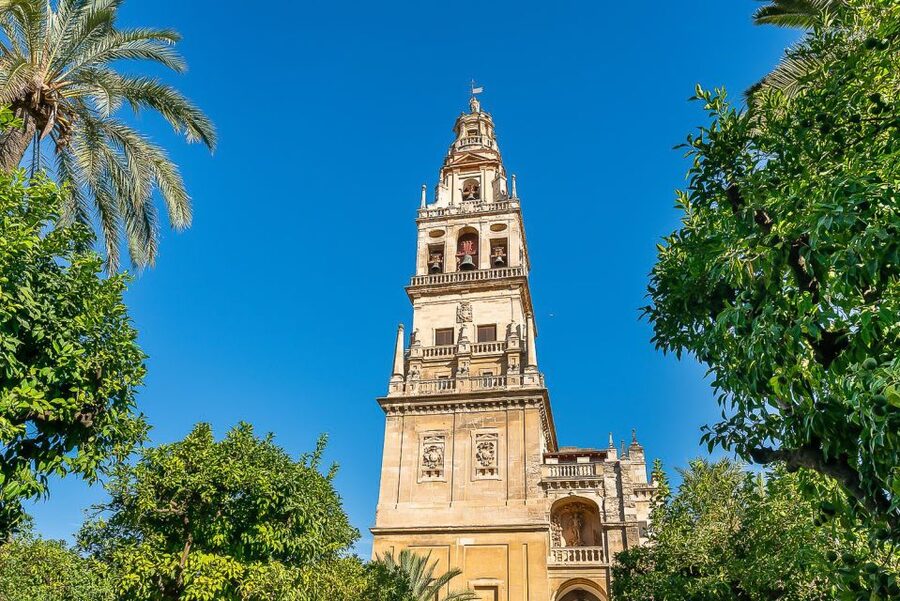
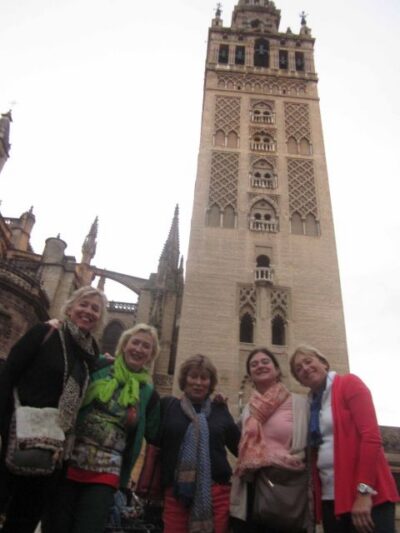
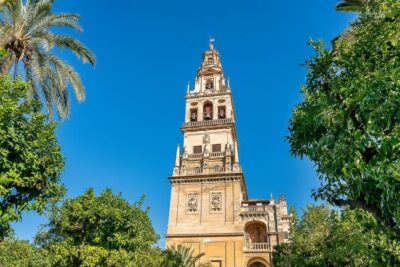
Right after, you visit Torre Giralda. The key detail here is that the Giralda began as a minaret associated with a main mosque built around the 12th century, later evolving into the tower we recognize today. It’s the kind of fact that makes the architecture feel less random. When you see the tower, you start noticing how one era’s structures can shape the next.

Admission is not included for the Giralda stop as listed. Still, the time you spend helps you understand the Cathedral area as one continuous story rather than separate landmarks.

Stop 5: Archivo General de Indias, One Included Ticket With Big Reach

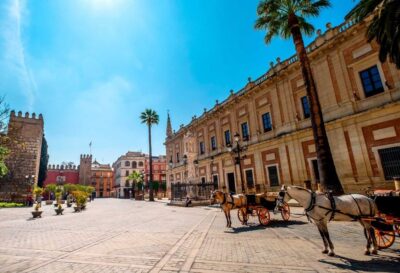
Here’s the stop with included admission: the Archivo General de Indias. This is a big deal because it connects directly to how Europe and America related economically and culturally. The archive is described as essential for understanding the history of America and those transatlantic connections.

You spend about 15 minutes here, and admission is included. This is the stop that often surprises people who thought this tour would be purely exterior. Even if you do not go super deep, having this one ticket included changes the value equation, because you get access to a core historical institution without extra costs.

Stop 7: Real Alcázar, Europe’s Old Palace Still in Use

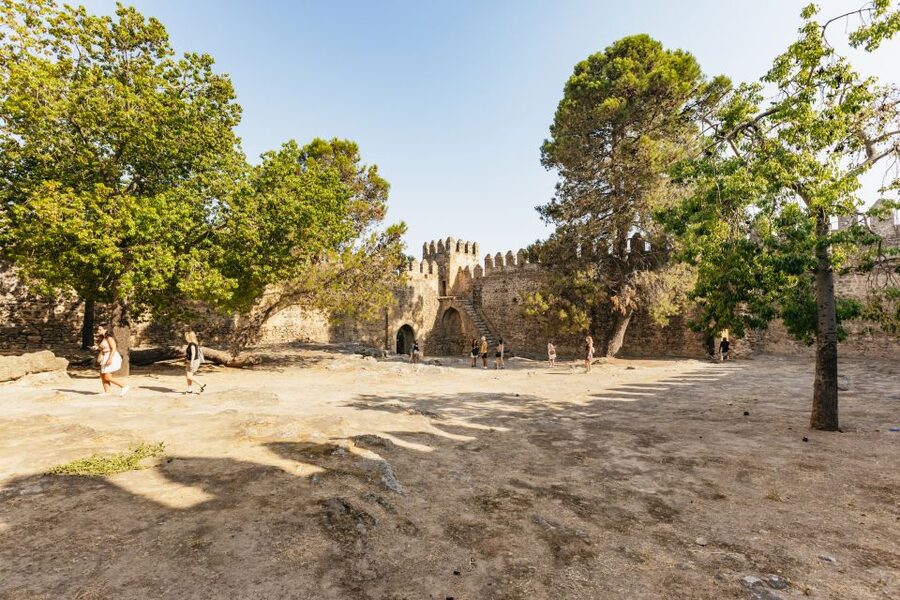
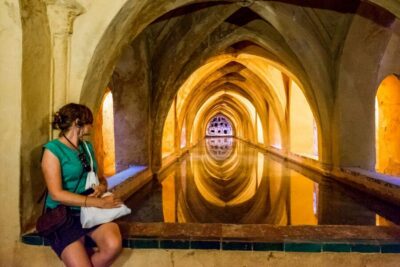
The Real Alcázar de Sevilla is UNESCO listed and described as the oldest palace in use in Europe, with origins dating back to the 11th century. The story starts when Muslim authorities decided to build a fortress in a strategic area for security.

You get about 15 minutes, and admission is not included. That might sound limiting, but the tradeoff is smart. With the bike tour format, you get the orientation and context that makes a later return visit more meaningful. You also learn what to look for while you are passing through the area, so you are not just reading plaques later without understanding why they matter.

Stop 8 and 9: Murillo Gardens and Torre del Oro for River Views and City Rhythm

At Jardines de Murillo, you get about 15 minutes and it is free. This is a chance to breathe and reset between major monuments. The Columbus Monument appears here along Paseo de Catalina de Ribera. You may also spot a statue dedicated to Rodrigo Díaz de Vivar, known as the Cid Campeador, located on Avenida del Cid.

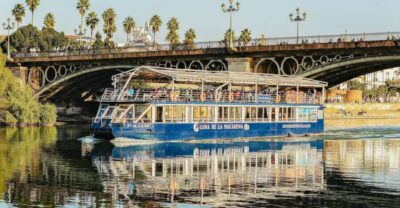
Then you reach Torre del Oro, with about 15 minutes, admission not included. The tower was built in the first third of the 13th century, tied to the last moments of the Taifa kingdoms. The name comes from Arabic, Borg-al-Azajal, described as meaning golden-tiled coating reflecting in the river like gold.

This stop is where the tour often feels most “Seville.” You get water, light, and a skyline that changes as you move. It’s also a useful break before the big cultural square stops.

Stop 10 and 11: Plaza de Toros de la Maestranza and Parque de María Luisa

Plaza de Toros de la Real Maestranza de Caballería is next. It’s described as the oldest bullring in Spain, connected to bullfights held during the April Fair of Seville. It is also identified as an Asset of Cultural Interest, classified as a Monument, with reference to BOE publication in 1984.

You’ll spend about 15 minutes and admission is not included. Even if you are not a bullfighting fan, this is a useful cultural marker. It tells you how Seville celebrates, how it organizes major events, and why this space is such a landmark.

After that comes Parque de María Luisa, free and about 15 minutes. This is a favorite if you want nature without leaving the city. The park covers about 40 hectares, with named places like Glorieta de Bécquer and Isla de los Pájaros, plus Monte Gurugú and Plaza de América.

This is also where you’ll likely feel the rhythm shift from heavy monuments to open space, which makes the final square stop more enjoyable.

Stop 12: Plaza de España, Designed for 1929 and Still Worth Your Time

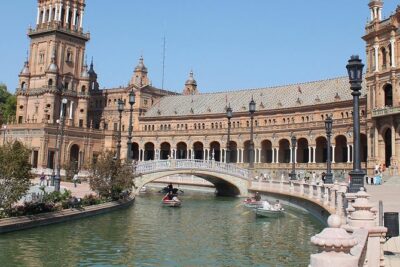
Your last major stop is Plaza de España, free and about 15 minutes. It is framed by María Luisa Park, designed by architect Aníbal González for the Ibero-American Exposition of 1929. The result is described as a palace-square unique in the world.

This is a great finale. If the earlier stops teach you context, Plaza de España lets you process it visually. It’s photogenic for a reason, and it also provides a clean ending point for your orientation, especially if you want to plan a follow-up walking route afterward.

Guides, Humor, and Why the Human Factor Matters Here

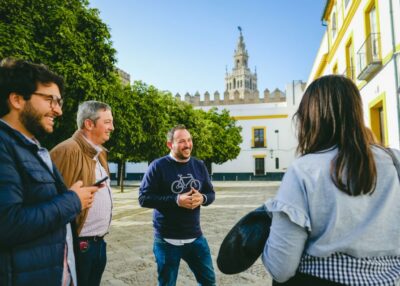
One of the most praised aspects is the guide experience. Past groups have credited guides like Emilio, Fernando, Pierre, Matteo, Milena, Melina, and Mateo for mixing clear explanations with humor and easy pacing. That matters because Seville can be dense. Without guidance, you might recognize names but miss connections.

This tour’s best moments tend to be when the guide does two things at once: explains what you are seeing, and then gives you a reason to care. It sounds simple, but it turns a stop from information into memory.

Timing Tips: Best Times to Ride and How to Handle Seville Heat

The tour depends on good weather, and it’s an outdoor bike experience. If you are visiting in summer, aim for a cooler slot when you can. One group noted that an evening on a Saturday felt cooler and less crowded, and they still got time to look around.

Also watch for city traffic around early evening. One past experience mentioned that traffic can make things tricky around certain times, especially with kids. You can’t control that, but you can choose your time window and set expectations.

Practical Gear: What to Bring Without Overthinking It

You should bring the usual Seville essentials for an outdoor ride: water, sunscreen, and comfortable footwear for any short on-and-off moments. Since stops are short, you will spend more time looking and listening than walking long distances, but you still want to stay comfortable.

If you get heat easily, choose a time with less sun. If you get rained out easily, remember the experience may be canceled due to poor weather, with a different date or full refund offered.

Should You Book This Sevilla Daily Bike Tour?

Book it if you want a fast, friendly way to get your bearings and see a tight cluster of top sights without wearing yourself out. It’s especially good for first-time visitors because it covers the Cathedral and Alcázar area, adds Triana context, and finishes in the Maria Luisa Park and Plaza de España zone.

Skip it or think twice if you want deep, slow museum time. This is timed for highlights, and most admissions are not included. Also, if you are extremely sensitive to outdoor heat, check your comfort level and pick a cooler part of the day.

If you can only do one guided overview early in your trip, this is the kind of tour that helps you plan the rest. You’ll leave with a clearer mental map, and you’ll know what to revisit on foot later.

FAQ

How long is the Sevilla Daily Bike Tour?

It runs about 2 hours 40 minutes to around 3 hours.

What is the price of the tour?

The price is $36.20 per person.

Is the tour offered in English?

Yes. The tour is offered in English.

What is included with the price for admission tickets?

Admission is included for the Archivo General de Indias. Other stops list admission as not included, while Jardines de Murillo and Parque de María Luisa and Plaza de España are free.

How many people are in a group?

This activity has a maximum of 15 travelers, and it requires at least 2 people to operate.

Where does the tour start?

The start is at C. Arjona, 8, Casco Antiguo, 41001 Sevilla, Spain. The tour ends back at the meeting point.

Do I get a mobile ticket?

Yes, it includes a mobile ticket.

What happens if the weather is poor?

The tour requires good weather. If it is canceled due to poor weather, you will be offered a different date or a full refund.

What is the cancellation deadline for a full refund?

You can cancel up to 24 hours in advance for a full refund. If you cancel less than 24 hours before the experience starts, the amount paid is not refunded.