REVIEW · HISTORIC SEVILLE WALKING TOURS
Seville Guided Small-Group Walking Tour
Big icons, zero guesswork. I like the small-group size (max 15) that keeps you close enough to hear your guide, and I love the tight 2-hour route that strings together Seville’s major sights in a way that actually helps your trip. The trade-off is straightforward: you mostly see landmarks from the outside, so you may still want separate entrance tickets if going inside is your priority.
You start and finish at Plaza de España (Av. Isabel la Católica, 41004 Sevilla). Along the way you’ll move through classic squares, government buildings, and religious monuments, then end at one of the city’s most photo-ready plazas. Optional traditional Andalusian breakfast at 9:30 AM can add extra sights.
This tour runs in English and uses a mobile ticket, with confirmation at booking. Since it’s outdoors for about two hours, it depends on good weather, but that is part of the fun in Seville.
Key highlights to look for

- Metropol Parasol (Setas de Sevilla) scale: you get a first look at the massive wooden structure and the story under it
- Giralda and Cathedral context: history and architecture explained while you’re standing in the right place
- Mudéjar-style Alcázar atmosphere: even from the exterior, you learn what to notice before you visit
- Working-city stops that most walks skip: Archivo General de Indias and Real Fábrica de Tabacos add depth beyond postcard Seville
- Breakfast option unlocks two bonus passes: the mosque area and the Setas de Sevilla route details are tied to the breakfast choice
A 2-hour Seville orientation that keeps the group close
Seville is huge in feel. Even when you stay in the historic center, it can be hard to connect the dots between a cathedral, a palace, old city gates, and the places where the city actually worked. This tour is built for that. In roughly 2 hours, you get a guided overview of the city’s big landmarks without turning it into a marathon.
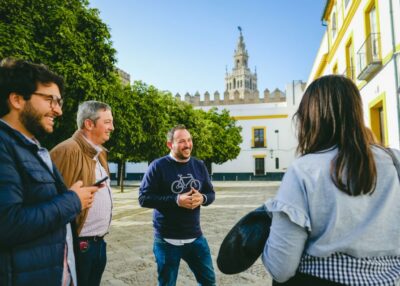
The small-group format matters. With a maximum of 15 people, you are not stuck trailing behind a giant crowd. Your guide can point things out clearly, and you can ask questions without shouting over ten other voices. That makes the walking pace feel manageable, even if you are not a marathon walker.
One more practical thing I appreciate: this is mostly an outside experience. You’ll see the main monuments at key viewpoints, but entrance tickets are not included. If you already planned to book the interior of the Cathedral, the Alcázar, or the archives, this works great as the “what am I looking at?” layer before you go in.
You can also read our reviews of more tours and experiences in Seville.
From Plaza de España to Plaza de San Francisco: the old-town kickoff

The day begins at Plaza de España on Av. Isabel la Católica (41004 Sevilla), and the tour ends back in the same area. Even before you reach the first major stop, you are positioned near the city’s grand showpiece, which helps your brain organize the rest of Seville.
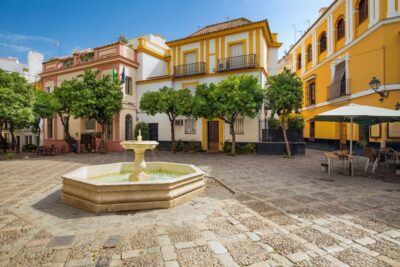
Then the walk pushes into older, tighter streets and squares. Stop one is Plaza de San Francisco, described as one of Seville’s oldest squares and the former main square. The meeting detail is specific: you meet near Banco de España under a blue umbrella or the Seville Guias&Tour logo.
Why this start works: it sets the tone. You begin with open space, then you gradually move toward heavier historic landmarks. It is an easy rhythm for your legs and a smart rhythm for your understanding.
Plateresque Ayuntamiento: learn to spot Andalusian ornament

Next up is the Ayuntamiento (City Hall). The standout detail here is Plateresque architecture in Andalusia. Plateresque is the kind of style where the building looks like it has been carved with patient, almost jewelry-like detail. From the street, you might just register the façade as impressive. With a guide, you learn what to look for and why the style mattered.
This is also a good spot for a quick reset. The group stops, you take in the façade, and you get context before the walk swings toward the big religious icons.
Giralda and the Cathedral exterior: Seville’s skyline explained

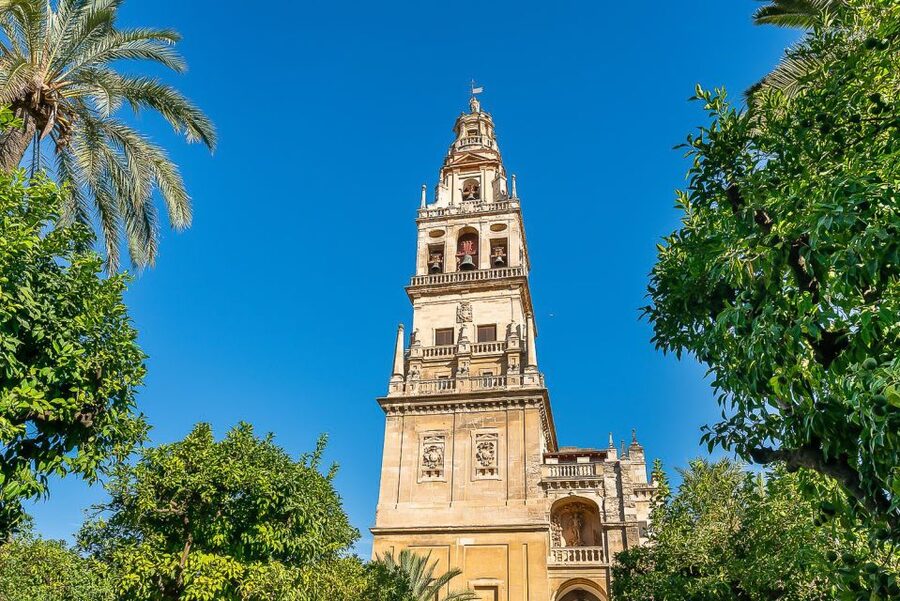
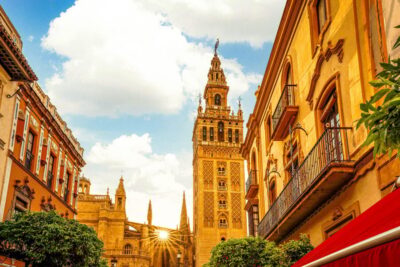
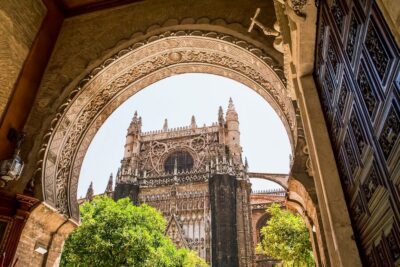
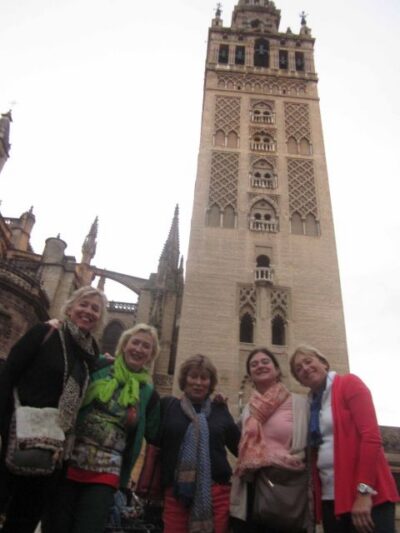
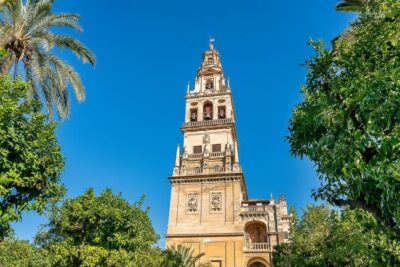
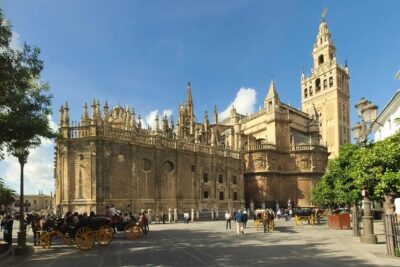
Seville’s most recognizable silhouette is the Torre Giralda. It is more than a landmark you point at on a map. The tour explains how it began as a minaret and later became a bell tower, so it becomes a living timeline instead of a single photo.
You also get time to appreciate the view potential. The guide keeps the stop focused at a length that feels realistic for a walking tour, about 15 minutes for Giralda.
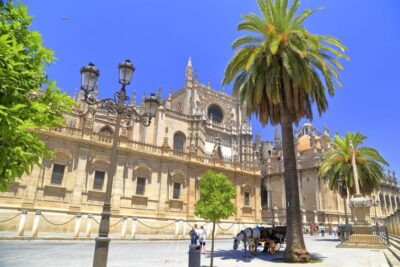
Then you move to the Catedral de Sevilla. Even without entering, this stop can land hard. The reason: the Cathedral is described as the largest Gothic Cathedral in the world, and the guide helps you see how the structure shaped Seville’s identity. You also learn that La Giralda dominates the Cathedral area and that it is the burial place of important characters tied to the city.
What to expect: you’ll be standing outside, looking at the scale and the relationship between buildings. If you love architecture, this stop is a great use of your time because it gives you vocabulary for what you later see up close.
Real Alcázar (exterior): the styles you’ll notice later

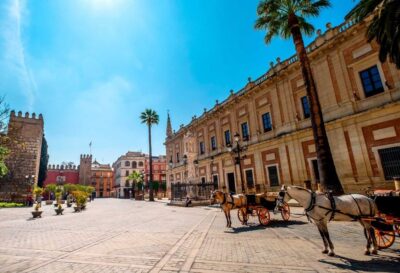
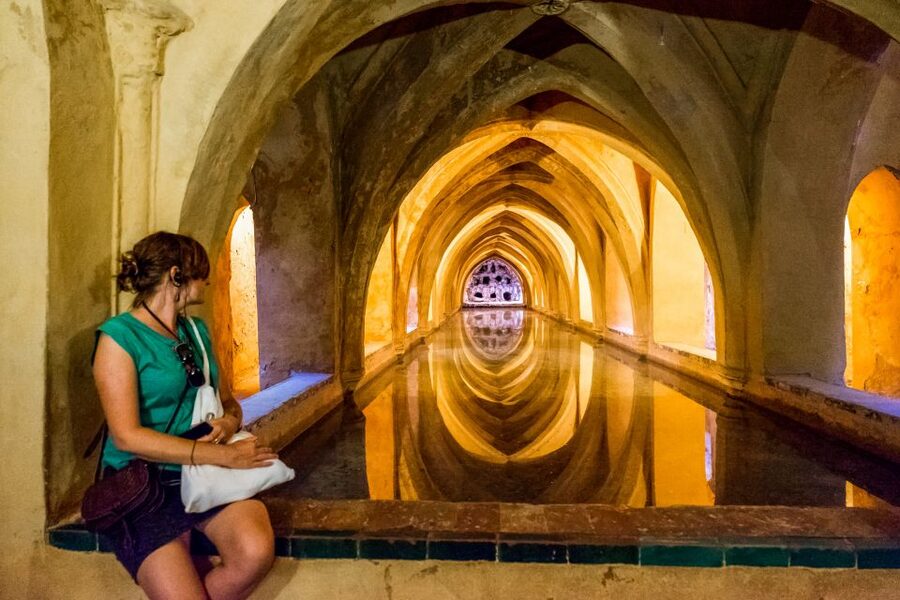
The walk includes the Real Alcázar de Sevilla as an exterior stop. The big value here is the guide’s explanation of the mix of styles: Mudéjar, Gothic, Renaissance, and Baroque. When you know that ahead of time, you start spotting style clues faster when you eventually visit interiors or view the palace complex from different angles.
The Alcázar is the kind of place where visitors can either feel overwhelmed or totally tuned in. This tour aims for tuned in. The stop is around 15 minutes, which is long enough for a guided orientation without dragging your feet.
If you are short on time later, this exterior look can help you decide what interior sections to prioritize. Even if you plan to skip the Palace ticket later, it helps your mental map.
Archivo General de Indias: the city through documents

History buffs often want more than monuments. That’s why the Archivo General de Indias stop is a strong mid-tour choice. It’s described as a treasure for history lovers because the archive holds documents that detail Spain and America’s intertwined past.
This stop is also useful for perspective. You are watching the city as more than a set of buildings. You are learning how Seville connected to wider Spanish history through records, administration, and global movement. Even from outside, the guide makes the building feel purposeful, not just impressive.
Plan for a slightly more head-and-ears moment here. It can be easier to miss meaning when you’re moving constantly, but a focused exterior stop helps you absorb what you’re seeing.
Puerta de Jerez and Real Fábrica de Tabacos: Seville beyond monuments

After the archive, the tour leans into two stops that broaden the picture.
Puerta de Jerez is one of the old entrances to the city. It also has great historical significance. When you stand near a structure like that, the city starts to feel like it used to be defended, controlled, and organized. It turns Seville from a postcard into a place with movement, borders, and history you can almost feel.
Then comes Real Fábrica de Tabacos. The key framing is that it is the largest industrial building of Spain, dating back to the XVIII century. The guide explains it was used not only for cigar production, but also as the main theater of one of the greatest opera set in Seville.
This is a fun and surprisingly helpful contrast. Many tours focus only on religious power and royal palaces. This one reminds you Seville also ran on work, industry, and culture tied to everyday life. It makes the whole trip feel more complete.
Breakfast option adds two smart passes, including the Setas

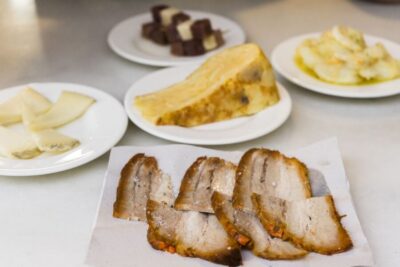
Here’s the fork in the road. You can choose to add traditional Andalusian breakfast at 9:30 AM. If you do, the tour includes two additional passes that you do not get otherwise.
First, you pass by the most important mosque of Seville. The exterior has Baroque architecture, and the description highlights that there is a less-obvious surprise behind its walls. The exact details are not spelled out in the route description, but the point is clear: you get an extra chance to notice an important layer of Seville’s religious and architectural story.
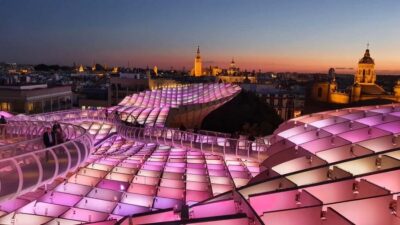
Second, breakfast also connects you to the Metropol Parasol, known as Setas de Sevilla, which is described as the largest wooden structure in the whole world. The explanation is extra interesting because it mentions that under the structure there are ruins found during excavation for a completely different project. So you are not just seeing a modern landmark. You are seeing modern design built above older discoveries.
If you hate wasting time in lines later, this is a good way to get oriented with Setas early. And if you like stories that mix “then” and “now,” breakfast makes this portion more meaningful.
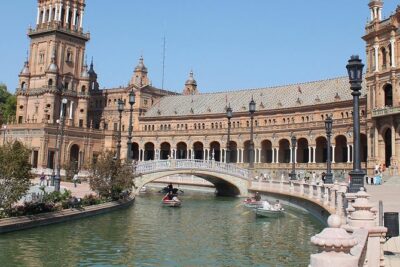
Plaza de España finale: the 1929 showpiece that still works
The tour ends at Plaza de España, with a final stop about 10 minutes. This is the payoff, and it usually hits visitors immediately because the plaza is so visually specific.
You learn it was created for the 1929 Ibero American Exhibition. The architecture is described as neo-Andalusian, with brick, iron, and tiles. It also has a reputation as one of the most famous movie sets in Seville, which helps you understand why it looks so “designed” rather than purely historic.
Why this ending works after the historic center: you finish with a place that feels staged, elegant, and easy to photograph. Your brain shifts from “timeline mode” into “wandering mode,” and you can continue exploring on your own with less effort.
How the guide style makes the city click
A walking tour is only as good as the person turning streets into context. On this tour, the guide storytelling is a big part of the appeal. In the way the experience is described, the guide keeps stops engaging and ties landmarks to eras of power, culture, and architecture.
You will also benefit from the Q and A tone. In multiple guide experiences, names like Julio, Patricia, Anna, Valentin, Rosa, Juan, and Carolina come up with similar themes: they are friendly, they explain clearly, and they make it easy to ask questions without feeling rushed.
One nice practical byproduct: you often leave with a list of additional ideas for sights and restaurants, so the tour becomes a planning tool, not just a two-hour walk.
If you like your city history as spoken street-level stories, this is a strong match. If you only want silence and photos, you might find the constant commentary a bit much, since the tour is built around explanations at every stop.
Value check: $21.78 for what you actually get
At $21.78 per person for about 2 hours, the math works if you treat this as orientation. You are paying for an expert local guide, a structured route, and an organized set of viewpoints you can use to plan the rest of your trip.
Because entrance tickets are not included, the value is strongest when you plan to do interiors separately. Think of it like buying the map in your head, not the map itself. You get exterior views at the big landmarks, plus the story behind what you’re looking at.
Also consider the schedule. The tour is offered in English, runs with a maximum group size of 15, and works best when you can comfortably walk several stops close together. If you are arriving late or you hate walking, your enjoyment may depend on the day you pick.
Finally, the experience requires good weather. If the weather is rough, you might need to switch dates, so I suggest booking it early enough that you can adjust without stress.
Should you book this Seville small-group walking tour?
Book it if you want a first-day plan that makes Seville make sense. This tour is especially useful if you are visiting major icons like Giralda, the Cathedral area, the Alcázar complex, and Plaza de España, and you want to understand how they connect.
Skip it, or at least treat it as part of a larger plan, if you only care about entering monuments. Since most stops are exterior-only, you will still need separate ticket time for places like the Cathedral or Alcázar interiors.
My rule of thumb: if you can spare two hours for guided walking, you will come away with a clearer sense of where to go next, what to notice, and how Seville’s layers fit together.
FAQ
How long is the Seville guided small-group walking tour?
The tour lasts about 2 hours.
Is the tour offered in English?
Yes, it is offered in English.
What is the maximum group size?
The maximum group size is 15 travelers.
Are entrance tickets to monuments included?
No. The tour includes exterior visits only, and monument entrance tickets are not included.
Can I add breakfast, and what time is it?
Yes. You can add an optional traditional Andalusian breakfast at 9:30 AM. With the breakfast option selected, the tour includes additional passes by the mosque area and the Setas de Sevilla portion.
Where do I meet, and where does the tour end?
You meet and end at Plaza de España, Av. Isabel la Católica, 41004 Sevilla, Spain.
Are service animals allowed?
Yes, service animals are allowed.
What happens if the weather is poor?
The experience requires good weather. If it’s canceled due to poor weather, you’ll be offered a different date or a full refund.
More Tour Reviews in Seville
Not for you? Here's more nearby things to do in Seville we have reviewed
More Historic Seville Walking Tours worth a look.
★ 5.0Small-Group City Highlights Walking TourFrom $271,204 reviews
★ 5.0Cultural Walking Tour of Seville MonumentalFrom $8861 reviews
★ 4.9Tapas, Taverns, and History Walking TourFrom $84676 reviews
★ 4.9Tapas, Taverns and History Guided Walking TourFrom $99515 reviews
★ 4.9Small-Group Jewish Quarter Discovery Walking TourFrom $29499 reviews
★ 5.0Seville Private Walking Tour with Alcazar & Cathedral TicketsFrom $276332 reviews
★ 5.0Seville Small-Group Monumental Highlights Walking TourFrom $30278 reviews
★ 4.7Paranormal and Legends Guided Walking TourFrom $12267 reviews
Continue by place or experience