
REVIEW · TRIANA QUARTER EXPERIENCES
Complete Triana Tour “Corrales included”
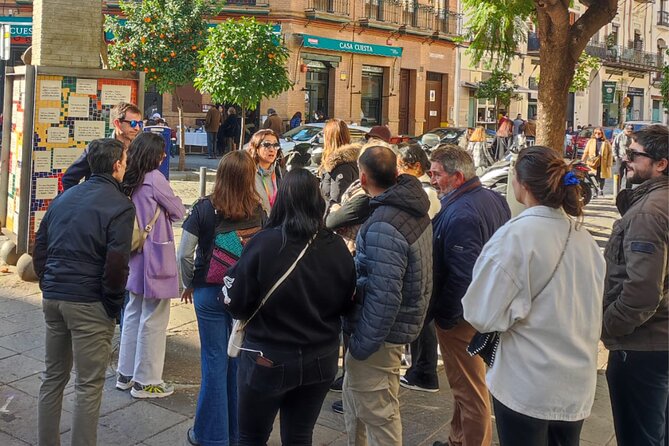
Triana gets a full tour in two hours. This one is a walk through Triana with the neighborhood’s Corrales, plus churches, ceramics, flamenco spots, and a food finish. You also cover the river edge, key bridges, and a couple of historical stops tied to Seville’s tougher chapters.
I really like how the route mixes major landmarks with smaller “corner” sites that explain how Triana lives day to day. I also love that the tour spotlights San Jacinto and the religious world of Triana, including the Hope of Triana chapel, without making it feel like a textbook.
One drawback to think about: there’s been at least one reported case of a guide not showing up. For peace of mind, I’d arrive early and double-check your confirmation details before you head out.
Key highlights you will actually feel on this walk
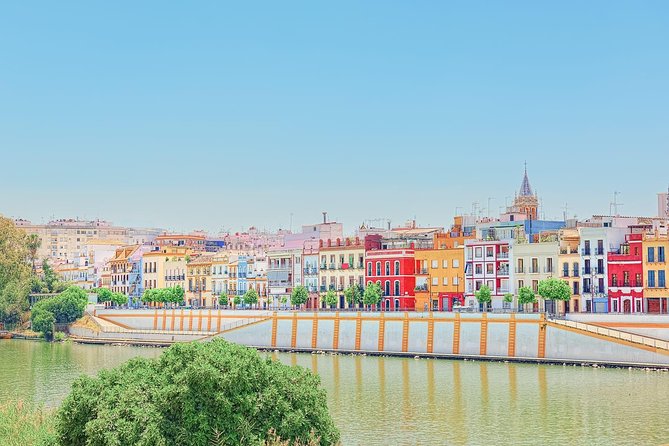
- Torre del Oro to Puente de Isabel II views: you get photo-ready river panoramas while the guide sets context fast
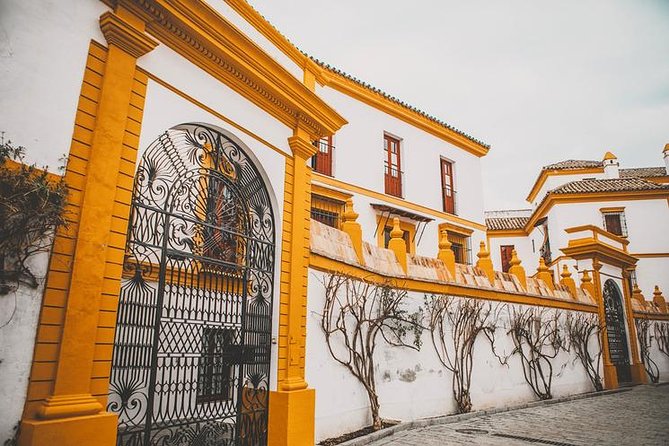
- Corrales and patios focus: you see why this neighborhood layout matters, not just the pretty facades
- Church stops with local identity: Santa Ana, sailors, and the Hope of Triana are central to Triana’s story
- Cultural markers on San Jacinto: flamenco, brotherhood chapels, and even a nod to Hispano-Aviación
- Ceramics in the street-level way: you pass by the ceramic-making world and end near Triana Market
Starting at Torre del Oro, then stepping into the river views
Your tour kicks off with a classic Seville waterfront mood at Torre del Oro. This famous Gold Tower once worked as a defensive bulwark and beacon, and it gives you one of the best wide-angle views over the river. Even if you have seen pictures, standing near it helps you understand why Triana grew where it did.
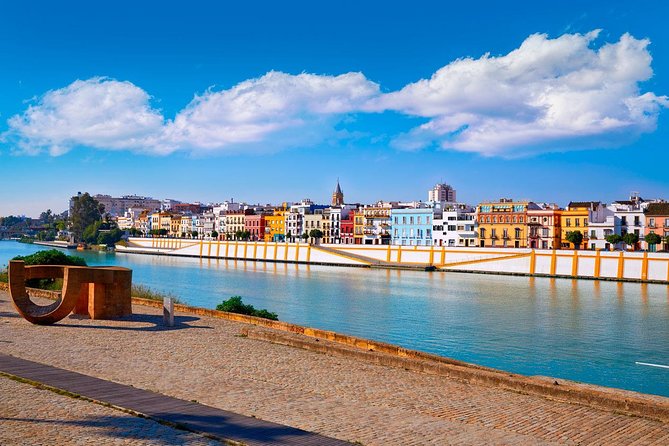
From there, the route pushes you toward the bridges. You cross over on the San Telmo Bridge for another quick fix of Seville skyline and the Triana side of the Guadalquivir. It is the kind of setup that makes the rest of the walk easier, because you start to “place” the neighborhood in relation to the water.
A practical note: the tour listing shows the meeting point near Puente de Isabel II and also indicates the first stop right at Torre del Oro’s front door. Before you go, check the exact pin in your confirmation so you are standing in the right place when your group forms.
You can also read our reviews of more tours and experiences in Seville.



Bridges, Zero Mile, and how Triana fits into Seville’s big picture
Once you get your bearings, you hit the Milla Cero de la Tierra area. This monument connects Seville to the famous first round-the-world departure, and you also learn what is tied nearby with Seville’s April Fair. It is a short stop, but it gives the tour a “why here, why now” frame.
Then the walk turns more neighborhood-real on Calle Betis. You get the idea that Triana has long behaved like its own smaller world inside Seville. That separation matters, because it shapes everything you will see later, from crafts to religious chapels to the everyday street energy.
Next up is Calle Troya, where the tour connects Triana to writer Miguel de Cervantes. It is the kind of stop that makes you notice buildings differently, because you start linking walls to people and stories instead of just snapping photos.
And then you shift to the port atmosphere at El Embarcadero. This is where the tour brings in the myth-world of Carmen and Las Cigarreras, tied to people leaving from this jetty for work in Seville’s tobacco factory. If you like cultural references, this is one of the more memorable “meaning stops” on the route.
Puente de Triana and the patios-and-corrales side of Triana life
You cross Puente de Isabel II, also known as Puente de Triana. It is described as the oldest preserved iron bridge in Spain, built in 1852. The structure is impressive, but what I found more useful is how it becomes a visual marker: once you see this bridge, you keep seeing Triana as a distinct zone.
After the river bridges, the tour focuses on the Triana patios idea. The route highlights that there were once more than 100, and today you may find around 15. That number is a good reality check. The patios are not just charming, they are part of how the neighborhood’s daily life, shade, and community feel developed.
Then you land at Plazuela de Santa Ana. This small square is presented as a major meeting corner, and it is tied to the area’s Flemish connections. Right away, you can feel how Triana’s history shows up in micro places, not only big monuments.
From there, you visit Real Parroquia de Señora Santa Ana in the center of old Triana. You get the sense that the church is not only religious, it is also a keeper of local identity, including the legends connected to Triana’s gypsy trianeros community. It is one of those stops where the guide’s storytelling makes the building come alive.
Santa Ana, sailors, and the Dominican Convent of San Jacinto
This part of the tour is the “heart and chapels” stretch. You move from Santa Ana into the Capilla de los Marineros, where you can enter one of Triana’s brotherhood chapels. The emphasis here is on the image of the Hope of Triana, described as unique for multiple reasons that the guide explains on the spot.
Then the tour turns toward Parroquia de San Jacinto (Dominicos), the former Dominican Convent of San Jacinto. The big historical point tied to this stop is that the surrounding hospital area served as a mass grave during a plague epidemic. It is heavy subject matter, but it matters, because Triana’s religious sites are not separate from the neighborhood’s real survival history.
Next comes San Jacinto peatonal, the busiest street in Triana. The guide uses it as a practical route section, pointing out where you can stop for a drink during the walk and also connecting it to Hispano-Aviación and the first Spanish reactor made there, which opened the way to modern fighters. That is a very specific detail, and it helps you see the neighborhood beyond just myths and monuments.
From San Jacinto, you continue to the Hermandad De La Estrella chapel. It is described as the Star Brotherhood and tied to the patron saint of former port shippers. If you pay attention to the tone of the story here, you’ll understand why religious brotherhoods were such a big part of daily Triana life in the 16th and 17th centuries.
Capilla del Carmen, Juan Belmonte, and the flamenco monument stops
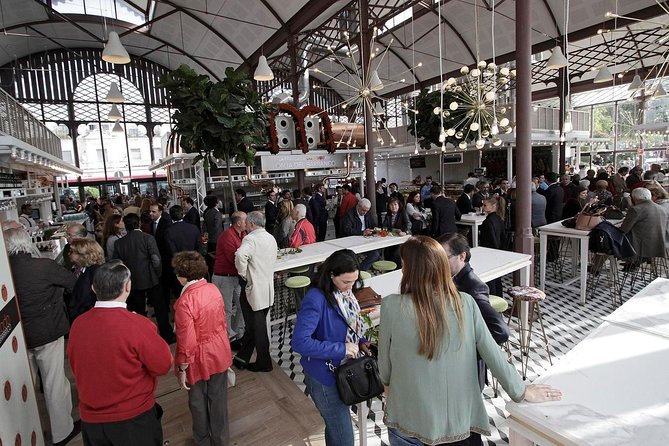
Triana does not do one theme at a time. After the chapel-and-street segment, you reach Calle San Jacinto again as a street-level scene: old courtyards, tiled facades, and the kind of crowd-and-bars atmosphere you come to Seville for.
Then you visit Capilla Virgen del Carmen, tied to architect Aníbal González, who is also connected to the 1929 universal exhibition and Plaza de España. That connection matters because it situates this chapel in the broader Seville story, not only local tradition.
You also pass a Monumento a Juan Belmonte. Triana is described as a land of great bullfighters, and the inclusion of Belmonte keeps the tour balanced. It reminds you that Triana’s identity is not only religious or artisanal, it is also tied to spectacle and popular culture.
And then comes the payoff for music lovers: Monumento Triana al Arte Flamenco. The tour presents flamenco as an Intangible Cultural Heritage of Humanity, and the monument frames the neighborhood’s relationship to singing, dancing, guitar, and palms. Even if flamenco is already on your itinerary, this stop helps you see it as something rooted in Triana’s streets, not just a theater performance.
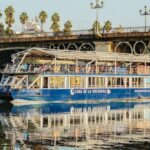
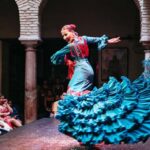
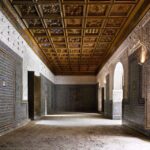
Triana Market and the snack strategy that ends the tour right

You finish the first big cultural sweep at Mercado de Triana. This market stop is built for atmosphere, with the tour emphasizing Triana’s renown for gastronomy and the idea that the market has real life. It is the perfect place to reset your energy after a couple of hours of walking.
The tour also includes recommendations for the best tapas in the neighborhood. Since you finish near the market, it is a practical setup. You can take the guide’s suggestions immediately while your walking momentum is still strong, and you are already in the right zone.
If you like food planning, here is how I use a market finish: I treat the market as orientation for flavors. Then, when I pick a tapas bar, I look for places that match the kinds of items the guide hinted at, rather than trying to guess from a menu photo.
Ceramics at Centro Cerámica Triana, plus Almohade tunnels and soap lore
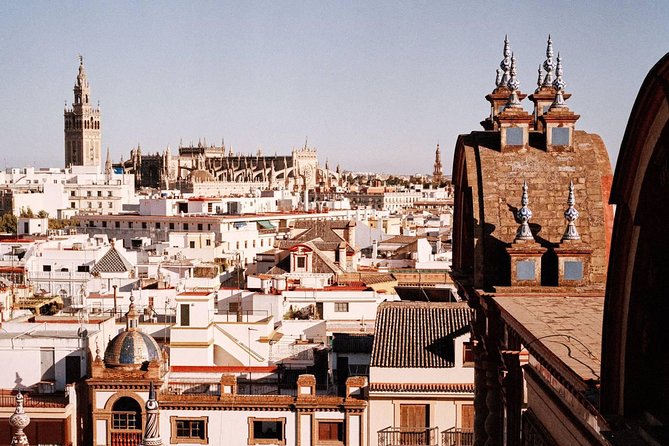
Now you shift into crafts and trade. The tour includes Centro Ceramica Triana, and it references the San Ana Ceramic Furnaces. This is one of the clearest reasons to book this specific tour: Triana ceramics are not just souvenirs. The tour approach helps you connect craft traditions to the neighborhood’s physical layout, including courtyards and workshop areas you can spot as you walk.
You also pass Castillo de San Jorge (sometimes called Castillo de St. George). The tour frames it as a place tied to the Catholic Monarchs and the inquisition. That is not a light stop, but it helps explain why Seville’s story includes both art and control, religious fervor and persecution. You come away with a more complete picture of what these walls mean.
Right near this area, the tour mentions the tunnels of the Royal Almonas Almohades, tied to the soap associated with those tunnels and described as popular in Europe and America. That is a fun way to turn “hidden space” into something you can talk about later, because it is not only about architecture, it is about everyday products and reputation.
Then there is Calle San Jorge, where you get the sense that ceramic work lived in the neighborhood’s courtyards. Even short stops like this can make a difference. You start noticing how crafts were built into the street fabric, not separated into a museum only.
Isla de La Cartuja, Calle Pages del Corro, and how Triana evolves
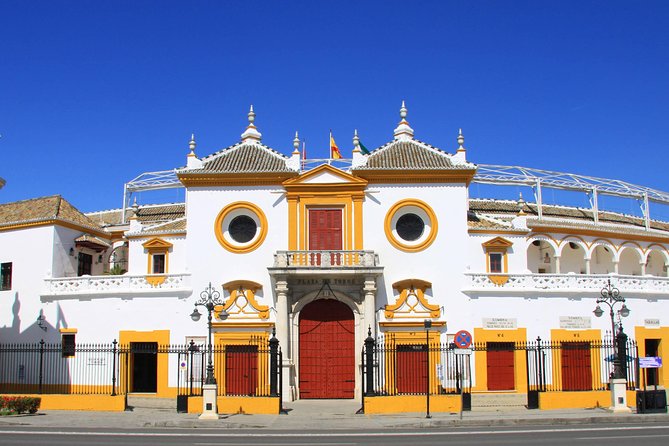
As you near the end, the tour includes Isla de La Cartuja. The framing here is evolution: Triana’s “yesterday, today, and tomorrow,” including references to Calle Pages del Corro as the Triana of different eras. Even if you have seen photos of modern Seville, this stop helps you understand continuity, where old trade patterns morph into newer identities.
You end in the Triana Market area, which makes sense. The route is built so your last moments are in a place where you can keep exploring on your own, eat, and absorb the neighborhood without rushing back to a hotel.
One more practical point: the tour is listed as about 2 hours. That is short enough to fit into most days, but long enough that you will want comfortable shoes and a small water plan. Triana has plenty of stairs, corners, and street turns, and you will feel it after the second or third chapel.
Price and value: what $9.49 buys you in real tour time
At $9.49 per person, this is an inexpensive way to get a guided structure through central Triana. The “value” here is not only the price, it is the balance of what is included in a short timeline.
Most of the route stops are marked as free in the tour description, with Torre del Oro specifically stating admission ticket not included, and Milla Cero marked as included. So you are mostly paying for the guide and the route logic, not a pile of entrance fees.
The tour also caps at 30 travelers, which usually means less crowd pressure than bigger bus-style group tours. And you get a mobile ticket, which is convenient when you are bouncing between sights.
I also like that the description says confirmation is received at booking, and the tour is near public transportation. That matters because it reduces the “logistics tax” on a short experience.
Should you book the Complete Triana Tour with Corrales included?
I think you should book if you want a focused two-hour Triana walk that mixes major landmarks with neighborhood-specific identity. The standout value for me is how the tour connects corrales and patios, churches and chapels, and ceramics, then finishes in a place where you can immediately eat.
You might skip it if you hate church settings or prefer a purely scenic route with minimal historical context. Also, because there was an instance of a guide not showing up, treat this like any small-group tour: arrive early, verify your meeting point, and keep your confirmation handy.
If you end up with a guide named Jose, that is a good sign. One guide described as Jose has been praised for friendly, warm explanations that make the two hours feel short.
FAQ
How long is the Complete Triana Tour with Corrales included?
The tour lasts about 2 hours.
Where do I meet and where does the tour end?
You start near the Monumento al Arte Flamenco by Puente de Isabel II, and you end near Triana Market (listed at C. Arfian, 13, 41010 Sevilla).
Is there an admission fee included for Torre del Oro?
The tour description says the Torre del Oro admission ticket is not included. Other stops are described as free, and Milla Cero de la Tierra is marked as included.
Is it a small group?
Yes. The tour has a maximum of 30 travelers.
Do I receive a mobile ticket?
Yes, the tour lists a mobile ticket.
Does the tour run in bad weather?
No. The experience requires good weather. If it is canceled due to poor weather, you will be offered a different date or a full refund.
What is the cancellation window for a full refund?
You can cancel up to 24 hours in advance for a full refund.
Is the tour suitable for most people, and are service animals allowed?
The tour description says most travelers can participate and that service animals are allowed. It is also listed as near public transportation.
More Tour Reviews in Seville
Not for you? Here's more nearby things to do in Seville we have reviewed

More Triana Quarter Experiences worth a look.
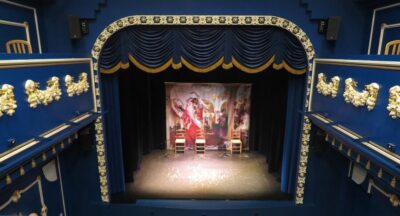 ★ 4.6Live Flamenco Show at “Teatro Flamenco Triana”From $283,290 reviews
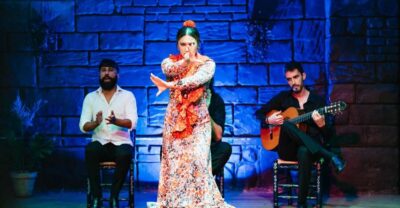 ★ 4.8Baraka Sala Flamenca Show with Drink in TrianaFrom $321,761 reviews
 ★ 4.8Traditional Flamenco Show in TrianaFrom $261,580 reviews
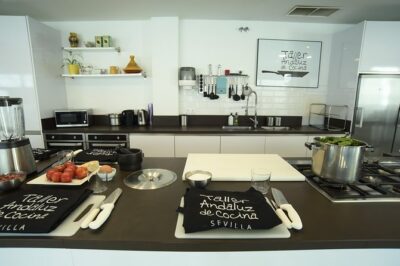 ★ 5.0Spanish Cooking Class & Triana Market Tour in SevillaFrom $90760 reviews
 ★ 4.93.5-Hour Spanish Cooking Class & Triana Market TourFrom $88751 reviews
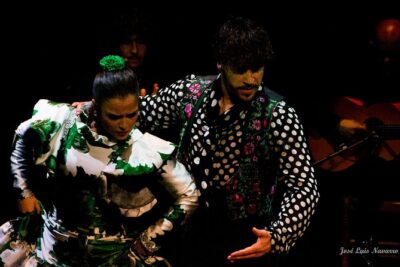 ★ 4.5Flamenco Show Tickets to the Triana Flamenco TheaterFrom $30599 reviews
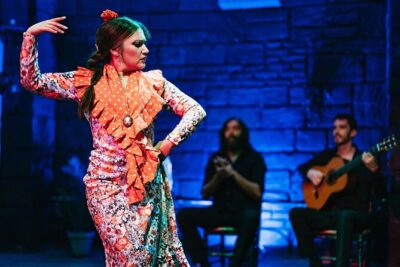 ★ 5.0Baraka Triana. Flamenco show with drinkFrom $32497 reviews
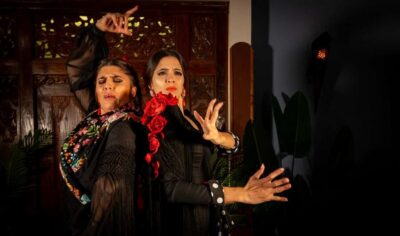 ★ 4.6Flamenco Show at Tablao Almoraima in TrianaFrom $28483 reviews
Continue by place or experience