
REVIEW · TRIANA QUARTER EXPERIENCES
Complete Triana Tour “Corrales included”.
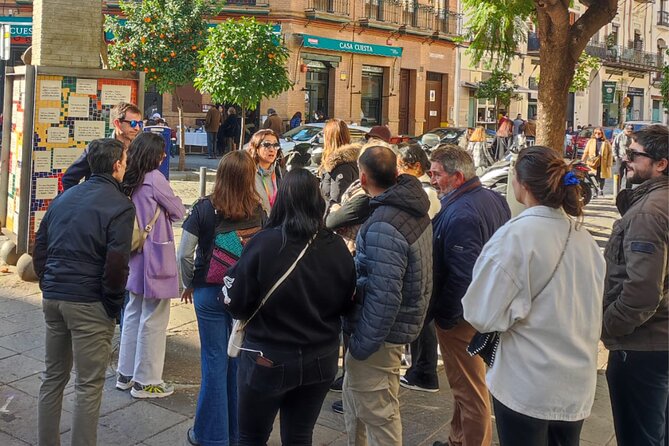
Triana has a secret you can walk. This guided route mixes the famous sights with quieter patios, and it includes the corrales de vecinos that many visitors only hear about. You get a close-up, local-history style of storytelling, with stops that range from major landmarks to tucked-away corners.
What I like most is the breadth of what you actually see in just two hours, from Torre del Oro and two big bridges to church steps, markets, and the Castle of San Jorge. I also love how the tour keeps pointing you toward daily life, not just monuments, especially with courtyard visits and the inside feel of working neighborhood spaces like the market and artisans’ sites. You end with a practical sense of where to eat and what to try in the Triana way.
One thing to consider, especially if you prefer a different language, is that the guide is Spanish-only. If you do not speak Spanish well, you might miss some of the nuance, even though the route and sites themselves are still very much worth your time.
Key highlights worth clocking before you go
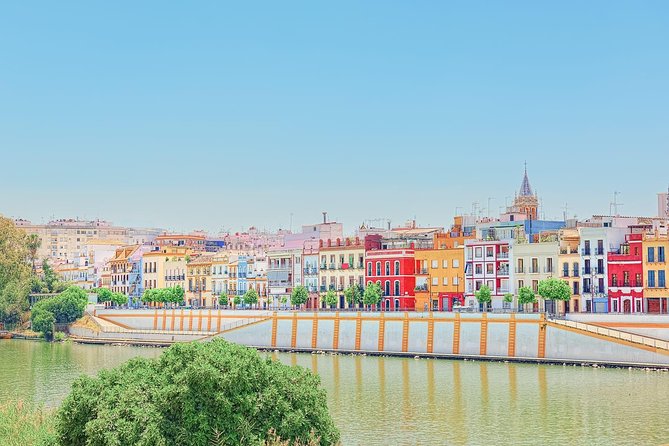
- Corrales de vecinos included: sky-open courtyards that show how Triana life has worked for generations.
- Religion and neighborhood, not just buildings: church stops tied to local devotion and community traditions.
- Royal Almohad Almonas tunnels: a history stop with a specific story, including the soap origin.
- San Ana Ceramics Factory and kilns: you see craft tradition in motion, not only in photos.
- Triana Market guidance: you finish near the action with tips for eating Triana, Sevillian, and even gypsy tapas.
A 2-hour walk through classic Triana and the quieter side
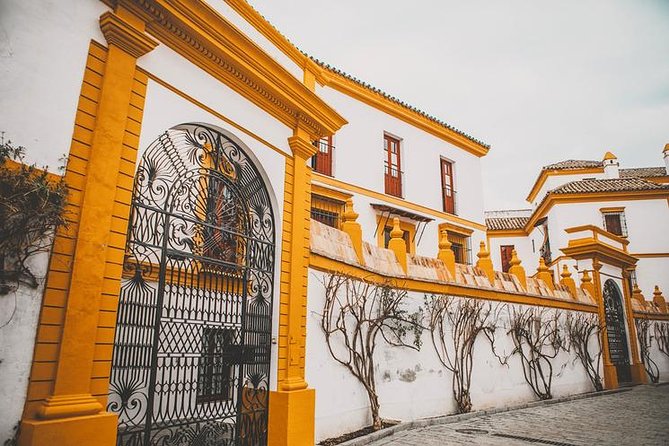
This is a compact tour with a big range, and that matters. Two hours sounds short, but the way the route is built lets you connect River Seville to Triana street life, then to courtyards, then to market energy again.
Triana itself is the star here. You get both a central, lively Triana and a more secret Triana away from the constant crowd noise, with magical corners and stories you would not naturally find on your own.
Seasonal comfort is built in too. In summer, the stops are in the shade, and in winter you will be in the sun, so you can plan clothes and timing with less guesswork.
You can also read our reviews of more tours and experiences in Seville.



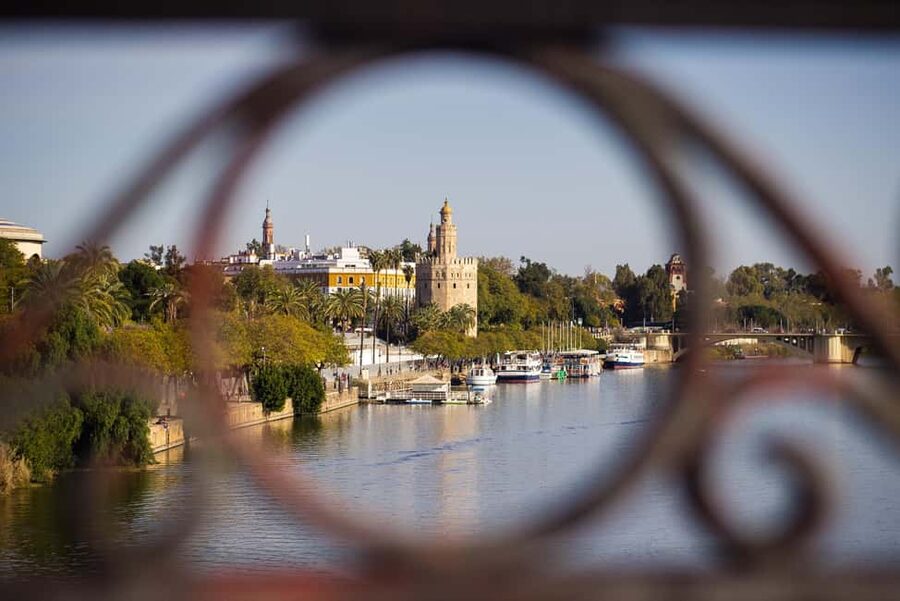
Starting at Torre del Oro, then crossing bridges toward Triana
You meet at the Torre del Oro gate, next to the canyons, and importantly, not down by the river. That detail helps you arrive calm, not confused, and it makes the start feel organized from minute one.
From there, you do a guided look at the Torre del Oro itself, then head into bridge territory with Puente de San Telmo and Puente de Isabel II. These stops do more than set up good photos. They help you understand how Triana sits across the river and why the neighborhood’s identity is tied to movement, trade, and crossings.
If you like street-to-landmark walking, this opening works well. It gives you orientation fast, and it sets expectations for what comes next: not only views, but also places where Triana’s history shows up in everyday details.
Santa Ana and Los Marineros: where Triana devotion lives
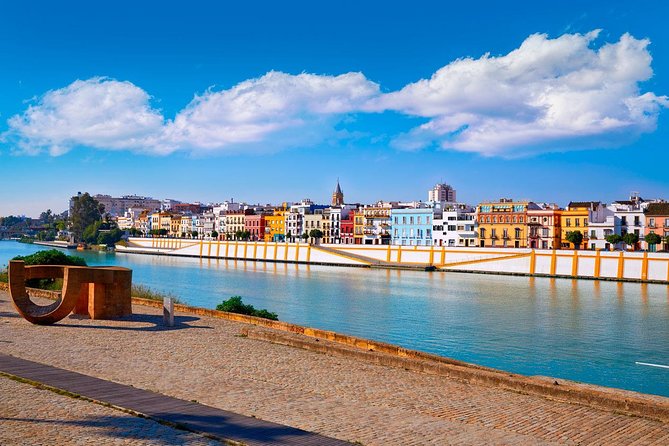
The route turns from river-and-bridge to faith-and-neighborhood. You spend time at Plazuela de Santa Ana and at the Real Parroquia de Señora Santa Ana, then continue into other sacred corners that represent Triana’s devotion.
One of the most interesting parts is that you are not just touring churches as stand-alone monuments. You also connect the feeling of worship to the neighborhood’s identity, including the devotion linked with Esperanza de Triana.
You also visit Hermandad de la Estrella (Triana) and the Chapel of Sailors. Even if you are not religious, this kind of stop pays off because it explains how community traditions shape the look and rhythm of the streets.
Corrales de vecinos and sky-open patios, where local life happens
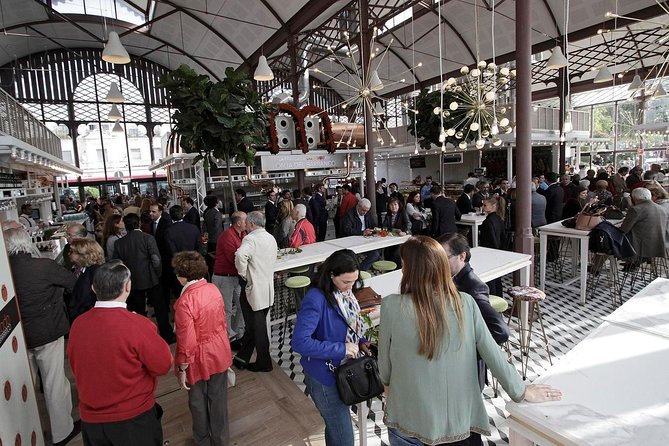
This is the main reason many people book it, and for good reason. The tour includes corrales de vecinos, the sky-open courtyards of older houses where neighbors shared space and daily life played out.
I like this part because it is human-scale history. You can stand in a big landmark anywhere, but a courtyard tells you how people actually moved, talked, and lived. It also changes your sense of Triana from a postcard to a working neighborhood.
You also get traditional patio visits, including the Patio de la Espartería with its distinctive architecture. If you like architecture, you will appreciate how the shape of space influences light, movement, and that special courtyard hush you only notice once you step inside.
And yes, there is a reason the tour promises corrals as a visitor gift. These places can be hard to find without local help, and the experience is very different from just looking at streets from the outside.
San Jacinto convent and Royal Almohad Almonas tunnels
Next comes a quieter, more reflective stretch. You visit the Dominican Convent of San Jacinto, described as serene, and the point is not only to see the grounds, but to understand the legacy left by Christian orders in this area.
Then the tour takes you underground with the tunnels of the Royal Almohad Almonas. This is where you get one of the more specific, memorable stories on the route: the connection to the popular soap in Europe and America being born here.
I like that this stop gives a “how history connects to daily life” feeling. A tunnel is not just a cool place to photograph. It becomes an origin story tied to something people actually used, and that kind of link sticks better than dates alone.




San Ana Ceramics Factory, kilns, and the makers of Triana

After the older layers of faith and underground history, you shift toward craft. You visit the San Ana Ceramics Factory, including the great kilns.
What makes this stop valuable is the focus on tradition continuing in practice. You are not only learning about Triana’s artistic side in theory. You are seeing how ceramic making fits into the neighborhood’s ongoing identity.
This is a great time to slow down a bit and look at details. If you care about design, this is where the tour helps you connect the dots between what you saw in patios and churches, and what you will keep seeing around Triana streets, bars, and homes.
Betis and San Jacinto streets, the fishing port feel, and Triana Bridge

As the tour moves toward its mid-to-late portion, it leans into lived-in Triana. You walk through Betis and San Jacinto streets, known for bars, stories, and legends.
You also visit the old fishing port area and the iconic Triana Bridge. The bridge stop matters because it ties the neighborhood’s identity to water and work, and it helps you understand Triana as both an artistic district and a community shaped by practical livelihoods.
This section works especially well if you like to understand “where the stories come from.” Landmarks are easier to spot, but the bridge-and-street combination explains how Triana keeps its character while the city evolves around it.
Castillo San Jorge and Calle San Jorge: history gets heavier
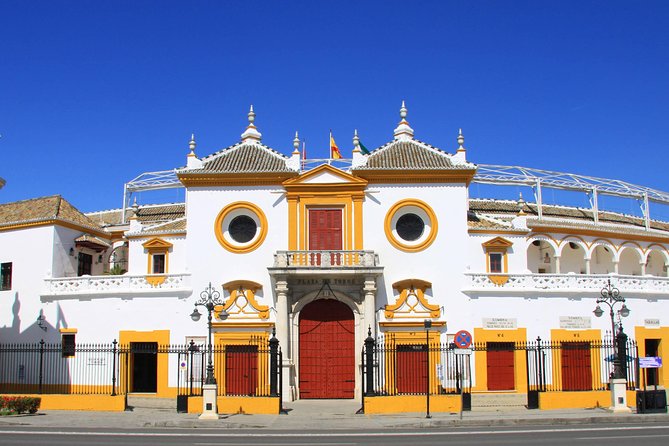
Now the tone shifts. You visit the Castle of San Jorge, and the guide points you toward the passage of the sad inquisition. It is a reminder that Triana history includes moments that were not gentle or romantic.
After the castle, you walk through Calle San Jorge. That street segment is useful because it connects the castle to the surrounding neighborhood fabric, so you can feel how big events are still linked to small streets and ordinary steps.
If you are sensitive to heavy themes, this is the portion where you will feel it most. On the bright side, the contrast also makes the earlier courtyard and market moments land harder later, because you understand that Triana’s charm has layers.
Triana Market finish: smart eating tips in the right neighborhood
You end near the Triana Market area, at Pl. del Altozano, 16A. Finishing here is smart because it turns your walk into next steps.
You get a guided stroll through the Triana Market, described as essential, and the guide shares how to recommend what and where to eat good Triana, Sevillian, and even gypsy tapas. You do not need to guess blindly after the tour. You leave with a direction that fits your tastes and what is happening nearby.
For me, the best part of a market finish is that you can immediately test your new knowledge. You see how people shop, how stalls are set up, and you can connect the craft and community stories you heard earlier with what people actually buy and eat.
Price and who this fits best
At about $14 per person for a two-hour guided walk, the value comes from density. You are not just doing one monument. You are bundling bridges, churches, courtyards, tunnels, a ceramics factory, and a market into one route.
This works best if you want an organized way to get the “Triana package” without overplanning. It is also ideal if you prefer walking that stays comfortable, since the tour says stops are accessible and comfortable without hills, plus summer shading and winter sun planning.
You should book it if:
- you care about corrales de vecinos and courtyard life, not only big sights
- you want expert local guidance in Spanish
- you like craft and neighborhood culture, including ceramics and market guidance
- you are traveling with kids or teens, since children and teenagers occupy a seat
One practical note. You are asked to include a mobile with WhatsApp when booking, so the guide can contact you the day before or the same day with indications to reach the meeting point.
Should you book Complete Triana Tour with corrales included?
If your Seville plans include Triana and you want more than a photo run, I think this is a strong choice. The corrales de vecinos included promise is the big differentiator, and the rest of the route supports it with churches, convent history, tunnels, craft, and a market finish where you can act on local food advice.
Skip it if you need a non Spanish guide, or if a two-hour walking format feels too tight for your pace. But for most people who want authentic Triana texture, this tour hits a sweet spot of depth without dragging.
FAQ
How long is the Triana tour?
The duration is 2 hours.
Where do I meet the guide?
Meet at the TORRE DEL ORO gate, next to the canyons, not down the river.
Where does the tour finish?
The tour finishes at Pl. del Altozano, 16A, 41010 Sevilla, Spain.
What language is the live guide?
The tour guide is live and Spanish-speaking.
Does the tour include corrales de vecinos?
Yes. The tour includes visits to the Corrales de vecinos and traditional courtyards of old houses open to the sky.
Is the tour comfortable for people with mobility needs?
Yes. All stops are described as accessible and comfortable without hills, and the activity is wheelchair accessible.
Do I need WhatsApp on my phone?
The tour recommends including a mobile with WhatsApp so the guide can contact you with arrival indications the day before or the same day.
Are speakers allowed?
No, speakers are not allowed.
More Tour Reviews in Seville
Not for you? Here's more nearby things to do in Seville we have reviewed



More Triana Quarter Experiences worth a look.
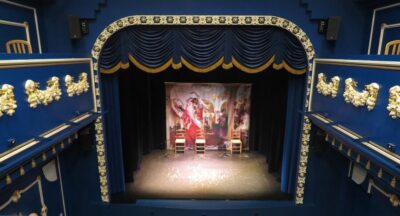 ★ 4.6Live Flamenco Show at “Teatro Flamenco Triana”From $283,290 reviews
 ★ 4.8Baraka Sala Flamenca Show with Drink in TrianaFrom $321,761 reviews
 ★ 4.8Traditional Flamenco Show in TrianaFrom $261,580 reviews
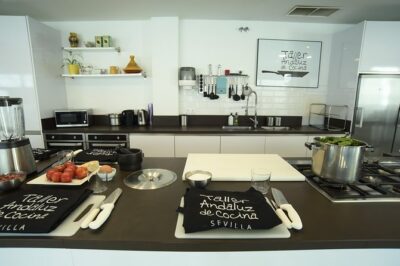 ★ 5.0Spanish Cooking Class & Triana Market Tour in SevillaFrom $90760 reviews
 ★ 4.93.5-Hour Spanish Cooking Class & Triana Market TourFrom $88751 reviews
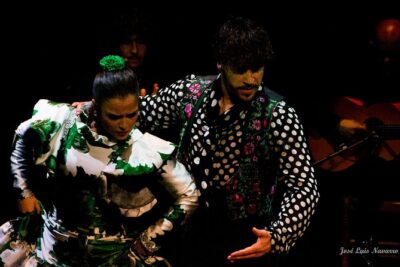 ★ 4.5Flamenco Show Tickets to the Triana Flamenco TheaterFrom $30599 reviews
 ★ 5.0Baraka Triana. Flamenco show with drinkFrom $32497 reviews
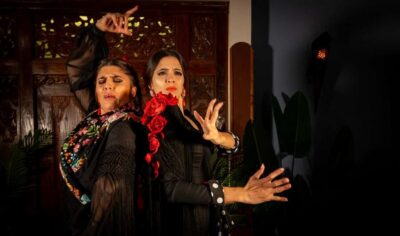 ★ 4.6Flamenco Show at Tablao Almoraima in TrianaFrom $28483 reviews
Continue by place or experience