
REVIEW · SEVILLE BIKE & E-BIKE RIDES
Electric Bike Tour in Seville
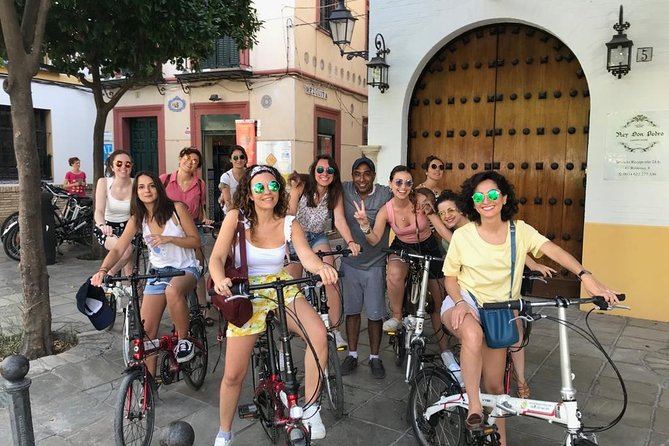
Seville is best seen with wheels. This electric bike tour strings together major sights in about 2.5 to 3 hours, with an easy motor boost that keeps the ride fun, not sweaty.
What I like most is how it combines long park scenery with big-picture landmark stops, and how the guide history talk makes the sites click in your head fast.
One thing to plan for: the bikes can feel a bit large at first, and kids need to fit the bike safely. If you’re bringing younger riders, arrive a little early and make sure bike size is right before you roll.
Key Highlights at a Glance
- Electric assist that helps without taking over so you still pedal through parks and along the river
- Parque de María Luisa and Plaza de España with Moorish-paradise vibes and photo-friendly views
- Torre del Oro, Triana Bridge, and Guadalquivir river crossings for a different Seville angle
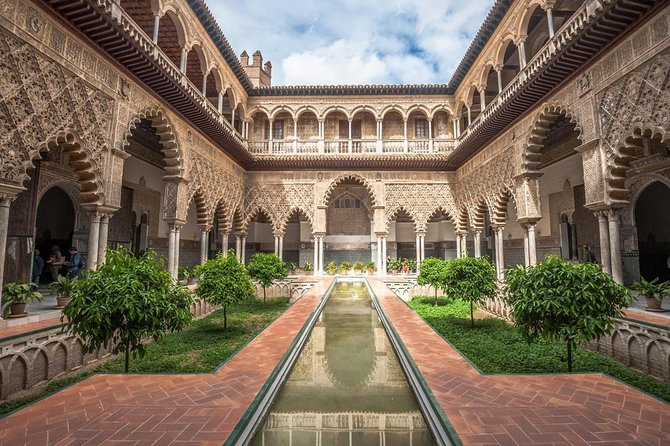
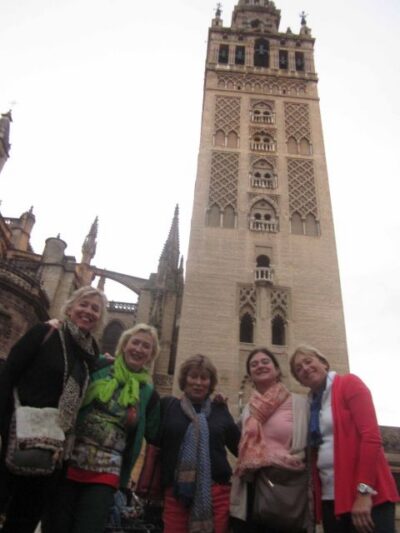
- Giralda plus Seville Cathedral and the Alcázar area to connect the city’s Moorish and Catholic layers
- Guides who keep safety and flow tight, with clear bike directions and smart pacing
- Private-group feel with your own pace, since the tour is only for your group
Why Seville Works So Well on an Electric Bike
Seville is gorgeous, but it’s also spread out. Doing the big sights by foot means lots of stop-start walking, and then you miss time to enjoy the places you came for. This tour trades that for a steady, scenic ride.
The electric assist matters more than you might think. Even though Seville isn’t all steep hills, you still deal with heat, distance between neighborhoods, and the stoplights and bridges that break up your momentum. The motor boost helps you keep going so the tour feels like sightseeing, not endurance training.
Also, the route is built around variety. You get palace-park atmosphere first, then the river, then the Cathedral and Royal Alcázar area. That gives you a well-rounded first look at Seville’s personality, not just one neighborhood’s highlights.
You can also read our reviews of more tours and experiences in Seville.



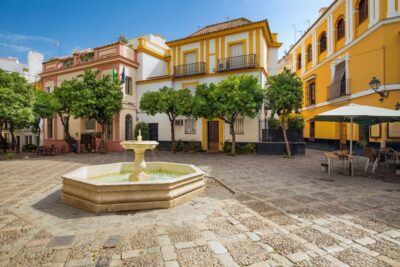
Getting Oriented at Plaza de Santa Cruz
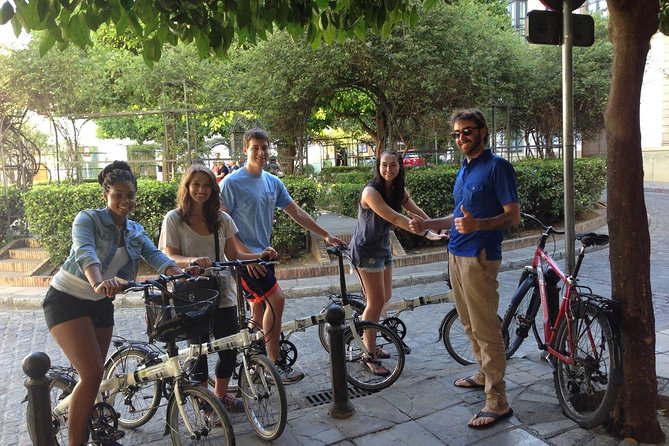
Your ride starts at Plaza de Santa Cruz, right in Seville’s historic core. It’s a good launch point because you’re already close to the Cathedral and Alcázar zone, so you avoid long transfers. You also end back at the same spot, which keeps the day simple.
Before you set off, you’ll get the basics: a helmet, use of the bike, and bottled water. You’ll also have a mobile ticket, so you’re not hunting for paper. And since this is an English-offered tour, you’ll get the explanations in that language.
One small practical note: wear comfortable shoes and expect at least some time with your helmet on. With bikes, comfort comes from small choices, not big ones.
Parque de María Luisa: Fountains, Gardens, and Doves Everywhere
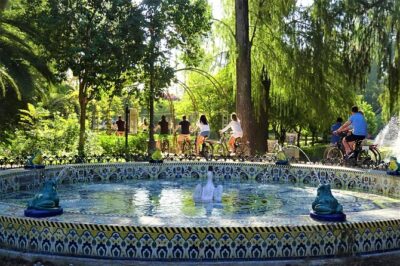
Stop one is Parque de María Luisa, a park with serious wow-factor even before you start biking. This wasn’t always a public green space. The grounds were formerly the gardens of the Palace of San Telmo, and they were donated to the city in 1893 by Infanta Luisa Fernanda, Duchess of Montpensier.
Then architect Aníbal González kicked off construction in 1914 for the Ibero-American Exposition of 1929. The park center is Parque de María Luisa, designed in a Moorish-paradisical style with a half mile of tiled fountains and plenty of pavilions, walls, ponds, benches, and exhedras.
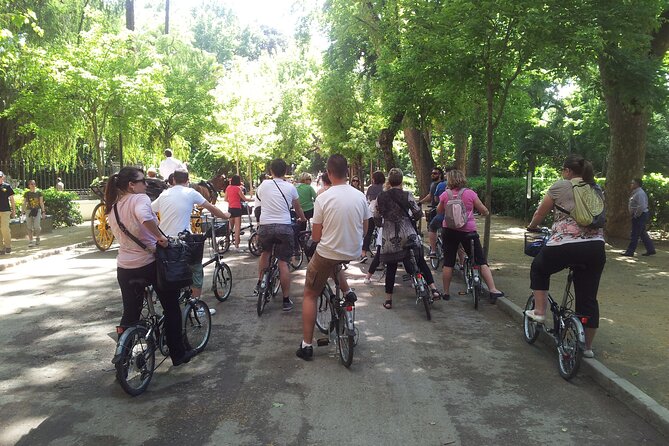
What you’ll feel on the bike is the park’s rhythm. It’s not one single viewpoint, it’s a sequence of shady lanes and garden corners. You’ll pass palms, orange trees, Mediterranean pines, and flower beds that feel hidden, because vines and trellises make little pockets of space.
Here’s the detail I’d actually watch for: this park works like a botanical garden, with educational panels along the way. You’ll also see a lot of birds, and the park is known for its large population of doves. If you like wildlife moments, this is where you’ll catch them between landmark stops.
Practical tip: slow down for photos near fountains and pavilion areas. On a bike, it’s easy to glide past something stunning because you’re focused on steering. The guide’s pace keeps it moving, but you can still grab a few good shots if you signal and pause briefly.
Plaza de España: Regionalist Architecture You Can See Up Close
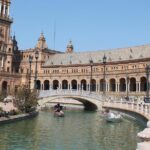
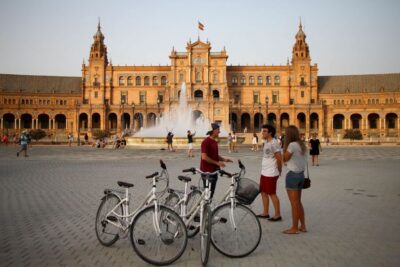
After the gardens, you’ll roll into Plaza de España, located inside Parque de María Luisa. This is one of those Seville sights that feels instantly familiar in photos, because it’s so iconic, but being there in person is different. The scale hits you.
The plaza was built in 1928 for the Ibero-American Exposition of 1929. Architecturally, it’s a landmark example of Regionalism architecture, blending Baroque Revival, Renaissance Revival, and Moorish Revival (Neo-Mudéjar) styles.
On an electric bike, you get a sweet advantage. You can slow down without feeling like you’re trapped behind a crowd, and you can reposition for pictures more easily than you could on foot. You also get a sense of how the plaza fits into the larger park setting, not just how it looks from one angle.
Practical note: plan for light traffic energy. People are drawn to Plaza de España, and even if you can move through it smoothly, you should expect pedestrians and keep your speed controlled.
Torre del Oro: The Golden Tower From the River Side
Next comes Torre del Oro, a dodecagonal military watchtower built to control access to Seville via the Guadalquivir River. It dates to the first third of the 13th century and was erected by the Almohad Caliphate.
You get a few fascinating historical layers here. The tower served as a prison during the Middle Ages, and its name comes from that golden shine it projected on the river. The clue is in the building materials, which included a mixture of mortar, lime, and pressed hay.
What makes this stop worth your time is the combo of structure and setting. This is not an isolated monument. It belongs to the river story of Seville, the kind of perspective you only get when you’re riding along and can look toward the water.
On a bike, you also tend to spot things you’d miss on a quick bus ride. If your guide points out details like the tower’s shape and why it was built where it was, you’ll leave with a clearer mental map of where power lived in the city.

Triana Bridge (Puente de Isabel II): Cross Toward the Real Seville Feel
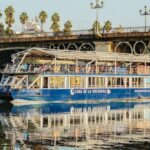
You’ll then head to Puente de Isabel II, also known as the Triana Bridge. This is a metal arch bridge connecting Triana to the city center, crossing the Canal de Alfonso XIII. That canal is one reason Triana feels like an almost-island.
The bridge was completed in 1852, and it replaced an earlier floating bridge made of boats, a pontoon bridge. The story goes back even further, because the Moors built the original bridge structure in the 12th century, and repairs helped it last for centuries.
This is a great moment to notice Seville’s different “moods.” Triana tends to feel less like a museum zone and more like a living neighborhood, and the ride across the canal reinforces that shift. Even if your main goal is sightseeing, crossing here helps you understand how Seville’s geography shapes how people live.
Practical tip: keep a light grip and steady speed on the bridge areas. Metal arch bridges can make you feel slightly exposed. The bike helps, but you still want calm control, especially if it’s windy.
Giralda and Seville Cathedral: Moorish Minaret to Gothic Power
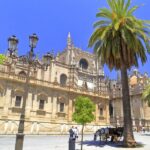
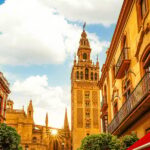
From the river side, you’ll move into the Cathedral zone, and Giralda is where the story starts. The Giralda was originally the minaret for the Great Mosque of Seville during the Almohad dynasty. After the Catholic reconquest, a Renaissance-style top was added.
So you’re looking at one tower that visually ties together two worlds: Moorish Spain and the later Catholic Seville. The tower is 104.1 meters tall, and it’s one of the city’s most important symbols. It’s also a UNESCO World Heritage Site as part of the broader Alcázar, Cathedral, and archive complex.
Then comes Seville Cathedral, a Roman Catholic cathedral that was also UNESCO-registered in 1987. It’s the fourth-largest church in the world and the largest Gothic church. The building covers 11,520 square meters.
A few details that make the stop feel less like a random stop and more like a story:
- It was the site of the baptism of Infant Juan of Aragon in 1478
- The royal chapel holds the remains of Ferdinand III, Alfonso the Wise, and their descendant Peter the Just
- Christopher Columbus and his son Diego are buried here
Even if you do not go deep inside for every chapel moment, the guide’s explanation helps you connect what you’re seeing to why it matters.
If you want one practical takeaway, it’s this: when you’re moving by bike, you have the advantage of seeing how the monuments sit in the city grid. Take a second to look up from street level. You’ll notice the Giralda’s presence in a way that you can’t recreate with a quick glance from a tour bus window.
The Royal Alcázar: Mudéjar Palace Layers in Real Time
The tour’s final major historical draw is the Royal Alcázars of Seville, known as the Alcázar. This palace was built for Christian king Peter of Castile on the site of an earlier Abbadid Muslim fortress that was destroyed after the Christian conquest.
It’s famous for Mudéjar architecture, with design elements that also reflect Gothic, Renaissance, and Romanesque influences from different construction stages. That mix is exactly why the Alcázar feels special. It’s not one style frozen in time. It’s Seville’s shifting identity, written in stone and ornament.
Another detail you can keep in your mind while you ride near it: the upper storeys are still occupied by the royal family when they are in Seville, and it’s administered by Patrimonio Nacional.
Even if you don’t spend long hours inside during a 2.5 to 3 hour ride, the Alcázar stop gives you the anchor. Once you understand it as a layered palace site, you’ll notice Mudéjar details and design echoes everywhere you look afterward in Seville.
How the Electric Bike Assist Feels on the Ground
This tour uses electric help plus pedaling, not a throttle ride. That means you can move at a comfortable speed while still feeling like you’re part of the street.
One thing I’d treat as a small “check before you roll”: show yourself how the bike works. A few riders have suggested doing that upfront, and it makes sense. If you’re new to electric bikes, a quick run-through at the start can save you confusion later.
Also, Seville often feels flatter than you expect. In a couple cases, riders felt the motor was helpful but not strictly necessary. Still, the assist helps in the real travel situations: longer distances between stops, warmer afternoons, and moments when you just want to coast without pushing.
Size matters here. Some riders noted that bikes can be large for shorter riders, especially at the beginning. Kids need correct fit. If your group includes a smaller child, it’s smart to ask about the right bike size before you start.
Your Guide, Like Danny, Juan, Elena, and Veronica, Sets the Tone
This is the biggest reason the tour scores so high. Guides keep it safe and keep it moving, but they also add context that turns landmarks into a coherent story.
You might ride with guides such as Danny, Juan, Elena, Veronica, Alejandro, Ben, Daniel, Medhi, or Tristan. The common thread in the praise is pretty consistent: clear safety and directions, friendly pacing, and history talk that stays understandable.
If you want to get more out of the ride, ask one simple question at the start:
- What should I focus on most in the parks and what should I notice near the Cathedral and Alcázar?
Guides can tailor the emphasis if they know what you care about. You’ll usually get better answers if you’re direct, like you want architecture details, river history, or the quick version that helps you connect neighborhoods.
Weather Reality: All-Weather Riding, So Dress for It
The tour operates in all weather conditions, which is great because Seville’s plans can change fast. You won’t be stuck waiting indoors while everyone else rides.
That said, your clothing choice still matters. In rain, the parks can be slick, and wind on river routes can make things feel colder. Bring a light rain layer and wear shoes you trust on damp pavement.
If the sky is clear, the park sections give you shade and cooling breezes. That’s part of why the itinerary starts with Maria Luisa. You get scenic walking-free sight time before you hit the more open city stretches.
Price and Value: About $48 for a Big Seville Loop
At about $48.06 per person, you’re paying for several things at once:
- a guided route that covers multiple major landmarks
- electric bike and helmet included
- bottled water included
You’re not paying for food, and there’s no hotel pickup and drop-off, so you’ll want to eat before or after. Still, value is strong because you’re saving energy and time. Instead of figuring out how to connect parks, the river, and the Cathedral area, you follow a pre-set route with bike-friendly momentum.
Another small plus: group discounts can make this cheaper if you’re traveling with friends or family. If you’re planning ahead, note that this tour is commonly booked about 26 days in advance, which suggests it fills up, especially in busy seasons.
Who Should Book This E-Bike Tour (and Who Should Skip It)
This tour is a good fit if you:
- want an efficient introduction to Seville’s top monuments
- like guided explanations but still want to enjoy the outdoors
- are comfortable riding a bike at a relaxed pace
- want something that works across ages and skill levels
It may be less ideal if you want long, inside-only time at each major site. This is a sightseeing ride with stops, not an all-day museum ticket marathon. If your priority is deep interior exploration of Seville Cathedral or the Alcázar, you might pair this bike tour with separate timed-entry visits later.
Also consider your group size and rider heights. If you have kids, confirm bike sizing early so everyone rides safely.
Should You Book? My Take on the Best Time to Do It
I’d book this tour if you want to see the most important Seville highlights without building a complicated route yourself. The mix of Parque de María Luisa, Plaza de España, river viewpoints, and the Giralda-Cathedral-Alcázar zone is exactly what makes Seville feel like Seville.
Do it earlier in your trip if possible. You’ll get a fast mental map, and then the rest of your days feel easier. Parks and river areas start to make sense, and the Cathedral and Alcázar stop feeling like separate stops.
If you’re traveling with kids or shorter riders, be extra proactive about bike fit. Otherwise, this is a fun, practical way to cover major ground, learn what you’re looking at, and still have energy left for tapas afterward.
FAQ
How long is the electric bike tour in Seville?
It runs about 2 hours 30 minutes to 3 hours.
What does the tour cost, and what is included?
The price is $48.06 per person. Included are bottled water, a local guide, and use of the bicycle and helmet.
Where does the tour start?
The meeting point is Plaza de Santa Cruz, Pl. de Sta Cruz, Casco Antiguo, 41004 Sevilla, Spain.
Where does the tour end?
It ends back at the meeting point.
Is food or hotel pickup included?
No. Food and drinks are not included, and there is no hotel pickup or drop-off.
What language is the tour offered in?
The tour is offered in English.
Does it run in bad weather?
Yes. It operates in all weather conditions, so dress appropriately.
What is the child rate rule?
The child rate applies only when sharing with 2 paying adults.
Is this a private tour?
Yes. Only your group will participate.
More Tour Reviews in Seville
Not for you? Here's more nearby things to do in Seville we have reviewed


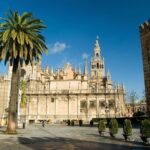
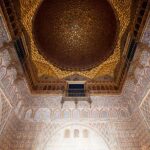

More Seville Bike & E-Bike Rides worth a look.
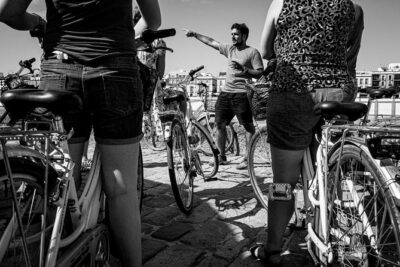 ★ 5.0Seville Highlights Bike Tour (English)From $422,225 reviews
 ★ 4.8Highlights City Bike TourFrom $382,168 reviews
 ★ 4.8Relaxing City Bike Tour with a Tour GuideFrom $351,588 reviews
 ★ 4.9City Sightseeing and Local Culture Bike TourFrom $311,120 reviews
 ★ 5.0Seville Electric Bike Tour – Small GroupFrom $58841 reviews
 ★ 5.0Sunset Guided Bike Tour in SevilleFrom $36438 reviews
 ★ 4.9Guided Sunset Bike TourFrom $41332 reviews
 ★ 5.03-hour Guided Bike Tour along the Highlights of SevilleFrom $39315 reviews
Continue by place or experience