
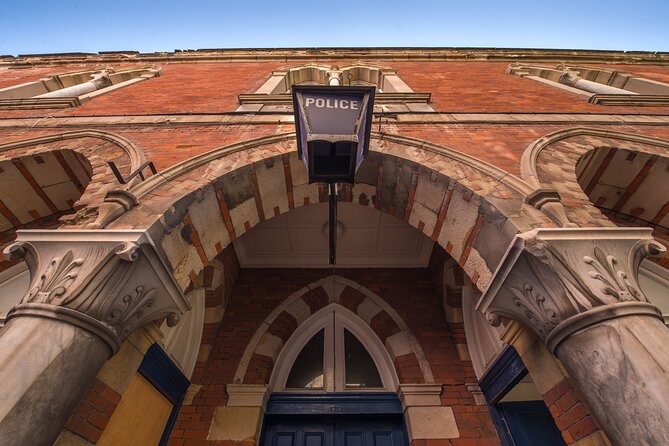
REVIEW · GIBRALTAR TOURS FROM SEVILLE
Gibraltar Walking Tour
Gibraltar shrinks into a single walk. In about 1 hour 45 minutes, this Gibraltar walking tour strings together the places you see on postcards with the stories that explain why they matter. You meet in Casement Square area and head down Main Street, with a guide keeping you pointed in the right direction.
I love how the route turns ordinary streets into a timeline. You get street-level context, from British defenses to the way Irish Town formed around military housing. I also like that you can pause for an interior look at the Cathedral of St Mary the Crowned, not just outside views.
One consideration: it is still a walking route with steady stops along the way, so you’ll want comfortable shoes. And since the experience is weather-dependent, plan for changes if conditions aren’t great.
Quick reasons this Gibraltar walking tour works
- 1 hour 45 minutes of focused stops that help you get your bearings fast
- Grand Casemates Square and its 1817 British-built casemates and drawbridge backstory
- Landport Tunnel and Landport Gate history, including the tunnel once guarded by twenty guns
- Irish Town’s naming and siege scars, from convents to barracks after 1704
- Cathedral of St Mary the Crowned interior time, where you can admire inside the church
- Trafalgar Cemetery links Gibraltar to 1805, with mention of the battle distance from the Rock
Why this Gibraltar historic-center walk is a smart first plan
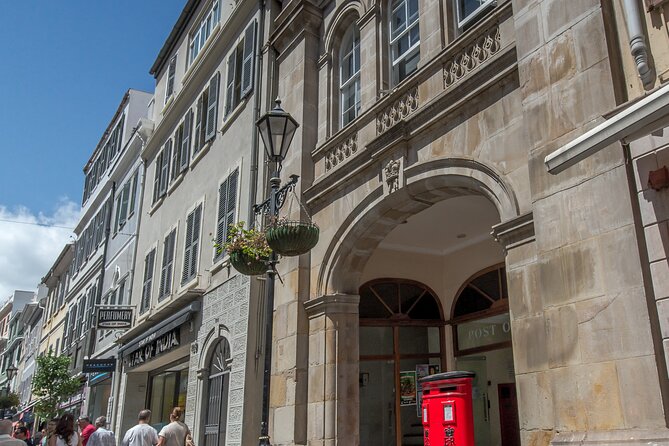
If you are short on time, this kind of tour is a practical move. The historic center of Gibraltar can feel like a mix of British, Spanish, and local influences layered on top of each other. The walk helps you connect what you see with what happened, so you do not just collect photos, you understand the setting.
The pacing is built for a “see a lot without rushing” feel. The whole experience runs about 1 hour 45 minutes, with time carved out for multiple photo-friendly pauses. That matters in Gibraltar because you can plan your day around one reliable time block, then enjoy the rest of your trip at your own speed.
You can also read our reviews of more tours and experiences in Gibraltar.



Meeting point and how the guide run the show
You start at 2 Main St, Gibraltar GX11 1AA, and the tour begins at 10:00 am. The finish is at Trafalgar Cemetery (GX11 1AA area), so you end in the part of town that ties back to the city’s defensive geography.
This is a small-group-style walk, with a maximum of 40 travelers. That is big enough for a lively group, but usually small enough that your guide can keep control of the pace and answer questions. I especially like the kind of guiding that mixes practical wayfinding with stories. One theme that comes through in feedback is that the guide can keep it personal and adjust pacing, with some guides, including one named Tessa, earning praise for moving things along while still filling in context.
Also, you get a mobile ticket, which is easy to handle. It is one less thing to worry about when you are trying to concentrate on streets and landmarks.
Grand Casemates Square: where the timeline starts
The tour kicks off in the Casemates area, with a focus on Grand Casemates Square. This is the larger of the two main city-center squares, and its name traces to Grand Casemates, British-built casemate and bombproof barracks completed in 1817.
The guide explains the square from Moorish times to the present, which helps you understand that the Rock’s strategic importance goes way beyond one era. You also get a specific detail that makes the place feel real: an 18th century drawbridge that was the only land entrance for pedestrians in that period. It is the sort of fact that changes how you look at a square. Instead of thinking it is just a meeting spot, you picture it as controlled access.
If you like history with clear visuals, this opening stop is strong. You see how “defense” shaped daily life, then you carry that lens forward down the route.
Landport Tunnel and the old gate still standing
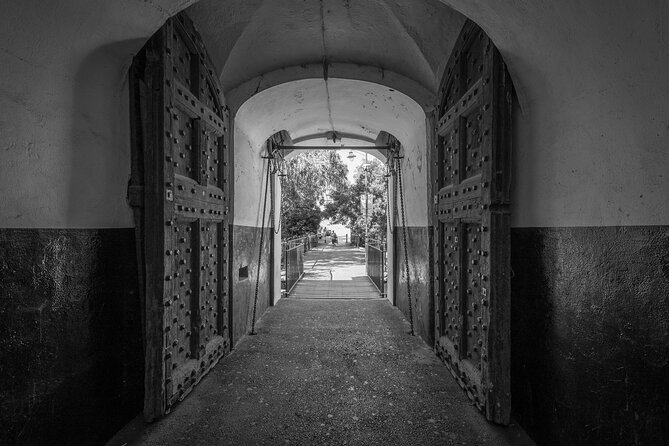
Next you move to Landport Tunnel, a key part of Gibraltar’s fortification story. Historically, Landport Gate was the only entrance into Gibraltar’s fortifications. In the tunnel, you get the striking detail that it was covered by twenty guns. That is not trivia for the sake of it. It explains why the approach to the fort was dangerous for attackers and safer for the soldiers inside.
You also get that reassuring, tangible moment: the original gate is still standing. When you can point to something that survived, the stories stick better.
Practical note: even when admission is free for the stops, you should still expect a short walk between points and a bit of time spent listening at each place. Wear shoes that handle uneven pavement and curb cuts.
Irish Town: a street that got renamed for who lived there
Then you hit Irish Town, one of those places where the name alone gives you a clue, if you know how to read it. The street was once called Calle de Santa Ana, and it had three convents. After the British captured Gibraltar in 1704, the convent buildings were converted into military barracks.
At that point, the street began to be known as Irish Town because it formed part of the barrack compound where lower military Irish ranks were housed. It is a reminder that street names often record the social reality of a given period, even when the buildings change.
One more layer: during the Great Siege ending in 1783, when Spain tried to recapture Gibraltar, most of the old town, including the buildings along Irish Town, was razed to the ground. Hearing that while standing in the street makes you understand why the built environment feels like a patchwork of eras rather than a single “old town” from one moment in time.
This is a stop I would recommend especially for first-timers. It gives you a reason behind the architecture mix you will see throughout the historic center.





St Mary the Crowned Cathedral: what you gain by seeing inside
At St Mary the Crowned Cathedral, you get a short window to admire the inside of the church. The tour includes time here, and the practical value is that the guide can point out what to notice, so you do not miss the most meaningful bits while you are trying to take photos.
Even in a short tour, “inside” access is a big deal. Seeing exteriors is nice, but interiors are where you learn what a community valued and how it used sacred space. If you are someone who likes architecture details, this stop turns the walk from street history into something you can experience on the spot.
Main Street: the practical geography of Gibraltar’s civic life
Then you walk along Main Street. This section is about reading the city as a map of institutions. You pass the Gibraltar law courts, and your guide explains the history behind what you are looking at.
From there you move toward the Anglican cathedral, with time to admire the building. Gibraltar’s mix of religious buildings makes more sense when you are thinking in terms of who ruled, who built, and what the city needed at different times. This is one of the stretches where the tour’s guided storytelling improves your self-guided wandering afterward.
You might also catch other landmark-style buildings as you go, since the tour is designed around the historic center’s key points. If you are planning photos, this is usually where you’ll find the most classic street-and-facade shots.
The Governor’s Residence and Convent: the pause that adds atmosphere
After Main Street, you head north toward the British Governor’s Residence and the Convent. The tour pauses here while the guide talks about the building and its haunting history.
Even if you do not remember every detail afterward, the pause matters. It gives your brain a moment to process what “power in Gibraltar” looked like in real buildings, not just in names on plaques. The Governor’s Residence area connects the civic and administrative side of the Rock to the defense-driven story you heard at Casemates and Landport.
If you like guided interpretation, this stop is the one that often feels less like “another site” and more like a mood shift.
Trafalgar Cemetery: where the distance to battle becomes real
Finally you head down toward Southport gates, leaving the fortifications’ core area, and you reach Trafalgar Cemetery. The cemetery sits just south of the city walls, and it was in a defensive ditch during Spanish rule. That geography is a big part of why it feels so “in the walls” even after the fortifications stopped serving their original function.
The cemetery is named after the Battle of Trafalgar in 1805. The guide also ties it back to the battle’s connection to Gibraltar by mentioning that Trafalgar was won about 72 nautical miles from Gibraltar. Hearing that while standing near the cemetery helps you understand the Rock as more than a local story. Gibraltar was tied to big naval and empire-wide events, and the city keeps that memory in its physical layout.
This is also where the tour ends, so you get closure. You start with fortification logic, you move through military housing and civic buildings, and you end in a place that connects Gibraltar to a major historical moment.
Price and what you actually get for $31.48
At $31.48 per person, this is not a budget “throwaway” tour. For the price, you get a local guide, a structured route through multiple historic points, and at least one interior moment at the Cathedral of St Mary the Crowned.
The real value is time and interpretation. If you try to DIY this without context, you might see impressive buildings but miss why they are there, how they relate to sieges and rule changes, and why names like Irish Town exist. Paying for a guide compresses that learning into a tight time window. At about 1 hour 45 minutes, it is easy to fit into a packed day without feeling like you lost half your sightseeing.
Group size also helps the value. With a max of 40, it is unlikely you will feel completely lost, and you still get guided pacing across the stops.
Best for whom, and who might want a different plan
This walk is ideal if you are:
- visiting Gibraltar for the first time and want to get your bearings fast
- short on time but want more than surface-level sightseeing
- interested in how defense, religion, and civic life shaped the town
You might want a different option if you:
- hate walking and prefer rides between major stops
- want long time inside museums or multiple attractions in depth
- are hoping for a food-focused route, this is primarily about historic sites and stories
Should you book this Gibraltar walking tour?
Yes, I’d book it if your goal is to understand Gibraltar’s center without spending hours piecing it together yourself. The route is tight, the guide context is the point, and you hit several locations that explain how the Rock’s story evolved from Moorish-era layers to British defense and major naval history.
If you are in doubt, choose it as your “orientation tour.” Then spend the rest of your trip picking a couple of places to revisit on your own at a slower pace. That combo usually gives you the best mix of facts, photos, and freedom.
FAQ
Where does the walking tour start?
It starts at 2 Main St, Gibraltar GX11 1AA, Gibraltar.
Where does the walking tour end?
It ends at Trafalgar Cemetery (GX11 1AA area).
What time does the tour begin?
The start time is 10:00 am.
How long is the tour?
The tour lasts about 1 hour 45 minutes.
What is included in the price?
The tour includes a local guide.
What if weather is bad?
This experience requires good weather. If it is canceled due to poor weather, you’ll be offered a different date or a full refund.
More Tour Reviews in Gibraltar
Not for you? Here's more nearby things to do in Gibraltar we have reviewed











More Gibraltar Tours from Seville worth a look.
 ★ 5.0Dolphin Watching Excursion in GibraltarFrom $38619 reviews
 ★ 4.5Historic Gibraltar Rock and St Michael’s Cave Tour from SevilleFrom $153590 reviews
 ★ 4.0Gibraltar Rock Guided TourFrom $68538 reviews
 ★ 5.0Dolphin Watching in Gibraltar Dolphin Safari V.I.PFrom $34428 reviews
 ★ 5.0EBike-Gibraltar: Rock To The Top TourFrom $133319 reviews
 ★ 4.5Dolphin Watching in Gibraltar & Fast Track Priority Cable CarFrom $53262 reviews
 ★ 5.0Upper Rock Walking TourFrom $55237 reviews
 ★ 5.0Gibraltar Inside Out Intermediate Tour 3.30hrsFrom $581180 reviews
Continue by place or experience