

REVIEW · SEVILLE TOURS
Guided visit to the Archivo de Indias
Seville has a paper trail that changed the world. In this guided visit to the Archivo General de Indias, you learn how one building became the key place to understand Seville’s link with the Americas. You start outside with views of the Cathedral and the Alcázar, then go inside to the two floors where precious documents are protected.
What I really liked is the way the guide connects big ideas to real spaces. You also get a standout storytelling moment, including the guide’s entertaining account of a trunk with 16 locks, the kind of detail that makes the history stick. One thing to consider is that it is best for adults and older teens, since it is not recommended for children under 12, and it is a guided experience that moves at a steady pace.
The Archivo de Indias is a UNESCO site for a reason. The “why it matters” part, and how the building came to be, are the heart of the tour. If you enjoy history but also like practical explanations, this is a strong use of your time in Seville.
Key highlights you should care about
- Start with the façade and its neighbors: You walk around outside to connect the building to the Cathedral and the Alcázar.
- A true World Heritage space: It was declared a UNESCO World Heritage Site in 1987, so you’re standing in an important cultural zone.
- A building with a surprising origin: It was not conceived as an archive at first, and its birth connects to a conflict between the Cathedral and 16th-century merchants.
- Two floors of guided interpretation: You see the most important aspects on both levels, not just a quick hallway stop.
- Live heritage expert guidance: The guide, often Rubén, keeps the story clear, organized, and fun.
- Small-group feel: The tour caps at 25 travelers, which helps the guide keep control of the pace.
Why the Archivo de Indias is more than a museum
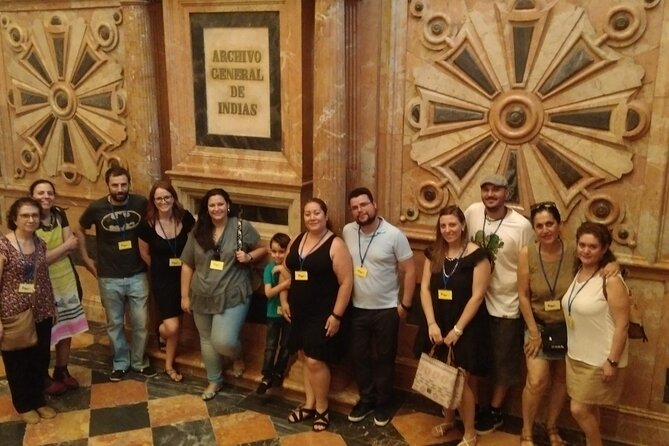
The Archivo de Indias is one of those places where the building itself is part of the story. Seville is full of gorgeous monuments, but this one adds a different kind of power. It’s the archive that ties the city to the Americas, and it does that through documents that are guarded within its walls.
What makes the tour especially worthwhile is the emphasis on how the site works as a historical tool. You do not just look at walls and read a few plaques. You learn what the space became over time, including what it was used for before it became the General Archive of the Indies. That matters because an archive is not automatically born as an archive. This one has a past that shaped its role.
The guided format is also a big plus. You’ll hear a heritage expert explain why this site connects so tightly to Seville’s story, including that 16th-century tension between the Cathedral and the merchants who filled the city. That origin detail gives you a new lens for understanding what you see next.
You’ll leave with a better sense of cause and effect. How decisions made by religious and commercial powers can echo across oceans. And how a place meant for records ends up carrying cultural memory for centuries.
You can also read our reviews of more tours and experiences in Seville.


Outside first: the façade walk that sets your context
The tour begins at the main façade on Av. de la Constitución. Before you go in, you take about 25 minutes to walk around briefly and get your bearings. This outside segment is not filler. It is how you learn to read the building in its urban setting.
You’re surrounded by major landmarks, and the guide uses that geography on purpose. You’ll connect the Archivo to the Cathedral of Seville and the Alcázar of Seville, two neighbors that help explain why this whole area matters. When you understand those relationships, the time inside feels less random. You start noticing architectural and spatial cues as part of a larger story.
This is also where you get your “mental map” of the visit. If you tend to feel lost in historic centers, this step helps you feel oriented. The short perimeter walk gives you a framework before the tour moves into the more complex interior sections.
Practical note: since you spend time outside first, dress for walking and plan for weather changes. The experience requires good weather, so you’ll want to keep your day flexible if forecasts are shaky.
Entering the General Archive: what changes on the inside
After the façade walk, you move into the two floors of the Archivo de Indias. The total tour time is about 1 hour 45 minutes, so you get a focused visit. It is long enough to feel meaningful, but short enough that you do not feel dragged through rooms you do not care about.
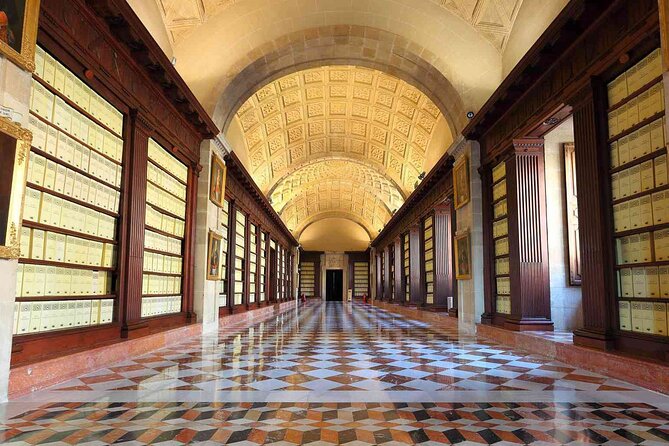
Inside, the big win is the guided pacing. You are shown the most important aspects of this World Heritage space, and you’re given context for why those parts matter. A guided visit works especially well in an archive setting, because the value is in interpretation. Without explanation, it can feel like a quiet building that happens to contain important documents. With the guide, it becomes a working story of governance, conflict, and memory.
You’ll also learn how the space evolved before it officially became the General Archive of the Indies. That before-and-after theme is crucial. It explains why the building exists in its current form and why it became necessary to gather records in the way that history demanded.
Then there’s the document side of the experience. The tour includes seeing documents of incalculable value that are guarded inside. You don’t need to be an expert to appreciate this. The guide’s framing helps you understand that these documents are not just artifacts. They are the evidence base for how Seville connected to the Americas.
If you like history explained with clear structure, you should enjoy the indoor part. It flows from origin, to evolution, to what the archive protects now.
The guide factor: Rubén’s storytelling makes it memorable
A lot of tours claim they have great guides. This one has repeatable evidence from how the guidance is described. The guide often named Rubén stands out for being ameno and organized, with lots of knowledge delivered in a way that does not overwhelm.
What I appreciate most is the balance of humor and detail. In one of the moments you’ll hear about, the guide tells the story of a trunk with 16 locks. It sounds like a small detail, but it works because it makes the idea of guarded information concrete. You understand why locks and rules mattered, and you can almost feel the tension of protecting records.
Rubén also links past and present with rigor, not just jokes. The explanation is said to be very well documented, and you can feel that in how the tour stays grounded. Even when the story turns playful, it does not wander. It stays focused on the building and the reasons behind it.
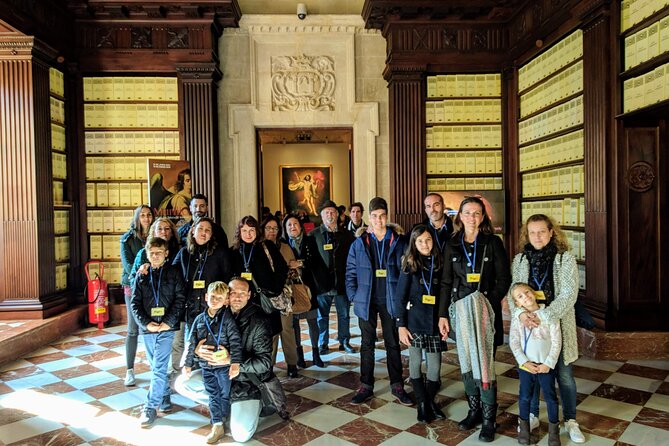
Group size is capped at 25 travelers, and that matters for the guide too. You’re not stuck in a cattle line. You can still hear the guide and keep up with the flow of the explanation.
If you like tours where the guide is the engine, this is the type to book. If you prefer silent self-guided museum time, you might find the narration a bit too structured. But for most people, it’s exactly the right mix.
How much it costs, and why the value makes sense
The price is $70 for a guided visit of about 1 hour 45 minutes, with a mobile ticket. Admission is included, and the archive guided tour is included.
At first glance, $70 can feel steep if you compare it to free walking tours or short museum entries. But here’s how I think about value. You are paying for a heritage expert’s interpretation in a place that is not designed to be understood from signage alone. Archives and protected document spaces need context. This tour gives that context while taking you through the building in a controlled, efficient way.
You’re also not paying for a vague “see the building” experience. The tour has a clear structure: outside façade orientation, then guided time on both floors with an explanation of origins, earlier uses, and the relationship with the Cathedral and the merchants in the 16th century.
If you only have one shot in Seville to learn the deeper connections, the guided format helps you get that depth without spending hours researching on your own. It is a smart use of limited time.





Itinerary walk-through: what to expect at each phase
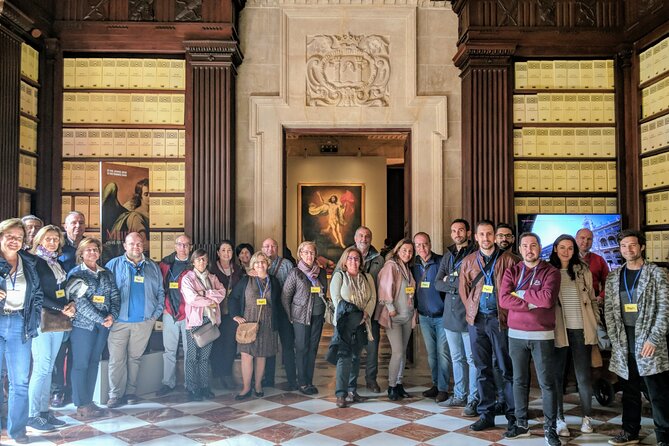
The tour has two main phases, and each one serves a different purpose.
Stop 1: the façade and the quick surround walk (about 25 minutes).
You start at the main façade on Av. de la Constitución. Before entering, you take a brief walk around to understand the historical relationship with the Monuments nearby, especially the Cathedral and the Alcázar. This is the time to ask yourself what you want from the visit. Do you want political context, urban context, or the story of how record-keeping evolved? The guide’s framing helps you get the answer fast.
Stop 2: two floors inside, with guided focus (about 1 hour 20 minutes).
Next you go into the archive and cover the most important aspects across two floors. You continue the story of what makes the building special, including its unusual birth and conflict-driven origin, and what the space was used for before becoming the General Archive of the Indies. You also see documents that are protected inside the facility.
A practical way to make this work for you: listen for the “why” behind each topic. Why did the Cathedral and merchants matter here? Why did the site become an archive? Why do rules and protection matter when the documents are precious? When you follow those threads, the building starts to feel like a single coherent story, not disconnected rooms.
Who should book, and who should skip
This is a good match for people who like guided interpretation and who want more than a casual monument photo stop. If you care about the link between Seville and the Americas, you’ll find this tour directly relevant. The theme is built into the building’s purpose and into the guide’s explanation of the archive’s role.
It is also ideal if you enjoy history told with structure and personality. The guidance style described for Rubén suggests a pace that is entertaining but still well grounded. The humorous trunk story is a good sign that the guide knows how to keep attention without turning the tour into a comedy act.
Who might not love it? If you are traveling with kids under 12, it is not recommended. Also, if you prefer completely self-paced visits with no narration, you might find the guided format less appealing.
If you like small-group tours, the cap of 25 travelers is another reason to book. It tends to support a clearer experience, especially in interior spaces where sound carries.
Practical tips to make the visit smoother
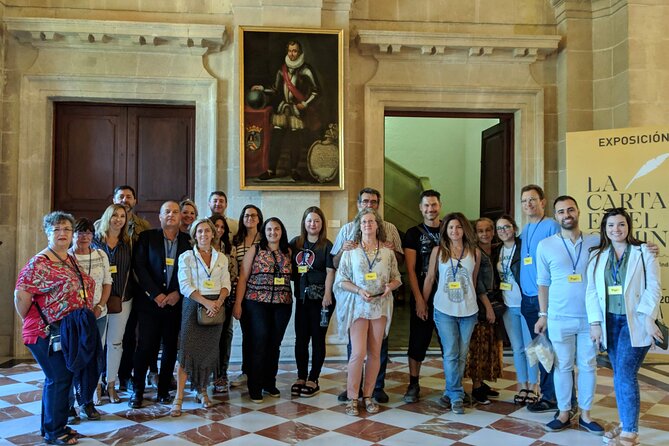
A few small choices can make a big difference in a 1 hour 45 minutes experience.
Plan for good weather.
The experience requires good weather, so check forecasts. If conditions are poor, you may be offered a different date or a full refund.
Wear walking-friendly shoes.
You have an outside portion around the façade and then time indoors on two floors. Even if it is not a long trek, you’ll be on your feet.
Bring a question mindset.
When the guide mentions the origin of the building and the conflict between the Cathedral and merchants, you can usually follow up with questions. Heritage experts often enjoy clarifying how records shaped power, trade, and administration.
Use the two-floor structure to your advantage.
If you take a moment at the start to decide what you want most, the indoor flow becomes easier to follow. You’ll see the key aspects in a logical sequence rather than feeling like you’re scanning rooms.
Should you book the Archivo de Indias guided tour?
If you want a meaningful, organized way to understand why this UNESCO site matters, I’d book it. The strengths are clear: you get a guided interpretation in a protected archive space, a thoughtful outside orientation connecting the building to the Cathedral and the Alcázar, and a guide style that stays entertaining while staying on track.
If you’re mainly in Seville for architecture photos and prefer total freedom, you might choose a different type of visit. But if you want the story to click, especially the idea that the building’s birth came from a 16th-century conflict and not from an archive plan from day one, this guided tour is one of the best ways to get that context fast.
FAQ
FAQ
How long is the guided visit?
The experience runs for about 1 hour 45 minutes. The visit includes an outside orientation and then guided time inside the archive across two floors.
Is the admission ticket included in the $70 price?
Yes. Admission to the attraction and the archive guided tour are included in the price.
Do I need a printed ticket?
No. The tour uses a mobile ticket.
Where do we meet, and how does the tour end?
You start at Archivo de Indias on Av. de la Constitución, s/n, Casco Antiguo, 41004 Sevilla, Spain. The activity ends back at the meeting point.
Is it suitable for children?
It is not recommended for children under 12. Most other travelers can participate.
How big is the group?
The tour has a maximum of 25 travelers, which helps keep the experience manageable.
What if the weather is bad or I need to cancel?
The experience requires good weather. If it is canceled due to poor weather, you’ll be offered a different date or a full refund. You also can cancel for a full refund if you cancel at least 24 hours in advance.
More Tour Reviews in Seville
Not for you? Here's more nearby things to do in Seville we have reviewed










More Seville Tours worth a look.
 ★ 4.6Royal Alcázar Entry TicketFrom $2328,378 reviews
 ★ 4.5Cathedral and La Giralda Entry TicketFrom $2024,592 reviews
 ★ 4.7Live Flamenco Dancing Show Ticket at the TheaterFrom $2716,396 reviews
 ★ 4.21-Hour Guadalquivir River Sightseeing Eco CruiseFrom $1910,281 reviews
 ★ 4.7Cathedral, Giralda, and Royal Alcázar Guided TourFrom $699,165 reviews
 ★ 4.6Setas de Sevilla Entry TicketFrom $188,901 reviews
 ★ 4.6Cathedral, Giralda & Alcazar Entry With Guided TourFrom $658,560 reviews
 ★ 4.8Priority Access Cathedral, Giralda & Alcázar TourFrom $647,563 reviews