
REVIEW · SEVILLE TOURS
Private 2-Hour City Tour of Seville
A short walk can still feel like Seville in miniature. This private tour strings together the city’s biggest landmarks with smart context, so you know what you are looking at as you go.
I love the art history framing. It turns famous stops like the Giralda and Seville Cathedral into clear stories you can remember. I also like the ending payoff at Plaza de España, which is the perfect visual exhale after a concentrated morning or afternoon of monuments.
One thing to consider: several key sights on the route are marked as not included, so you may need your own entry decisions for places like the Giralda, Cathedral, Alcázar, and the Archivo General de Indias.
Key highlights before you step outside
- Private group format means you get a focused walk instead of weaving through crowds.
- A structured route links Plaza Nueva to Plaza de España, so you get your bearings fast.
- Giral da, Cathedral, and Alcázar context helps you understand what you are seeing on first visit.
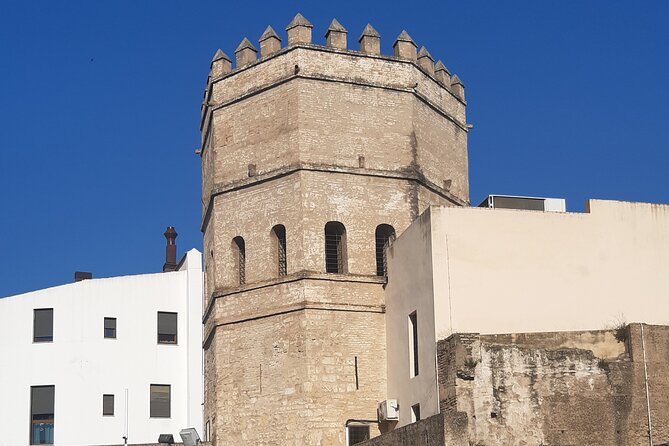
- River defenses with Torre de la Plata and Torre del Oro add variety beyond the usual headline sites.
- University-of-Seville stop at Real Fábrica de Tabacos gives you Seville’s cultural side, not just its medieval side.
- Finish at Plaza de España with easy follow-on options in María Luisa Park.
Getting oriented fast, from Plaza Nueva to the Plaza de España finish
Seville is one of those cities where you can wander for hours and still not connect the dots. This tour is built to do that for you, without wasting time. You start in the old center at Plaza Nueva, then work your way toward Seville’s big showpiece square.
Because the format is private, your guide can pace the walk to your group. That matters in Seville, where the streets are compact and the monuments can be intense if you rush through them.
The route also gives you an “arc” you can feel. Early stops focus on civic power and religious giants. Mid-route turns toward the river, defenses, and maritime trade. Then you end with the flashy, celebratory geometry of Plaza de España.
You can also read our reviews of more tours and experiences in Seville.


Plaza Nueva and Ayuntamiento de Sevilla: the story starts with civic power
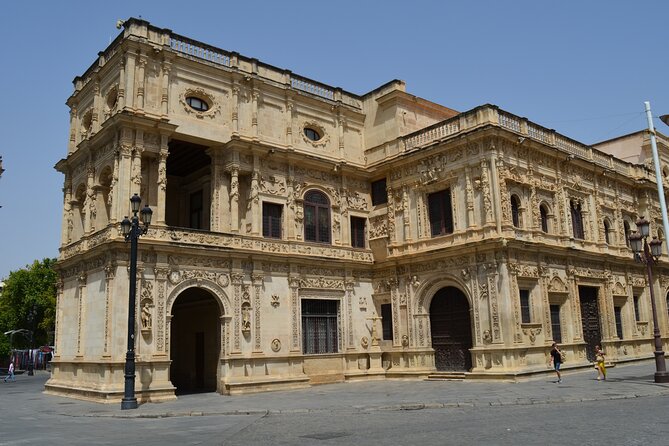
You meet at Ayuntamiento de Sevilla in Plaza Nueva, right by the sculpture of King Fernando III the Saint. That location is not random. Plaza Nueva sits in the Casco Antiguo, and the guide uses it to explain how Seville took shape.
The Ayuntamiento stop is short, but it is a useful warm-up. You get a sense of why this city looks the way it does, before you head into religious and royal landmarks that can otherwise feel like separate worlds.
Admission is marked as free here, so you can keep your time simple. Just be ready to stand and listen for a few minutes in the plaza before the walking starts in earnest.
Giralda stop: what the bell tower teaches about Muslim and Christian Seville
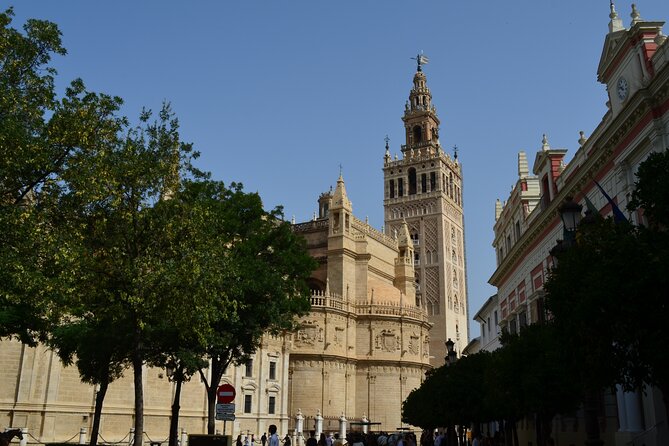
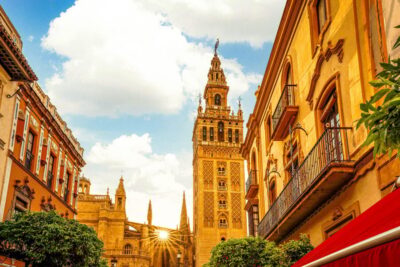
Next up is the Torre Giralda, Seville’s silhouette. This is one of the places where first-timers often notice the big shapes, but miss what they mean.
Here, the guide explains its Muslim and Christian history and the long life of the monument. The point of that context is practical: when you look up, you start recognizing layers instead of only seeing stone.
The stop is brief, around 10 minutes, and admission is not included for this tower. That means you should decide whether you want to add separate time later for viewing from higher up, if that is your priority.
Seville Cathedral: useful tips before you choose how to visit
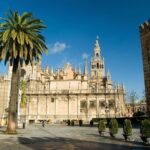
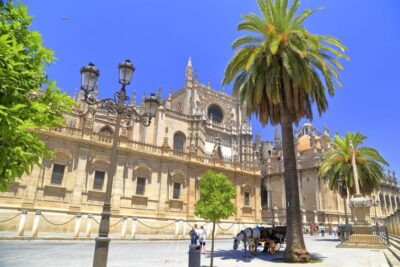
You then reach Catedral de Sevilla. It is one of those sites that is visually overwhelming at first glance, so the best way to enjoy it is with a sense of what to look for.
This stop is designed like a preview. You learn curious facts and you get tips on how to visit the cathedral, rather than doing a long inside tour during the walk.
Admission is not included, so you’ll likely be making choices based on your timing and interests. If you are the type who likes to read slowly and take photos, you might appreciate adding separate entry time. If you mostly want to absorb the exterior and key interior highlights, the short guided stop can be enough.
Real Alcázar: the “keys” idea works best for first-timers
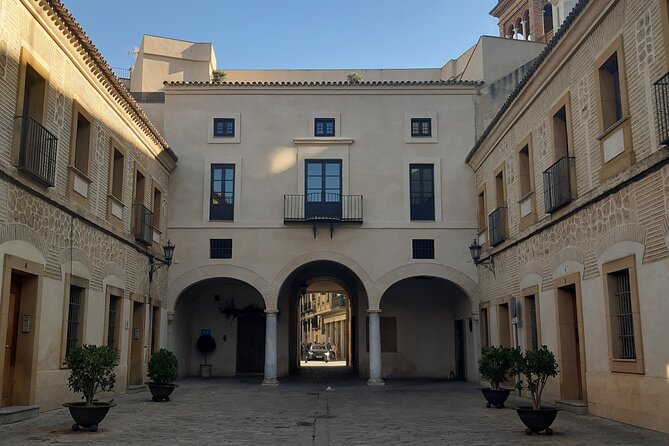
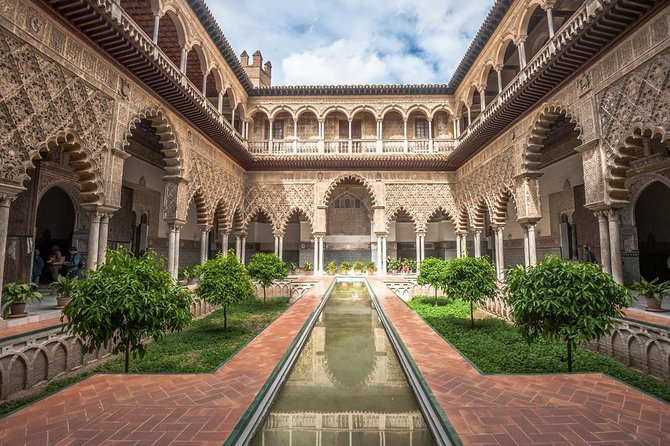
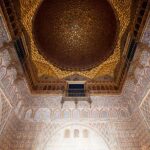
After the cathedral, the route moves to Real Alcázar de Sevilla, one of the essentials in the city. The guide frames it as long-history territory and gives you what they call the keys for how to visit.
That wording is perfect because Alcázar can be confusing without a plan. You might see rooms, gardens, and ornamentation and wonder where to spend your energy. The guide’s job here is to help you prioritize, so your eventual visit feels organized.
Admission is not included for this stop. So again, you have to decide whether you will later purchase your own entry and go deeper. Even if you do not, the guided overview helps you understand why people get emotional about this place.



Archivo General de Indias: why the documents matter
Next is Archivo General de Indias. This is not as famous to casual visitors as the cathedral or Alcázar, and that is exactly why it is valuable.
The guide explains how important this archive is because of the documentary treasure it keeps. That changes your mental picture of Seville. Instead of thinking only about castles and churches, you also start thinking about trade, exploration, and the records that came with them.
Admission is not included here either. But the stop gives you a strong reason to consider adding it later if archives and historical documentation are your thing.
Plaza del Cabildo: a charming square that earns its place
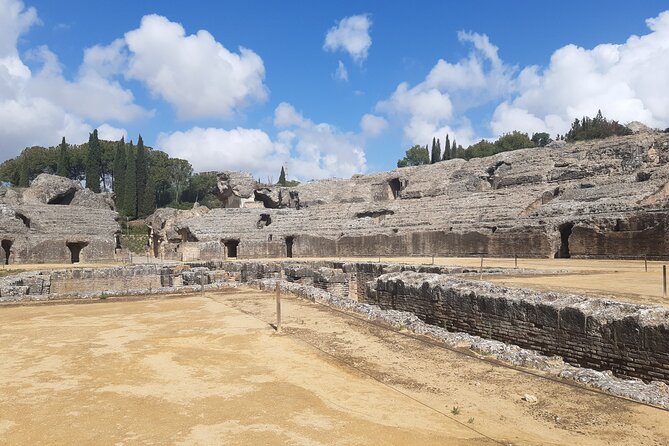
Then comes Plaza del Cabildo, one of the guide’s favorites. This is a quick stop in the overall schedule, but it is also one of the most charming breaks from monument intensity.
The value here is storytelling about how the square has been used throughout history. That kind of explanation helps you see public spaces as stages, not just backdrops for photos.
Admission is included for this stop. That makes it easier to treat the square as part of the guided flow without worrying about extra ticket decisions during the walk.
Torre de la Plata: the defensive side of Seville you might miss
One of the most interesting parts of the route is Torre de la Plata. It is presented as an unknown treasure, even to some locals, which means you often do not get a strong introduction to it on standard sightseeing.
The focus is defensive history. That is a smart change of pace because it shifts the theme from grandeur to protection. You start understanding how Seville guarded wealth and movement along the river.
Admission is included for Torre de la Plata. The stop is also around 10 minutes, which keeps it efficient.
If you enjoy learning how cities worked, not just what they looked like, this is the stop that helps you feel like you really studied Seville.
Torre del Oro: a symbol you can explain after this walk
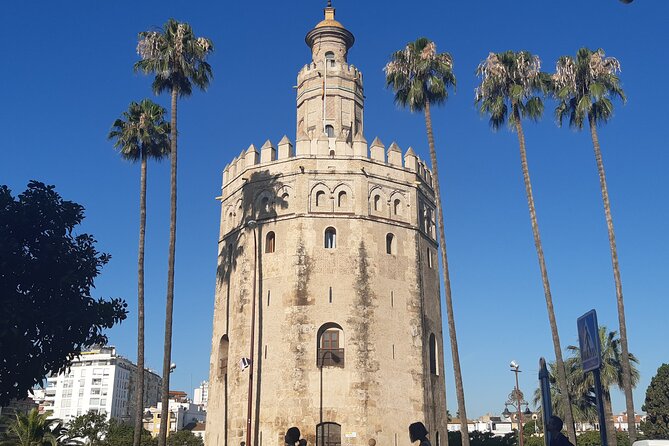
Next is Torre del Oro, another river landmark with identity built into the name. The guide covers when it was built and why it is called that, plus other corner details.
This is the kind of stop where you leave with answers. You get more than a view, you get an explanation you can use later while wandering.
Admission is free at this stop. That makes it an easy add to your mental map, especially if you plan to return for river walks.
Real Fábrica de Tabacos: cigar factory roots and opera links
At Real Fábrica de Tabacos, you get Seville’s industrial past and cultural afterlife in one location. The stop highlights that it was the site of the first great cigar factory in Seville, and it is now linked to the University of Seville and its rectorate.
The guide also connects the place to opera inspiration, including Carmen la Cigarrera. Even if you are not a big opera person, this is a memorable way to connect a building to art and storytelling.
Admission is free here, which is great for pacing. You can take in the setting without thinking about tickets. And because it sits off the exact path of the most ticket-driven sites, it gives you a breath between bigger monuments.
Plaza de España: the dramatic finish and how to use it afterward
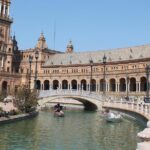
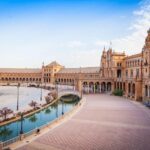
Finally you reach Plaza de España, one of the most important monuments in Seville and one of the most beautiful squares in the world. The guided stop is longer than most, about 15 minutes, and it focuses on the construction history and how it connects to María Luisa Park.
This is your payoff moment. After cathedrals, palaces, and archives, Plaza de España feels like a reset button. The guide’s explanation helps the square land with meaning, not just prettiness.
Admission is free for this stop, so you can stay flexible. If you want more time outdoors, the guide points you toward Parque de María Luisa right after the tour. That pairing is practical because you can continue by foot and keep your momentum.
How this tour feels in real time (timing, pacing, and who it suits)
The total duration runs about 2 hours 20 minutes to 2 hours 40 minutes. That is a sweet spot for first visit days when you want structure but still need time later for meals and deeper museum or monument entries.
It is also private, meaning only your group participates. That usually means fewer arguments about where to stand and more ability to ask questions. And with a mobile ticket, you can keep things simple on your phone.
This tour is a great match if you:
- want an efficient first approach to the city center
- enjoy art history and place-based storytelling
- like having a guide suggest where to go next, including restaurants
- prefer walking between nearby major sights instead of jumping with private transport
It may be less ideal if you:
- only want long inside visits of major monuments, since this walk focuses on key stops and orientation
- already know Seville well and want a deeper specialist tour on one single theme
Value check: what $69.66 buys you in Seville
At $69.66 per person, you are paying for more than footsteps. You are paying for an expert who can stitch together Seville’s Muslim, Christian, civic, and maritime threads in a single coherent walk.
You do not get private transportation, and several major sights are not included for admission. That means you should think of this as a guided map and context engine. The value comes when you use the tour to decide what to ticket next and how to spend your limited time.
A good strategy is to treat this as your first-day anchor. Get the background on the big names, then return later with your own plan for entry time and slower exploring.
Also, booking is typically done around 25 days in advance. That suggests it is a popular format, so if your dates are fixed, locking it in earlier can save stress.
After the walk: how to turn it into a full Seville day
The guide includes recommendations for other cultural interest and main restaurants. That matters because Seville sightseeing often leaves people hungry and wandering at the wrong time.
If you like to build a day that flows, your next step is to pick one follow-on area. The tour also offers options to combine the route with the Jewish quarter, Triana, or other main monuments. Those add-ons can help you shape the day based on what you care about most, architecture, neighborhoods, or evening atmosphere.
If your goal is monuments, plan to revisit the cathedral and Alcázar with separate entry tickets. If your goal is vibes and neighborhoods, plan to keep walking after Plaza de España toward María Luisa Park and then expand from there.
Should you book this private Seville city tour?
Book it if you want a focused, first-visit walk that explains what you are seeing and sets you up for smart next steps. The private format, the monument-to-monument storytelling, and the finish at Plaza de España make it feel like a complete orientation loop.
Skip it or consider a different style if you want long, inside-only museum time, because admission to several major stops is not included. You would still likely benefit from the orientation, but your personal schedule might need extra monument time booked separately.
If you want Seville to make sense fast, this is an efficient way to start, without losing the magic of walking through real streets.
FAQ
How long is the Private 2-Hour City Tour of Seville?
The tour lasts about 2 hours 20 minutes to 2 hours 40 minutes.
Where does the tour start and end?
It starts at Ayuntamiento de Sevilla, Plaza Nueva, 1, Casco Antiguo, 41001 Sevilla, Spain and ends at Plaza de España, Av. Isabel la Católica, 41004 Sevilla, Spain.
Is transportation included?
No, private transportation is not included.
Is this a private tour?
Yes. It is a private tour/activity, so only your group will participate.
Which major sights are not included for admission?
Admission tickets are marked as not included for the Torre Giralda, Catedral de Sevilla, Real Alcázar de Sevilla, and Archivo General de Indias.
Are any sites included or free for admission?
Admission is free for Ayuntamiento, Torre del Oro, and Real Fábrica de Tabacos, and free for Plaza de España. Admission is included for Plaza del Cabildo and Torre de la Plata.
What is the cancellation policy?
You can cancel for a full refund up to 24 hours before the experience starts. If you cancel less than 24 hours before, the amount paid is not refunded.
More Tour Reviews in Seville
Not for you? Here's more nearby things to do in Seville we have reviewed



More Seville Tours worth a look.
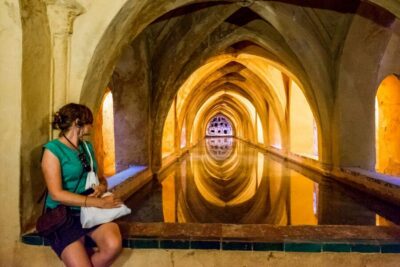 ★ 4.6Royal Alcázar Entry TicketFrom $2328,378 reviews
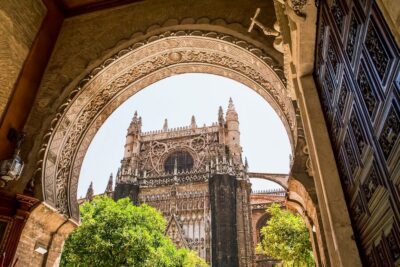 ★ 4.5Cathedral and La Giralda Entry TicketFrom $2024,592 reviews
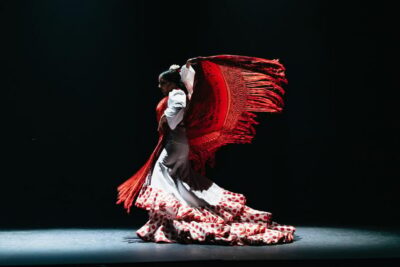 ★ 4.7Live Flamenco Dancing Show Ticket at the TheaterFrom $2716,396 reviews
 ★ 4.21-Hour Guadalquivir River Sightseeing Eco CruiseFrom $1910,281 reviews
 ★ 4.7Cathedral, Giralda, and Royal Alcázar Guided TourFrom $699,165 reviews
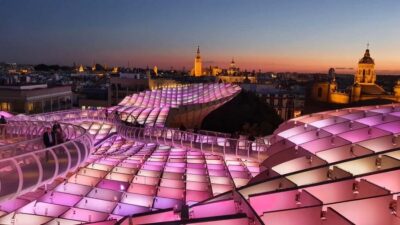 ★ 4.6Setas de Sevilla Entry TicketFrom $188,901 reviews
 ★ 4.6Cathedral, Giralda & Alcazar Entry With Guided TourFrom $658,560 reviews
 ★ 4.8Priority Access Cathedral, Giralda & Alcázar TourFrom $647,563 reviews