
REVIEW · SEVILLE TOURS
Private visit to Casa de Pilatos and Casa Salinas
One palatial walk through Seville can feel like a mini time machine. This private visit strings together Casa de Pilatos and Casa Salinas with a guide who explains how the architecture, collections, and family life fit into the city.
I especially like the way the tour makes the houses feel lived-in, not just museum-still, with gardens, courtyards, and room details. I also love the quick bonus stops on the way, including the church connected to the mosque and synagogue story.
One thing to plan for: entrance tickets are not included, so your total depends on those admissions. Also, most of the time is spent inside, with only a short stop at the churches between palaces.
Key Things to Know Before You Go
- Casa de Pilatos brings three styles together: Gothic, Mudejar, and Renaissance, all in one coordinated complex.
- You get context between palaces, not just a checklist, with stops tied to the San Bartolomé neighborhood.
- Iglesia de Santa María la Blanca has a layered identity, originally a mosque, then a synagogue, then a church.
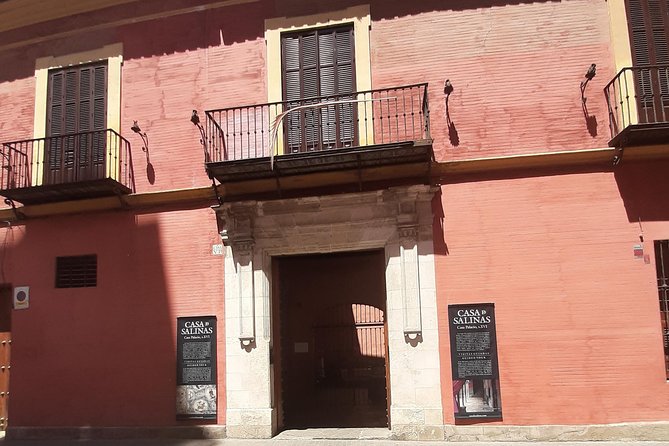
- Casa Salinas is a restored private residence, so the mood stays intimate and domestic while still being spectacular.
- Ticket help is part of the value, with assistance purchasing at each monument.
- Pacing is tight but doable: about 2 hours total, with 1 hour at Pilatos, about 10 minutes at the church stop, and about 40 minutes at Salinas.
Why This Private Pair Works So Well in Seville
If you want the highlights of Seville’s historic houses, this combo is a smart use of time. Instead of doing just one palace, you visit two very different home-palace styles within walking distance, so your brain can actually compare the look and feel.
Casa de Pilatos tends to impress through scale and detail, with its layered architectural language and the sense that everything was designed to guide you upward and inward. Casa Salinas, by contrast, feels more personal, because it remains a private residence and the restored spaces still look like the owners care for them day to day.
The private format matters here. In a group setting, you might spend more time waiting at entrances. Here, the guide can keep the flow moving and explain what you are actually seeing as you move through patios, staircases, and rooms.
You can also read our reviews of more tours and experiences in Seville.


Meeting Point and Timing, Including What the 2 Hours Really Means
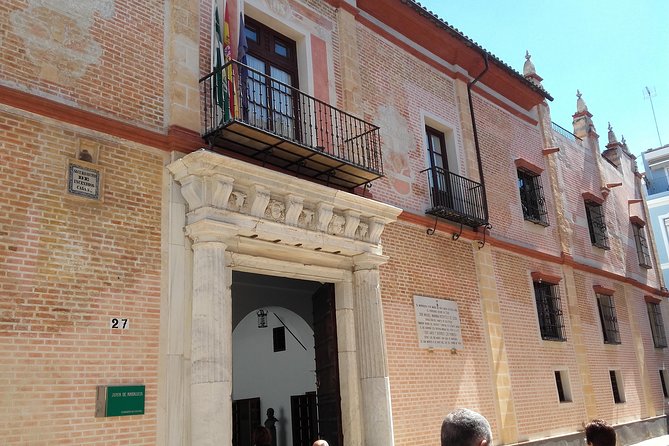
The tour starts at Plaza de Pilatos, 1 by Casa de Pilatos. It ends at Calle Mateos Gago, 39, at Casa Salinas, so you finish closer to the second palace and can continue your own walking afterward.
The total time is about 2 hours, and the schedule is clearly built around inside time:
- About 1 hour at Casa de Pilatos
- About 10 minutes at the Iglesia de Santa María la Blanca stop
- About 40 minutes at Casa Salinas
Then there is the walking time through narrow streets in between.
This timing is great if you like hands-on visiting, not long transport breaks. It might feel short if you love reading every label and lingering for photos in every angle, but that is exactly why a private guide helps: you get the best parts without burning half a day.
Also, the experience runs best with good weather, since a chunk is spent walking through compact historic streets.
Tickets, Mobile Entry, and Where You May Spend Extra
In the information I have, the base price is shown as $0.00, but the key point is that admission tickets are not included for both palaces. The upside is that you are not guessing where to start or which line makes sense. The tour includes assistance with purchasing tickets at each site.
You will also want to have a practical mindset about the buildings. These are not endless halls. You will move from monumental staircase moments to courtyards to room clusters, and your ticket time is part of that rhythm.
One more logistics detail: radio guides are only mentioned for groups of 7 or more. If you are in a larger group situation, you might need them, but for a typical private group you should not expect to rely on them.
Casa de Pilatos: The Architectural Mix That Feels Like a Story
Casa de Pilatos is the anchor of this visit, and it is easy to see why it is one of Seville’s most popular historic sites. The big theme is harmony among styles. You will see how Gothic, Mudejar, and Renaissance details fit together without feeling chaotic, which is not always how palace renovations work in other cities.
Expect your eyes to keep moving. The tour focuses on specific highlights like:
- A monumental exterior cover
- Sculpture collections
- Decorative wall tiles
- Impressive coffered ceilings
- A grand staircase that leads you to the main floor
The guide also frames how the place functioned as a home, not just a beautiful backdrop. That is where this visit becomes more than architecture spotting. You start to connect the spaces to how people lived day to day.
And then there are the gardens. The description emphasizes the freshness of the greenery, which matters in Seville. Even on bright days, a garden pause gives your feet and your eyes a break before you head back into narrow streets.
One small caution: Casa de Pilatos is detailed. If you want a slower pace, this may feel packed into an hour. If you like a guided route that hits the key rooms and collections, it is a strong fit.
The Walk Through San Bartolomé, House of Mañara, and Synagogue Footprints
The transition between the two palaces is not treated as empty time. You move through the San Bartolomé neighborhood on narrow streets, and the guide uses that walk to build a religious and cultural map of the area.
As you head toward the second palace, you pass key landmarks linked to older communities:
- You will pass by the House of Mañara
- You will be near the Church of San Bartolomé, built on the site where one of Seville’s synagogues once stood
- You then enter the tight streets of the area so you feel the urban texture, not just the museum interiors
This is one of the smartest parts of the tour because it changes how you experience the churches. Instead of treating them as isolated monuments, you start noticing continuity: where buildings changed hands, what replaced what, and how different faiths left physical traces.
If you enjoy walking segments that explain the city layer by layer, you will appreciate this stretch. If you prefer long pauses or quiet time between big sights, you might find the movement a bit brisk, but it stays within the 2-hour plan.





Iglesia de Santa María la Blanca: From Mosque to Synagogue to Church
The short church stop is about identity and change over time, not long worship space sightseeing. You will pass in front of Iglesia de Santa María la Blanca, and your guide explains a key transformation story.
Here is the timeline you are meant to understand:
- The building was originally a mosque
- Ferdinand III ceded it to the Jewish community for synagogue use
- Later, it was transformed into a church
That sequence is the core reason this stop works inside the tour. It gives religious history weight to what you are seeing in the palace houses, because Seville’s big domestic and ceremonial architecture is tightly connected to the city’s shifting cultural landscape.
You only spend about 10 minutes at this stop, so do not expect a long inside visit. Instead, think of it as a historical waypoint. When the tour works best, you leave the church with a clearer idea of why the neighborhood matters before you walk into Casa Salinas.
Casa Salinas: A Restored Private Residence With a Patio You Will Remember
Casa Salinas is the second major interior moment, and it has a different vibe from Casa de Pilatos. It is described as a 16th-century palace house that is still a private residence and has been restored carefully by its owners.
That matters for the feel of your visit. Instead of everything looking staged for tourists, you get a sense of lived caretaking, especially in the patio.
The patio is the star:
- Arched galleries
- Plasterwork decoration
- Genoese marble columns
- Tiled surfaces
- Cartuja windows
Then you move through the ground-floor rooms, which continue to be used by the owners. This is where the guide’s pacing helps, because you are not just walking through empty showrooms. You are seeing how domestic spaces can preserve art and craft without turning into a sealed display.
And then there is the courtyard with an impressive Roman mosaic. The tour highlights a second-century mosaic dedicated to the god Bacchus. It is the kind of detail that makes you realize the site holds layers beyond one era, even when the building you are visiting looks like a palace home from later centuries.
This stop runs about 40 minutes, which is a good amount of time for both room viewing and the courtyard moment. If you love Roman art, this part alone can justify the second palace visit.
Guide Quality, Language, and Why Private Pacing Adds Value
This is a private tour with only your group participating, led by Clara Alarcón. The difference you will feel is that the guide can shape explanations around your pace and interests, instead of trying to run the same script for everyone.
The guiding approach is also praised for being attentive and for bringing stories to life. One common thread in the experience descriptions is that the guide highlights human stories, including how women and men contributed to building and shaping the house.
Language flexibility is another practical benefit. Clara is noted for speaking English and German clearly, and one past group described the tour as charming and very guided. If you want historical context explained in plain language, that matters more than fancy jargon.
Also, because the tour includes assistance buying tickets, you spend less time at the counter figuring things out and more time inside where the details are.
What You Should Pay Attention To While Visiting
To get more out of your two palaces, I suggest you focus on three things as you go.
First, watch for transitions between style and function. In Casa de Pilatos, pay attention to how surfaces, ceilings, and the staircase work together to elevate you through space. In Casa Salinas, look at how the patio layout guides light and movement.
Second, connect decoration to daily life. You are being told how inhabitants lived, not just admiring ornament. Even if you do not remember every term, you will remember the feeling of domestic grandeur.
Third, treat the church stops as context, not filler. The story about mosque to synagogue to church is not random, it helps explain why the neighborhood around San Bartolomé feels culturally layered.
If you are the type who likes to take photos, plan for this: you will have prime photo moments at the patio and staircase, then shorter windows inside. Bring a phone battery backup if you tend to shoot nonstop.
Who This Tour Suits Best
I think this works best for you if:
- You want two major Seville palaces in a tight time window
- You like walking historic neighborhoods with short landmark history built in
- You value a private guide who explains architecture and daily life, not just dates
It may be less ideal if:
- You want a long, slow visit with lots of unstructured wandering time
- You want all ticket costs to be included up front
- You dislike walking on narrow streets between monuments
Most travelers can participate, and service animals are allowed, which is helpful if you travel with a companion animal.
Should You Book This Private Visit?
Yes, book it if you want a concentrated dose of Seville domestic grandeur plus real context about the city’s religious layers, all without spending half a day logistics juggling. The private format, guide stories, and ticket assistance are the value engine here.
I would not book it if you are trying to keep costs fully fixed and you hate adding separate admissions on arrival. Since entrance tickets are not included, your final spend depends on the palace admissions.
One last practical tip: wear comfortable shoes. The time inside is substantial, but the route includes walking through tight streets between stops, and that walking is part of the experience.
FAQ
How long is the private visit?
It is listed at about 2 hours, with roughly 1 hour at Casa de Pilatos, about 10 minutes at the Iglesia de Santa María la Blanca stop, and about 40 minutes at Casa Salinas.
Are entrance tickets included?
No. Entrance tickets for the monuments are not included. The tour does include assistance with purchasing tickets at each site.
Is this a private tour?
Yes. It is a private activity, so only your group participates.
Where do we meet and where does the tour end?
You start at Casa de Pilatos, Plaza de Pilatos 1, in the historic center. The visit ends at Casa Salinas, Calle Mateos Gago 39, also in the historic center.
Do I get a mobile ticket?
The tour details include a mobile ticket, and you should receive the information needed at the time of booking.
What other landmarks are included while walking between palaces?
While moving between the palaces, you pass by the House of Mañara and near the Church of San Bartolomé, plus you stop at the Iglesia de Santa María la Blanca.
What if the weather is poor?
The experience requires good weather. If it is canceled due to poor weather, you will be offered a different date or a full refund.
More Tour Reviews in Seville
Not for you? Here's more nearby things to do in Seville we have reviewed









More Seville Tours worth a look.
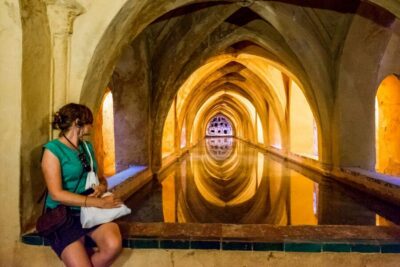 ★ 4.6Royal Alcázar Entry TicketFrom $2328,378 reviews
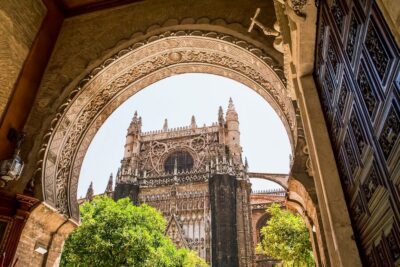 ★ 4.5Cathedral and La Giralda Entry TicketFrom $2024,592 reviews
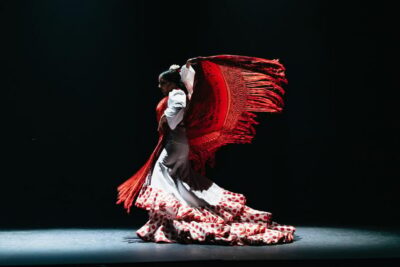 ★ 4.7Live Flamenco Dancing Show Ticket at the TheaterFrom $2716,396 reviews
 ★ 4.21-Hour Guadalquivir River Sightseeing Eco CruiseFrom $1910,281 reviews
 ★ 4.7Cathedral, Giralda, and Royal Alcázar Guided TourFrom $699,165 reviews
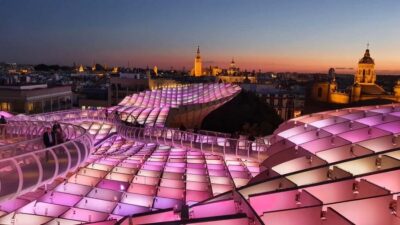 ★ 4.6Setas de Sevilla Entry TicketFrom $188,901 reviews
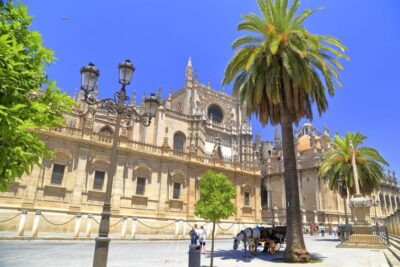 ★ 4.6Cathedral, Giralda & Alcazar Entry With Guided TourFrom $658,560 reviews
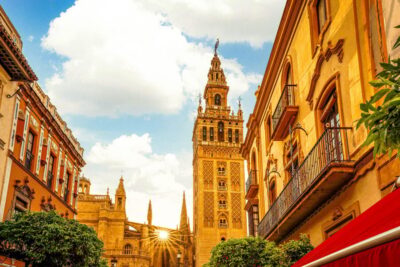 ★ 4.8Priority Access Cathedral, Giralda & Alcázar TourFrom $647,563 reviews
Continue by place or experience