
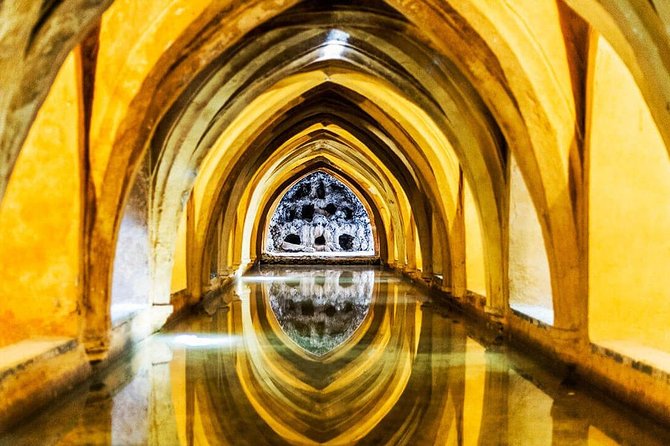
REVIEW · ROYAL ALCáZAR TICKETS & TOURS
Private visit to the Alcazar and the Cathedral of Seville
Seville’s past is right on the pavement. This private visit connects the Real Alcázar and Seville Cathedral with clear stories about how Seville changed from Arab rule to Christian kings, with stops timed for real looking, not frantic rushing. The biggest drawback is simple: monument tickets are not included, so you’ll pay extra at the sites.
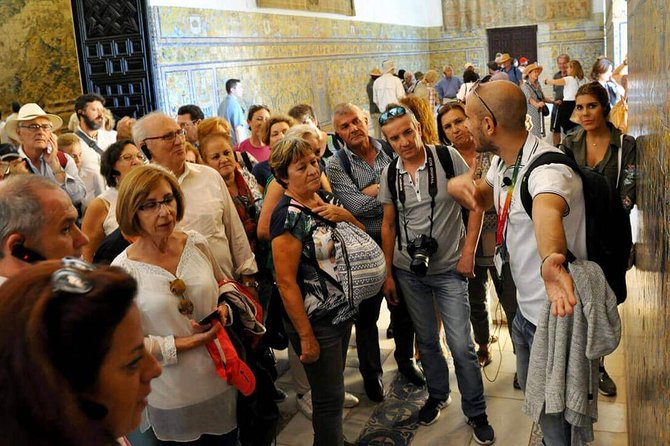
I like that the tour is set up for a small private group in the historic center, roughly 3 hours from start to finish. Reviews also single out Ricardo, whose style is part medieval history and part practical local insight, including where to eat after the monuments.
Key takeaways (what makes this tour worth it)
• Private group format with an official guide, so you can ask questions and set a comfortable pace.
• Real Alcázar first, giving context for the Mudejar mix before you step into the Cathedral.
• Gardens time is built in (about 30 minutes), and garden access is included with your Alcázar entry.
• Giralda included with Cathedral entry, so you get the city views without buying another separate ticket.
• Ricardo as guide is repeatedly praised for connecting Seville’s layered history, including the coexistence of cultures and religions.
• Radio guides may be needed if your group is larger than 7 people, at an extra cost per person.
Why the Alcázar and Cathedral belong together
In Seville, history is not one straight line. It’s layers stacked on top of each other, sometimes literally built on the footprints of earlier places. Doing the Real Alcázar and Seville Cathedral back to back is a smart way to see that transformation without needing a full day of planning.
The Real Alcázar is described as the oldest royal palace still in use in Europe. You’re not just looking at decorative rooms. You’re seeing a palace that began as an Arab fortress, then expanded under Christian kings after the reconquest. That blend matters, because it sets up how Seville looks and feels today: Islamic design details alongside Christian power and court life.
Then the Cathedral changes the topic again, but it keeps the theme of continuity. This is the third largest cathedral in the world, and it was built after the conquest on the site of the old Aljama Mosque of Isbiliya. With a guide, you don’t just recognize big religious architecture. You understand why that site became what it is.
If you want Seville to make sense fast, this pairing helps you connect the story between palace and sacred space in one organized route.
You can also read our reviews of more tours and experiences in Seville.


Meeting on foot in Seville’s historic center
The tour starts at Pl. del Triunfo 3 in the Casco Antiguo, and it ends back at the same meeting point. That “start and end in the same place” detail is practical. You don’t need to figure out a second drop-off location while you’re tired after monument time.
Pickup is described as hotel pickup only on foot, and only within the historical center. So plan for a little walking to and from your hotel, especially if your lodging is outside the core. The meeting point is also listed as near public transportation, which is a relief if you’re using buses or tram connections to get into the city center.
Here’s what I’d do to make this smooth. Wear comfortable shoes, because you’ll move between the Alcázar area, the gardens, and the Cathedral/Giralda zone. Also, consider carrying water, even in mild weather. Monument visits are usually more walking than you think, and your guide will keep you moving at a good pace.
Stop 1: Real Alcázar de Sevilla, the working palace
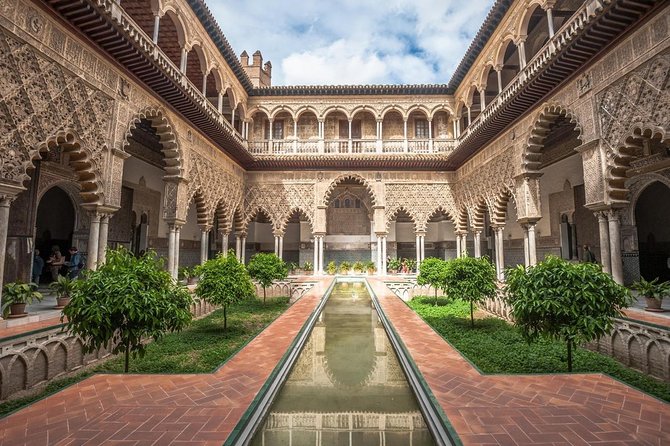
The first stop is the Real Alcázar de Sevilla, with about 1 hour on site. The palace is presented as the oldest royal palace in use in Europe, which is a big claim for a reason. This place wasn’t abandoned and turned into a museum. It grew, changed rulers, and kept functioning as court space over time.
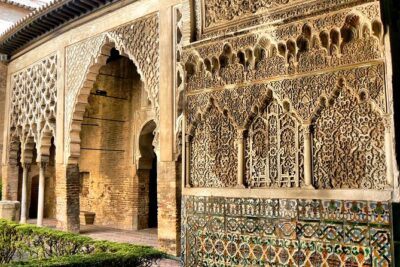
The story you’re given is the key. The Alcázar begins as an Arab fortress, then Christian kings expanded it after the reconquest. That’s why the palace is so strongly tied to Mudejar style, a mix that is unique to Spain’s historical overlap. If you’ve only seen Moorish architecture in theory, the Alcázar is where it becomes visual and personal.
One practical reality: since the admission ticket for the Alcázar is not included, you’ll want to budget time and money for that separate step. The tour includes the guided experience, but monument entry is extra, and you’ll need to handle it at the appropriate redemption point listed for the tour.
If you love architecture details, this is your moment. You’ll get explanations that go beyond simple descriptions, focusing on how different periods shaped the palace and how those changes show up in what you see.
Stop 2: Jardines de los Reales Alcazares, included garden time
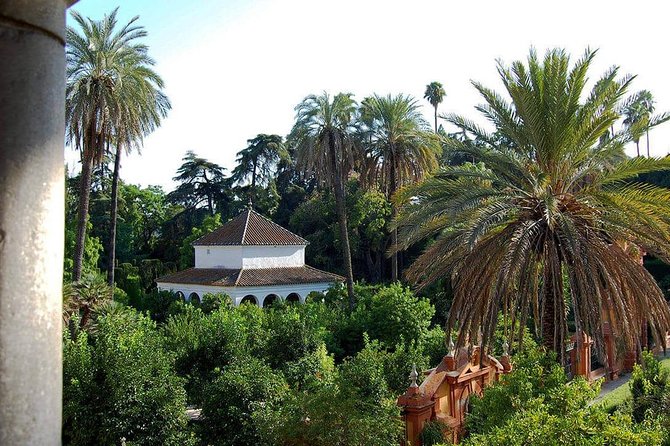
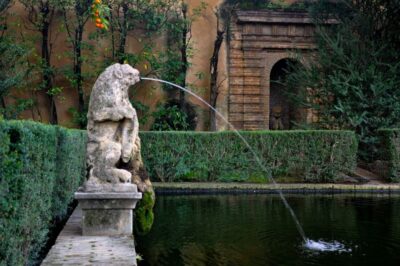
After the palaces, you get roughly 30 minutes in the Jardines de los Reales Alcazares. The tour notes the gardens as more than 7 hectares, so even half an hour can feel like a real reset if you’re tired of crowds and indoor lights.
This stop is also designed for an important reason: the Alcázar can feel dense, visually and emotionally. Gardens give you breathing room and help your brain reset before the Cathedral.
A good detail here is that garden access is included as part of the Royal Alcázars entrance. So you’re not doing extra ticket purchases for this segment. It’s one of those “small but valuable” inclusions that makes the pacing feel more generous.
The trade-off is also clear. Thirty minutes is enough for a quick stroll and a few good viewing spots, but it’s not enough if you want to linger like a botanist. If you’re the type who reads every label in a museum, you may want extra time on your own after the tour.
Stop 3: Seville Cathedral, built on the old Aljama Mosque
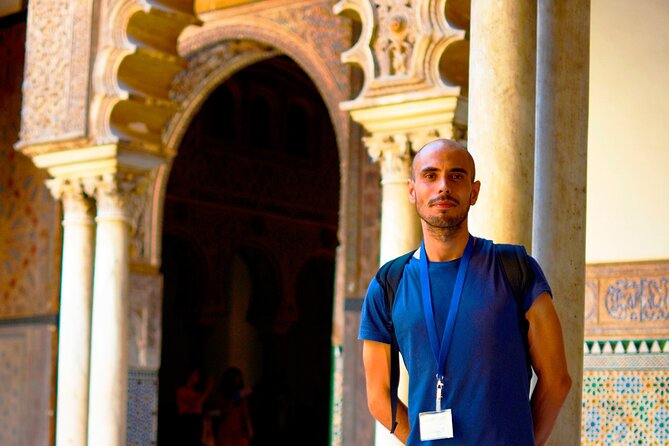
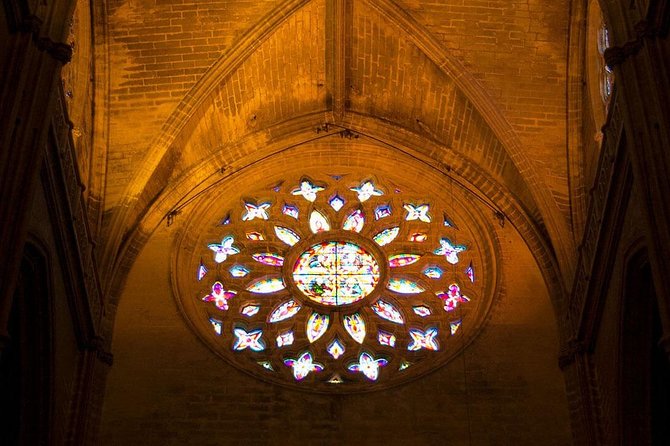
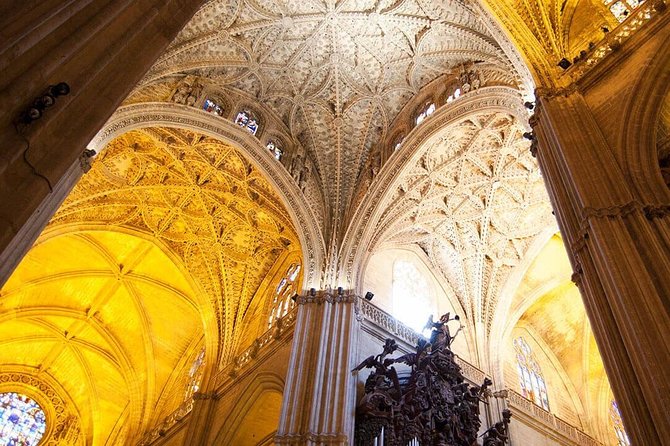
Next up is the Seville Cathedral, with about 1 hour. This is described as the largest Gothic cathedral in the world, and it’s built on the old Aljama Mosque of Isbiliya after the conquest of the Muslims. That single line tells you the Cathedral is not just a building. It’s a historical statement about power and belief.
With a guide, you’ll be looking at more than scale. You’ll be able to understand the site as a transformation point. That matters because Seville is full of monuments that look impressive but start making real sense only when someone explains what came before.
I also like how guides for this area tend to talk about coexistence and cultural mixing, not just conquest dates. In the case of Ricardo, the feedback emphasizes stories that interweave the three religions that coexisted in Seville. That approach helps you see why the Cathedral feels both monumental and layered.
As with the Alcázar, the Cathedral entrance ticket is not included. So factor that cost into your total budget, especially if you’re traveling with kids, students, or older adults who might qualify for different rates.





Stop 4: Torre Giralda views from the former minaret
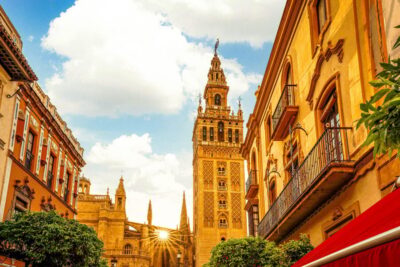
The final stop is Torre Giralda, about 30 minutes. This tower is described as the minaret of the old Mosque and the bell tower of the current Cathedral of Seville. For Sevillians, it’s one of the city’s most revered symbols.
You’ll have the chance to access more than 80 meters high and get spectacular city views. This is the moment where the tour stops being just “history listening” and becomes “Seville understanding.” From above, Seville’s shape and layout start clicking into place.
The good news is that access to Giralda is included with your Cathedral entrance. That means you’re not buying a separate entry just to get the tower experience. It’s a smart pairing inside the tour structure.
The only consideration is physical. Climbing up a tower usually means stairs and time. The tour is marked as suitable for most travelers, but if you have limited mobility, expect that you might need to go slower. It’s also worth arriving prepared for possible lines or waiting inside the complex, since monument access can be busy.
Price and value: what the fixed group rate really means
The tour price is listed as $223.10 per group (up to 10). At the same time, the overview states a fixed price per private group for up to 19 people maximum. That tells me the pricing is structured around private group buying, not per-person selling.
So what should you do with that? Treat it as a group-value tour. If you’re traveling with family or friends, the math can look very good compared to buying separate guided entry tickets for each person. If you’re traveling solo or as a couple, your value depends on whether you can join a private group slot or you’re basically paying for your own group.
Tickets are not included, and that’s the part you can’t ignore. The listed monument ticket prices are:
- Alcázar of Seville: €14.5 adults, €7 students (14 to 30), pensioners over 65 (EU citizens), €1 children up to 13, disabled (33%), free for born or residents in Seville
- Seville Cathedral: €11 adults, €6 students up to 25, retirees over 65, free for children up to 13
If you’re an adult booking just for yourself, the tour price is the guide and coordination, but the big monuments add on top. For a typical adult, the two major tickets alone total €25.50, before any student or age discounts.
Also remember the radio guidance note. Radio guides are needed for larger groups of 7 people, at €1 per person. If you’re booking for a group that might pass that threshold, ask your operator how it will be handled for your exact headcount, so there are no surprises on the day.
My practical take: this is a strong value if you want a guide who can explain the “why” behind Mudejar, reconquest, mosque sites, and Christian cathedral power, while you still get actual time inside the monuments.
Timing and route flow: a calm 3-hour rhythm
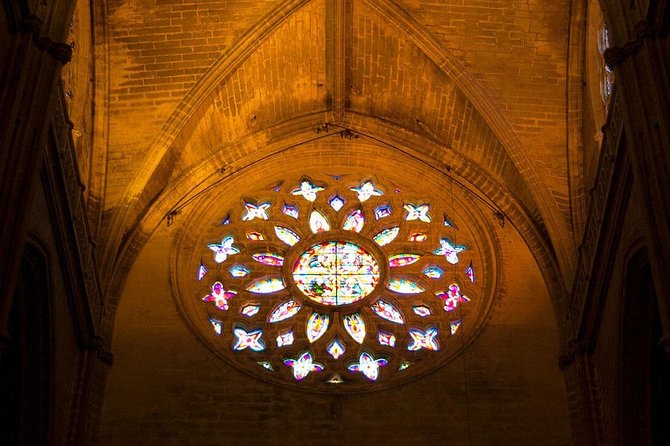
The tour is about 3 hours total, and the day plan is built in blocks: 1 hour at the Alcázar, 30 minutes in the gardens, 1 hour at the Cathedral, and 30 minutes for Giralda. That structure is one reason it works for people who only have a limited window in Seville.
Another practical detail: the ticket redemption point is listed as Plaza Virgen de los Reyes. That’s useful for planning, because it tells you where monument access will connect. Even though you’re guided, you still have to physically handle entry procedures.
Here’s how I’d protect the experience from feeling rushed:
- Start on time. The meeting point is Pl. del Triunfo 3, and you want to be ready to move.
- Keep your phone charged for photos, because towers and courtyards invite picture stops.
- If you’re sensitive to crowds, know that these sites are popular. Having a guide helps you keep your head when lines form.
Also, since the tour ends back at the meeting point, you can treat it as a clean morning or late-afternoon activity, then continue exploring at street level right after.
The guide factor: why Ricardo earns the praise
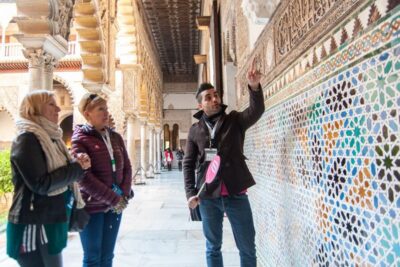
The feedback you provided points again and again to Ricardo. People describe him as passionate about medieval history and generous with stories that make the monuments feel alive. The best part, in my view, is that the guide seems to focus on interpretation, not just facts.
One review theme is how he connects the history of the city through the lens of the three religions that coexisted in Seville. That kind of framing turns big stones and soaring ceilings into a readable timeline of change.
Another theme is approach and tone. Some comments say he’s professional but still informal in the best way, like you can actually follow what he’s saying instead of feeling trapped in a lecture. That matters because Alcázar and Cathedral visits are visually overwhelming. You need an explanation that helps you prioritize what to notice.
People also highlight that Ricardo is helpful beyond the tour. There’s mention of recommendations for local lunch and dinner spots, plus address suggestions after the visit. If you like a guide who also thinks like a local, not just a history narrator, that’s a big plus.
What you can expect at each stage, in plain terms
Here’s the practical reality of the day, so you can set expectations:
- You’re paying for guided time, not just entry. The guide leads you through two of Seville’s biggest historic sites, using the context that’s built into the monuments themselves.
- You’ll do both indoor and outdoor parts. Palace time, then garden strolling, then Cathedral time, then tower views. Plan for changing light and crowd levels.
- Your main extra costs are the monument tickets. Everything else is either included or optional depending on group size (radio guides).
- You’ll end where you started. That makes the schedule easy to stitch into your Seville itinerary.
If you’re the kind of traveler who prefers to understand what you’re looking at, rather than just checking boxes, this tour style suits you.
Who should book, and who should skip it
This tour is a good fit if:
- You’re seeing Seville for the first time and want the two headline monuments without guessing how they connect.
- You want a private-group feel, with time for questions.
- You care about how Mudejar style and mosque-to-cathedral history shaped the city.
You might skip it if:
- You’re traveling extremely budget-focused and don’t want to add ticket costs on top of the guide fee.
- You don’t care for explanations, and you’re happy touring independently at your own speed.
- You have mobility limits that make stairs and tower access a challenge, because Giralda involves climbing.
Should you book this private Alcázar and Cathedral tour?
I think it’s worth booking if your goal is to understand Seville’s layered story in one organized stretch. The Alcázar plus Cathedral plus Giralda plan is efficient, and the guide emphasis helps you turn big monuments into something you can actually remember, not just photograph.
Before you book, do two quick checks:
1) Confirm how the group size cap is handled for your exact booking, since the info lists up to 10 in one place and up to 19 in another.
2) Budget for Alcázar and Cathedral tickets, and remember that Giralda access is included with the Cathedral entrance.
If you want history explained in a way that feels connected to the city, this private format is a strong choice.
FAQ
Are entrance tickets to the Alcázar and Seville Cathedral included?
No. The tour price covers the guided private visit, but monument entry tickets for the Alcázar and Seville Cathedral are not included.
How much time does the tour take?
The duration is about 3 hours.
What stops are included in the tour?
You’ll visit Real Alcázar de Sevilla, Jardines de los Reales Alcazares, Seville Cathedral, and Torre Giralda.
Is there a separate ticket for the Giralda tower?
No separate Giralda ticket is mentioned. Access to Torre Giralda is described as included with the entrance to Seville Cathedral.
Where do you meet the guide?
The meeting point is Pl. del Triunfo, 3, Casco Antiguo, 41004 Seville, Spain. The tour ends back at the meeting point.
Where are tickets redeemed?
Ticket redemption is listed at Plaza Virgen de los Reyes, Pl. Virgen de los Reyes, Casco Antiguo, 41004 Sevilla, Spain.
Does the tour offer hotel pickup?
Hotel pickup is only on foot, and only within the historical center of Seville.
Do you need radio guides?
Radio guides are needed for larger groups of 7 people, at an extra cost of €1 per person.
What is the cancellation policy?
You can cancel for a full refund if you cancel at least 24 hours before the start time. If you cancel less than 24 hours before, the amount paid is not refunded.
More Tour Reviews in Seville
Not for you? Here's more nearby things to do in Seville we have reviewed







More Royal Alcázar Tickets & Tours worth a look.
 ★ 4.6Royal Alcázar Entry TicketFrom $2328,378 reviews
 ★ 4.7Cathedral, Giralda, and Royal Alcázar Guided TourFrom $699,165 reviews
 ★ 4.6Cathedral, Giralda & Alcazar Entry With Guided TourFrom $658,560 reviews
 ★ 4.8Priority Access Cathedral, Giralda & Alcázar TourFrom $647,563 reviews
 ★ 4.6Alcázar and Cathedral Entry Ticket and Guided TourFrom $785,056 reviews
 ★ 4.5Alcazar and Cathedral of Seville Tour with Skip the Line TicketsFrom $714,579 reviews
 ★ 4.6Alcázar of Seville Skip-the-Line Tickets and Guided TourFrom $443,941 reviews
 ★ 4.5Alcázar Guided TourFrom $463,371 reviews
Continue by place or experience