
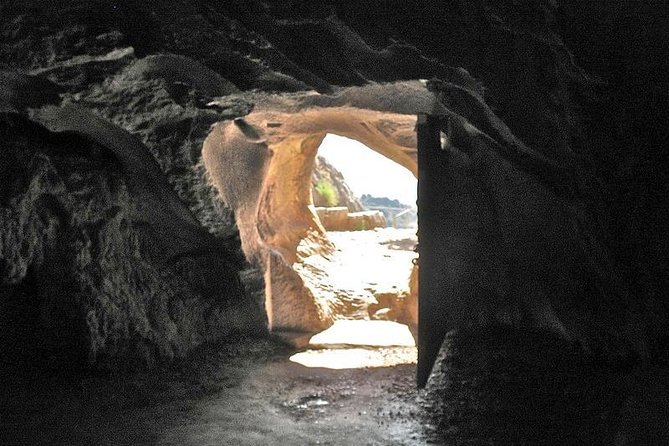
REVIEW · RONDA, SETENIL & WHITE VILLAGES
Rock art and Ronda
A day that mixes ancient cave art with Ronda’s dramatic cliffs.
This trip stands out because you get prehistory at Cueva de la Pileta and a real walk through Ronda’s old and new city in one smooth, guided loop.
I especially like the balance here: the cave visit is structured and guided for understanding, then you get enough time in Ronda to actually enjoy views, not just pose for a photo and rush on.
One possible drawback to plan for: the drive is on winding roads, and it can feel like plenty of ups and downs. If you get car sick, bring a remedy and give yourself a little time to settle in.
Key things to know before you go
- Cueva de la Pileta includes the ticket, with guided time to understand the art
- Ronda’s gorge views are built around the New Bridge viewpoint and a guided old-town walk
- A small group (up to 8) makes it easier to hear the guide and move at a human pace
- Roundtrip Seville transportation in an air-conditioned vehicle keeps the day comfortable
- Ronda is scheduled for about 2 hours, so you’ll need to pick your priorities quickly
- Lunch isn’t included, so decide ahead of time how you’ll handle food in Ronda
Why this Seville day trip pairs rock art with Ronda so well
This is one of those rare day trips where the two big pieces of the day actually complement each other. In the cave at Benaoján, you’re looking at images that were made thousands of years ago, focused on animals, symbols, and abstract marks. Then, in Ronda, you move into a town shaped by geography and history, where the gorge does half the storytelling for you.
I like that the day doesn’t stay locked in one theme. You get prehistoric rock art in a real Franco-Cantabrian context, and then you switch to street-level walking, viewpoints, and architecture around one of Spain’s famous cliff towns. It feels like two different chapters of Andalusia, stitched together with practical transport and a guide.
You can also read our reviews of more tours and experiences in Seville.



Morning ride out of Seville and the Los Pueblos Blancos factor
You start at 9:00 am from Sevilla Moving at C. Luis Montoto, 19, Local Bajo, 41003 Sevilla. The day runs about 9 hours total and ends back at the same meeting point, so you’re not stuck figuring out return transport later.
The vehicle is air-conditioned, and the group is kept small, up to 8 travelers. That matters more than you might expect on a longer day. In a small group, the guide can manage pacing, answer questions, and keep everyone together without the chaos that can happen on bigger tours.
Also, the route is part of the experience. The tour is built around Los Pueblos Blancos, which means you should expect Spanish countryside scenery as you move through the white village region. It’s not just “drive time.” It’s the visual warm-up for Ronda, since this area is all about dramatic terrain and towns perched like punctuation marks on the hillside.
One thing to consider: reviews and the overall road context suggest winding roads. Even with a careful driver, the motion can be noticeable. If you’re sensitive to that, plan ahead with a travel-sickness option and sit where you feel the most stable.
Cueva de la Pileta: prehistoric rock art you can actually understand
Cueva de la Pileta is a prehistoric cave site in Benaoján, in the province of Málaga. What makes it special is not just that it has art, but the scale and variety of it, plus the time span it covers.
This is a site with Parieolithic parietal art and Neolithic remains, discovered in 1905 by José Bullón Lobato. Later study and exploration included researchers Willoughby Verner, Henri Breuil, and Hugo Obermaier. The art includes paintings and engravings in the Franco-Cantabrian style, with representations such as cervids, horses, fish, goats, bulls, a seal, a bison, and also abstract signs and indeterminate figures.
In other words, you’re not just seeing one theme. You’re seeing a whole animal world, plus symbols that leave room for interpretation. The dates given for the artistic period are between about 7,000 and 4,500, connecting this cave art with a wider European story about the spread of Paleolithic art beyond the areas where it’s most often discussed.
You’ll spend about 2 hours at the cave, and you get the admission ticket included as part of the tour. That’s a big practical win because cave tickets can be an extra variable on your schedule. Here, the time and access are handled for you.
What the cave visit feels like, and how to get the most from 2 hours
In a cave, you can only do so much: you’re limited by time, lighting, and how quickly you can process what you’re seeing. The value here is that the guide helps you connect the images to what they mean in context.
Expect focus on the types of images and how they fit a larger style and timeline. The cave is described as an important group providing data on the expansion of Paleolithic art outside its classic development areas. In plain terms, your guide is likely to help you understand why this matters, not just point at wall marks.
There’s also the reality of group flow. One reason this type of visit can feel tricky is that cave spaces don’t behave like open-air museums. If the group going through the cave is larger than you’d like, having a guide who can point, explain, and keep your attention on the most important areas helps a lot. In the supplied feedback, Miguel is specifically praised for helping people understand the guide’s explanations, including how bilingual interpretation was handled during the visit.
Practical advice so you enjoy it:
- Dress for cooler, rock-scented air. Even on warm days, caves can feel distinctly chilly.
- Slow down your eyes. Let your brain adjust to the lighting, then look for outlines of animals first, symbols second.
- Ask a question if something looks like it might be abstract. Cave art can look confusing fast, and that’s normal.
Ronda: the gorge city where viewpoints do the heavy lifting
After the cave, you’ll shift into Ronda, a city in Málaga province built around a deep gorge. The gorge, described here as the Tagus, separates what’s often described as the newer city from the older quarters that trace back to Arab rule.
Ronda is scheduled for about 2 hours, and Ronda’s admission is noted as free in the tour details. That matters because it keeps your costs predictable. You still pay attention to what you choose to see, but you won’t lose time worrying about paid entry right when you arrive.
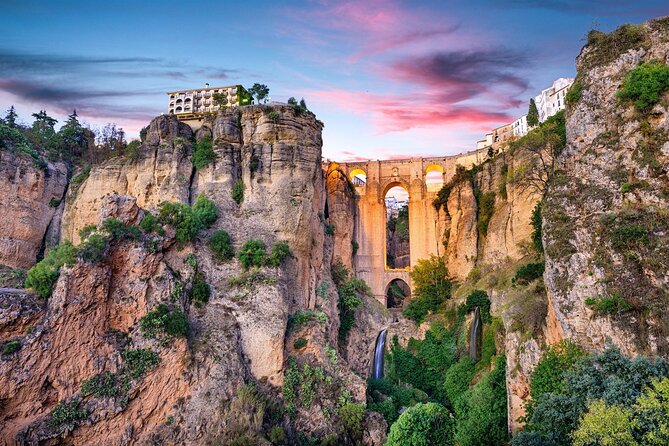
The most important “anchor” on the Ronda side is the New Bridge, a stone bridge crossing the gorge. There’s a viewpoint here, and the city’s drama is hard to explain until you stand where the gorge opens in front of you.
You’ll also hear about key monuments in the new city, including the bullring, described as one of Ronda’s prominent 18th-century monuments. Even if you’re not focused on bullfighting, it gives context for how Ronda developed its identity around public spaces and spectacle.
Finally, you get walking time that focuses on the old city. Miguel is praised for taking visitors on a walking tour of the old city, which is exactly the right approach for Ronda. The streets help you understand the layout and the split between old and newer sections.



Getting your timing right in Ronda (and choosing lunch without stress)
Two hours sounds short, but Ronda rewards fast decision-making. When the tour time is limited, you want to spend your energy on what only Ronda can deliver: views from the New Bridge area and the old-town streets your guide is pointing out.
Lunch is not included. That’s normal for day trips like this, but it does change how you should plan. You’ll want a clear idea of how you’ll eat once you’re in Ronda. In the feedback, there’s mention that the driver helped point the group toward a great lunch spot in the new city. That’s the kind of small help that can turn a “we’ll figure it out” lunch into a smooth meal.
A practical strategy:
- Decide whether you want a sit-down lunch or something quicker.
- Aim to eat before you start overthinking the last 30 minutes, because Ronda time slips away quickly once you’re in the gorge-and-bridge zone.
If you care about photos, plan for them early. The light in Ronda can shift as you move, and the best angles often mean you stop moving, not just walk past.
Price and value: what $270.93 buys you (and what it doesn’t)
The price is listed at $270.93 per person. For many people, that’s the moment to ask if this is a fair value, not just an expensive day.
Here’s what you get that directly reduces your own effort:
- Roundtrip transportation from Seville by air-conditioned vehicle
- A guide
- Admission ticket for Cueva de la Pileta included
- A day length of about 9 hours, so it’s not just a quick drive-by
What you don’t get:
- Lunch is not included
- Tips are not included
So where is the value? In the cave. Tickets, guided interpretation, and protected scheduling make Cueva de la Pileta much easier to handle. And in Ronda, you get organized walking time rather than trying to self-navigate a gorge town you might only lightly understand from maps.
Also, group size is capped at 8. Smaller groups can make a guided day feel more personal, even if you don’t choose it for that reason. And the tour notes group discounts, which can help if you’re traveling with friends and booking together.
Who should book this Rock art and Ronda tour
You’ll probably love it if you:
- Want both a serious cultural stop and a scenic cliff-town stop in one day
- Like guided interpretation, especially for complex topics like prehistoric art and symbolism
- Prefer a small group day trip, with up to 8 travelers
- Are comfortable with moderate physical fitness needs for walking in town
You might want to think twice if you:
- Are highly sensitive to car motion, since the roads can feel rough in terms of ups and downs even with a careful driver
- Need a lot more than two hours in Ronda, because the schedule favors a short but focused visit
This is a strong choice for couples, solo travelers who like guided structure, and history-and-views travelers who want a day that doesn’t waste time.
Should you book Rock art and Ronda from Seville?
I’d book it if your ideal day looks like this: guided entry into a major prehistoric cave site, a chance to understand how the art fits into a bigger European timeline, then real time in Ronda where the gorge and the New Bridge viewpoints do the convincing.
It’s also a good pick if you’d rather pay for a guided day than spend your energy coordinating tickets, transport, and timing on your own. The inclusion of the cave ticket and the small-group structure make it feel more efficient than a DIY plan.
Only consider passing if motion on winding roads will ruin your day, or if you know you want a longer Ronda visit than two hours. Otherwise, it’s a smart, value-minded way to see two sides of Andalucía in one go, prehistoric walls and dramatic stone streets.
FAQ
What is the duration of the Rock art and Ronda tour?
The tour lasts about 9 hours.
What time does the tour start in Seville?
The start time is 9:00 am.
Where does the tour begin and end?
It begins at Sevilla Moving, C. Luis Montoto, 19, Local Bajo, 41003 Sevilla, and ends back at the same meeting point.
What languages is the tour offered in?
The tour is offered in English.
How many travelers are in the group?
The tour has a maximum of 8 travelers.
Is transportation included from Seville?
Yes. Roundtrip transportation from Sevilla is provided in an air-conditioned vehicle.
Which tickets are included?
Tickets for Cueva de la Pileta are included, and the tour includes a guide.
Is lunch included?
No. Lunch is not included.
Is there an admission ticket required for Ronda?
The tour details note that admission ticket for Ronda is free.
If I need to cancel, can I get a refund?
This experience is non-refundable and cannot be changed for any reason.
More Tour Reviews in Seville
Not for you? Here's more nearby things to do in Seville we have reviewed



More Ronda, Setenil & White Villages worth a look.
 ★ 4.5From Seville: Pueblos Blancos and Ronda Full-Day TripFrom $523,849 reviews
 ★ 4.4From Seville: Ronda+Setenil de las Bodegas Day TripFrom $533,562 reviews
 ★ 4.8From Malaga: Ronda and Setenil Tour with Scenic TrainFrom $282,895 reviews
 ★ 4.5White Villages and Ronda Day Tour from SevilleFrom $952,049 reviews
 ★ 4.5Ronda: Guided Walking Tour with English or Spanish GuideFrom $29423 reviews
 ★ 4.5White Villages and Ronda Guided Day Tour from SevilleFrom $95415 reviews
 ★ 5.0Ronda, Setenil and Sevilla Small Group Tour from MalagaFrom $118334 reviews
 ★ 5.0White Villages and Ronda Day Trip from SevilleFrom $107295 reviews
Continue by place or experience