
REVIEW · SEVILLE TOURS
Secrets of Maria Luisa Park and Plaza de Espana
Seville’s park has more secrets than you think. I love how Maria Luisa Park pairs quiet garden space with the big showstopper of Plaza de España, and an official guide helps you spot details you would normally walk right past. The main drawback to consider is timing, Plaza de España gets focused time, not a long sit-and-stare session.
What makes this experience work is the way it connects people and design. You start with monuments that set the tone for the park, then you follow the garden’s flow of water and paths toward Plaza de América and finally Plaza de España, with a guide who explains why each space was shaped the way it was. If you want lots of photo stops plus short explanations, this is a strong fit.
Key highlights at a glance
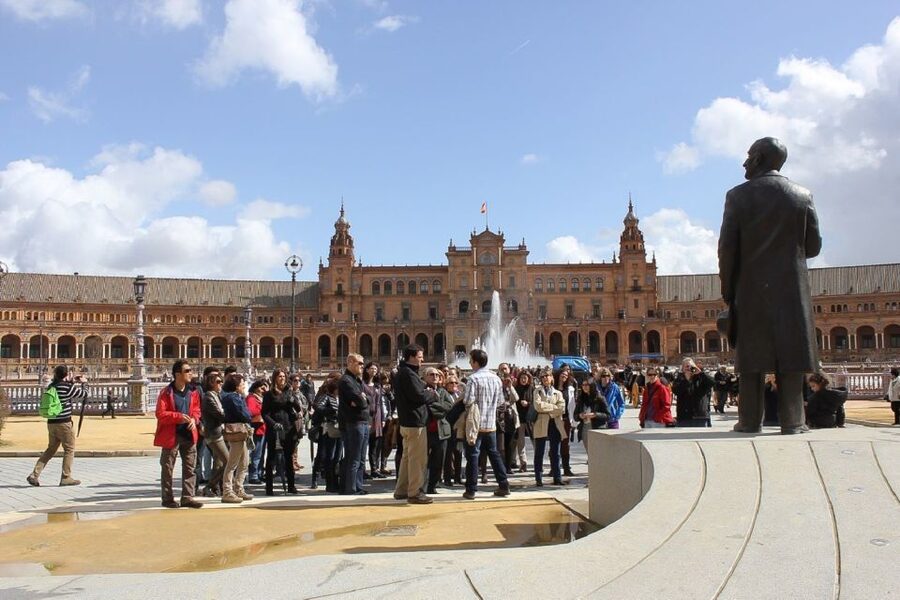
- Plaza de España plus Plaza de América in one efficient, guided loop
- Ibero-American Exposition of 1929 context that makes the architecture make sense
- A walk through an urban green lung that Seville has loved since 1914
- Photo stops and short guided moments at themed points, including the Lotos pond area
- Guides in Spanish known for clear, friendly storytelling (I’ve seen names like Julián, MariPaz, and Grecia)
Maria Luisa Park and the 1929 story in 2 hours
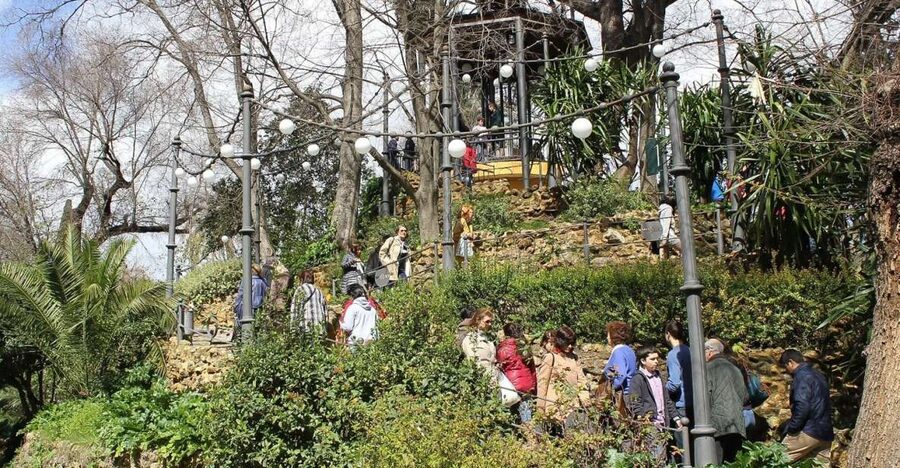
Maria Luisa Park is Seville’s reminder that a city can be both grand and calm. This is an urban park, and it matters for how Seville breathes. The park originally belonged to the private gardens of Infanta Maria Luisa Fernanda, then she donated it to the city in 1914. That change, from private retreat to public space, is part of the emotional pull here.
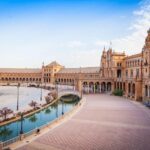
Then the big 20th century layer shows up: inside the park sits Plaza de España, built by Aníbal González for the Ibero-American Exposition of 1929. When you walk with a guide, the architecture stops being just pretty tiles. You start noticing how the spaces were designed to communicate an era, a theme, and a sense of connection across the Atlantic world.
In a two-hour format, you will not cover every corner of the park in deep detail. But you will leave with a mental map, plus the key “why” behind what you’re seeing. That’s the real value, especially if you only have a limited window in Seville.
You can also read our reviews of more tours and experiences in Seville.

The design logic: Forestier, Aníbal González, and garden water
This tour’s strongest advantage is that you learn to read the park like a design plan, not a random stroll. Maria Luisa Park includes the work of landscape and architecture minds tied to the exposition era, with mention of Forestier alongside Aníbal González’s Plaza de España.
Here’s what I think helps most visitors: you learn how the park’s water and paths guide your attention. The walk leads from Monte Gurugú down toward the Estanque de los Lotos area, so the sequence feels intentional. You’re not just moving from landmark to landmark, you’re following the park’s built-in choreography.
The fountains and ponds are also where guides shine. In past experiences I’ve had, the best guides give you a practical lens, like how to spot the visual language of water basins and how the surrounding paths frame views. In this case, guides have been praised for sharing details around the fountains and park secrets, which is exactly what makes a short guided walk feel longer than it is.
Getting started: meeting points and how to handle Seville walking
This is a walking tour through a historical park, and the weather is part of the deal in Seville. You’ll want comfortable shoes. The tour is recommended with sunglasses, sun hat, and sunscreen, especially in spring or summer. Think of it like this, you’re paying for an interpretation of place, so you don’t want your legs or your sun tolerance to cut the experience short.
Starting points can vary depending on what you booked. Common options include Avenida María Luisa (La Raza) and Fuente de la Glorieta de San Diego. If you’re trying to match your day, choose the start point that keeps you least-stressed on arrival. That small planning move buys you more time to enjoy the park.
The tour is in Spanish, and it’s listed as an official guide experience. If Spanish is your weak spot, you may still follow the visuals, but the full payoff comes when you can catch the guide’s explanations.
The opening monuments: Bécquer and Infanta Maria Luisa
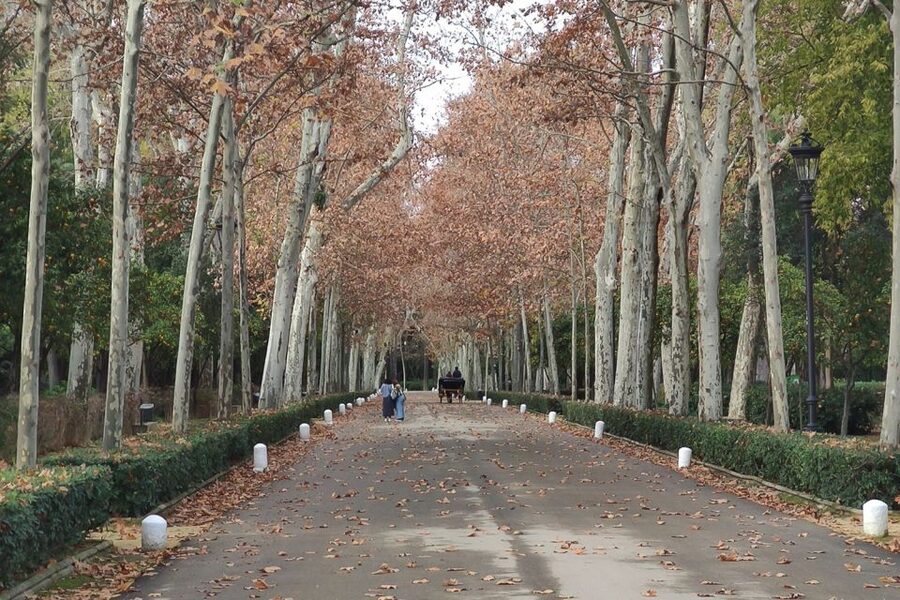
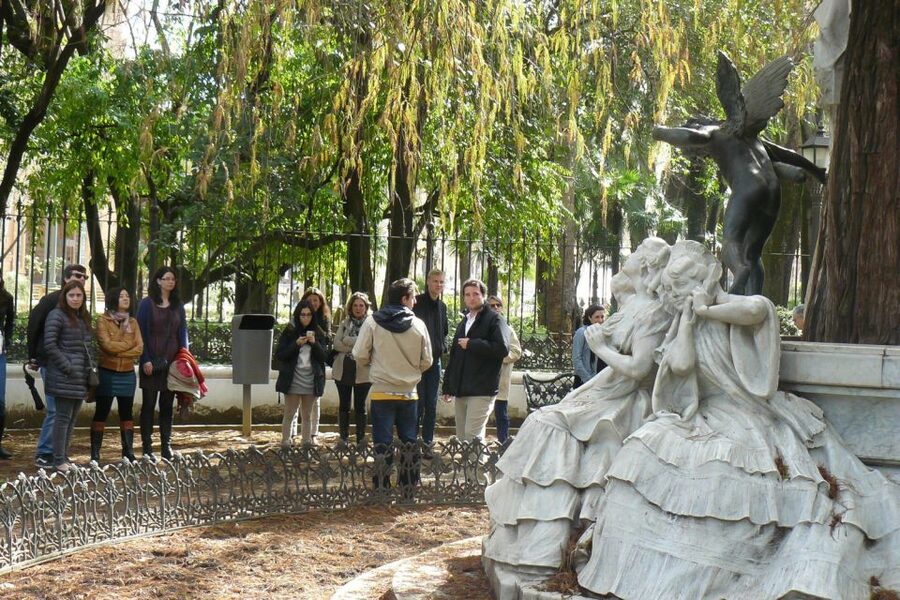
The first part of the walk sets the emotional tone. You begin at the Gustavo Adolfo Bécquer Monument with a photo stop and a short guided moment. This is a good warm-up because it anchors you to Seville’s cultural identity. Before you get lost in the garden’s paths, you get one reference point that makes the city feel human, not just architectural.
Next comes the Monumento a la Infanta Maria Luisa. This is more than a statue stop. It’s where the park’s story becomes personal. You remember that the grounds once belonged to her private gardens and then became public in 1914. That context matters when you later see the park’s calm, open feel. It also helps you appreciate why the park’s design leans toward elegance rather than pure wilderness.
A nice part of this style of tour is the pace of stops. You don’t rush through everything at once. You get short guided blocks, then you move on while your brain is still engaged. That rhythm works well for a two-hour visit.
Estanque de los Lotos and the park’s themed corners
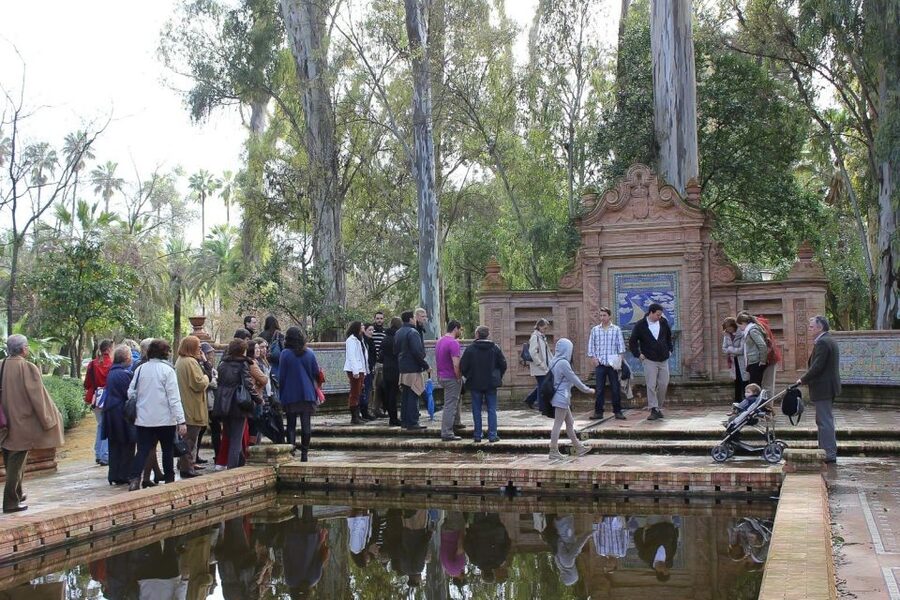
Now the park starts to feel like a stage set. One highlight stop is the Estanque de los Lotos area, with a short visit and guided explanation. Even if you’re not a fountain person, this type of water feature changes the way the park “sounds” and “breathes.” It’s a visual pause, and it gives the guide a chance to talk about the symbolism and design logic behind the space.
Then you’ll move to other themed stops, including Glorieta de Juanita Reina. That name is a clue that the park isn’t only about royal donors and exposition architecture. It also reflects Sevillan culture, with spaces that honor figures connected to local identity. Even if you don’t know the name yet, the guided context helps it click.
After that, Monte Gurugú comes next. The tour’s sequencing from Monte Gurugú toward the Lotos pond area means you gradually connect the rise and fall of the park’s experience. Monte Gurugú isn’t just another stop. It acts like a pivot point in the walk, making the later water feature feel more like a destination than a random ornament.

Glorietas with poets’ names: Hermanos Machado and Álvarez Quintero
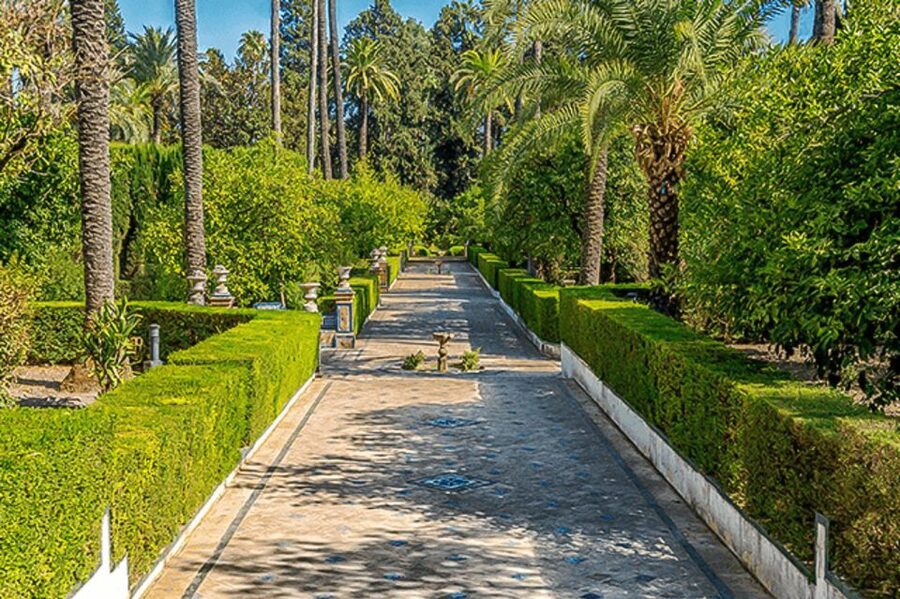
As the walk continues, you’ll pass glories and courtyards known by cultural names like the Glorieta de los Hermanos Machado and the Glorieta de los Hermanos Álvarez Quintero. These stops are brief, but they serve a purpose: they remind you that Maria Luisa Park is a public stage for cultural memory.
In my view, this is where guided tours earn their keep. Without context, a traveler might treat these as just scenic corners for photos. With a guide, you get a sense of who was honored and why it belongs here. That turns the park into a story you can walk through.
Also, these cultural-name stops are helpful for pacing. They break up the larger visual moments. When you arrive at Plaza de América later, you’ll feel mentally prepared because you’ve already been “reading” the park for a while.
Plaza de América: where the exposition vibe shows up
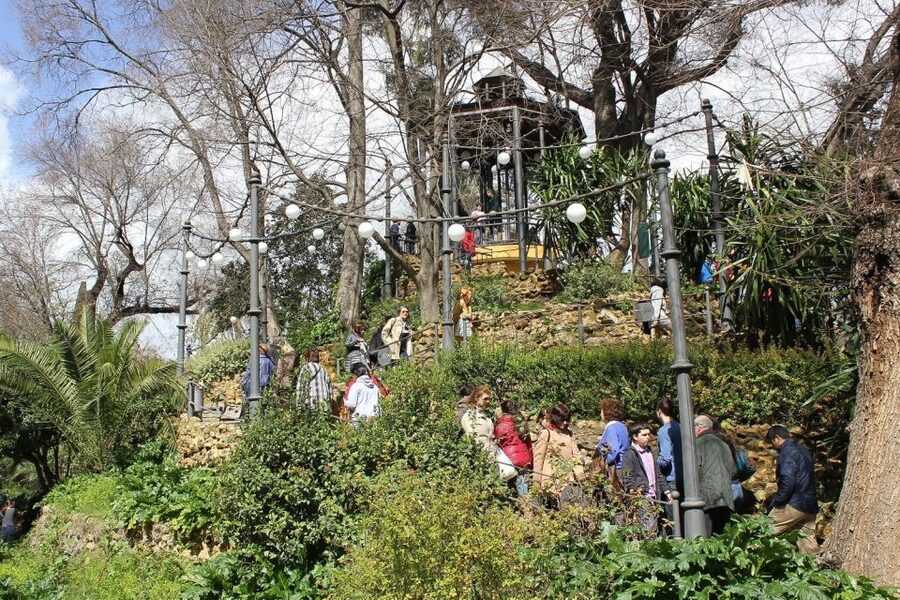
Plaza de América is a key moment because it shifts you from garden intimacy to a more open, architectural outlook. You’ll get photo time plus a guided segment focused on what you’re looking at.
This plaza is connected to the wider world of the Ibero-American Exposition of 1929. When you understand that the exposition shaped the park’s major architectural components, Plaza de América stops being just another pretty square. It becomes part of the design language used to present an idea of shared culture and historical connection.
You’ll likely notice how the space frames views and encourages you to look outward and inward. That’s the point of designed plazas inside parks. They give you a change of scale, so the walk feels varied rather than repetitive.
If you’re a person who loves learning just enough to make the next photo meaningful, Plaza de América is exactly the kind of stop that pays off.
Plaza de España in 25 minutes: what to focus on so it feels worth it
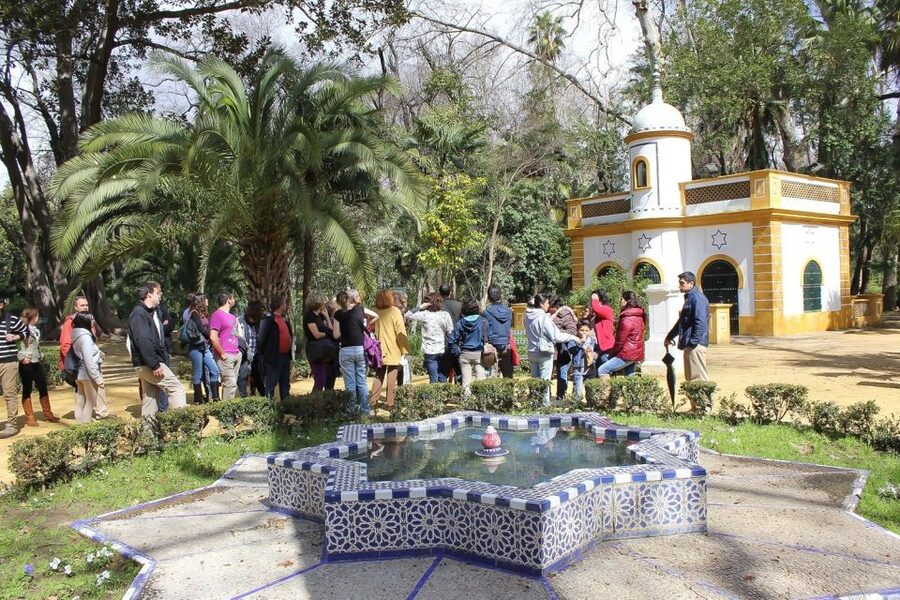
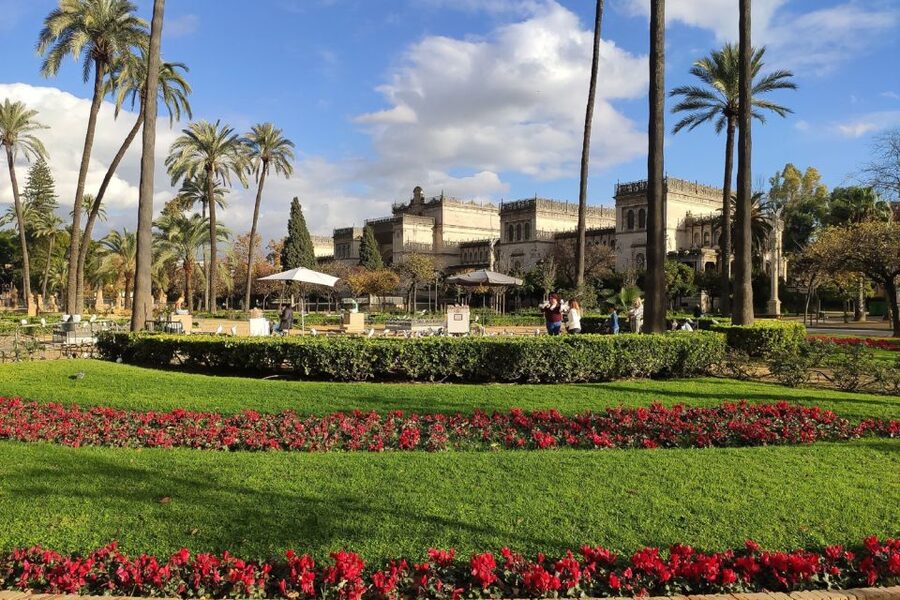
Plaza de España is why most people come, and you will see it clearly during this tour. You get photo stop time plus a guided explanation segment, designed to help you understand what’s around you fast.
Here’s how I would make the most of the time you have in Plaza de España, even if it’s not a long lingering visit. Look at three things in this order:
1) The overall geometry. Get your bearings first. The plaza is built to guide your eye around the big architectural sweep.
2) The decorative language. Even when you don’t know every symbol, you’ll understand that the design is intentional, not random.
3) The way the plaza connects back to the park. You’re inside a park, so you’re not just standing in a city landmark. You’re inside a designed transition between garden and monument.
A common feeling with shorter tours is that Plaza de España can feel like it deserves more time. One consideration is that if you want a slow, sit-down, photo-every-inch experience, you may feel the guided segment finishes quickly. My advice is simple: use the guided time for context, then plan your own extra minutes after the tour to relax by the views.
Still, even with that limitation, guided insight helps the plaza click. Without it, Plaza de España can turn into a blur of pretty surfaces. With it, you notice why it looks the way it does and how it fits into the bigger exposition story.
Value and pace: who should book this tour
At about $14 per person for a roughly two-hour official guided walk, this is solid value. You’re paying for three things that are hard to replicate on your own: a curated route, an official guide in Spanish, and a structured explanation of key park and exposition spaces. If you were going to spend time wandering randomly, this option usually converts that wandering into understanding.
The pacing is a balancing act. The tour includes multiple stops with photo time and guided segments. That means you’ll cover a lot, but you won’t do any one place for a long, slow deep hang. If you’re the type who wants long breaks, you might prefer adding extra time right after the tour near Plaza de España.
This experience is best for you if:
- you want a guided introduction that makes the park’s design and exposition connections clear
- you enjoy short stops with commentary rather than one long museum-style session
- you like architecture plus small cultural references, like the poet and artist named corners
It may be less ideal if you want only Plaza de España, with no park stops, and no learning component. But even then, the park context is what keeps the visit from feeling repetitive.
You’ll also appreciate that the tour is described as wheelchair accessible, which makes it easier for more people to join. If you’re booking a private group, it can help you move at a pace that suits your group better.
Should you book Secrets of Maria Luisa Park and Plaza de España?
Book it if you want the fastest way to understand why Maria Luisa Park feels special, and why Plaza de España is more than postcard scenery. The guide-led explanations, especially around fountains, design details, and the 1929 exposition framework, are the core reason this tour is worth your time.
I would not book it if you’re hoping for hours at Plaza de España alone. This is a “get the story, see the sequence” walk. Plan a little extra time after the tour if you want to sit, people-watch, and take your time.
If your priority is context over lingering, this tour is a smart match for a Seville day.
FAQ
How long is the Secrets of Maria Luisa Park and Plaza de Espana tour?
The tour duration is listed as 2 hours.
What is the price per person?
The price is listed as $14 per person.
Where does the tour start?
The meeting point may vary depending on the option booked. Two starting options are Avenida María Luisa (La Raza) and Fuente de la Glorieta de San Diego.
What major places will I see?
You’ll visit Plaza de España and Plaza de América, along with several stops inside Maria Luisa Park such as Monte Gurugú and the Estanque de los Lotos area.
Is food or drinks included?
No, food and drinks are not included.
Is the tour guided, and what language is it in?
Yes, it includes an official live tour guide, and the listed language is Spanish.
Is it wheelchair accessible?
Yes, the tour is listed as wheelchair accessible.
Do you offer private tours?
Yes, a private group option is available.
Is free cancellation available?
Yes. Free cancellation is available up to 24 hours in advance for a full refund.
Can I reserve and pay later?
Yes, the option to reserve now and pay later is listed as available.
More Tour Reviews in Seville
Not for you? Here's more nearby things to do in Seville we have reviewed

More Seville Tours worth a look.
 ★ 4.6Royal Alcázar Entry TicketFrom $2328,378 reviews
 ★ 4.5Cathedral and La Giralda Entry TicketFrom $2024,592 reviews
 ★ 4.7Live Flamenco Dancing Show Ticket at the TheaterFrom $2716,396 reviews
 ★ 4.21-Hour Guadalquivir River Sightseeing Eco CruiseFrom $1910,281 reviews
 ★ 4.7Cathedral, Giralda, and Royal Alcázar Guided TourFrom $699,165 reviews
 ★ 4.6Setas de Sevilla Entry TicketFrom $188,901 reviews
 ★ 4.6Cathedral, Giralda & Alcazar Entry With Guided TourFrom $658,560 reviews
 ★ 4.8Priority Access Cathedral, Giralda & Alcázar TourFrom $647,563 reviews
Continue by place or experience