
REVIEW · FLAMENCO SHOWS & TABLAOS IN SEVILLE
Sevilla : Flamenco Lessons
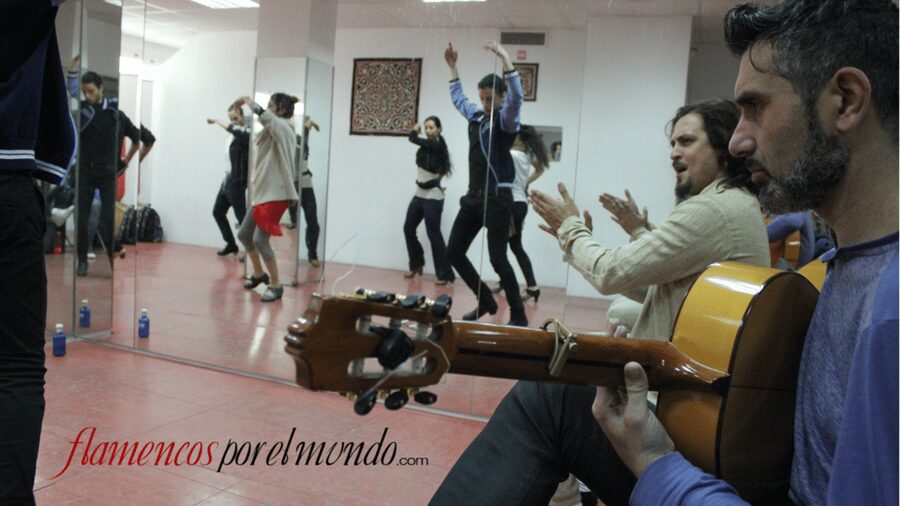
Flamenco starts with your feet and hands. This 60-minute class in the heart of Seville puts professional artists in the spotlight, teaching you the basics in a real theater setting. You will learn the rhythm first, then turn it into movement or sound, depending on the option you choose (flamenco is not just for watching).
What I like most is the clear instruction and fast momentum. You get hands-on practice with compás (the flamenco rhythm) and palmas (clapping patterns), plus guidance that works whether you are a total beginner or already know your way around music or movement.
One thing to think about: the flamenco guitar option is recommended only if you already play or have basic musical knowledge. If you do not, you might get more out of the dance or singing track instead.
Key takeaways
- Central theater setting in Seville, where flamenco culture is part of daily life
- You choose your track: dance, cante (singing), or guitar for that hour
- Beginners are welcomed for dance and singing, with technique broken down simply
- You train the core rhythm: compás and palmas, not just memorizing steps
- Guitar focus can include rasgueos (strumming) and flamenco chords, but needs basic music sense
- Instructors can match your level, with past lessons credited to teachers like Analīe and Penelope
One Hour of Flamenco Training in Central Seville
This is the kind of flamenco class that respects your time. One hour is short, so you do not get lost in long explanations. You get straight to the flamenco basics, the stuff that makes everything else click.
The lesson happens in central Seville, in a traditional flamenco theater environment. That matters. You are not learning flamenco as a museum object. You are learning it in a space built for it.
Price is $47 per person for a 60-minute lesson with a professional instructor. For Seville, it is a fair deal if you want skill, not just a photo stop. You are paying for live coaching, plus materials and guidance provided.
You can also read our reviews of more tours and experiences in Seville.


Dance, Cante, or Guitar: Pick Your Path
You choose what you learn for the full hour: flamenco dance, cante (singing), or guitar. That choice is more than a menu item. It changes what you practice and what kind of challenge you will feel.
Dance and singing are set up for beginners. You can show up without previous experience and still leave with a first taste of flamenco technique and expression.
Guitar is a different story. It is recommended if you already know how to play or you have basic musical knowledge. Flamenco guitar is its own language, and the class will likely move quickly once you hit technique like rasgueos and chord patterns.
The Core Lesson: Compás and Palmas
If flamenco had one secret, it would be the rhythm. In this class, you focus on the fundamentals of compás and palmas early on, because rhythm is what ties dance, singing, and guitar together.
Compás is the repeating rhythmic structure you feel underneath everything. When you understand it, flamenco stops being random and starts being playable.
Palmas are the claps that lock you into the timing. This is where many people get surprised, in a good way. Clapping looks easy until you try to match flamenco timing. Then suddenly you are learning real technique, not generic rhythm.
What the Dance Track Really Builds in Your Body
In the dance option, you work on simple steps paired with the flamenco rhythm. The goal is to give you the first physical vocabulary of the dance style, so you can move with intention instead of just copying hand signs.
You also get practice in how flamenco uses tension and control. Even at beginner level, flamenco is not about flailing. It is about accuracy, timing, and expression.
Practical tip: wear comfortable clothes and shoes that let you move. If you have dance shoes with a small heel, they can help. If not, do not stress. Just choose footwear that is safe on the floor and lets you tap or shift weight without sliding.
What Cante (Singing) Teaches You About Expression
If you pick singing, the lesson focuses on vocal expression as part of flamenco technique. Singing flamenco is not only about hitting notes. It is about shaping sound with emotion and timing.
Even if you cannot read music, you can still learn the basics of how flamenco phrasing works. The class is designed to guide you step-by-step, so you are not left figuring it out alone.
You will also get help that matters for non-singers, like how to coordinate your voice with the rhythmic backbone of compás. That coordination is what turns singing from “a song” into flamenco.
A nice detail from prior lessons: teachers such as Penelope have been praised for adjusting steps to your level. That same idea applies to singing. You should feel coached, not rushed.



Flamenco Guitar Basics: Rasgueos and Flamenco Chords
The guitar option can be great if you already play. It focuses on technique such as rasgueos (flamenco strumming) and flamenco chords. Those are the moves that make flamenco guitar sound instantly recognizable.
Because the class is only 60 minutes, you will not have time for heavy troubleshooting of brand-new playing skills. The idea is that you bring a foundation, then you sharpen the flamenco approach during the session.
If you do play, bring your own guitar if you want, or use one provided. Either way, come prepared to practice technique patterns along with the rhythm your instructor emphasizes.
How the Teaching Works in Real Time
This class is taught by professional flamenco artists. Past participants have singled out instructors by name, including Analīe for clear explanations and Penelope for matching choreography and steps to the learner.
That matters because flamenco teaching can go two ways. It can be vague, or it can be practical. This lesson is positioned as practical: technique broken into understandable parts, with guidance for both beginners and people who already have experience.
Expect coaching as you try the basics. The best flamenco learning happens when you make the rhythm, then adjust it with feedback right away.
Who Should Take This Class (And Who Might Skip It)
This is a strong pick if you want a hands-on flamenco taste in Seville without spending half your day chasing tickets and starting times.
Great fit for you if:
- You want to learn dance or cante and have no prior experience
- You like structured practice, not just watching performances
- You want a memorable cultural activity that is small scale and coach-led
- You like the idea of learning the rhythm behind flamenco, not only copying moves
You should think twice if:
- You are a complete beginner at guitar and have no musical background
- You want a deep, long-form training plan (this is 60 minutes, not a multi-session program)
- You are bringing young kids. The class is not suitable for children under 6 years
Value Check: Is $47 Worth It?
For $47 per person, you are buying a few things at once: a professional instructor, a focused 60-minute lesson, and guidance plus necessary materials.
Is it cheaper than a show? Usually, yes. Is it more than a casual activity with no instruction? Also yes. So the real question is what you want in Seville.
If you want to understand flamenco from the inside, this price makes sense. A flamenco performance is memorable, but it does not teach you how compás and palmas work, or how dance and vocals connect to rhythm. This class does.
Also, choosing between dance, singing, and guitar means you are not paying for an activity that does not match your interests. That saves you from a common travel mistake: doing something you tolerate instead of something you actually want to learn.
Practical Tips Before You Go
This is simple, but do not show up underdressed and unprepared.
Bring:
- Comfortable clothes
- Comfortable shoes
- Water and enthusiasm (water is part of the suggested prep)
For dance, shoes with a small heel can help, but comfort matters more than fashion. For singing, wear something that lets you move and breathe. For guitar, bring your own if you prefer, but know you can use a provided instrument too.
Language-wise, the class is available in English and Spanish. If you speak Spanish, you may enjoy the extra cultural texture. If English is your comfort zone, you will still get instruction clearly.
Should You Book This Flamenco Lesson?
If you want a flamenco experience with real skill-building, I think you should book it. One hour is enough time to feel what compás and palmas do, and to walk away with a new way to understand performances you see later.
This is especially worth it if you are a beginner in dance or singing. The class is built for people with no prior experience, and instructors have a track record of adapting to your level.
Only skip or switch tracks if you are considering guitar but you have no musical background. In that case, dance or cante will likely feel more accessible and more satisfying.
If you are short on time in Seville and want one activity that feels cultural, coach-led, and actually educational, this fits the bill. Grab a spot, pick your discipline, and go learn flamenco like it is meant to be learned: by doing.
FAQ
How long is the flamenco lesson in Seville?
It lasts 60 minutes.
What can I choose to learn during the class?
You can choose dance, singing (cante), or guitar for the one-hour lesson.
Do I need any prior experience to join?
For the dance and singing options, no prior experience is needed.
Is the guitar class recommended for beginners?
The guitar class is recommended only if you already know how to play guitar or have basic musical knowledge.
What languages are available for the instruction?
The lesson is offered in English and Spanish.
What should I wear or bring?
Wear comfortable clothes and comfortable shoes. You might also want to bring water and, if you are doing dance, shoes with a small heel if possible.
Is the class suitable for children?
It is not suitable for children under 6 years.
More Tour Reviews in Seville
Not for you? Here's more nearby things to do in Seville we have reviewed


More Flamenco Shows & Tablaos in Seville worth a look.
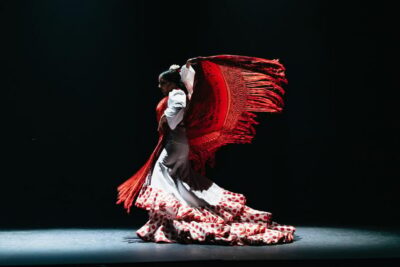 ★ 4.7Live Flamenco Dancing Show Ticket at the TheaterFrom $2716,396 reviews
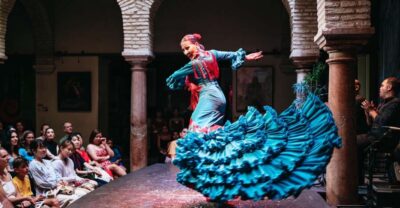 ★ 4.8Puro Flamenco Show with Optional Museum TicketFrom $346,088 reviews
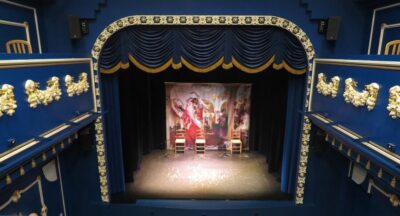 ★ 4.6Live Flamenco Show at “Teatro Flamenco Triana”From $283,290 reviews
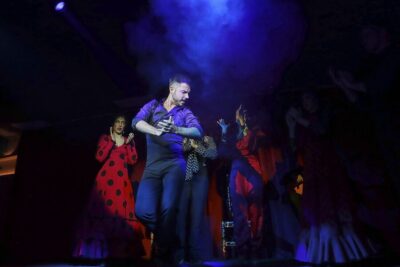 ★ 4.8Flamenco Show Ticket at Tablao Flamenco Las SetasFrom $332,214 reviews
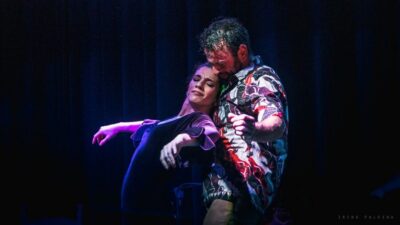 ★ 4.8Traditional Flamenco Show in TrianaFrom $261,580 reviews
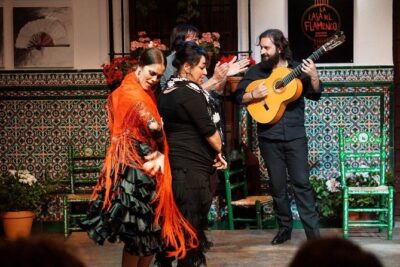 ★ 5.0Authentic Flamenco Show with Tapas & Wine Guided TourFrom $951,476 reviews
 ★ 4.5Flamenco Show at Tablao El Arenal with Drink and Optional Dinner or TapasFrom $591,415 reviews
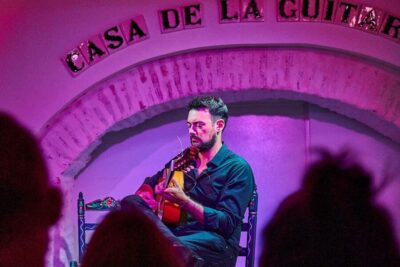 ★ 4.5Ticket to Flamenco Show at La Casa de la GuitarraFrom $231,321 reviews
Continue by place or experience