
REVIEW · SEVILLE BIKE & E-BIKE RIDES
Seville City Bike Tour: Top Seville’s Monuments
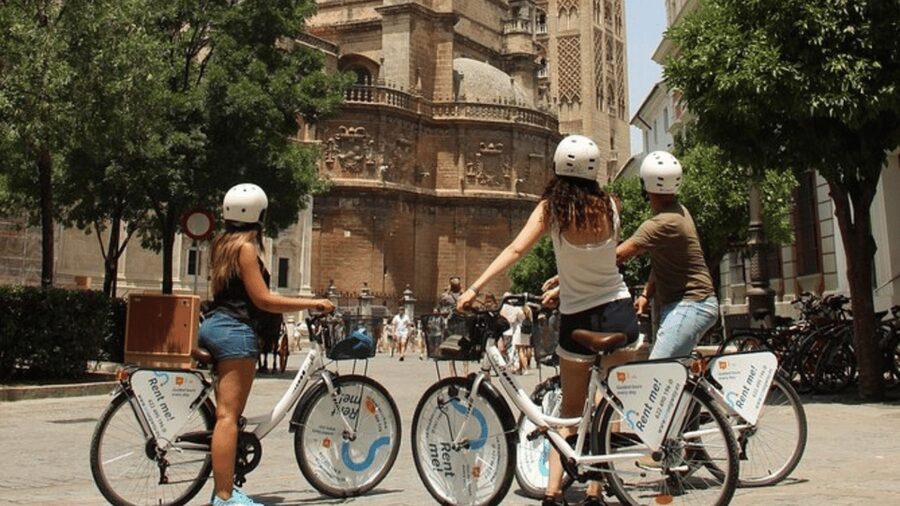
Seville on a bike makes the city feel personal. This 2 hour loop turns major sights into a smooth route, so you can cover far more than you would on foot, with a local guide who explains what you are actually seeing. I especially liked the Barrio Santa Cruz cruising and the guide led storytelling that ties stops like the Alcázar and the Antigua Fábrica de Tabacos to the city’s bigger story. The tradeoff is that it is a fast moving tour, with many sites viewed from the bike or with short pauses, not long, ticketed stays.
One more thing to consider: bike time plus city streets means you should be ready for frequent turning, getting on and off a little, and keeping your attention on the guide’s directions. In the best way, it avoids the stress of figuring out logistics. In the less perfect way, if you want slow, deep museum style time, this route will feel a bit like highlights, not a full day immersion.
Quick reasons to like this Seville city bike tour
- Barrio Santa Cruz route that gives you that classic Seville street feel early on
- Alcázar and Cathedral pass by that helps you orient before you spend more time on your own
- Plaza de España and Parque de María Luisa for the 1929 Exposition atmosphere and mosaic tiles
- Triana to Torre del Oro area for river views and key landmarks in one sweep
- Setas de Sevilla stop near Campana Café to place one of Seville’s most distinctive modern sights
Why a 2-hour bike loop works in Seville
Seville is big in sights, but compact in surprises. The city can look walkable until you try to connect the Cathedral area to the river, then keep going to the 1929 Exposition grounds and beyond. That is where a bike tour shines, because you spend less time transferring and more time actually seeing.
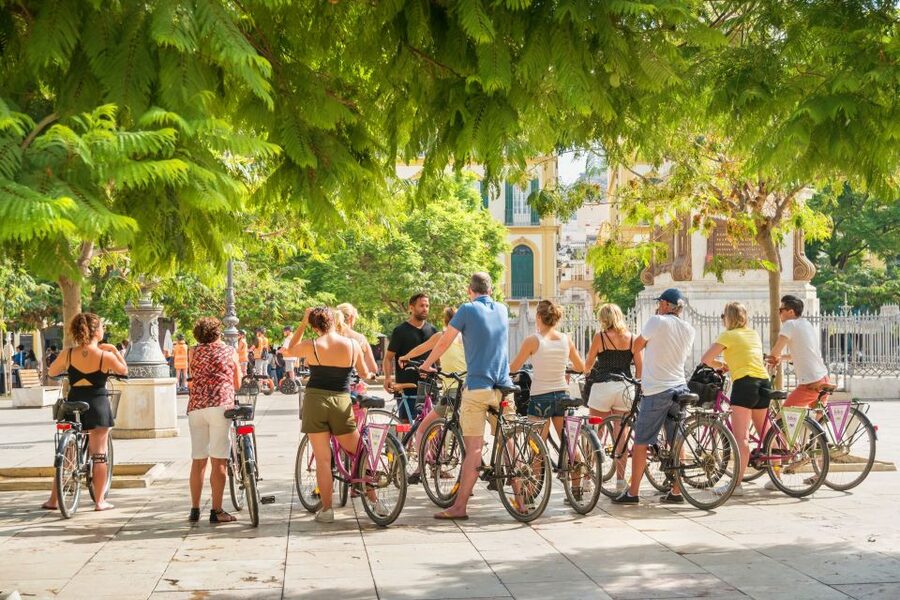
This one is designed around a tight, high value route. You start with a quick setup and safety briefing, then head out through historic neighborhoods and official landmarks. You will still get real moments to look, stop, and listen, but the pace is meant to keep you moving. For many people, it is the ideal first or second day activity, when you want the lay of the land fast.
And there is a practical bonus: the guide handles the flow. When you are biking through tight streets, that matters. A good guide also keeps the story from becoming a list of names. In the guide reviews, people repeatedly highlight how guides like Zak and Zach tell the city’s history clearly, and how guides like Barry add local color in a way that feels like conversation, not a lecture.
You can also read our reviews of more tours and experiences in Seville.


Starting at Topsegway, then cruising into Barrio Santa Cruz
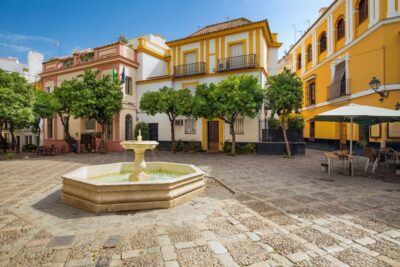
Most people think of Seville as the Cathedral and the Alcázar, then maybe one pretty neighborhood. This tour starts smarter, by using the Barrio Santa Cruz streets as your launch point. Those lanes are narrow, old, and full of small views that make Seville feel lived in. Even if you come back later with your own plans, you will understand the neighborhood’s layout much faster after biking through it.
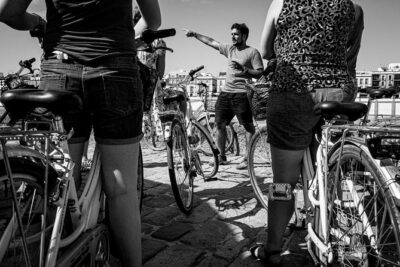
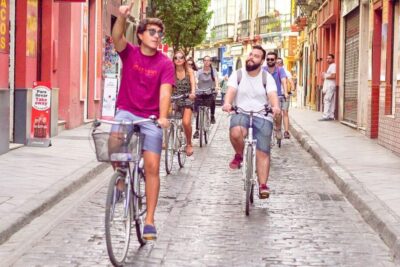
You begin at Topsegway and get the setup you need, including bike rental and a helmet, plus bottled water. After a safety briefing, the route gets moving quickly. That early momentum is key. You do not spend the first half hour stuck at the start point. You get into the flow of the city, with the guide steering you through the streets at a comfortable sightseeing pace.
You will also learn how to read the city from a bike. Instead of craning your neck the whole time, you get a rhythm: look ahead, listen to context, then glance up at details as you pass. It is an easy way to absorb Seville without getting exhausted.
From Cathedral area to Alcázar: quick orientation, real impact
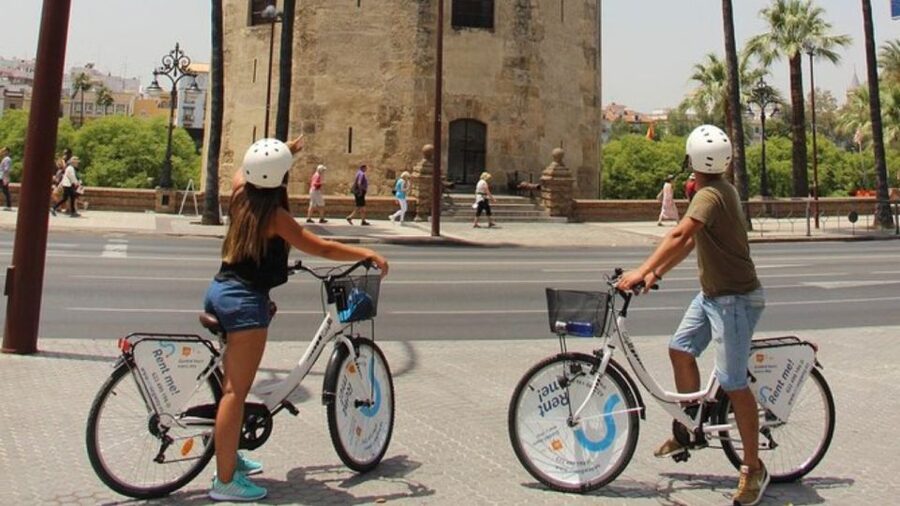
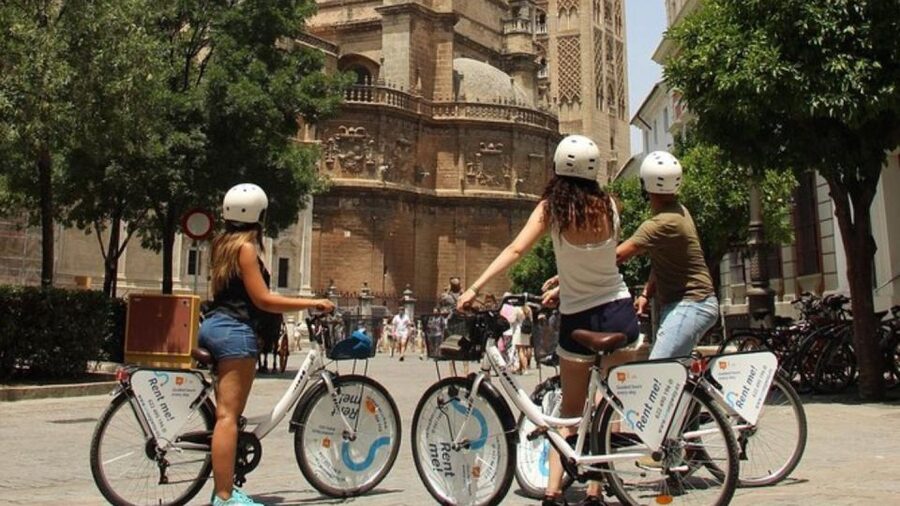
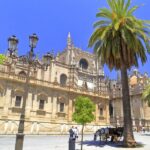
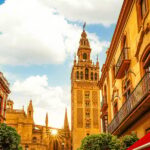
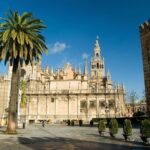
The tour gives you a head start on two of Seville’s most important sights. You pass the Seville Cathedral, then you roll toward the Alcázar of Seville. Even without spending hours inside on this specific route, seeing them from the street and getting guided context makes a difference.
Why it matters: Seville has a strong visual hierarchy. The Cathedral and Alcázar are anchors. Once you understand why these places were built where they are, the rest of the city starts to make sense. Later, when you walk on your own, you are not just chasing pretty photos. You are recognizing the geography and the planning logic.
A small practical note: the experience is built around pass by views and short sightseeing breaks. So if you are hoping for a long interior visit at both places, you will need separate plans. Still, for first time orientation, it is a smart way to decide what to revisit.
Murillo gardens and the Antigua Fábrica de Tabacos
After the Cathedral and Alcázar area, the route moves toward greener stretches like the Jardines de Murillo. This is a good change of pace. Seville can feel warm and dense, and gardens give you breathing room while you keep moving. It also sets you up for the next major stop area: the Antigua Fábrica de Tabacos (the old royal tobacco factory).
The tobacco factory is one of those places that gets more interesting the moment someone explains why it mattered. It is tied to work, power, and how Seville fit into larger economic life. From a bike, you get a clear view of the building mass and its setting. That makes the history feel grounded in real space, not just a page from a guidebook.
After that, the route continues toward Seville University. You are basically using the bike to connect different layers of the city, from royal and religious power to education and everyday life. That variety is part of the value of the itinerary, because it avoids the trap of only seeing monuments as isolated postcards.
Plaza de España and Parque de María Luisa: Exposition tiles at human speed
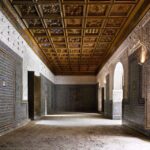
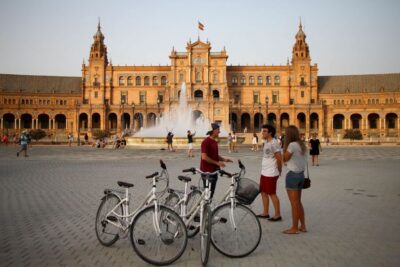
Then you get the big showpiece: Plaza de España. You will take a break here, with time to visit and enjoy the space, plus sightseeing as you pass through. This is where Seville often stops first in people’s minds, and it deserves that spotlight. The mosaic tiles and architecture are not just decorative. They are part of the 1929 Iberian-American Exposition story, and the scale gives you a strong sense of what Seville wanted to project.
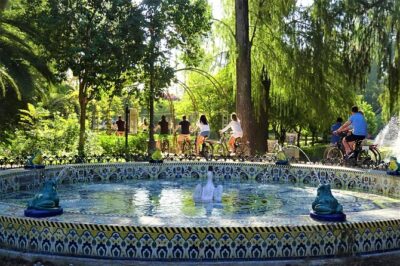
From Plaza de España, the ride continues to Parque de María Luisa, the centerpiece of that same Exposition era. You get time to visit and look around, but the bike keeps you from turning the park into a slow maze. It is a good balance. You can still pause for views, but you are not stuck trying to cover everything on foot before the route moves on.
If you like photography, this section is easy to plan around. You can decide which angles you want from the bike, then stop for a few minutes where the guide points out the best sight lines. The guide approach matters here. Strong guides help you see what is behind the look, like what elements connect to the Exposition theme and why the layout feels the way it does.

Torre del Oro, the Maestranza, and Triana by the river
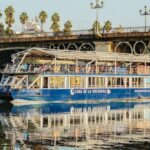
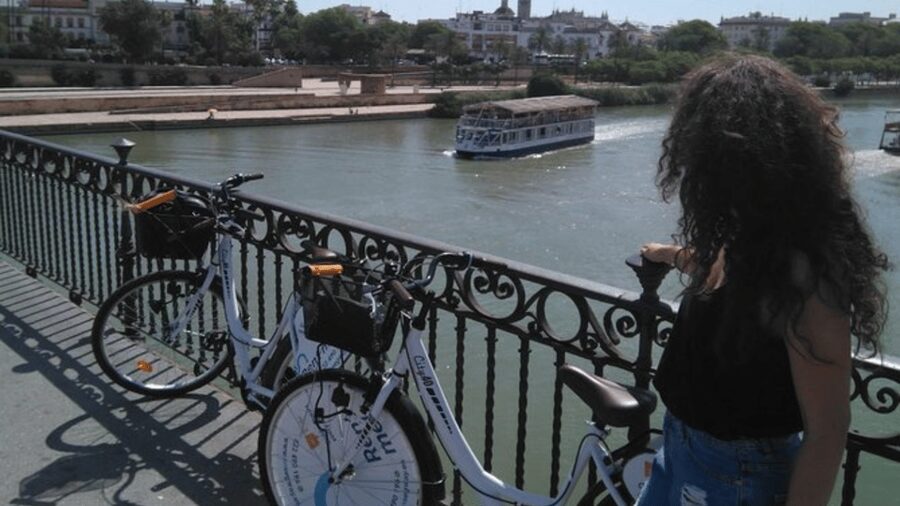
Once you leave the Exposition area, you shift to the river side of the story. You see Torre del Oro, you catch views near the Plaza de Toros de la Maestranza, and you continue into Triana.
This part of Seville feels different. You have more sky, more open angles near the river, and a sense of neighborhood identity. Triana is especially important because it is not just another district name. It feels like a world with its own rhythm, and biking through helps you understand the flow from the river inland.
You also get guided context as you pass. You will not just see the buildings, you will understand what they represent and why they show up here, in this order. That is one of the most praised aspects of the tour based on guide feedback, with many people praising how guides like Barry and Giacomo explain things in a way that stays interesting and never drags.
Campana Café and the Setas de Sevilla: modern Seville, placed in context
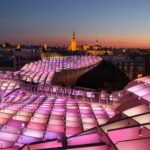
One of Seville’s most talked about modern landmarks is the Setas de Sevilla, often called the mushrooms. The tour routes you through this area in a way that feels practical, not random. You stop at Campana Café to get your bearings, and then you pedal through the surrounding streets where the Setas sit.
Why this stop is useful: Seville’s modern architecture can feel hard to place if you only see it from a distance. The bike route helps you reach it from different sight lines and keeps you from walking in circles trying to find where everything fits. The Campana Café break also gives you a moment to reset, check your map, and regroup without turning the tour into a rushed sprint.
Also, the tone is important here. Several guide comments emphasize not only knowledge but also an ability to keep things fun and conversational. That matters on a landmark like the Setas, because you are balancing modern design with a city that people often experience through older styles.
Cartuja and the Monasterio de la Cartuja, then back through Alameda
The tour continues north toward Cartuja, which is tied to the 1992 Exposition. Here you get to see the Monasterio de la Cartuja area. This is a key contrast point. Seville is not only about Moorish and Renaissance beauty. It also has later layers, and Exposition sites show how the city kept evolving.
The bike helps you connect Cartuja back to the center without wasting time. You head back toward Alameda, then finish with a quick pedal around Santa Cruz, passing by major sights again like the Cathedral and Alcazares.
That final pass matters more than it seems. It helps you build a mental map. After you have seen the Exposition grounds, the river neighborhoods, and the modern Setas area, coming back through the center gives you orientation. You start to feel where everything sits relative to everything else.
Bike comfort, safety briefing, and what to bring
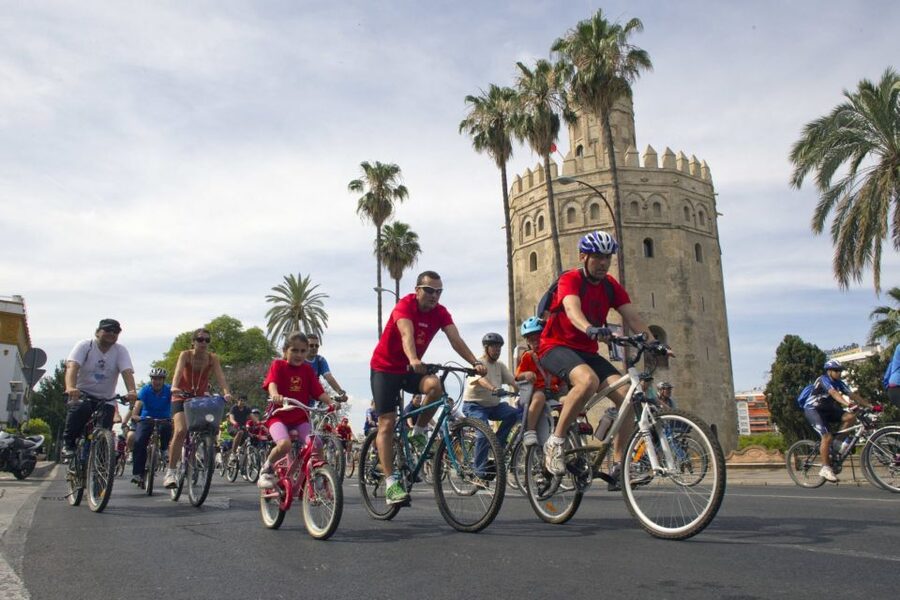
This experience is built for active sightseeing. You get bike rental and a helmet included, and there is a safety briefing before you roll. If you have ever had the stress of renting a bike and trying to figure out traffic rules, this is the opposite. You start with basic guidance, then the guide leads the way.
You also get bottled water, which sounds small until you are out in the heat with multiple stops and a lot of looking. On a 2 hour tour, hydration is not optional.
What to bring is straightforward: passport or ID card. That is it from the given info, but I still suggest you bring a light layer, especially if you plan to do this earlier or later in the day when temperatures shift.
If you are nervous about biking, focus on your comfort level first. The route is designed for sightseeing, so it should feel manageable, but it still uses real city streets and requires attention and balance.
Price and value for a $40, 2-hour monuments route
At $40 per person for 2 hours, this is positioned as a value sightseeing option that trades deep time for coverage. You get a guided experience, bike rental, a helmet, and bottled water. For many people, those inclusions are what make the price feel fair, because you are not paying separately for the basics.
The value comes from what you avoid:
- You avoid the time sink of walking long distances between major areas
- You avoid the mental load of planning a bike route on your own
- You avoid missing key landmarks because someone gives context while you pass them
The drawback is also part of the value equation. Because you are covering a lot, you should expect shorter stops rather than long stays at each monument. This works best if you want a strong overview plus a shortlist of what to revisit later.
Who should book this Seville city bike tour?
This is a great fit for you if you want:
- A first look at Seville’s top monuments in a short time
- A guide who explains history in a way that stays lively
- A mix of classic neighborhoods, major squares, and modern landmarks like the Setas
It is also a solid choice if you like being active but still want help. The route makes sense, and the guide keeps the story moving. Based on guide feedback, you can expect guides to take their time with clients and share local advice, such as those personable, fluent explanations credited to guides like Zak and Giacomo.
If you are someone who wants to spend half a day inside buildings, you should treat this tour as the overview piece. Then plan extra time for the places you care about most.
Should you book this Seville monuments bike tour?
Book it if you want a guided overview that connects Seville’s big icons to real neighborhoods. I think it is especially worth it when you want the Exposition sights, Triana river views, and the Setas area in one efficient route.
Skip or reconsider if your priority is long interior visits or slow pacing. This is a highlights style tour, and it works best when you are happy to see a lot, then go back later for deeper time.
If you are flexible and you like the idea of covering ground without turning your day into logistics, this one is a strong match.
FAQ
How long is the Seville City Bike Tour?
The tour lasts about 2 hours.
What is the price per person?
The price is $40 per person.
What is included in the tour?
Bike rental and a helmet are included, along with a guide and bottled water.
Where does the tour start?
It starts at Topsegway.
What major places will I pass or stop at?
You will cycle past or stop near Seville Cathedral and Alcázar, Antigua Fábrica de Tabacos, Plaza de España, Parque de María Luisa, Torre del Oro, Plaza de Toros de la Maestranza, Triana, the Setas de Sevilla area (near Campana Café), and the Cartuja area including Monasterio de la Cartuja.
What languages are the guides?
The live tour guide is available in English, Spanish, and French (the tour also lists these languages).
Do I need to bring anything?
You should bring a passport or ID card.
Is the tour wheelchair accessible, and are there private groups?
Yes, it is listed as wheelchair accessible, and private group options are available.
More Tour Reviews in Seville
Not for you? Here's more nearby things to do in Seville we have reviewed


More Seville Bike & E-Bike Rides worth a look.
 ★ 5.0Seville Highlights Bike Tour (English)From $422,225 reviews
 ★ 4.8Highlights City Bike TourFrom $382,168 reviews
 ★ 4.8Relaxing City Bike Tour with a Tour GuideFrom $351,588 reviews
 ★ 4.9City Sightseeing and Local Culture Bike TourFrom $311,120 reviews
 ★ 5.0Seville Electric Bike Tour – Small GroupFrom $58841 reviews
 ★ 5.0Sunset Guided Bike Tour in SevilleFrom $36438 reviews
 ★ 4.9Guided Sunset Bike TourFrom $41332 reviews
 ★ 5.03-hour Guided Bike Tour along the Highlights of SevilleFrom $39315 reviews
Continue by place or experience