
REVIEW · SEVILLE TOURS
Seville: City of Queens, Nuns, Sex Work & Witches
Queens, nuns, sex work, witches, and history. This themed Seville walk is built around women’s perspectives on the city’s biggest monuments and lesser-known corners. You’ll connect architecture to real lives, from roles that held influence to stories that were pushed to the margins.
Two things I really like: you’ll get a strong sense of Seville’s identity at key landmarks you’d otherwise just pass, and you’ll hear sharp, human stories from a guide who can explain how power works in plain terms. Abby and Nico, two guides people rave about, both show up as funny, responsive, and able to keep the group engaged.
One consideration: the theme is not always light. With topics hinted at by the tour title like sex work and witches, it may feel more adult and specific than a standard highlights tour.
Key things you’ll notice on this female-focused Seville walk
- Women’s stories as the organizing thread
You don’t just get dates. You get how decisions, work, and reputations shaped what Seville became.
- Stop-and-explain moments at major sights
Think Parque de María Luisa, Plaza de España, and the Exposición 1929 pavilions, with context tied to real people.
- A memorable Old Tobacco Factory segment
The cigar girls at the old factory add weight to a site that many visitors treat like a photo stop.
- Backstreets in Santa Cruz
You’ll walk through the Jewish quarter’s narrow alleys and side lanes that feel like Seville before the crowds.
- A break at an atmospheric local bar
You get a breather, plus that bonus feeling of being shown where locals reset.
- Small group, real conversation
With a max group size of 8, you’re not lost in the shuffle.
A Seville highlights tour with a point of view
Seville is famous for spectacle. This tour keeps that, but it asks a different question: what did women do, endure, control, and survive to make the city what it is?
That twist matters because it changes the details you notice. You start reading buildings like evidence. You start hearing social rules behind the pretty facades. And you stop seeing history as one straight line of kings and wars.
You also get a theme that feels deliberately human. Instead of only praising power, the tour looks at power gaps too. Some figures had influence. Some didn’t. Some were used. That balance makes the stories feel more grounded.
You can also read our reviews of more tours and experiences in Seville.

Price and time: is $105 for 2 hours a good deal?
At $105 per person for a 2-hour small-group walking tour, you’re paying for two things that matter in Seville: expert interpretation and a tight route that hits multiple areas without wasting time.
You get a professional guide, a city map, and insider tips. The map and tips are especially useful because Seville rewards curiosity, and this tour gives you a way to keep exploring after the walk ends.
Is it a bargain? No, it’s not a budget stroll. But it is value if you want context and storytelling tied to specific sites. If you prefer “walk and look only,” you’ll probably feel the time cost. If you want meaning, this is built for that.
Also, the group size limit of 8 means you’re more likely to get your questions answered, not just hear the main script.
Where you meet, how long you walk, and how the pace feels
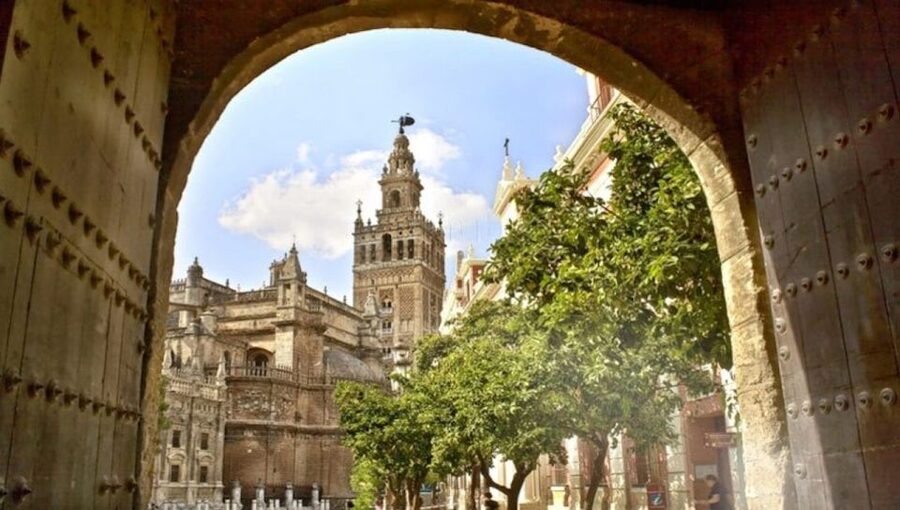
You meet at the Costurero de la Reina monument on P.º de las Delicias, 3. The tour ends at Plaza Nueva (41001 Sevilla).
This is a walking experience. You’re moving at a leisurely pace, with short stops to look closely and listen. The time is set up for attention, not marathon sightseeing.
The pacing is practical: even if you’re stopping often, you’re not stuck in one spot for long. The route includes gardens, squares, and old-city lanes, so your feet get variety. You’ll still want comfortable shoes, since the old town includes narrow streets and uneven surfaces.
If you’re the type who likes a plan, this works well. If you’re the type who likes pure spontaneity, you might feel the structure a bit. Luckily, the tour is short, so it doesn’t steal your whole day.
Starting with the Costurero de la Reina: women’s roles made physical
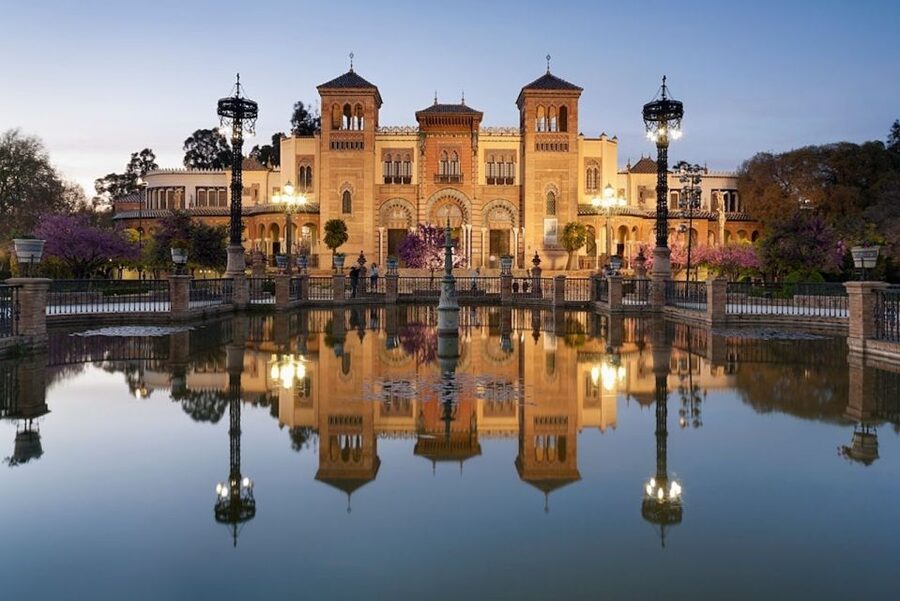
The tour begins at a monument tied to the queen’s sewing box, the Costurero de la Reina. That’s a clever choice for a starting point because it frames the theme in a concrete way.
Sewing sounds domestic. But in many societies, domestic roles were power with rules attached. The tour uses the space to talk about what women were expected to do, what they could control, and how those expectations influenced what became public and what stayed private.
From there, you start moving toward the city’s big “show” areas, like the kind of architecture people photograph nonstop. The trick is you won’t look at those buildings the same way afterward.
Parque de María Luisa and Doña Sol: why these garden stops matter
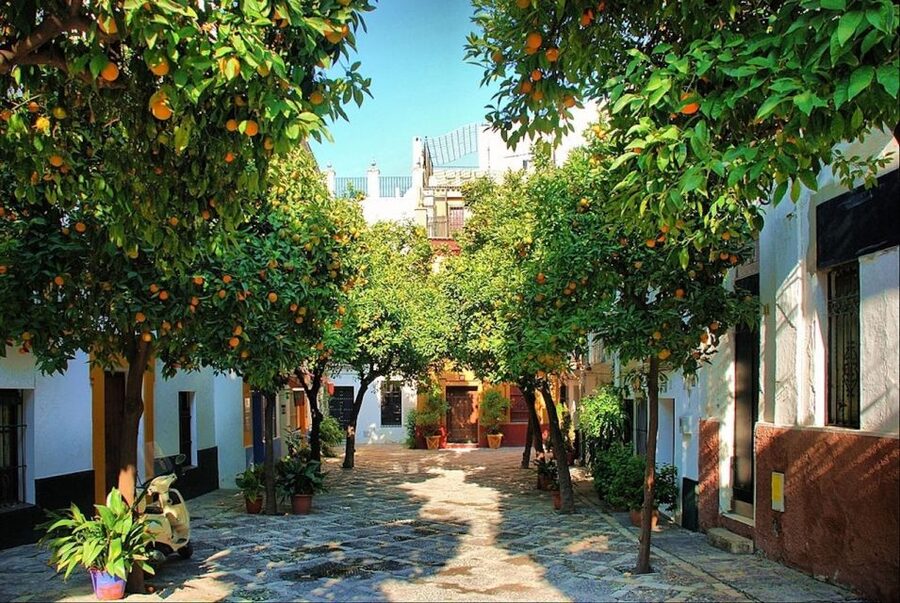
In Parque de María Luisa, you’re not just in a pretty park. You’re in a designed mood, and the tour uses that mood to talk about how public space can reflect social choices.
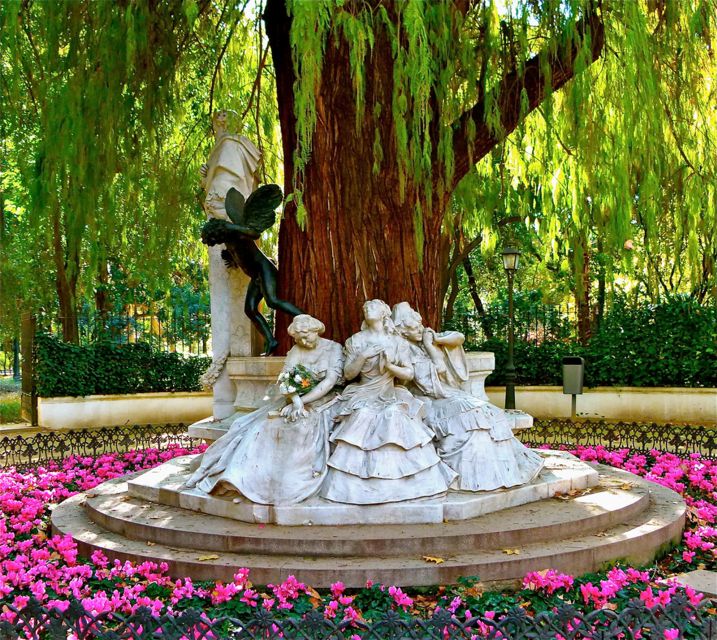
You’ll also hit a stop at the Glorieta de Doña Sol. That short segment is a good example of what this tour does well. It takes a named spot and turns it into a story anchor. Even when you only spend a few minutes there, you leave with a name, a context, and a sense of why the place was remembered.
Garden time works on a walking tour because it resets your attention. By the time you move back into city streets, you’re ready to look harder.



Exposición 1929 pavilions: architecture you can read like a story
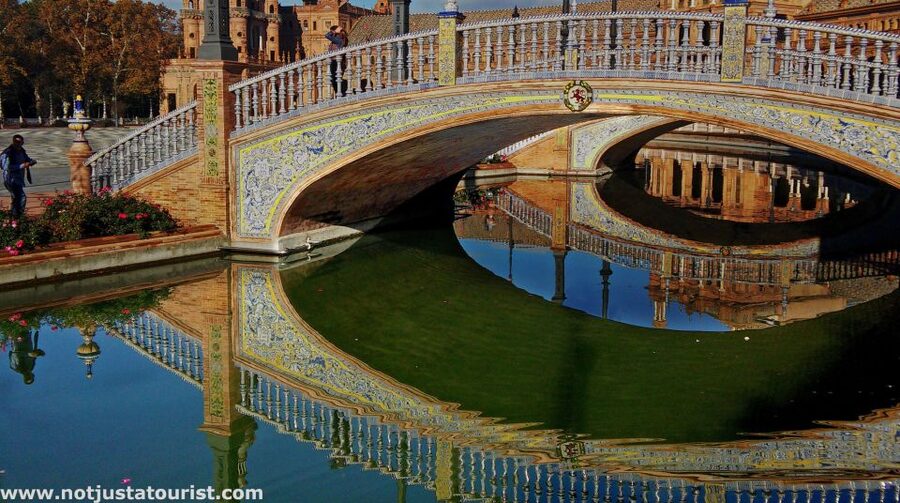
One of the most satisfying parts of this tour is how it uses the Exposición 1929 area to show the city at a specific moment in time. You visit pavilions that are not just pretty, they’re symbolic.
You’ll see the Pabellón de Estados Unidos and later the Pabellón de Portugal, plus a guided stop area connected to Plaza de España and the surrounding complex. The tour doesn’t treat them like random photo points. It ties the architecture to the idea of who gets visibility and how power is displayed.
This is where the theme earns its keep. Even international exhibition buildings are tied to who represents whom, and what stories get promoted in public space.
Quick practical note: these areas can feel sunny and bright, especially if your walk overlaps midday. Bring sunscreen and give yourself permission to slow down at the stops.
Plaza de España: the big scene, explained without the fluff
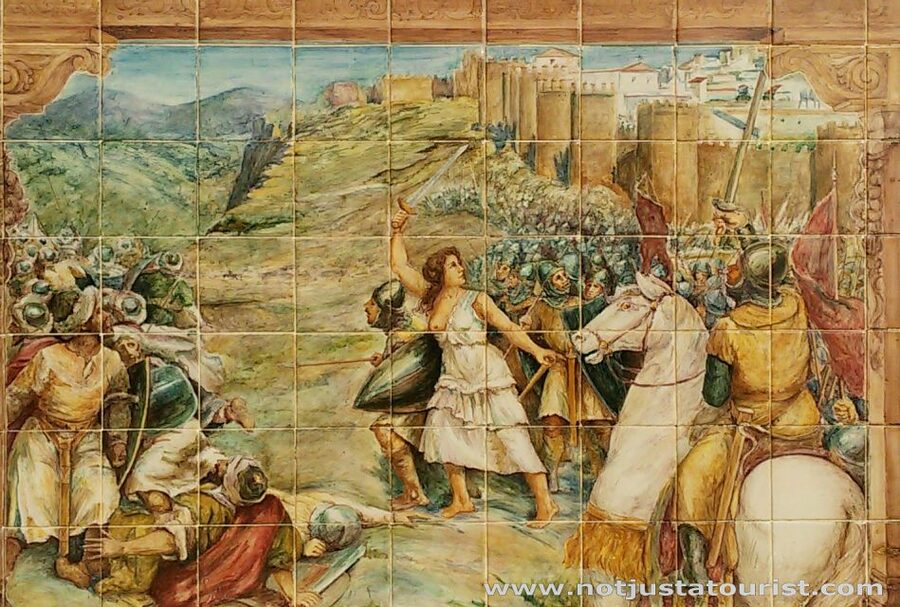
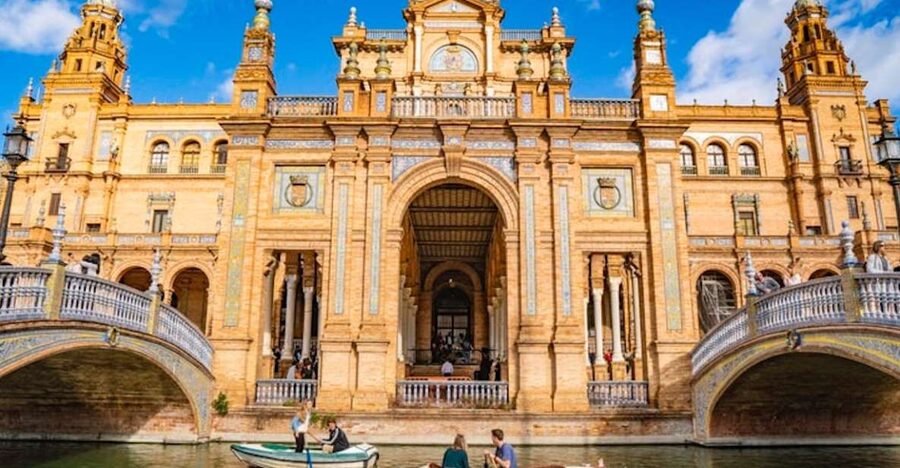
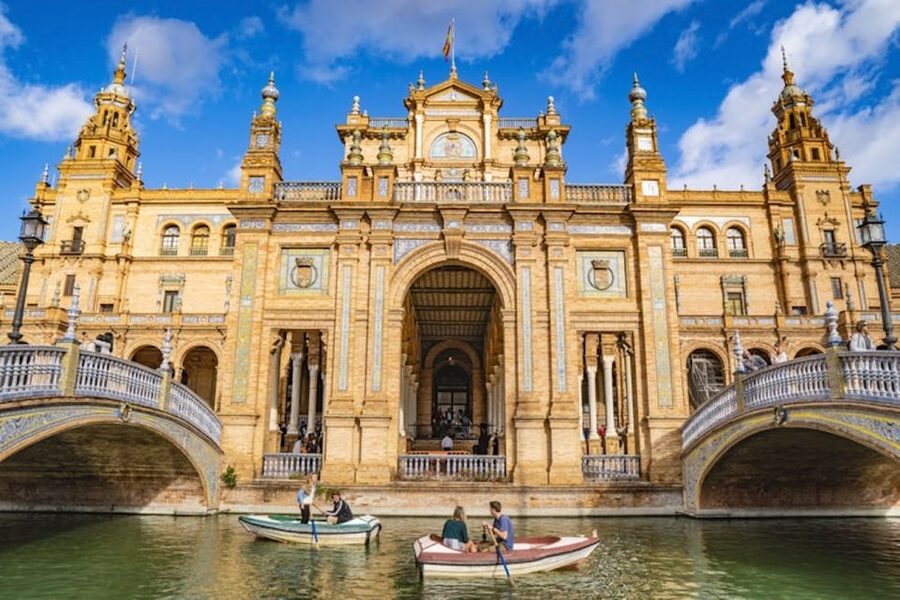
Plaza de España is one of Seville’s top sights for a reason. The half-mile stretch of tiled surfaces and sweeping details can overwhelm you if you don’t know what you’re looking at.
This tour gives you a guided moment there, short enough that it doesn’t drag, long enough to change your experience. You learn to notice the patterns and the symbolism, and you get a female perspective that keeps the focus from drifting into generic sightseeing.
If you love architecture but hate lectures, this is a good compromise. You get enough explanation to make the place meaningful, not enough to make you want to escape.
Old Tobacco Factory and the cigar girls: where the story turns serious
The stop at the antigua fábrica de tabacos, the old tobacco factory, is a highlight for a reason. The tour connects the building to the cigar girls, a group whose labor and conditions mattered to Seville’s economy and social structure.
This is one of those segments where you start seeing the city’s “heritage” as something lived in, not just preserved for visitors. You get a sense of how women’s work created impact, even when the broader narrative didn’t always credit them properly.
It also fits the tour’s balancing act. You see how influence can come from labor, not only from birth or ceremony. You see how systems can rely on certain groups, then treat them as background once the story moves on.
This part pairs well with the rest of the route because the earlier stops set up the question of women and power. The factory is where the answer gets sharper.
Calle Susona and Callejón del Agua: the old town without the rush
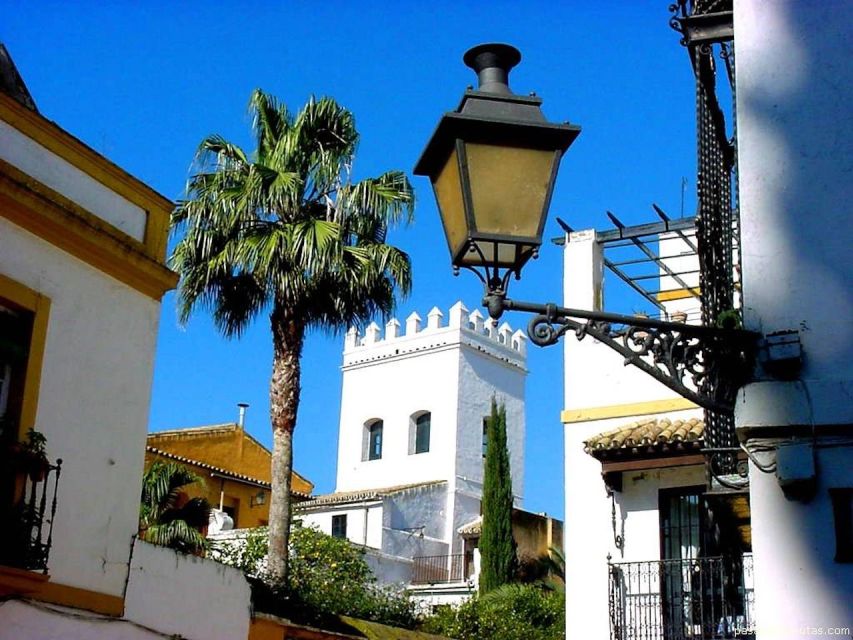
This tour gets time in smaller streets too, including areas like Calle Susona and a stop at Callejón del Agua. These backstreets are where Seville’s texture shows itself.
In the narrow lanes, you notice things you miss at the big plazas. You hear echoes more clearly. You feel the scale shift between open squares and squeezed alleyways. You get that lived-in atmosphere that makes Seville feel like a city you can still wander through.
These segments are short, so don’t expect a slow neighborhood hang. But they do what good walking tours should do: they give you a change in setting so the city doesn’t blur together.
Santa Cruz’s Jewish quarter: narrow alleys and a brief emotional reset
Santa Cruz is a name that most visitors know, but you still get more from it with interpretation. This tour gives you time through the quarter’s narrow alleys, and it uses that walking time to build context around women and social life in Seville’s history.
You’ll get that “turn the corner, surprise yourself” feeling. The old streets can be beautiful and atmospheric, and the guide keeps the focus on human stories rather than just scenery.
If you enjoy exploring on foot and you want to feel like you’re moving through neighborhoods instead of bouncing from landmark to landmark, this section fits your style.
The local bar stop: small pause, good energy
A refreshing stop at an atmospheric local bar is included. That’s a smart detail in a 2-hour tour because it keeps the experience from turning into nonstop walking and listening.
You’ll get a break without losing the thread of the day. It’s also the kind of moment where you can take in the surroundings and reset your energy before the final stretch.
One of the nicest touches from the reviews is how guides sometimes go beyond the script. People mention Nico buying drinks on a hot day and still keeping the tour moving smoothly afterward.
Guides matter: Abby and Nico set the tone
The reviews around guide performance are consistently strong, and that matters because this kind of themed tour lives or dies on storytelling.
Abby is praised for sharing things you would not pick up on your own, plus for being engaging and humorous. Nico is praised as funny and responsive, and as someone who speaks English very well.
One detail I love about the feedback is how guides handle different group needs. One review mentions Nico working hard to keep a teen engaged, which is a real skill, not a luck factor. If you’re traveling with family, it’s reassuring.
If you book this tour expecting history, go ahead. But if you book expecting atmosphere and smart storytelling, you’ll likely find it delivered.
Who should book this Seville walking tour?
This is a great fit if you want:
- a small-group experience with a guide who talks through meaning, not only facts
- a Seville walk that includes major sights plus calmer old-town lanes
- a female point of view that covers influence and limitations, not just celebrated names
It may not be ideal if you want a straightforward highlight parade with zero thematic edge. The tour title hints at adult themes, so keep that in mind if you’re traveling with kids or if you prefer purely light sightseeing.
If you enjoy history but you get bored by long lectures, the format should suit you. It’s short, structured, and designed to keep moving while still giving you context.
Should you book Seville: City of Queens, Nuns, Sex Work & Witches?
I’d book it if you’re in Seville for only a day or two and you want your sightseeing to feel connected. You’ll see big landmarks like Plaza de España and the Exposición 1929 pavilions, but you’ll also get the more intimate streets of Santa Cruz and story-heavy stops like the old tobacco factory.
At $105 for 2 hours, the value is best when you want interpretation. If you’re the type who can wander freely without needing a guide, you might get by on your own. But if you want to understand Seville’s power dynamics through women’s lives, this walk gives you a clearer lens than most standard tours.
If you’re unsure, think about how you like to travel. If you want to leave with stories you can repeat, not just photos, this one is worth your time.
FAQ
How long is the Seville walking tour?
It lasts 2 hours.
Where do I meet, and where does the tour end?
You meet at Costurero de la Reina monument, P.º de las Delicias, 3, 41001 Sevilla, Spain. The tour ends at Plaza Nueva, 41001 Sevilla, Spain.
How big is the group?
The group is small, with a minimum of 2 participants and a maximum of 8.
What languages are available?
The live tour guide offers English and Spanish.
Is the tour mostly walking?
Yes. It is a walking tour with multiple short stops at sights and corners around the city.
What notable places are included on the route?
You’ll visit places such as Parque de María Luisa, Plaza de España, the Exposición 1929 area pavilions, the Antigua Fábrica de Tabacos, and time in Santa Cruz.
Is there a break during the tour?
Yes, there is a refreshing stop at an atmospheric local bar.
Can I request a customized tour or combine activities?
You can indicate if you want a more customized tour or a combination of this tour with other activities, tours, or workshops offered by the provider.
More Tour Reviews in Seville
Not for you? Here's more nearby things to do in Seville we have reviewed




More Seville Tours worth a look.
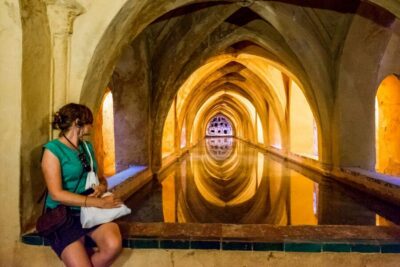 ★ 4.6Royal Alcázar Entry TicketFrom $2328,378 reviews
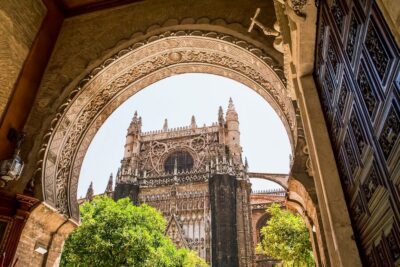 ★ 4.5Cathedral and La Giralda Entry TicketFrom $2024,592 reviews
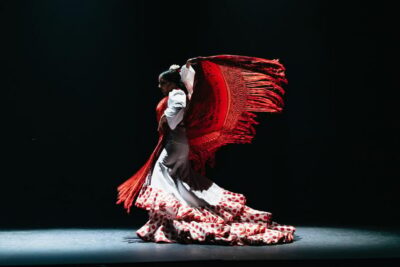 ★ 4.7Live Flamenco Dancing Show Ticket at the TheaterFrom $2716,396 reviews
 ★ 4.21-Hour Guadalquivir River Sightseeing Eco CruiseFrom $1910,281 reviews
 ★ 4.7Cathedral, Giralda, and Royal Alcázar Guided TourFrom $699,165 reviews
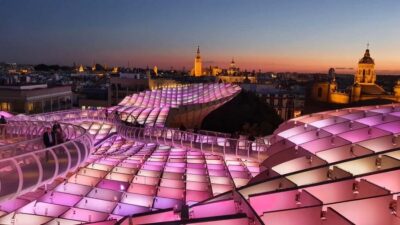 ★ 4.6Setas de Sevilla Entry TicketFrom $188,901 reviews
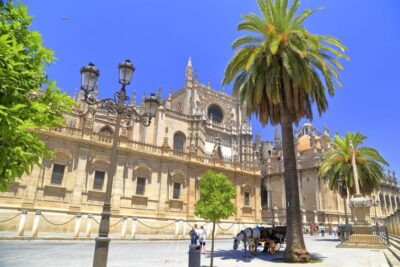 ★ 4.6Cathedral, Giralda & Alcazar Entry With Guided TourFrom $658,560 reviews
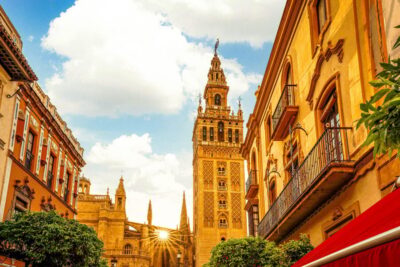 ★ 4.8Priority Access Cathedral, Giralda & Alcázar TourFrom $647,563 reviews