
REVIEW · SEVILLE TAPAS, TAVERNS & MARKETS
Seville Food Tour: Vermut, Churros & 10+ Tasty Local Dishes
Seville tastes better on foot. This 3.5-hour small-group experience mixes Seville landmarks with a serious lineup of local bites and drinks.
I love the way the tour turns history landmarks into context for food, so you are not just eating, you are understanding where the flavors and neighborhoods fit. I also like the 12-person max size, which keeps things social but still focused at each stop.
One thing to plan for: this is walking-heavy, and the route passes popular spots where you might wait a bit. Wear comfy shoes, and do not expect a quiet, seated meal.
Key things to know before you go
- Vermut, tinto de verano, beer, and hot chocolate are part of the tastings, not an afterthought
- 10+ local dishes plus churros and an extra secret dish means you will likely leave full
- Alcázar of Seville is on the route, tying royal history to what you taste
- Triana is the food-world detour, across the Guadalquivir, where Seville’s everyday life shows up
- No private transport means you are on foot the whole time, built for comfortable pacing
- Menus can shift based on availability, weather, and other on-the-ground realities
A 3.5-hour Seville food walk that feels like local orientation
This tour is built for your first night or first full day in Seville. You start in the Casco Antiguo and finish over in Triana near the Isabel II bridge, so you end your evening already oriented to two of Seville’s main zones.
The format matters. With a maximum group size of 12 and an English-speaking guide, you get a steady rhythm of walking, short stops, and tastings without feeling herded. It is also priced like a premium food experience at $105.21 per person, but the value comes from the number of tastings packed into the time.
The tour is also flexible. The itinerary and menu can change depending on what is available and what the weather allows, so you are not locked into a script that may fail outdoors.
You can also read our reviews of more tours and experiences in Seville.



Vermut, tinto de verano, and beer, plus hot chocolate for the sweet reset
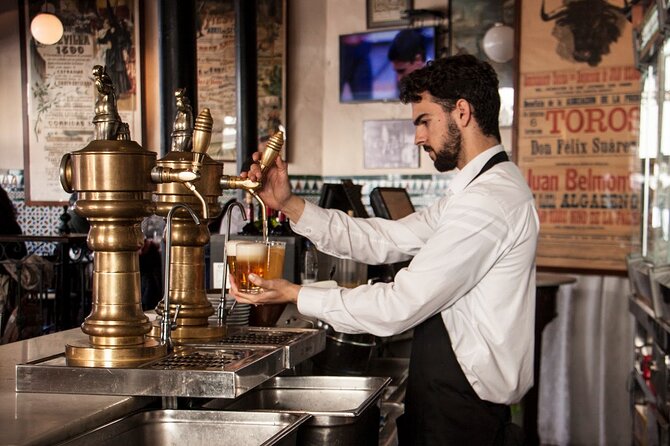
Food tours can treat drinks like decoration. This one gives you an actual tasting lineup: vermut and tinto de verano (summer red wine) plus local beer, and then hot chocolate with your sweets.
That sequence is smart. Vermut and tinto de verano are the kind of drinks locals use to start a night, and the bitter-sweet profile pairs well with salty snacks like ham and anchovies. Then the hot chocolate gives you a proper palate reset for the churros segment.
If you prefer non-alcoholic options, you should check dietary and drink needs in advance. The tour notes that you should contact them ahead of time so they can cater as best as possible.
Stop by stop: the walking route that sets you up for Seville tastes
You will move through some of Seville’s most recognizable architecture, but the point is not sightseeing for sightseeing’s sake. Each stop helps explain what you are seeing when you later eat in the same areas on your own.
Las Setas viewpoint and an archaeological glimpse
One of the first stops is a sculptural wooden structure with an archaeological museum, rooftop walkway, and viewpoint. It is one of those places where modern design meets the city’s older layers, and it is a good warm-up before you get to the classic food streets.
Even if you are not a museum person, this stop helps you understand how Seville stacks time on top of time. That matters because the tour later connects Moorish-era and Christian-era landmarks to Andalusian food culture.
Parque de María Luisa and the Neo-Mudéjar style you can spot
Next, you are in a plaza within Parque de María Luisa, a landmark example of Regionalism architecture. The style blends Renaissance Revival touches with Moorish Revival elements, often described as Neo-Mudéjar.
This is the kind of detail you will notice more after you eat. Andalusia’s cuisine is also a mix, and the architecture clue makes that idea feel less abstract when you get to dishes like anchovies in vinegar and pork skewers.

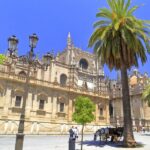
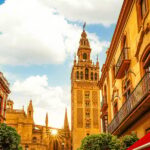

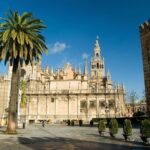
Seville Cathedral’s bell tower, once a minaret
Then you get to the bell tower of Seville Cathedral. What makes it standout is its origin as the minaret for the Great Mosque of Seville during the Almohad dynasty.
That history connection is useful. It is not a random fact dropped in passing. You are being shown how the city’s identity changed, and Seville food tells similar stories through technique, ingredients, and what people normalized over centuries.
Triana across the river, where the night really starts
The tour includes a dedicated stop in Triana, the colorful neighborhood on the west bank of the Guadalquivir. Triana is where many people feel the city’s everyday energy, and it makes sense this tour routes its most signature eating flavors there.
Food in Triana has a practical edge. You are not just grabbing something cute, you are eating what you would expect a local to choose for a proper bite. Expect flavors that lean salty and savory, plus classic Andalusian styles you will want to order later.
If your guide is one of the names people often highlight, like Camila, Albania, Cristina, Xavier, Sarah, or Adrian, you can also expect extra neighborhood context. The big theme in guide feedback is how they connect what you eat to where it comes from in day-to-day Seville life.
The Alcázar route: why royal palaces belong on a food tour
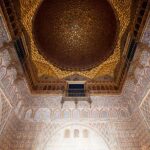
You also pass a royal palace built for Christian King Peter of Castile. It is the oldest royal palace still in use in Europe, and it is UNESCO-listed since 1987 as a World Heritage Site.
On paper, this sounds like pure history. In practice, it helps you understand Seville’s long-standing taste for crafted detail. Think of it as a visual lesson in why certain ingredients and culinary habits stick around.
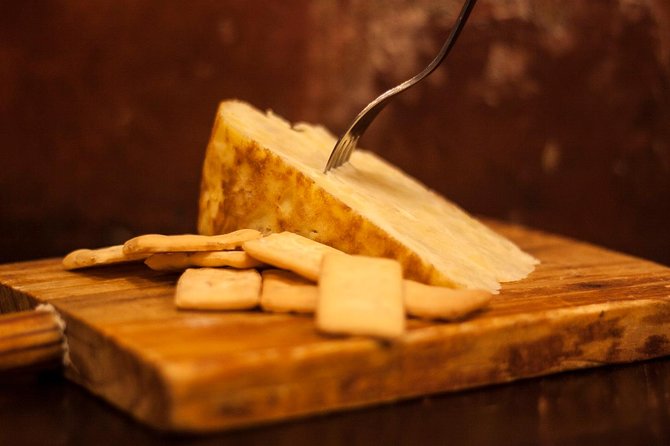
After seeing that kind of landmark, you are more alert to contrast. You will notice that some dishes feel simple, but the flavors are carefully balanced, like salty cured ham paired with creamy local cheese, or sweet notes showing up in dishes that otherwise taste savory.
The dodecagonal watchtower and prison-era Seville
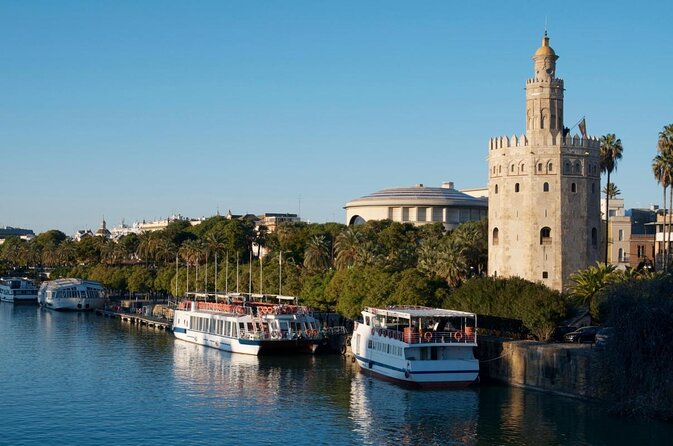
Another notable architectural stop is a dodecagonal military watchtower built in the first third of the 13th century. It served as a prison during the Middle Ages.
This is one of those stops that can quietly change your mood during the tour. It shifts you from romance to reality, which is exactly what Seville does well. The city is pretty, but it also has scars, decisions, and hard history, and the food is part of that same story.
By this point, you will likely be craving the savory course of bites in the tasting lineup, because you have already walked through a lot of stone and details.
What you actually eat and drink: 10+ dishes you can use as ordering ideas
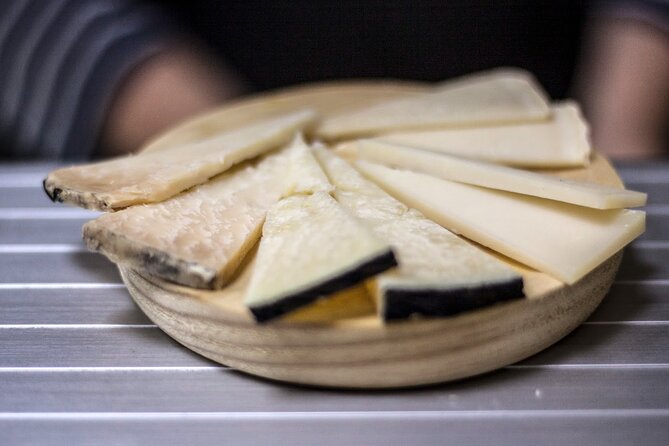
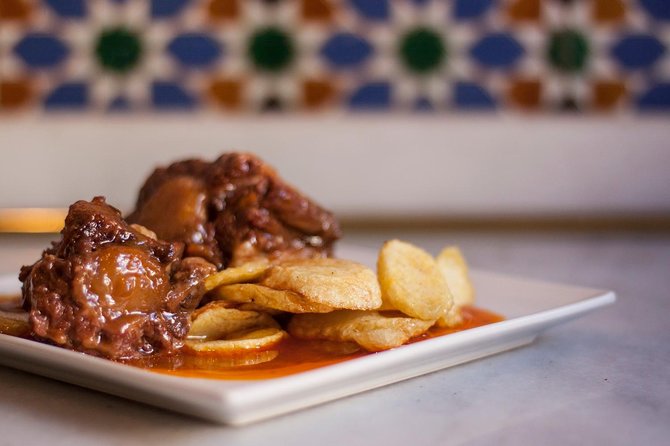
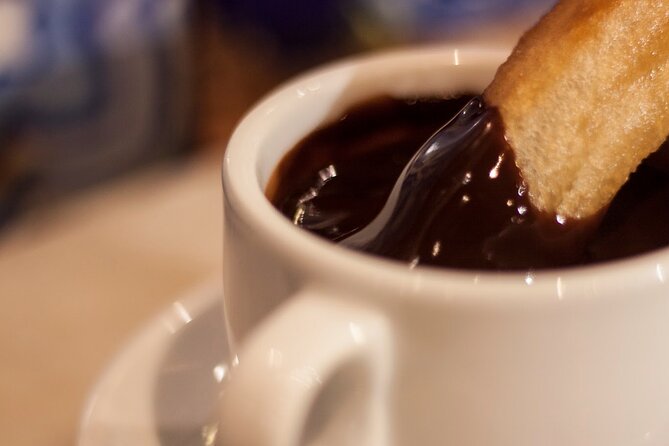
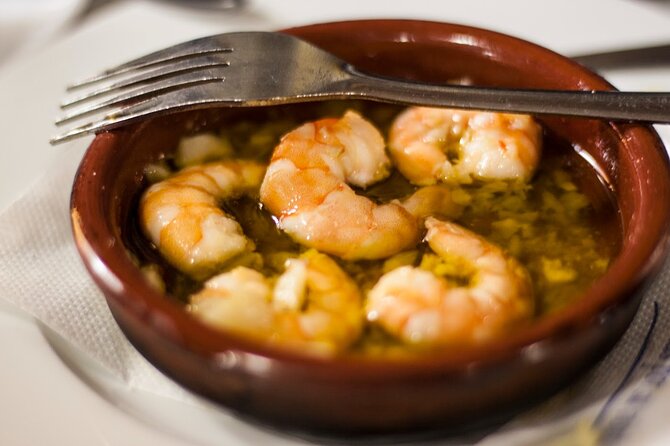
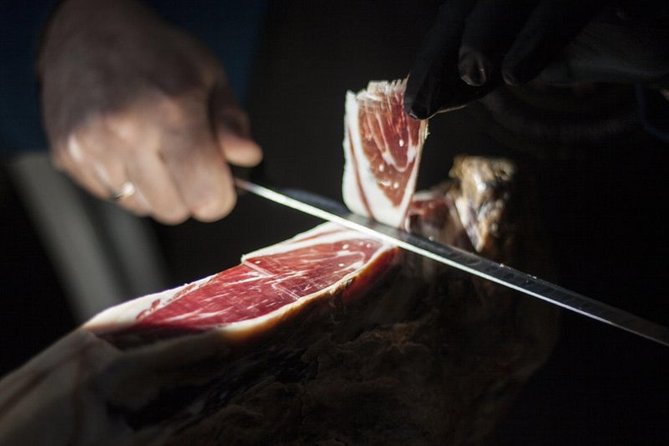
This is where the tour earns its keep. You get churros, Iberian ham, and local cheese, plus multiple savory dishes. Your tasting menu also includes fried eggplant with molasses, pringa (an Andalusian-style sandwich), anchovies in vinegar, and pinchito (an Andalusian pork skewer).
There is also mention of a secret dish, which is fun because it keeps the experience from feeling like a predictable checklist. On a different departure, you might still get the same spirit of variety, even if one stop has to adapt.
You should plan your energy around this lineup. This is not a light snack tour. People often leave full, and the combination of pork, ham, seafood, and sweet churros makes it feel like you are doing a mini dinner across multiple stops.
How the tasting mix helps you order later
The best payoff is what you learn for future restaurant nights. By tasting items like anchovies in vinegar and pinchito, you understand which flavors you actually like in Seville style, so you do not have to gamble blindly when you order on your own.
I also like that the tour includes both savory and sweet signals. You get the savory anchor, then the hot chocolate and churros follow, so your last bite does not feel like an afterthought.
One practical downside to accept
Because many stops are popular, you may sometimes queue at a bar or small venue with limited space. That is normal in Seville food life, but it means your pacing might feel slightly different on the day you go.
Also note: there is no private transportation, and the tour involves a fair amount of walking. If you rush your shoes decision, you will feel it by stop two or three.
Timing, comfort, and how to get the most from a 3.5-hour evening
The experience lasts about 3 hours 30 minutes, and it is offered in English. Start at Pl. del Salvador, 8 in the Casco Antiguo, and expect to finish near the Isabel II bridge on the Triana side at Puente de Isabel II, 30.
If it is your first time in Seville, this is a great length. It gives you enough walking to learn the city fabric, but not so long that you are collapsing at dessert.
For comfort, pack the basics: good non-slip shoes, water, and a willingness to stand and walk more than you sit. Also, think about timing. If you already ate a full meal right beforehand, the tasting volume may feel like overkill.
Finally, keep expectations realistic about sound. The tour is designed to stay intimate without microphones, which is great for a close feel. In crowded spots, you just have to lean in and stay attentive.
Should you book this Seville vermut, churros, and local dishes tour?
Book it if you want your first Seville evening to do two jobs at once: taste the city and see the landmarks that shaped it. The mix of vermut, tinto de verano, beer, churros, and savory classics like ham, eggplant with molasses, anchovies in vinegar, and pork skewers is exactly what you need if you want to return to restaurants with confidence.
Skip it if you hate walking or you want a fully seated, low-motion meal. This tour is about moving, standing, and tasting across spots, and the city will not slow down for your comfort.
If you are going to Seville soon, this is one of the best ways to jump from first impression to real understanding fast, without turning your trip into a rigid checklist.
FAQ
What is the duration of the Seville Food Tour?
The tour runs for about 3 hours 30 minutes.
How many people are in the group?
The tour has a maximum group size of 12 travelers.
What language is the tour offered in?
The tour is offered in English.
What is included in the tastings?
It includes churros, Iberian ham, local cheese, fried eggplant with molasses, pringa, anchovies in vinegar, pinchito, a secret dish, hot chocolate, local beer, tinto de verano, and vermut.
Is private transportation included?
No, private transportation is not included.
What should I do if I have dietary requirements?
Contact the tour in advance so they can cater for dietary requirements as best as possible.
What happens if weather is bad?
The experience requires good weather. If it is canceled due to poor weather, you will be offered a different date or a full refund.
More Tour Reviews in Seville
Not for you? Here's more nearby things to do in Seville we have reviewed



More Seville Tapas, Taverns & Markets worth a look.
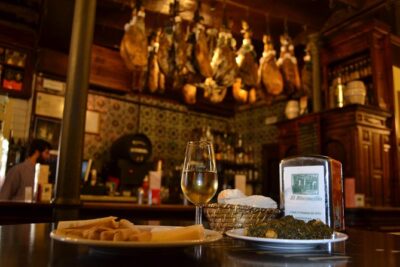 ★ 5.0Sevilla Food Tour: Tapas, Wine, History & TraditionsFrom $833,468 reviews
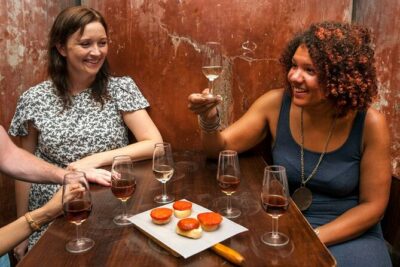 ★ 5.0Ultimate Seville Tapas, Wine & History Small Group TourFrom $1011,766 reviews
 ★ 4.9Tapas CrawlFrom $861,705 reviews
 ★ 5.0Authentic Flamenco Show with Tapas & Wine Guided TourFrom $951,476 reviews
 ★ 4.5Flamenco Show at Tablao El Arenal with Drink and Optional Dinner or TapasFrom $591,415 reviews
 ★ 5.0The Seville Tapas Crawl Tour by Food Lover TourFrom $881,213 reviews
 ★ 5.0Seville Ultimate Food TourFrom $83898 reviews
 ★ 4.3Exclusive River Boat Tour with TapasFrom $41802 reviews
Continue by place or experience