
REVIEW · SEVILLE BIKE & E-BIKE RIDES
Seville: Historic Center Bike Tour
Seville’s defensive walls are made for bikes. This 2.5-hour ride is a fast way to understand the city, from its early roots through the 1868 riots and what still remains today, while you roll past the former wall route with a bilingual guide.
I love how the tour turns street-level views into a clear timeline. You cover the Tartessians, Carthaginians, Romans, and later the Almoravids, plus you get architecture and city gates explained in plain language.
One consideration: it is not suitable for people with mobility impairments, and at least one review notes that some bikes may be showing wear. If a smooth bike feel matters to you, give the rental a quick check before you start rolling.
Key moments worth planning for
- Former defensive route on two wheels, including surviving wall sections and wall-linked neighborhoods
- Gate stops that help you picture how people and carriages moved in and out of Seville
- A timeline from early settlers to the 1868 riots, with the Glorious Revolution mentioned in context
- Almoravid wall-building explained, including why Seville became famous for defense
- Language support in Spanish, English, and French, with guides working to keep you up to speed
- Included map and water bottle, so you can keep your bearings right after the tour
Getting started at Centerbici and why this ride feels easy
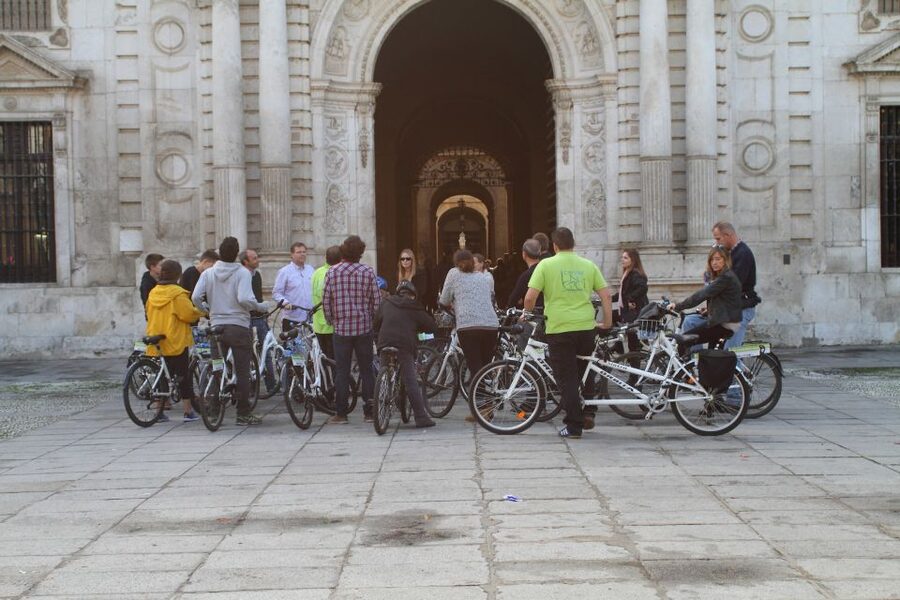
The tour meets at Centerbici Store, C/ Espronceda, 5, 41004 Sevilla. In practice, that matters because you get your bike and start close to the action of Seville’s historic center, without wasting time on a long transfer.
You’ll get bike rental and a water bottle, plus a map. That combo is small but smart. During a short 2.5-hour tour, it helps you connect what you see to what you want to explore next, instead of feeling like you’re only collecting names.
Helmets are part of the setup for children. If you’re traveling with kids, that reduces hassle. If you’re an adult, you’ll just want to use your common sense about comfort and traffic, since you’ll be sharing streets with normal city life.
Finally, remember the big promise: this isn’t just sightseeing. You’re moving along a defensive route, so you’ll keep noticing how Seville’s shape and its gates were built for control, not convenience.
You can also read our reviews of more tours and experiences in Seville.



A guided timeline from Tartessians to the 1868 riots
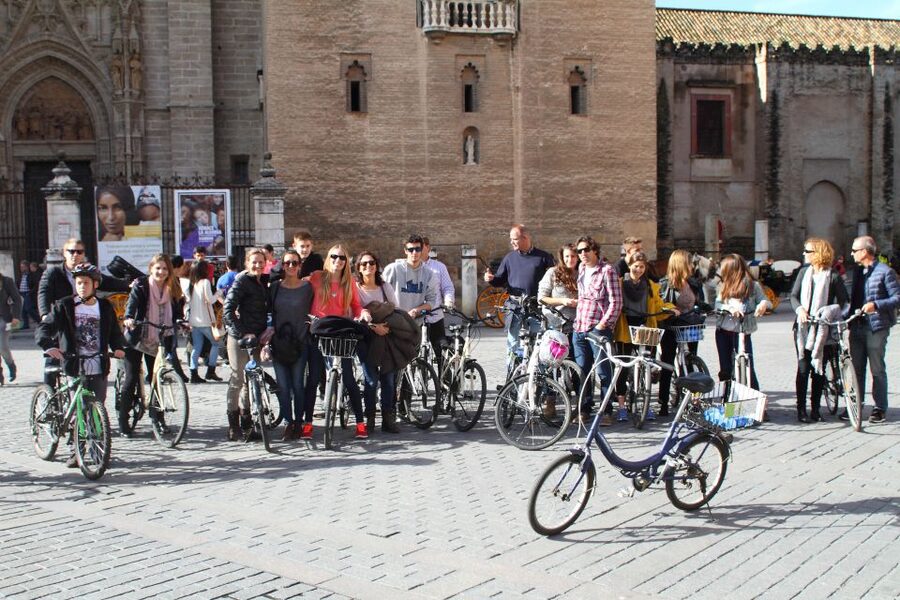
What makes this tour work is that the story is tied to places you can actually see. Your guide walks you through Seville’s past from Roman origins and earlier settlers in the area, including the Tartessians and Carthaginians.
You’ll then connect that early period to later power shifts, including how Seville became known as a major, well-defended city. The tour specifically frames the Almoravids and their role in strengthening the city, including why Seville is described as a best-walled city in Europe under them.
The middle of the story turns more political. You’ll hear about the riots of 1868 and the Glorious Revolution in that context, and how certain structures were affected. That’s where the ride stops feeling like a textbook and starts feeling like understanding cause and effect in real neighborhoods.
If you like your history fast but grounded, this is a good format. The tour lasts 2.5 hours, so you get enough detail to understand what you’re looking at, without needing to spend a whole day on it.
Riding the former defensive walls near Macarena and the Alcázar area
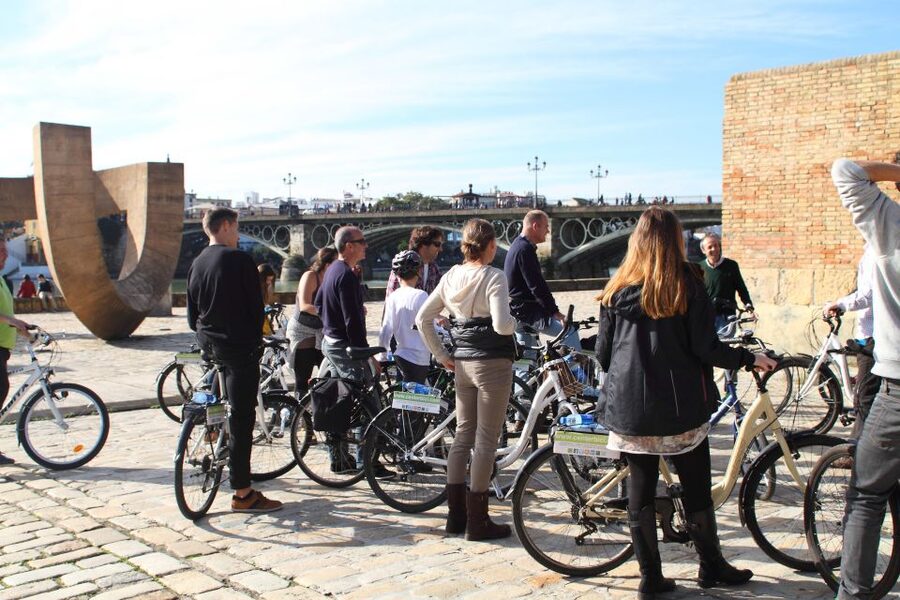
A bike tour is perfect for walls because you can cover distance while your mind tracks the logic. Seville’s defensive route is the core idea here, so you’re not only looking at monuments. You’re following how a city tried to protect itself.
The tour includes wall sections and stops connected to major areas like Macarena and the Alcázar left after the 1868 riots. Even when you’re seeing only parts of what once existed, your guide helps you interpret what’s missing. That is often the difference between a view that’s just pretty and a view that’s meaningful.
You’ll also hear about the way the city’s defenses shaped movement. Gates were chokepoints, and wall sections were physical reminders that this was a strategic city.
What to watch for: because you’re traveling by bike, your attention will be split between pedaling and listening. It helps to stay mentally “on,” especially during the history segments. If you miss one explanation, you might still see the place, but the story will take effort to catch up.
Puerta de Córdoba and the architecture you can actually spot
One of the best parts of a short bike tour is the architectural contrast. The route is designed to show diversity in styles, not just one grand monument.
Puerta de Córdoba is part of the ride. That gate acts like a visual checkpoint, so you can compare how the city’s defenses and its aesthetic language evolved over time. Your guide ties what you see to why it matters historically, including Seville’s rise and the city’s defensive identity.
Here’s why this is valuable for you: you walk into Seville later with a better “pattern” in your head. Instead of seeing gates as isolated photo stops, you understand them as part of a system.
Also, because you’re biking, you can cover more than you would by foot in the same timeframe. In a city where streets can feel busy and distances add up, that matters.
Just keep expectations realistic. You’re seeing highlights and key structures along the route, not every corner of the historic center. That is what makes the pacing so manageable.
Gate stops that explain how people entered Seville
The tour builds excitement around gates, because gates are where history becomes practical. You’ll stop at Puerta Carmona, Puerta Osario, and Puerta Triana during the ride.
Each gate gets its own story. The tour description specifically notes that carriages were stopped at certain points, and that mysteries get unraveled through the guide’s storytelling. Even if you don’t treat it like a mystery novel, the effect is the same: you start imagining the city as a living network of arrivals and exits.
Puerta Carmona is one of your stops, giving you a sense of how the city controlled access. Puerta Osario adds another layer, again helping you connect route, defense, and daily movement. Then Puerta Triana rounds out the gate experience, where the guide pulls together the defensive theme with the human side of how Seville worked.
If you’re the kind of traveler who loves photos, these stops are built for that. If you’re more into understanding, these stops are even better, because the guide explains what you might otherwise walk past without noticing.
One practical tip: at each gate, pause for the photos but also listen for the “why.” If you focus only on the view, you’ll miss half the value. If you focus on both, the gates start to feel like chapters in the same book.




Why the Almoravids matter on this ride
The tour includes a specific stop-and-explain moment about the Almoravids and Seville becoming heavily walled, described as the best-walled city in Europe under them. That detail is more than trivia. It gives you a reason to keep looking for defensive logic even when the walls aren’t full-length and intact.
What I like about this emphasis is that it helps you interpret the city’s boundaries. You begin to see defenses as a long-term project, not a single construction event.
Your guide connects this to earlier layers too, from early settlers to later power changes. In a place like Seville, where multiple eras overlap, the explanation keeps you from getting lost in a blur of beautiful architecture.
This is also where language support becomes important. Some guides are so good at rephrasing that you feel like you never got left behind. One French-language experience I read highlighted how the guide worked hard to make understanding happen in English when needed, even using the phone to translate. That kind of effort makes the tour feel more welcoming if your Spanish or French is rusty.
The guide experience, and what to expect from language support
The tour is led by a live guide with language options in Spanish, English, and French. That’s a big deal on a history-focused ride, because the quality of your experience depends on how clearly you can follow the story.
The reviews you’ll find around this tour praise guides for being attentive and for knowing Seville well. Names like Luca, Daniel, and Sébastien show up with strong marks for how engaging and helpful they are.
One review also points out that while French was preferred, the guide made sure communication worked in English. Another notes guides who were particularly attentive to the well-being of their clients. That kind of care matters more than people think on a bike tour, because staying comfortable is what lets you pay attention to the explanations.
Pace wise, you’re on a bike for a short half-day segment, so you won’t be drained afterward. Still, you should plan to focus. If you want to hear everything, it helps to stay close to the guide during the quiet listening moments and not drift too far ahead for photos.
Price and value: what $35 buys you in Seville
At $35 per person for about 2.5 hours, the value comes from what’s included, not just the duration. You get a tour, bike rental, a bilingual guide, plus a water bottle and map.
When those items are bundled, you’re not shopping for gear and paying separately to hire someone to explain what you’re seeing. You’re also not stuck doing “DIY listening,” where you pause every few minutes to look up a plaque or an offline guide.
This is especially good if you have limited time. Seville is one of those cities where you could easily spend days and still feel like you missed something. A short guided bike ride helps you get a reliable first map of the historic center’s story, including defenses and gates.
The main value trade-off is that you’re cycling outdoors and covering ground quickly. If you want slow museum time, or if you need a fully accessible route, you might feel constrained. But if you’re comfortable on a bike and you want history that moves, $35 feels like a solid bargain.
Also consider this: at least one mention flags that some bikes may be in end-of-life condition. That doesn’t automatically ruin the tour, but it means you should check the bike quickly at pickup and speak up if something feels off.
Who should book this Seville Historic Center bike tour
This tour fits best if you want a guided look at Seville’s evolution without spending all day. It’s great for first-timers who want their bearings fast, especially if you’re interested in how a city’s defenses shaped its layout.
It also works well if you like your history connected to physical places. Walls, gates, and architecture are easier to remember when you bike past them and hear what role they played.
I’d skip it if you have mobility impairments, since it is specifically marked as not suitable. I’d also be cautious if you’re not comfortable biking in city streets, even though the ride is relatively short.
Best match scenarios:
- You have a tight schedule and want a high-information overview
- You like architecture plus history together
- You want included bike rental and a guide who can explain in Spanish, English, or French
FAQ
How long is the Seville Historic Center Bike Tour?
The tour lasts 2.5 hours.
Where is the meeting point?
You meet at Centerbici Store, C/ Espronceda, 5, 41004, Sevilla.
How much does the tour cost?
The price is $35 per person.
What languages are available for the guide?
The live tour guide is available in Spanish, English, and French.
What is included in the tour price?
Included are the tour, bike rental, a bilingual guide, a water bottle and map, and helmet rental for children.
What areas and historic sites will I see?
You’ll cycle through Seville’s historic center, including the former defensive walls and areas such as Macarena and Puerta de Córdoba, plus parts of the Alcázar left after the 1868 riots. You’ll also stop at Puerta Carmona, Puerta Osario, and Puerta Triana.
Is this tour suitable for people with mobility impairments?
No, it is not suitable for people with mobility impairments.
Is free cancellation available?
Yes. You can cancel up to 24 hours in advance for a full refund.
Is there a reserve now and pay later option?
Yes. You can reserve now and pay later, with the option to pay nothing today.
Should you book this Seville Historic Center Bike Tour?
I’d book it if you want Seville history tied to walls, gates, and real streets in a short time. The included bike rental and the guide’s multi-language support make it a smoother experience than trying to piece together the story on your own.
Skip it if mobility needs you to move differently, or if you know you’re picky about bike condition. In that case, do a quick bike check at pickup and ask for the best option available. If you get a good bike and a clear guide, this tour gives you a memorable, practical way to understand how Seville worked as a defended city.
More Tour Reviews in Seville
Not for you? Here's more nearby things to do in Seville we have reviewed





More Seville Bike & E-Bike Rides worth a look.
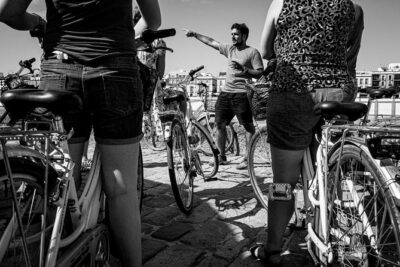 ★ 5.0Seville Highlights Bike Tour (English)From $422,225 reviews
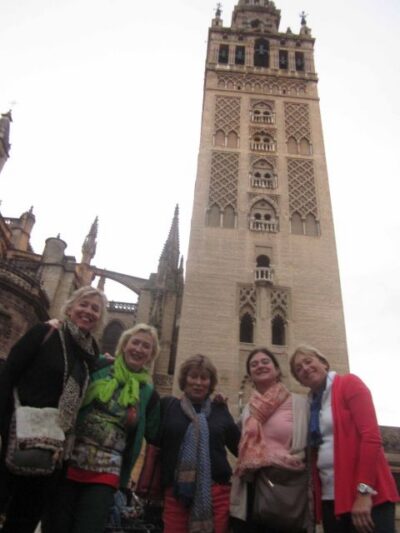 ★ 4.8Highlights City Bike TourFrom $382,168 reviews
 ★ 4.8Relaxing City Bike Tour with a Tour GuideFrom $351,588 reviews
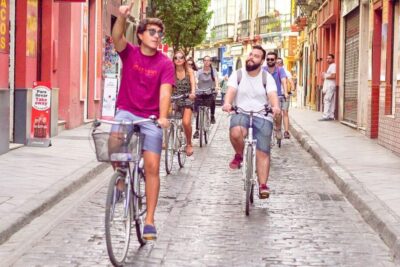 ★ 4.9City Sightseeing and Local Culture Bike TourFrom $311,120 reviews
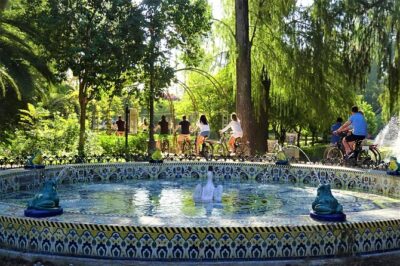 ★ 5.0Seville Electric Bike Tour – Small GroupFrom $58841 reviews
 ★ 5.0Sunset Guided Bike Tour in SevilleFrom $36438 reviews
 ★ 4.9Guided Sunset Bike TourFrom $41332 reviews
 ★ 5.03-hour Guided Bike Tour along the Highlights of SevilleFrom $39315 reviews
Continue by place or experience