
REVIEW · SEVILLE TOURS
Seville: Outdoor Escape Game – Operation Mindfall
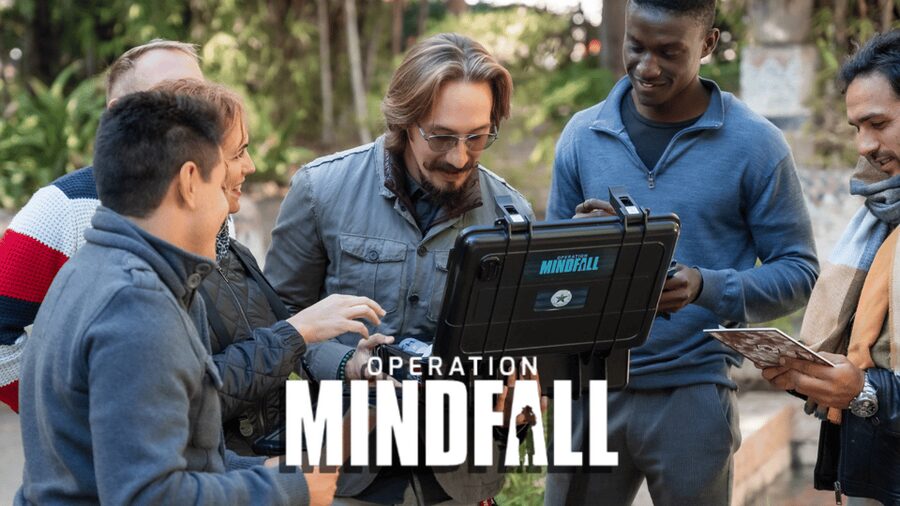
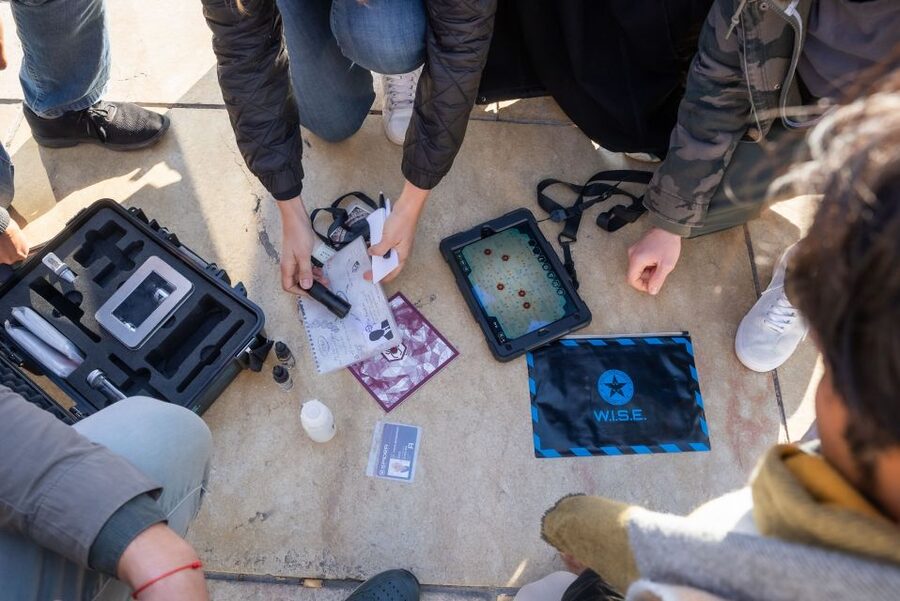
Riddles turn Seville into a walk game. I like how Operation Mindfall uses an iPad to guide you from checkpoint to checkpoint, so you are not just staring at monuments. The two best parts for me are the riddle-solving trail that makes landmarks feel connected, and the way the route highlights major sights like Seville Cathedral and the Santa Cruz area. One thing to consider is that you will get the most out of it if you understand English or Spanish, since the puzzles and instructions are not purely pictorial.
You get a clear structure in about 2 hours: a short setup, then a self-paced walk that keeps you moving without feeling rushed. It also helps that this is a private group format, so you can work as friends, couples, or family teams instead of racing strangers. Since entrance tickets are not included, you are viewing many places from the outside, which is great for timing, but it is not a replacement for a paid interior visit.
Key points worth knowing before you go
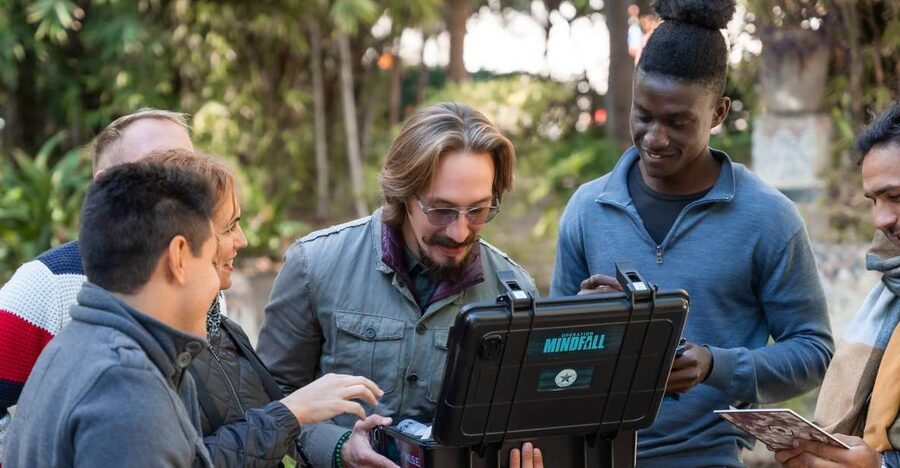
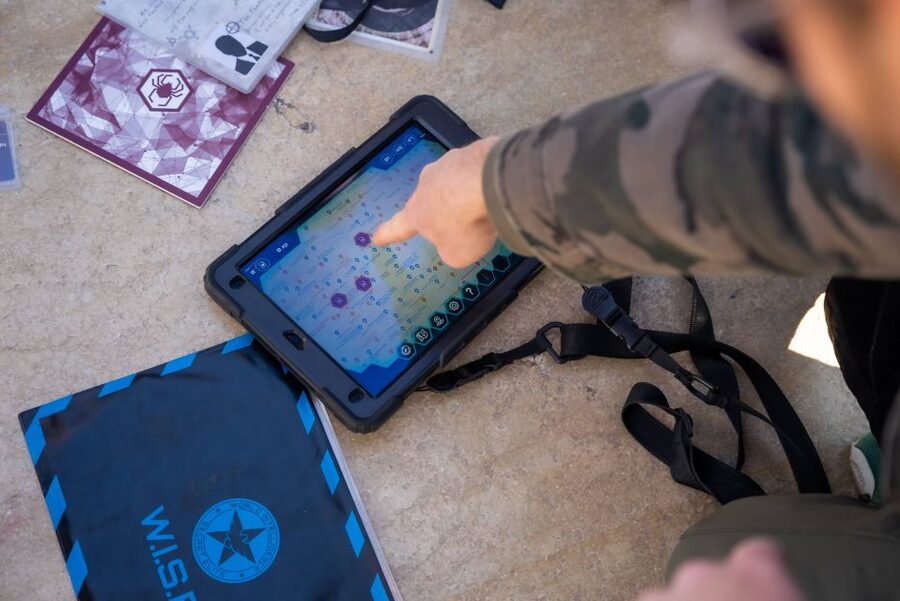
- iPad-guided clues: you follow a map and answer questions at each checkpoint
- 15 sight checkpoints: the game is designed to pull you through standout areas of Seville
- Work the puzzle, then see the place: logic, imagination, and hidden clues all play a role
- Outside sightseeing focus: you pass major landmarks rather than relying on paid entry tickets
- Language matters: English or Spanish understanding helps you solve faster
- Good value for 2 hours: for about $25, you get gear plus a full walking challenge
What Operation Mindfall Feels Like on Seville’s Streets
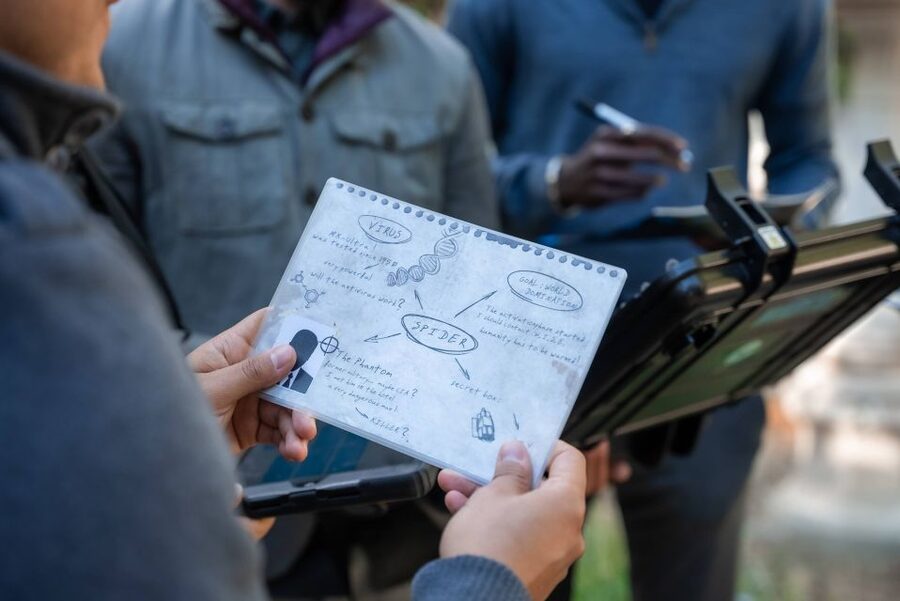
This is an outdoor escape game, but it does not try to turn Seville into a theme park. The whole idea is to get you walking, reading clues, and noticing details you might otherwise skip. I like that it gives you a reason to slow down at key corners, then move on when you have figured out the next step.
You are not in a constant guided lecture. Instead, you follow the game flow at your own pace, answering questions and solving riddles in order to reach the next checkpoint. The end result is that the city starts to feel like a story, with each stop acting like a chapter.
Because it is built as a walking game, the best mindset is problem-solver mode. If you enjoy group banter, noticing small hints, and taking a few wrong turns when your logic fails, you will probably have a great time.
You can also read our reviews of more tours and experiences in Seville.


iPad-Driven Clues, Self-Paced Walking, and Why That Matters
The big hook here is the gear. You receive an iPad and an interactive action pack before you start, and the device helps you navigate and access the history content. That means you are not depending on guesswork when it comes to where you are in the story.
I also like that the game does not force you into one strict pace. You can move quickly when you are confident, or stop longer when you are stuck. In a city where getting your bearings can take time, that flexibility is a real value.
One more practical upside: the iPad can give you a structured way to learn without turning the walk into a classroom. You are still outdoors, still seeing Seville’s streets and landmarks, but you are getting prompts that connect the visuals to the answers.
How the 2-Hour Game Route Works (and what you really see)
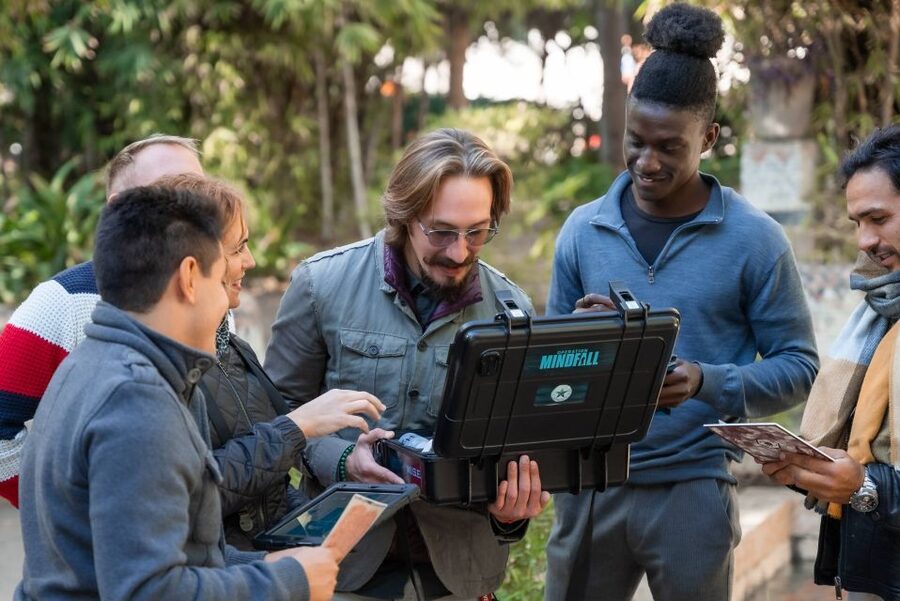
Plan on roughly a 2-hour experience from start to finish. The timing is organized into segments, with the game walking part broken into multiple checkpoint stops and then a return to base.
Here is the key expectation to set correctly: entrance tickets are not included. That means you will mostly be passing sights rather than entering them. You can still appreciate the scale, architecture, and city layout, but if you want to go inside Seville Cathedral, the Alcazar, or other major interiors, you would need separate tickets on a different visit.
The highlights say the game helps you discover 15 of Seville’s most important sights, and the route is designed around iconic stops. From the information you are given, you can expect the game to take you past or around major landmarks such as Seville Cathedral, General Archive of the Indies, Puerta de Jerez, Torre del Oro, Paseo de Cristóbal Colón, the bullring area at Plaza de Toros de la Real Maestranza, and Calle Arfe. The overall theme also points to major cultural zones like Santa Cruz and the Alcazar area, even if your game checkpoints may be positioned around viewpoints and surrounding streets.
In plain terms: it is an excellent way to get oriented and see a lot of must-see exteriors, then decide later what you want to do for a paid interior visit.
Starting at Last Escape Sevilla, Setup, and Safety Briefing
Your game starts at Last Escape Sevilla City Game. You will get a safety briefing first, about 15 minutes, before you head out for the walking portion.
This part matters more than you might think. A short briefing helps everyone understand how to use the iPad, how checkpoints work, and what the basic rules are as you solve. That way, you are not spending the prime sightseeing time just figuring out the system.
If you are doing this with family or mixed-age friends, the setup period is also useful for assigning roles. One person can watch the device, another can scan for clues, and the rest can focus on reading and answering. It turns the walk into a team sport instead of a solo scavenger hunt.
Seville Cathedral Checkpoint: A Worthy First Big Landmark
One of your early passes is Seville Cathedral. Even if you are not going inside, seeing it from the street level still hits hard, because the building dominates the area.
In the game flow, this is more than a postcard moment. You are moving through the historic center with a task in mind, so you are more likely to notice details like street alignments, sightlines, and how the neighborhood frames the monument.
A practical consideration: because you are on a timed schedule with checkpoint passing, you should not plan to linger for photos at every corner unless your team is solving smoothly. If you do want more photo time, leave a little buffer by being ready to move once you solve the clue that sends you forward.





General Archive of the Indies and Puerta de Jerez: Clues Meet Coastal Trade History
The route continues with a pass by the General Archive of the Indies and Puerta de Jerez. These stops are good anchors because they connect Seville to its role as a gateway for voyages and administration, not just a city of bars and plazas.
I like checkpoints like this because they give you a reason to look up. When you are focused on the next question, you start scanning façades, entrances, and street layouts instead of only walking through.
Puerta de Jerez also works well for photo lovers. It is a visible landmark that helps you calibrate where you are, so the game makes navigation feel easier as it goes.
Because entrance tickets are not included, treat these as “see it well from the outside” moments. If a specific building is calling your name for interior time, plan it separately after the game.
Torre del Oro and Paseo de Cristóbal Colón: Where the Game Gets Scenic
Next comes Torre del Oro and the Paseo de Cristóbal Colón. Even if the device is guiding you step-by-step, this is where the walk starts to feel more open.
Torre del Oro is one of those Seville landmarks you recognize even when you are not sure where you are. In a riddle game, that recognition helps you breathe and resets your attention. You solve, look, then move on.
The Paseo de Cristóbal Colón area can also make the experience feel like a change of pace from narrow streets. If you have been stuck in puzzle mode, this is a good stretch to regroup, discuss the last answer, and get ready for the next clue push.
Sunglasses are worth bringing for this part. Outdoor walking in Seville can mean strong sun, and the game is built for being outside.
Plaza de Toros de la Real Maestranza and Calle Arfe: Old City Texture and Character Streets
You will pass the bullring area at Plaza de Toros de la Real Maestranza de Caballería de Sevilla, then continue to Calle Arfe. These stops are great because they add variety to your mental map.
The bullring landmark is distinctive, and seeing it from the street helps you understand how Seville’s major institutions are woven into daily walking routes. Calle Arfe is different. It is a street that feels like a real city corridor, a place where you can imagine the flow of people without needing to enter anything.
This is where the game format really shines for me. Riddles keep you engaged, but the city stays a city. You are not trapped in a single viewpoint. You are moving, turning corners, and absorbing how Seville connects neighborhood life to iconic monuments.
One warning for teams that struggle with puzzles: if you get stuck late in the route, you might lose some of the relaxed sightseeing feeling. Pace your group, and if you are not making progress, use the allowed help options and move toward the intended checkpoint logic.
The Real Trick to Winning: Logic, Clues, and Language
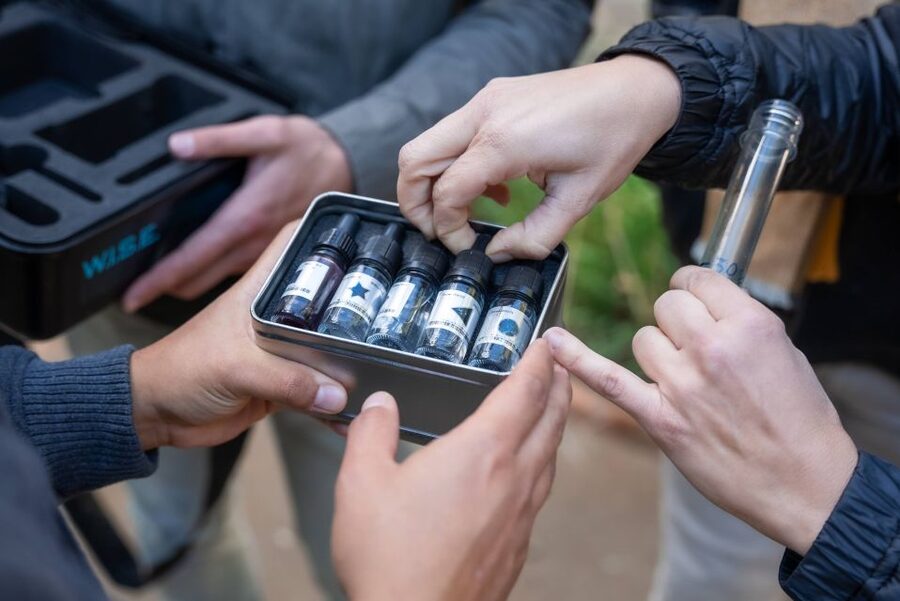
The puzzles rely on several approaches. The game encourages you to use imagination, logic, the internet, and attention to hidden clues around you. That is a good mix for groups, because different players can contribute different strengths.
Here is what I would treat as the most important consideration, based on what people emphasized: language understanding is key for success. You will likely solve faster if you understand English or Spanish instructions and question text. If your group is mixed-language, I suggest you designate one person as the reader and answer-checker.
Also, do not assume the solution is always obvious from the landmark view. These games are often built on details you notice when you stop and look like a local, not when you just walk by for a single quick glance.
If you are tempted to rush, resist it. Taking 30 seconds to scan for clues around your immediate area can save you much longer later.
Value for $25: Why This Can Beat a Lonely Self-Guided Walk
At about $25 per person for a 2-hour outdoor game with an iPad provided, this can be strong value if you like interactive activities. A lot of paid tours charge more and still do not give you a reason to look at the city in a structured way. Here, the cost is paying for the equipment and the puzzle system, not for museum entry.
The main tradeoff is simple: you are not getting guaranteed interior access. If your priority is entering specific buildings, budget separately for those tickets and treat the game as your orientation and exterior highlights session.
For the right traveler, it is a fun way to see multiple big-name sights without spending half a day planning. You get built-in motivation to cover ground, but you still control your pace.
Who Should Book This (and who might prefer something else)
This activity is a good fit if you want:
- a self-paced walking plan with built-in reasons to pay attention
- an experience you can share with friends or family
- outdoor time that still feels structured
It is also a great option for people who find standard sightseeing too passive. The riddle format gives you a goal, and that goal keeps you from drifting into autopilot.
You might choose something else if:
- you only want interior museum time
- your group cannot handle English or Spanish puzzle text
- you dislike problem-solving games and prefer straight guided commentary
Practical Tips So Your Game Stays Fun
Bring what the experience asks for: passport or ID card and sunglasses. That is not optional if you want a smooth start.
Also, come with a team mindset. Even if it is private, the puzzles work best when you split tasks. One person reads, another checks the iPad prompts, and others scan for clue details.
Finally, be ready to use the tools you are allowed. The game allows using the internet as part of solving, and it also asks you to pay attention to clues hidden around you. If you want a smoother experience, bring patience for a few trial-and-error minutes.
Should You Book Operation Mindfall in Seville?
I think you should book this if you want a light, practical way to see a big chunk of Seville in about 2 hours, while still learning through play. The combination of an iPad guide and location-based riddles makes the walk more memorable than a standard stroll, and the price-to-time value is solid.
Skip it or plan around it if your main goal is interior visits. Since entrance tickets are not included, treat it as exterior sightseeing with a mission. If you like puzzles, teamwork, and walking, this is a smart way to experience the city without overplanning.
FAQ
How long is Operation Mindfall in Seville?
The experience lasts about 2 hours.
How much does the Seville outdoor escape game cost?
It is priced at $25 per person.
What’s included in the activity?
You receive an iPad and an interactive action pack.
What should I bring with me?
Bring a passport or ID card, plus sunglasses.
Are entrance tickets included for the sights?
No. Entrance tickets are not included.
What languages are used during the experience?
The instructor is available in English and Spanish.
More Tour Reviews in Seville
Not for you? Here's more nearby things to do in Seville we have reviewed






More Seville Tours worth a look.
 ★ 4.6Royal Alcázar Entry TicketFrom $2328,378 reviews
 ★ 4.5Cathedral and La Giralda Entry TicketFrom $2024,592 reviews
 ★ 4.7Live Flamenco Dancing Show Ticket at the TheaterFrom $2716,396 reviews
 ★ 4.21-Hour Guadalquivir River Sightseeing Eco CruiseFrom $1910,281 reviews
 ★ 4.7Cathedral, Giralda, and Royal Alcázar Guided TourFrom $699,165 reviews
 ★ 4.6Setas de Sevilla Entry TicketFrom $188,901 reviews
 ★ 4.6Cathedral, Giralda & Alcazar Entry With Guided TourFrom $658,560 reviews
 ★ 4.8Priority Access Cathedral, Giralda & Alcázar TourFrom $647,563 reviews