
REVIEW · HISTORIC SEVILLE WALKING TOURS
Walking Tour of Sevilla’s Historic Sites
Seville clicks into place fast on foot. This guided walk strings together major historic stops, from Moorish-Christian details at the Cathedral area to the big 1929 expo finale at Plaza de España.
What I love most is the guided route through intimate neighborhoods, especially Barrio Santa Cruz, where the streets make you slow down. I also like that you get individual audio headsets as you walk, so you can follow the stories without craning your neck.
One possible drawback: if you run into a booking mix-up, it can take a little extra patience at the start. The good news is that the guides I saw highlighted by name still managed to keep the tour moving and the vibe positive.
Key highlights worth showing up for
- Green-umbrella meeting that makes it easy to find your group right away
- Individual audio headsets so your listening stays clear while you walk
- Top sights in one sweep with free entry at each stop
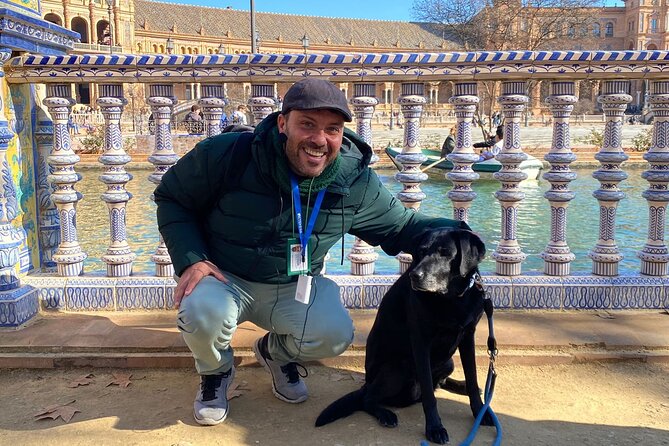
- Story-first guiding with humor and city detail from guides like Miguel, Carmen, and Julio
- Small-group feel with a maximum of 29 people
A 2h15 walk that hits Seville’s icons fast
This tour is built for people who want the headlines without spending half a day hopping between neighborhoods. In about 2 hours 15 minutes, you cover a tight circle of Seville’s most recognizable landmarks, plus the smaller squares that help you understand how the city breathes.
The pacing also makes sense. You will get short photo windows, then a guide-led explanation that connects the dots between Moorish, Christian, and 20th-century Seville. If you only have a couple of days, this kind of orientation walk can help you plan the rest of your trip.
Also, the length matters for comfort. A walking tour this focused is easier to pair with a late lunch or an evening flamenco show than a full-day marathon.
You can also read our reviews of more tours and experiences in Seville.



Price and value: why $12.02 feels unusually fair
At $12.02 per person, the value comes from two things you can actually feel while you’re there: the route is packed, and the logistics are light.
First, the tour includes stops where admission is free. That means you are not paying extra at each landmark, and your time stays spent on seeing and listening instead of queuing.
Second, the tour provides mobile tickets and headphones for the entire group. That headset detail is not just a nice-to-have in Seville’s busy streets. It helps you catch the guide’s stories even when you are near other tourists or traffic noise.
One more practical plus: the group stays under 29 people. You may still feel like you’re moving with a crowd, but it’s not the kind of mass tour where you can’t hear or you lose the guide in a second.
The route as a time machine, stop by stop
Below is how the itinerary feels in real time, and what each stop adds to the bigger Seville story. I’ll also flag what to watch for, and what might slow you down.
Plaza de San Francisco, Mercurio Fountain start and the green umbrella
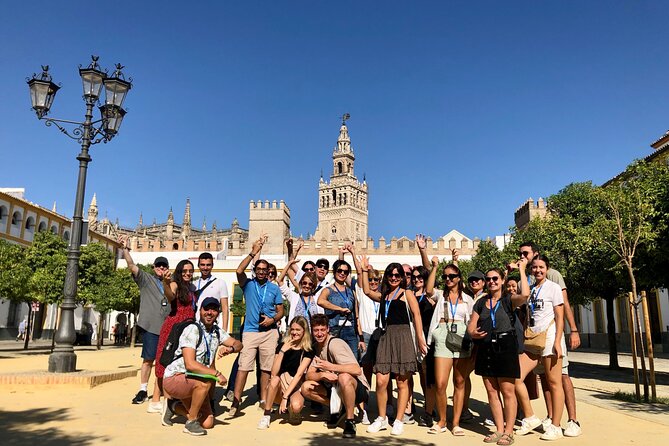
You begin at Plaza de San Francisco, specifically near the Mercurio Fountain. The tour group is easy to spot, since you will be looking for the green umbrella.
This first stop is a good warm-up. You get the guide’s context early, and it helps you understand what you’re about to see before the landmarks start stacking up. Expect about 10 minutes here, with a free admission stop.
Practical tip: if you arrive early, take 2 minutes to watch where pedestrians naturally flow. You’ll notice the route is set up so you walk on comfortable streets instead of cutting across inconvenient corners later.
Avenida de la Constitución, 1929 expo-era buildings
Next comes Avenida de la Constitución, where you’ll spot impressive buildings from the early 1900s tied to the Ibero-American Exposition in 1929. This segment is shorter, around 5 minutes, but it sets the tone that Seville is not only ancient.
What I like about this pause is how it prevents the classic mistake of thinking Seville is only medieval. You see how the city put on a modern face for an international event.
If you’re photographing, keep an eye on façades and window rhythms, not just the biggest monuments. This stretch is good for architectural “patterns,” which your guide will likely point out.



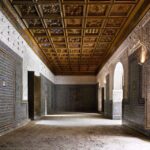
Puerta del Perdon at the Cathedral area, Mudejar details and old-world meaning
At Puerta del Perdon, you see a standout doorway on the Cathedral side, described as Mudejar style. The guide also explains that this was an exit door where ablutions were formerly given in the Arab era.
This is one of those stops where the story adds weight fast. A door is just a door until someone explains how people used it and why it was placed where it was.
Plan for about 10 minutes. This is a free stop, and it’s ideal for learning what to look for in Islamic-influenced ornamentation without getting lost in art history terms.
Possible consideration: near famous entrances, it can get crowded and photo angles may be tight. Just take the guide’s recommended spot and move when the group does.
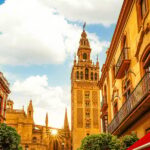
Torre Giralda, the Arab-Christian mix at Seville’s most famous silhouette
Then you reach Torre Giralda, the symbol of Seville. The key point is the Arab-Christian mix, which your guide frames as the tower’s character at its peak.
You’ll be outside for about 10 minutes and focus on the tower’s overall form and the idea that Seville’s identity was shaped by overlapping eras. If you have ever wondered why Seville looks different from other Spanish cities, this is a good anchor moment.
Photo tip: don’t only shoot straight-on. Look for a slight angle that shows how the tower’s base and upper levels relate. That helps you “read” the tower, not just capture it.
Barrio Santa Cruz, the Jewish quarter that rewards slow steps
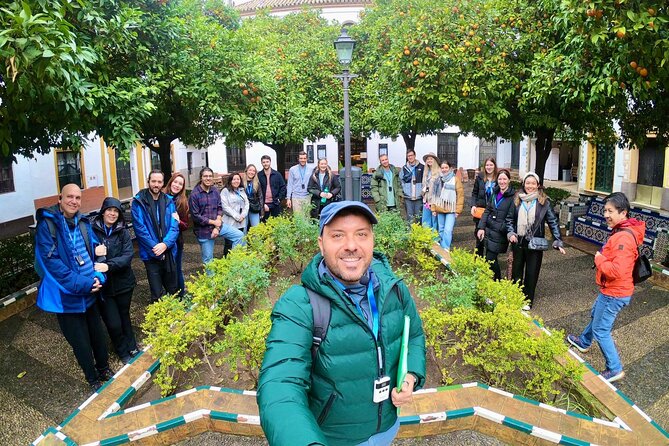
Next is Barrio Santa Cruz, Seville’s famous old quarter and former Jewish neighborhood. You’ll step into a maze of charm, with about 15 minutes given to this stop.
This is where the tour earns its “learning through walking” feel. The guide can point out how the streets likely shaped daily life, and why the area still feels intimate even with tourists moving through.
Best use of time here: listen first, then wander for 2 or 3 minutes after the explanation. If you immediately sprint to photos, you miss the small cues your guide gives.
Possible drawback: this is a small-space neighborhood. If you dislike crowds, go into it with patience. The time limit helps, but the area can still feel busy.
Plaza de Doña Elvira, one of Seville’s prettiest small squares
You then arrive at Plaza de Doña Elvira, described as possibly the most beautiful small square in Seville. You’ll have about 10 minutes, with free admission.
This is one of those stops that makes the whole tour feel more human. Big landmarks are memorable, but small squares are where you actually notice light, texture, and the way people gather.
If you’re a photo person, watch for the way the square frames views. If you’re not, still pause and look around, because the guide’s context will help you understand why the square looks the way it does.
Plaza Patio de Banderas, the postcard you earn by being there
Then comes Plaza Patio de Banderas, a classic Sevillian photo moment. Expect about 10 minutes.
This stop works best when you treat it as a “checkpoint.” You’ve already learned the layers of the city, and now you see a scene that matches what many people picture when they think Seville.
Practical advice: keep your photos quick. Then turn your head and listen. Your guide often uses these recognizable spots to connect the dots you just learned.
Plaza del Triunfo, where UNESCO monuments cluster in one square
At Plaza del Triunfo, you will see three UNESCO World Heritage monuments in the same square. You’ll have about 10 minutes.
This is a powerful stop because it condenses a lot of significance into a small area. It also helps you understand that UNESCO here is not one building in isolation, but a group of landmarks that together tell a story.
Possible consideration: UNESCO zones can be the busiest. If you want the best sightlines, follow the guide to the recommended spot, then step back when the group moves on.
Torre del Oro, the symbolic tower with a Muslim legacy
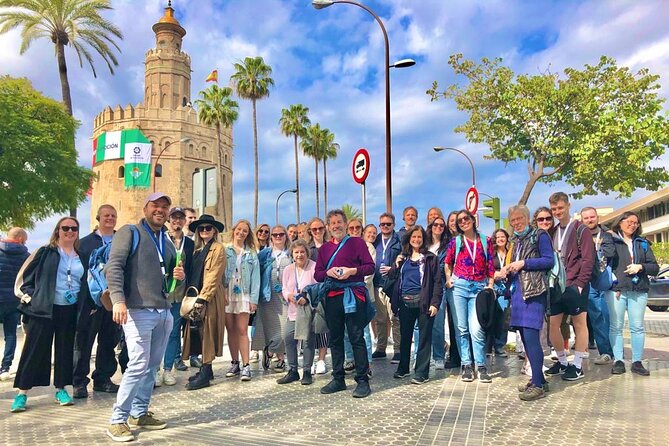
Next is Torre del Oro, described as the second most important and symbolic tower in Seville, with Muslim legacy. You’ll spend about 5 minutes.
This is brief, but it’s a meaningful pivot from the Cathedral and palace side into Seville’s river-connected identity. Even in a short window, a guide explanation helps you notice elements you would probably ignore on your own.
Photo tip: with only 5 minutes, aim for one strong shot, then look for another angle only if the group pauses long enough. Otherwise, use your time to hear the story.
Puerta de Jerez and Alfonso XIII, 1929 royal visitor context
Then you see Puerta de Jerez, along with the Royal Hotel Alfonso XIII built for monarch visitors during the Ibero-American Exhibition in 1929. Plan for about 10 minutes.
This stop gives Seville’s 20th-century “international stage” a face. The hotel built for visitors helps you picture how the expo reshaped the city and drew attention from beyond Spain.
If you like architecture and politics, this one hits. If not, just treat it as a context stop so Plaza de España makes sense later.
Real Fábrica de Tabacos, the tobacco factory turned university space
Next is Real Fábrica de Tabacos, the old Royal tobacco factory from the 18th century. Today it’s one of Spain’s most beautiful public universities.
You’ll have about 10 minutes here. The tour’s value is that you see how buildings can change roles without losing their visual identity. A former industrial giant turned education hub is a very practical way to understand how cities keep using older structures.
Possible consideration: depending on what’s visible from the outside, you may not get a full feel for the building unless you choose to return later. Still, the exterior plus guide context is enough to leave with understanding.
Plaza de España, the 1929 expo finale
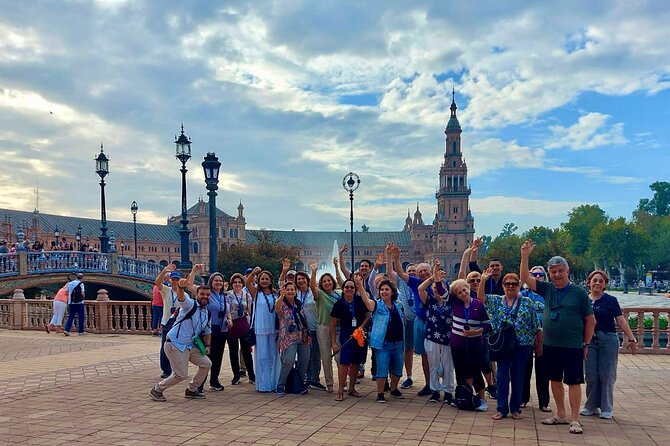
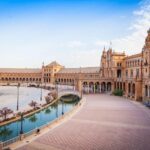
You finish at Plaza de España, the main venue of the Ibero-American exhibition of 1929. It’s the perfect ending because it’s expansive and visually dramatic after tighter historic streets.
You’ll spend about 10 minutes here. That final stretch is where the tour often feels most rewarding, because it ties the modern expo-era story into a landmark space that is now central to Seville’s identity.
Practical tip: at the end, take 5 minutes to look beyond the obvious arches. If your guide pointed out design ideas, you’ll spot them faster when you slow down.
Guides make the difference: Miguel, Carmen, and Julio’s style
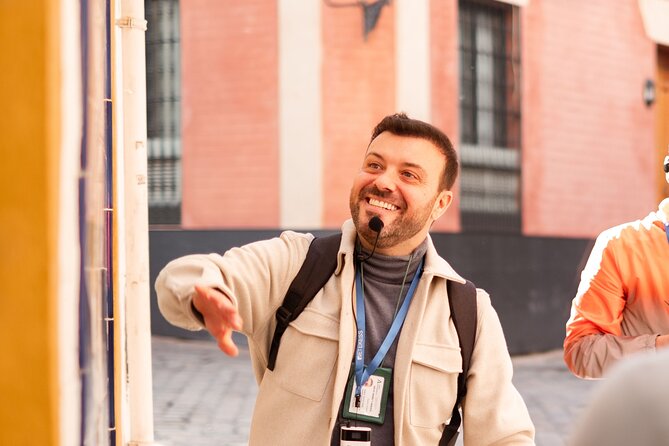
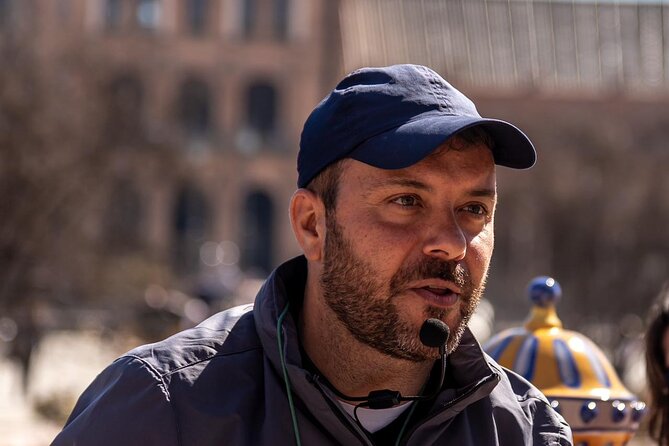
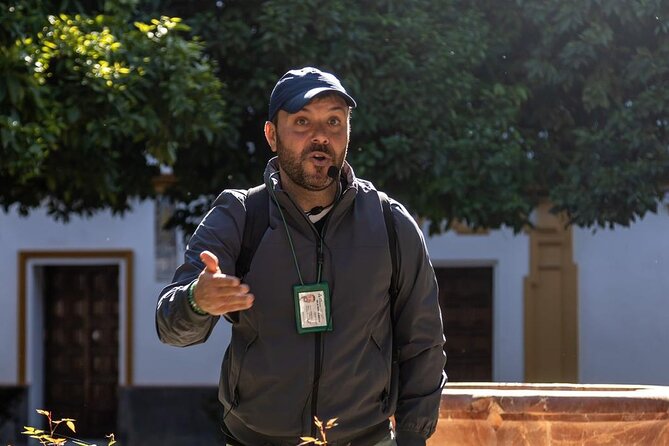
What stands out most in the strongest reviews is the guide style. Names like Miguel, Carmen, and Julio show up with consistent praise for animated storytelling, humor, and clear English delivery.
That matters because Seville’s architecture can feel like a blur if you only take photos. A good guide gives you an ordering system: what is Moorish influence, what is Christian adaptation, and what is the city’s modern reshaping in 1929.
If you want a walking tour where the person leading you actually makes the city feel personal, this format usually delivers.
Also, the headset system is a big part of why guides can keep their rhythm. When you can hear clearly, you stay engaged and you don’t drift away while the group walks.
Who this tour suits best, and who might want a different plan
This is a great match if you:
- want a fast orientation to Seville’s historic sights
- like guided stories in short, readable chunks
- want free-entry landmarks without extra ticket stress
- travel with someone who wants both photos and context
It may be less ideal if you:
- want long time inside major sites, since this is mainly an on-foot exterior and plaza experience
- prefer deep museum-style reading instead of street-level explanation
- are very sensitive to crowding in narrow old streets, especially around Barrio Santa Cruz
Booking smart: how to get the most out of your two hours
Since the tour is only around 2 hours 15 minutes, your best move is to treat it as your first Seville “map.” Afterward, you can decide what deserves a longer return trip.
A few simple habits help:
- Wear comfortable shoes, because the route is built for walking and quick stops.
- Keep your phone charged for photos, but keep it away during the explanations so you do not miss details.
- If you’re planning your day, schedule this earlier rather than later. You will know where to go next.
And if you want to maximize value from the audio headsets, use them right from stop one. The story you hear in Plaza de San Francisco will shape how the later stops land.
Should you book this Walking Tour of Sevilla’s Historic Sites?
If you like guided walking tours that feel fun, focused, and practical, I’d say yes. The price is low, the stops are all free admission, and the headset + English setup makes it easier to stay connected to what the guide is saying.
The biggest reason I think it’s worth your time is that it covers both Seville’s layered past and its 1929 expo identity in one continuous route. You end at Plaza de España, which is a strong payoff, and you start with enough context to enjoy the in-between details.
Just go in with the right expectations: this is a sharp highlight tour, not a long, inside-the-sites deep dive. If that fits your trip style, you should book it.
FAQ
How long is the walking tour?
The tour runs for about 2 hours 15 minutes.
What is the price per person?
The price is $12.02 per person.
Is the tour in English, and are headsets included?
Yes, the tour is offered in English, and headphones are included with individual headsets for the whole group.
Where does the tour start and where does it end?
It starts at Plaza de San Francisco, Mercurio Fountain area (Best Of Sevilla Free Tour) and ends at MAS&Go, C. Felipe II, 16, where the tour finishes in Plaza de España.
Are admissions required for the stops?
Admission is listed as free at every stop on the itinerary.
Is free cancellation available?
Yes. You can cancel for a full refund up to 24 hours before the experience starts.
More Tour Reviews in Seville
Not for you? Here's more nearby things to do in Seville we have reviewed




More Historic Seville Walking Tours worth a look.
 ★ 5.0Small-Group City Highlights Walking TourFrom $271,204 reviews
 ★ 5.0Cultural Walking Tour of Seville MonumentalFrom $8861 reviews
 ★ 4.9Tapas, Taverns, and History Walking TourFrom $84676 reviews
 ★ 4.9Tapas, Taverns and History Guided Walking TourFrom $99515 reviews
 ★ 4.9Small-Group Jewish Quarter Discovery Walking TourFrom $29499 reviews
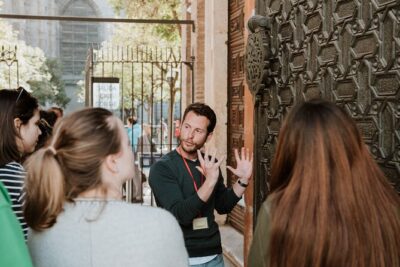 ★ 5.0Seville Guided Small-Group Walking TourFrom $21435 reviews
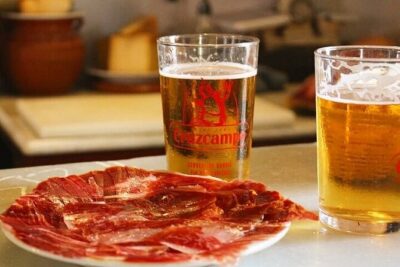 ★ 5.0Seville Private Walking Tour with Alcazar & Cathedral TicketsFrom $276332 reviews
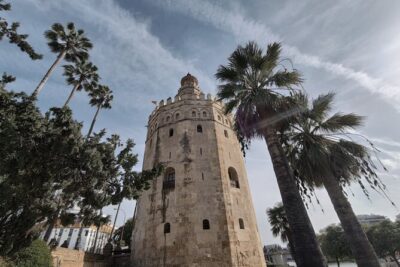 ★ 5.0Seville Small-Group Monumental Highlights Walking TourFrom $30278 reviews
Continue by place or experience