
REVIEW · HISTORIC SEVILLE WALKING TOURS
Walking tour through the monumental and historical area of Seville
Seville reads best on foot. This 2-hour guided walk strings together Seville’s most important landmarks with clear context, from the city’s Moorish roots to the Expo-era sights. I especially love the small-group attention and the way the guide points out what to actually look for at each stop.
One thing to consider: this is mostly a sight-and-story tour, so you should not expect long, inside-only visits at every monument. If you hate uneven pavement or stairs, bring sturdy shoes and pace yourself.
You’ll start at 10:00am near public transportation, grab a mobile ticket, and follow an English-speaking guide through the monumental center. It ends back at the same meeting point, so you can move on to dinner without planning a second rendezvous.
Key points worth knowing before you go
- A tight route with major landmarks, from Catedral de Sevilla and La Giralda to Plaza de España and Torre del Oro
- Small-group, private feel, so questions get answered and the guide can adjust pacing
- Moorish Seville to Expo Seville, with stop-by-stop clues you can keep using after the tour
- Fast photo rhythm, with brief windows at each highlight so you see more in less time
- Most stops marked admission ticket free, meaning you pay mainly for guidance and navigation, not ticket lines
- Guides like Francisco, Miguel, Luis, and Marcio show up in past groups, and they tend to share practical local recommendations too
A 10:00am walk that strings Seville’s icons together
If your Seville trip is short, this kind of walk is a smart way to build a mental map. You get the big “wow” sites in one continuous loop, plus the connective tissue between them. That matters because Seville is layered, and without context the city can feel like a collection of separate postcards.
The pacing is brisk but manageable. You spend about 10 to 30 minutes per stop, then move on. The route moves from older foundations, through cathedral and royal power, then out to the big open-air showpieces of the 1929 Ibero-American Expo.
At $49.37 per person for about 2 hours, it is priced like a guided experience, not like a museum day. If you like walking tours that help you decide what to do next, this format usually lands well.
You can also read our reviews of more tours and experiences in Seville.



Meeting the guide and getting answers in real time
This is a private tour/activity, meaning it is only your group. Reviews mention guides named Francisco, Miguel, Luis, and Marcio, and the common thread is that they do more than read facts. They answer questions as you go, and they help you understand why the architecture looks the way it does.
You also get practical value that shows up fast. One guest noted that the office had maps available, and the guide helped show where you would be going and offered recommendations for after the walk. Another tip that came up: the guide proactively watches for restroom needs since public options can be hard to spot quickly.
Language is English, and a mobile ticket is used. That usually means less hassle at check-in and fewer paper things to manage while you are trying to enjoy the city.
Stop 1 and 2: Eglise du Divin Sauveur and Plaza de San Francisco
The walk starts at Eglise du Divin Sauveur, where the guide sets the stage with how Seville formed. This is not just a history lecture. You also get a look at the courtyard of the old mosque, which helps you understand why so many later buildings borrowed from older foundations.
In many cities, you can see centuries side by side and still not “get it.” Here, you’re nudged to connect dots. That makes the next stops easier, because you start spotting the idea of transformation: sacred space changing hands and styles shifting over time.
Next up is Plaza de San Francisco, described as a showcase of Spanish plateresque art. Even with a short stop, it is useful. Plateresque is the kind of style that can look like decoration overload if you do not know what you are looking for. A guide helps you slow down enough to notice the details that give the style its identity.
Stop 3: Catedral de Sevilla, the Door of Forgiveness and La Giralda
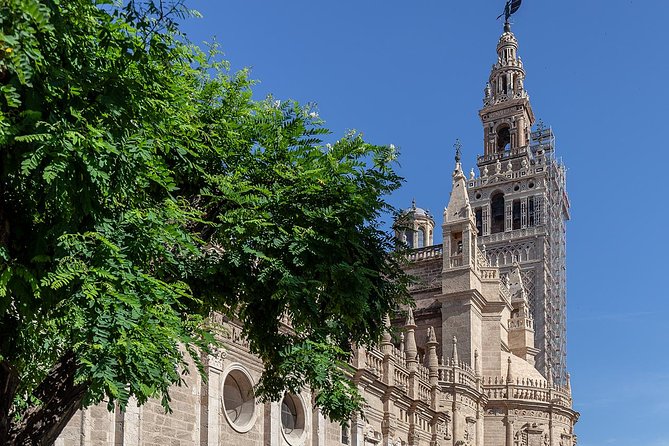
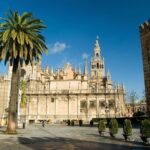
This is the heart stop for many first-timers. The tour focuses on key exterior features around the cathedral, including the Door of Forgiveness, described as the oldest door of the cathedral. You also get pointed attention to the patio of the orange trees, plus details tied to older Moorish elements.
Then comes La Giralda, the cathedral tower and one of Seville’s most famous landmarks. Even if you do not go inside, this stop teaches you how the tower fits into the larger story of power and religious identity.
A good way to use this stop is to pick one thing to remember. For example, decide you will later find where the patio of orange trees sits in relation to the main entrance, or where the Giralda’s lines pull your eye upward. When you do the cathedral area later on your own, those details will click.
Stop 4 and 5: Real Alcazar facade and the Archivo General de Indias
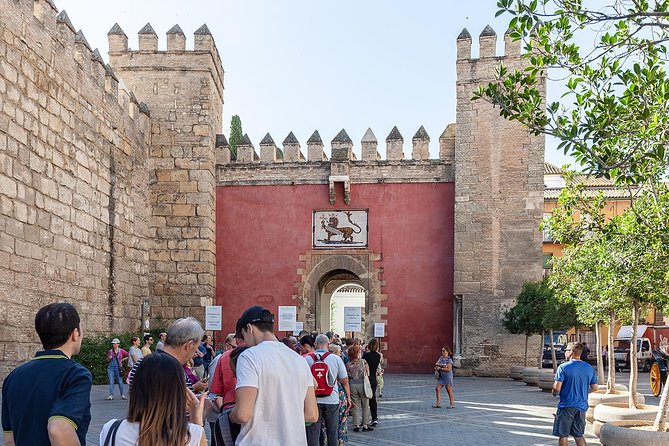
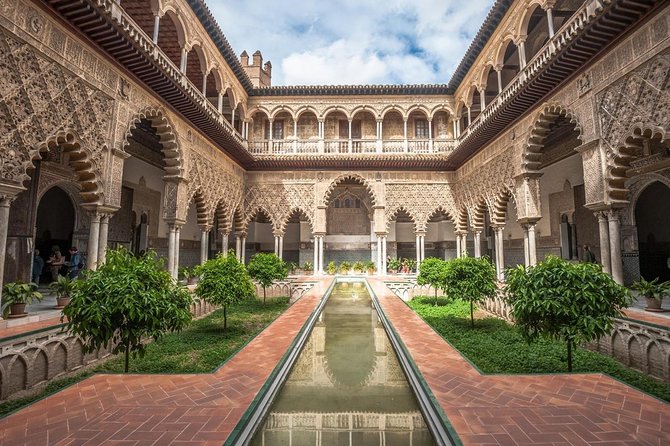
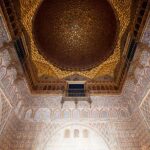
From the cathedral zone you shift to the royal story with Real Alcazar de Sevilla. The stop emphasizes the facade and Patio de Banderas, both quick to grasp from the outside but still meaningful. The Alcazar is a place where style changes without losing its identity, and that is the kind of lesson you want early in your trip.
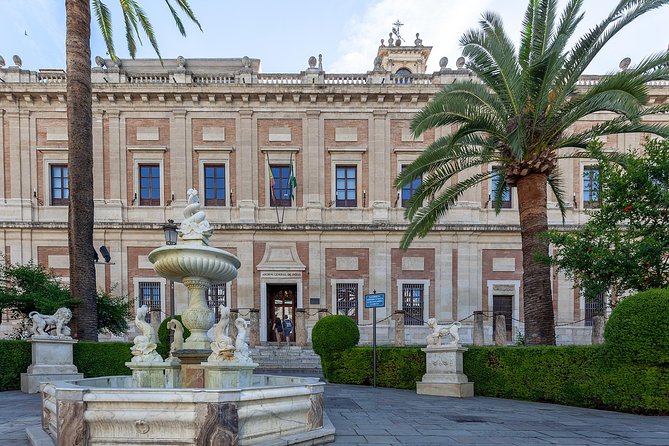
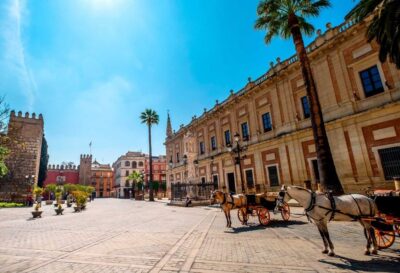
Then you move to Archivo General de Indias. This is short, but it is a big deal: it is described as the most important archive in Spanish history, preserving documents tied to the relationship between Spain and the American colonies. Even if you only glance at the building, the point is clear. Seville was not only about religious power and royal palaces. It was also a crossroads for trade, administration, and record-keeping.




Stop 6 and 7: Barrio Santa Cruz and Jardines de Murillo
Now the tour slows into neighborhood texture. You walk through Barrio Santa Cruz, noted as the old Jewish district of the city. It is a key moment because the story of Seville is not only about monuments. The city’s identity is also carried in the streets, the way spaces were organized, and the layers of community history.
After Santa Cruz you reach Jardines de Murillo, described as old orchards from the Alcazar turned into public gardens. This stop gives you a breather. You are guided through a garden full of plant life like magnolias, orange trees, and ficus, plus features such as gazebos, fountains, ceramics, and monuments.
One detail I like here is the mention of ladies at night, which is a plant known for its evening scent. It is a small thing, but it makes the garden feel alive rather than like just another pretty park. If you can, time a quick pause here. Rest your legs, then use your senses, not just your camera.
Stop 8 to 11: Real Fábrica de Tabacos, Plaza de España, Parque de María Luisa, Torre del Oro
This is where Seville switches from intimate spaces to showpiece city planning.
First, Real Fábrica de Tabacos, now the headquarters of the University of Seville. The tour mentions crossing its huge corridors and patios on the way to Plaza de España. That matters because many first-timers picture the factory as one building. Instead, it is an entire system of interior spaces that once drove European-scale tobacco production, and now supports campus life.
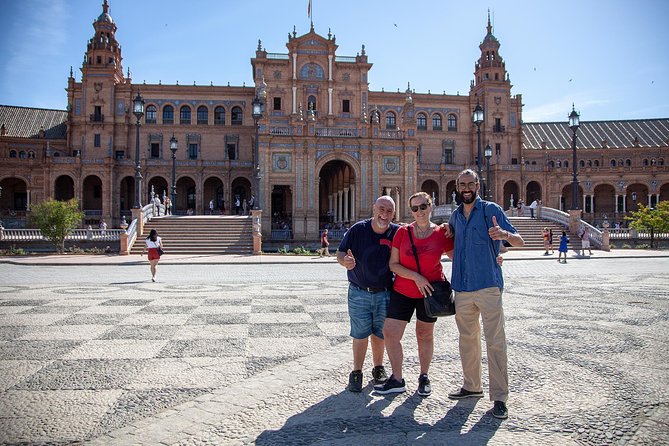
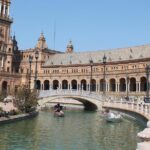
Then comes Plaza de España, the big Expo centerpiece from 1929. The guide explains how the plaza connected all the American countries through their pavilions and official buildings. This stop is built for wonder. The key is to notice how the plaza is designed to make you feel part of a bigger stage, not like you are just walking past a monument.
From there, you move to Parque de María Luisa, Seville’s early urban park and one of its green lungs. The tour gives a short but useful timeline, including its designation as a historical garden in 1983 and its inauguration on April 18, 1914 for Infanta María Luisa Fernanda. It is a practical way to understand why the park looks like it has always been part of everyday Seville, not just a modern addition.
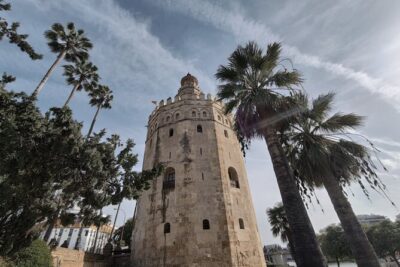
Finally, you end at Torre del Oro, an albarrana tower on the left bank of the Guadalquivir. It served as a surveillance point for the old port, and it was declared a historical-artistic monument in 1931. This ending works well because it brings you back toward the river story, rounding out the urban sweep with a clear maritime function.
Price and value: $49.37 for a guided “Seville map in motion”
At $49.37 per person for about 2 hours, the value comes from compression. You cover a lot of ground, including the cathedral area, Alcazar exterior viewpoints, Santa Cruz streets, major gardens, and the Expo icons. Most stops are marked admission ticket free, which usually means you are paying for guidance and structure, not for expensive entry tickets at each point.
That structure is worth money when you are trying to understand what you are seeing. Seville’s sights are famous, but fame can make them feel flat if you do not know what makes each one tick. A good guide turns a checklist into a story you can walk around with later.
Also, the tour tends to book ahead. It averages being reserved about 25 days in advance, so if you are traveling during peak season, it is wise to lock it in sooner rather than later.
What to expect on the ground: walking pace, surfaces, and comfort
This is a walking tour, so plan for real street conditions. Cobblestones and uneven patches are part of the experience, and there can be stairs. Bring sturdy shoes even if you think you only need “nice walking sandals.” Your feet will thank you later, especially with the stop-and-go pace.
Time is also part of the design. You only spend a short window at each highlight, so you need to decide how you will use your time. If you want photos, move a few steps early to find an angle before you stop. If you want details, listen first, then photograph once you understand what that view represents.
One smart move: keep your questions ready. The whole point of a guided format is asking things you would otherwise wonder about in silence.
Who this tour fits best (and who should skip it)
This tour is a great fit if you:
- Want an early introduction to Seville that helps you plan the rest of your stay
- Like walking with a guide and getting both story and location tips
- Prefer seeing the connections between Moorish, royal, and Expo-era Seville in one morning
It may not be ideal if you:
- Want a lot of long indoor time at specific sites
- Hate walking for long stretches, even at a manageable 2-hour scale
- Need a fully accessible route with minimal uneven ground, since the city center involves varied surfaces
Should you book this Seville historical walking tour?
I think you should book it if you want to get your bearings fast and feel confident navigating Seville afterward. The strongest reason is the route itself. You do not just hit famous places. You get guided explanations that connect why those places exist and what they replaced or transformed.
Skip it only if you are looking for a slow, sit-down museum style day or you want guaranteed deep interior access to every major monument. Otherwise, this is a well-paced way to turn your first Seville morning into a map you can reuse all week.
And one last practical note, from the kind of small issues that matter: come with comfortable shoes, and listen for your guide’s hints about where basic stops are easiest.
FAQ
What is the duration of the Seville walking tour?
It is listed as about 2 hours.
How much does the tour cost per person?
The price is $49.37 per person.
Is the tour offered in English?
Yes, it is offered in English.
What is the meeting point and start time?
The meeting point is Sevilla Moving – Alojamientos y experiencias, C. Luis Montoto, 19, Local Bajo, 41003 Sevilla, Spain, and the tour starts at 10:00am. It ends back at the meeting point.
Is this a small group or private tour?
It is described as a private tour/activity, so only your group participates.
What if the weather is bad?
This experience requires good weather. If it is canceled due to poor weather, you are offered a different date or a full refund.
More Tour Reviews in Seville
Not for you? Here's more nearby things to do in Seville we have reviewed






More Historic Seville Walking Tours worth a look.
 ★ 5.0Small-Group City Highlights Walking TourFrom $271,204 reviews
 ★ 5.0Cultural Walking Tour of Seville MonumentalFrom $8861 reviews
 ★ 4.9Tapas, Taverns, and History Walking TourFrom $84676 reviews
 ★ 4.9Tapas, Taverns and History Guided Walking TourFrom $99515 reviews
 ★ 4.9Small-Group Jewish Quarter Discovery Walking TourFrom $29499 reviews
 ★ 5.0Seville Guided Small-Group Walking TourFrom $21435 reviews
 ★ 5.0Seville Private Walking Tour with Alcazar & Cathedral TicketsFrom $276332 reviews
 ★ 5.0Seville Small-Group Monumental Highlights Walking TourFrom $30278 reviews
Continue by place or experience