
REVIEW · CARMONA HISTORY DAY TRIPS
Carmona: City Walking Tour
Carmona packs 3,000 years into two hours. This walking tour strings together the places that make the town feel layered, from Roman traces to Muslim and Christian touches. You get a focused route with a professional guide, plus enough time to look, listen, and snap photos without feeling rushed.
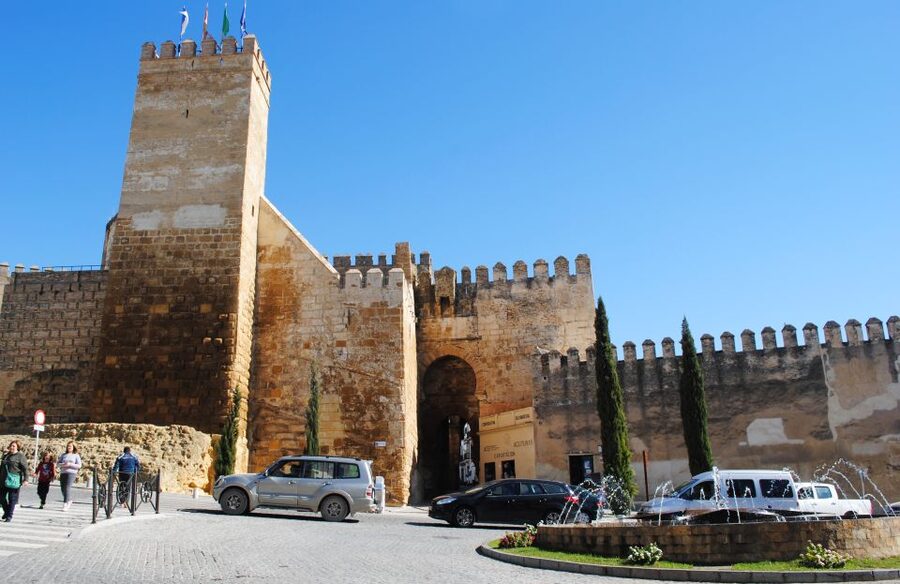
I love the architecture variety, especially the blend of Mudejar and Baroque churches you pass along the way. I also like the fact that the route includes key monumental stops such as Puerta de Sevilla, the Plaza de San Fernando, and the Alcázar area, so you’re not just walking for walking’s sake.
One thing to consider: the experience depends heavily on your guide and on how well the guide handles multiple languages. One group report mentioned a late start and uneven English coverage, while a couple of others praised guides by name, like Iván and Enrique, for being clear and organized.
Key things to know before you walk
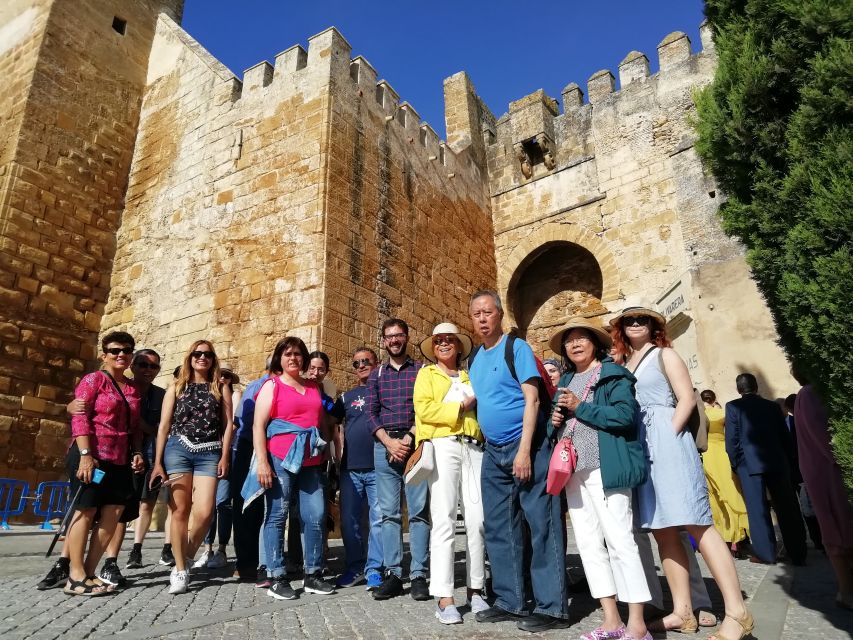
- Puerta de Sevilla as your anchor point: you meet at the door, then start with the most important “gate” energy right away.
- Ancient-to-medieval story line: Carthaginians, Romans, Muslims, and Christians are connected through the streets and monuments.
- Mudejar and Baroque church views: the tour highlights architecture you can actually spot while walking.
- Alcázar stops, not just photo stops: you move between major royal and fortified-feeling sites.
- A viewpoint finish: the end is built around views over the Vega de Carmona.
- Guide quality and language matter: some departures are described as excellent, others less smooth.
Meeting at Puerta de Sevilla, and why the 2-hour pace works
Most Carmona tours start with a convenient idea, but this one starts with an actual landmark. You meet the guide in front of the Puerta de Sevilla, and from there you begin walking through the town’s historic spine. With a total duration of about 2 hours, the pace is meant to keep you moving while still giving you short guided stops.
That timing matters because Carmona’s highlights are spread out in a way that can feel like a scavenger hunt if you’re solo. On this route, you’re guided from gate to plaza to churches to alcazars, with photo stops built in. It’s a smart format if you want the “greatest hits” first, then return later for anything that hooks you.
If you hate long, meandering walks, this tour is a good compromise. You’re on foot for several short segments, then you slow down at the big monuments. Also, wearing comfortable shoes is not optional here, since the experience is designed as a walking loop.
You can also read our reviews of more tours and experiences in Carmona.
How Carmona’s 3,000 years show up in real streets
Carmona earns its reputation because it doesn’t feel like a museum you visit once. It feels like layers you can read while you walk. This tour frames the town’s story as a sequence of cultures, with Carthaginians, Romans, Muslims, and Christians leaving marks that you can still sense in the architecture and street layout.
You’ll hear that Carmona is a 3,000-year-old medieval town, and it has a Roman connection so early it nearly makes your head spin. Julius Caesar even referred to it as the Star of Europe. Whether you take that as legend or political hype, it gives you a sense of how long this place has been “important.”
The practical upside for you: instead of hearing dates and names in a vacuum, you’re shown where those influences show up. That’s what makes short guided stops useful. You’re not just collecting facts, you’re building a mental map of why the town looks the way it looks.
Puerta de Sevilla to Plaza de San Fernando, the town’s momentum
Right after meeting, you head toward the Alcázar de la Puerta de Sevilla area. You’ll get a photo stop and a guided moment of context (about 15 minutes). This is a great opener because the Puerta de Sevilla is described today as the oldest building you can visit in Spain. Even if you only catch a few details, that superlative sets the mood.
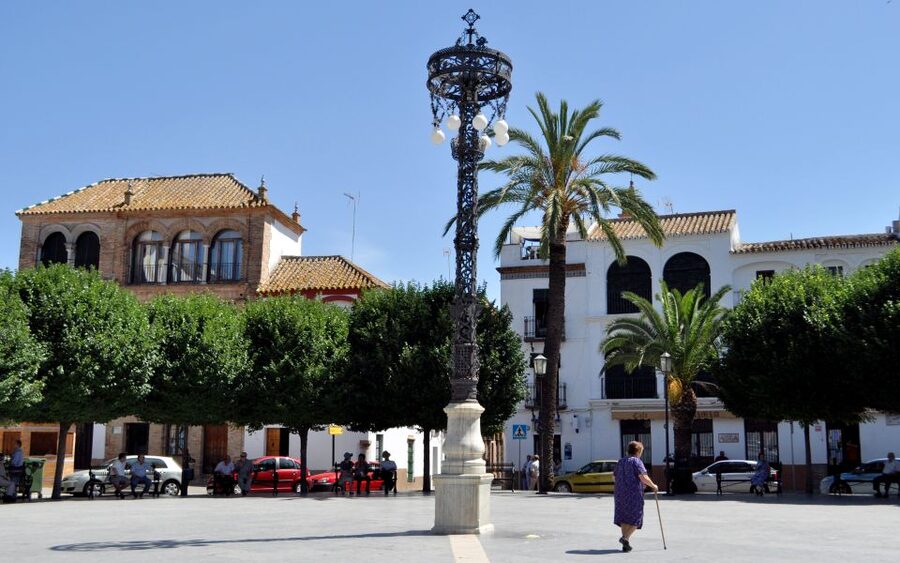
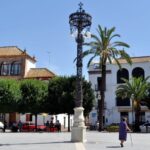
From there, you walk a short stretch on foot and land in the city center at the Plaza de San Fernando. The tour includes a photo stop and guided explanation here too (about 10 minutes). Plazas in Andalusia are more than waiting rooms for life. They’re where the town breathes, where you can regroup, and where you start to see the surrounding church and street lines more clearly.
A key tip for getting value at this stage: look up. The tour is short, so you’ll miss details if you only stare at street level. Pay attention to how buildings frame the space, especially around religious architecture and former fortified areas.
Then you continue toward the Church of Santa María for the next photo stop and explanation. This part of the route works well if you like walking “clockwise” through a town’s logic, rather than bouncing around.
Church of Santa María and Iglesia de Santiago, what to notice
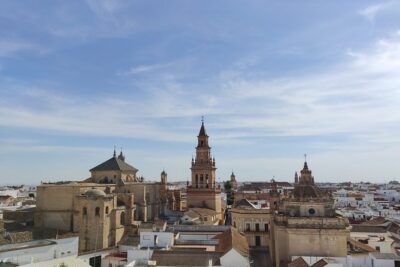
The tour leans into Mudejar and Baroque architecture, and these church stops are where that theme becomes real. You pass the Church of Santa María, then later you reach Iglesia de Santiago with another guided photo moment (about 10 minutes for the Santiago stop).
What I like about focusing on church architecture here is that you can actually compare details without needing art history homework. Even in short stops, you can spot differences in how parts of the buildings are shaped, decorated, and built. Mudejar influence often shows up through a specific kind of ornamental style and material rhythm, while Baroque can read as movement and theatrical emphasis.
A practical drawback to flag: if you’re sensitive to language coverage, this is the stretch where you want a guide who explains clearly. One English-speaking visitor report mentioned uneven focus between English and Spanish speakers. If you’re booking in English, it’s smart to be ready for the possibility that your group dynamics affect how much you hear.
Still, the overall structure is helpful. You’re not just inside a church. You’re moving through town and getting a sense of how these landmarks sit within daily streets.
Gate to Córdoba and the Alcázar del Rey Don Pedro
The route then shifts toward the Gate to Córdoba, and this is a pivotal moment for understanding how Carmona was defended and organized. You’ll have a photo stop and guided time here (about 20 minutes), then you walk on foot for about 10 minutes afterward.
Why this segment matters: gates like these are not random leftovers. They signal how cities were connected, controlled, and expanded. You’ll also hear Roman references like the Cardo Máximo, which you’ll pass from Roman times. That’s one of those details that makes a town feel less “static.” Roads used to matter politically and practically, and you can sense the long continuity when it’s explained as you walk.
Next you reach the Alcázar del Rey Don Pedro, via the Puerta de Córdoba area. This isn’t just a stop for a pretty view. It’s part of the tour’s bigger idea of exploring the three Alcazares, with the day’s stops arranged so you gradually understand the fortified and royal feel of the city.
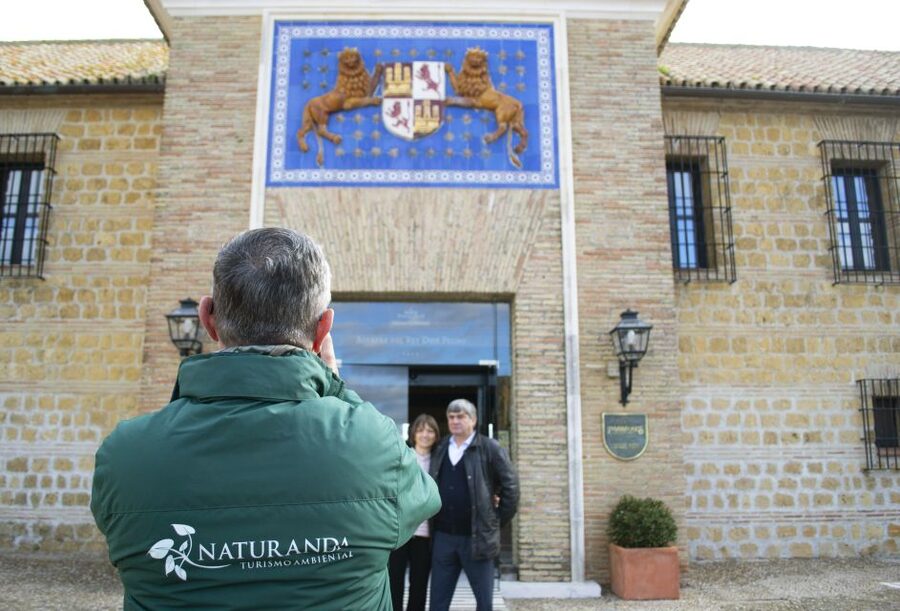
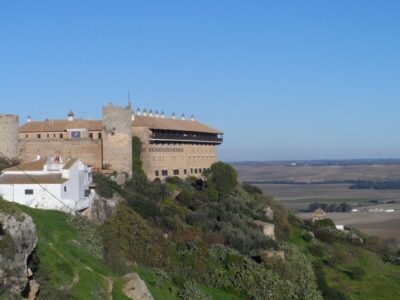
One more stop is at the Parador de Turismo de Carmona. The Parador isn’t just a “place to stay.” It’s an important landmark in the historic environment, and the tour includes a photo stop and guided explanation there (about 20 minutes). For me, it’s one of those times when the tour nudges you to think, not just look. You start to see how the alcazar story links to the present-day city.
The narrow streets feeling and the value of a local-style route
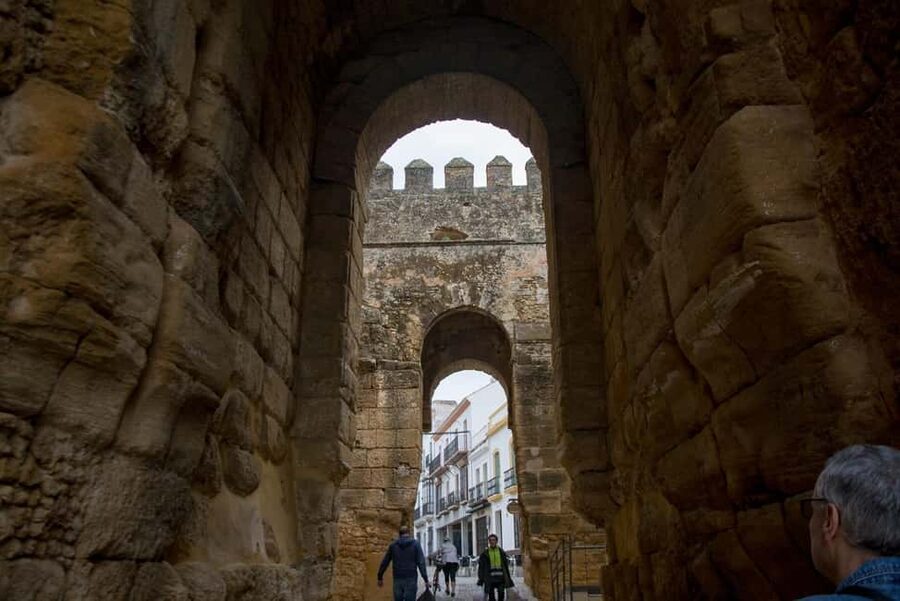
At a certain point, the walking starts to feel more like the Andalusian town you imagined before you arrived. You move through older parts of the city with narrow streets and a traditional feel. The tour is designed so those “slow” streets show up after you’ve already learned the big pieces, so the town layout makes more sense.
I also appreciate that the tour isn’t only about the most famous structures. It’s described as including palace-houses, church architecture, and local-loved hidden corners. You don’t get the sense that the guide is rushing through a checklist. Instead, the route gives you moments where you can pause and understand what you’re looking at.
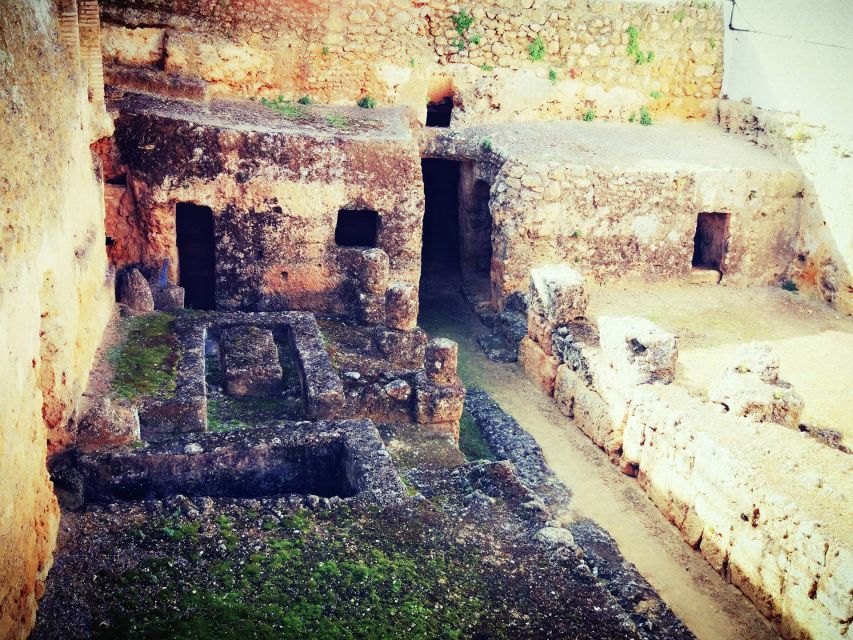
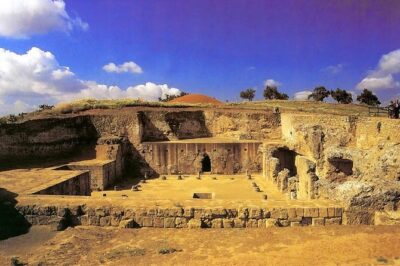
That said, a caution from recent experience stories: one booking mentioned a mismatch around a necropolis-related expectation. The guide reportedly was not aware that a necropolis visit was included, and the group left feeling like they had paid for an extra stop they never saw. If necropolis access is important to you, I’d recommend confirming with the operator or checking what’s explicitly included for your departure before you rely on it.
The final viewpoint over Vega de Carmona, and what to do after
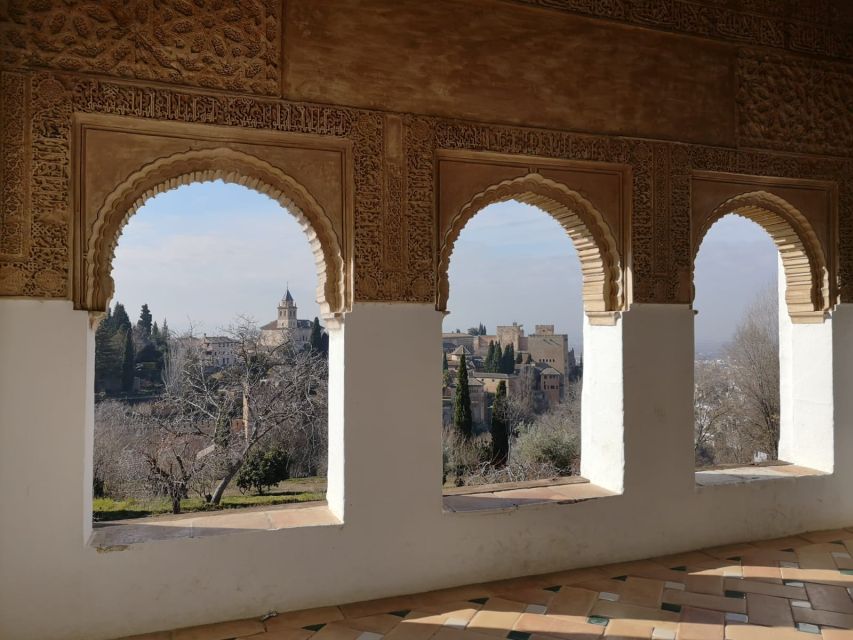
Every good walking tour needs a finish that lets you breathe. Here, the ending is built around views over the Vega de Carmona from an excellent viewpoint location. It’s not just a grand photo moment. It’s where the town’s setting becomes clear, and the history you heard earlier starts to make geographic sense.
This is also a smart time to decide your next move. Carmona is the kind of place where one viewpoint can change your priorities for the afternoon. After the tour, you’ll likely want to wander a bit more, go back to the churches you liked most, or simply re-walk a street because it now looks different in your head.
Food and drinks are not included, so plan a stop afterward. The timing is usually helpful, too. You’ll finish while you still have energy to grab a snack and continue exploring, rather than ending the tour when you’re exhausted and hungry.
Price and value: what $18 buys you in real walking-time
At $18 per person for around 2 hours, this is the kind of price that makes sense for a first visit. You’re paying for a professional guide and a walking route that connects major monuments you’d otherwise need to piece together yourself.
In value terms, here’s what you’re really buying:
- Short, guided explanations at high-signal points like Puerta de Sevilla, Plaza de San Fernando, major churches, gate areas, and alcazar zones.
- A clear storyline connecting cultures and architectural styles instead of random sightseeing.
- A finish with a planned viewpoint so the tour ends on a payoff.
The guide factor is the only variable that can change the value. Some bookings praised guides like Iván for being well documented, organized, and enjoyable, with a visit that ran a bit longer than expected. Others complained about punctuality or language balancing. That means the tour can be excellent or merely fine depending on the day and the guide assignment.
If you’re budget-minded and want structure, $18 is a good deal for a “greatest hits with context” day. If you’re extremely strict about language coverage, arrive with an open mind and be prepared to ask for clarification.
Who this tour suits best
I’d point you toward this tour if you:
- Want a high-impact first visit to Carmona with an easy route.
- Like architecture and want help spotting Mudejar and Baroque details.
- Enjoy guided context that ties together different historical eras.
- Have limited time and still want a viewpoint finish.
I’d think twice if you:
- Need guaranteed, equal coverage in multiple languages, since group language dynamics can affect what you hear.
- Expect specific additional sites beyond what’s clearly described, especially if you’re relying on a necropolis stop that was not experienced by at least one group.
If you’re traveling with a friend and you both want different languages, it helps to align on what you can handle during explanations. The tour is live and depends on the guide’s approach.
Quick FAQ for planning your Carmona walk
FAQ
Where does the tour meet?
Meet your guide in front of the Puerta de Sevilla.
How long is the Carmona walking tour?
The duration is about 2 hours.
How much does the tour cost?
The price is $18 per person.
What is included in the price?
Included is a walking tour and a professional guide.
What is not included?
Food and drinks are not included.
What languages are available for the live guide?
The live guide is available in English, Spanish, French, and Italian.
What should I bring?
Bring comfortable shoes.
Is there a student discount?
Yes. The student price is for students up to age 25 with a valid and updated student card.
Is free cancellation available?
Yes. You can cancel up to 24 hours in advance for a full refund.
Can I reserve without paying right away?
Yes. The option to reserve now and pay later is available.
Final verdict: should you book this Carmona walking tour?
Yes, if you want a smart, time-efficient way to see Carmona’s core monuments and understand how its layers connect. The best version of this experience is clearly guide-driven, and the indications from standout guides like Iván suggest you can get detailed, organized explanations that make the town click fast.
Book it if you’re comfortable with a walking-first format, want church and alcazar highlights, and enjoy a viewpoint payoff at the end. Skip or verify details closely if your main goal is a specific extra site that you’ve heard might be part of some departures, because at least one group felt the reality did not match their expectation.
In short: for $18 and 2 hours, this is a solid way to get your bearings in Carmona, learn what to notice while you walk, and still have energy left to explore after.
More Tour Reviews in Carmona
Not for you? Here's more nearby things to do in Carmona we have reviewed
More Carmona History Day Trips worth a look.
 ★ 4.5From Seville: Cordoba, the Mosque and Carmona Day TripFrom $1171,967 reviews
 ★ 4.5Cordoba & Carmona with Mezquita, Synagoge & Patios from SevilleFrom $1191,126 reviews
 ★ 4.5Carmona and Necropolis: Guided Day Tour from SevilleFrom $5841 reviews
 ★ 5.0Private visit to Carmona and its main monumentsFrom $14423 reviews
 ★ 4.3Carmona and Necropolis Tour from SevilleFrom $5822 reviews
 ★ 5.0Private trip to Carmona from Seville: 5000 years of historyFrom $3008 reviews
 ★ 4.0Carmona Roman Necropolis and History Walking TourFrom $1025 reviews
Continue by place or experience