
REVIEW · CóRDOBA TOURS FROM SEVILLE
City of Caliphs: A Self-Guided Walking Tour of Córdoba’s History
Cordoba has layers, and this route reads them fast.
I like the offline audio and maps, so you can keep moving without hunting for signal. I also love how the GPS guidance helps you rejoin the path when you stop for photos or a longer look. One drawback to plan for, the app needs your phone plus headphones, so bring them, and be ready to tap through the start points if you want to begin mid-route.
This is a self-guided walking tour through Córdoba’s big identity markers, from the Mosque-Cathedral area to patios, Jewish heritage sites, and the Christian-era fortress zone. It runs about 3 to 3.5 hours, and you loop back to the meeting spot by the Roman Bridge. If you want a guided feel but with your own pace, this format is hard to beat.
Key things to know before you start
- Offline audio, maps, and geodata mean fewer stress breaks when service gets spotty
- GPS rerouting is built in, which helps when you pause for pictures
- Stop and restart friendly pacing works well in heat, shade, or long museum moments
- A tight theme trail through Islamic, Roman, Jewish, and Christian Córdoba
- A lot in one half-day without needing a bus between areas
- Optional archaeological time lets you choose how deep to go
How to use this self-guided Córdoba route like a pro
This tour is designed for walking, not for rushing. You get an app for Android and iOS, with lifetime access, plus offline audio, maps, and geodata. That combo is the difference between a fun wandering day and the annoying part where you keep reloading directions.
I recommend you treat it like a plan, not a script. The audio tells you what to look for at each stop, then you move on when you are ready. One practical tip: if you know you will spend extra time in the Mosque-Cathedral zone or the patios streets, start early, or build in a longer pause at those moments.
Logistics are simple but not zero. You should plan on bringing a smartphone and headphones, since they are not included. Also, this is listed as a private activity, meaning your group uses the same tour plan without mixing with strangers.
One note from real use: a couple people found it tricky to start at a later point in the route, and another issue came up when switching from taking a picture back to the map. So if you want to jump in mid-tour, give yourself a few minutes to get oriented before you commit to pacing.
You can also read our reviews of more tours and experiences in Cordoba.
Price and value: why $11.99 can make sense here
At $11.99 per person, the price is low enough that you can justify it even if you only get partial value. Here’s what makes it worthwhile: Córdoba’s main sights are dense, and the audio helps you see patterns, not just buildings. The value is less about trivia and more about helping you understand why these places are in the same walking day.
Also, the tour gives you lifetime access, which means you can repeat the route later in the year. That matters because Córdoba has different light and different crowds depending on season and time of day. If you are the kind of traveler who likes to return for a second look, this format becomes even better.
The only real cost besides the ticket is time and your own comfort. You need your phone, and you might want water because you are walking. Food and drink are not included, so plan a snack stop you actually enjoy, not one forced by a fixed group schedule.
Starting at Torre de la Calahorra and getting your bearings fast
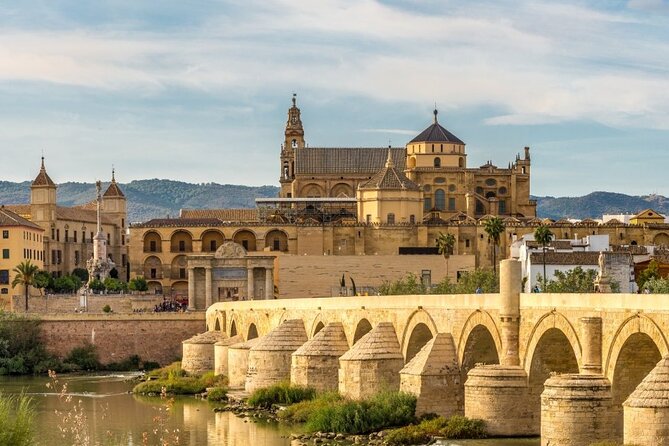
Your meeting point is Torre de la Calahorra by Puente Romano on the south side of Córdoba. That’s a smart launch area because you are already near big river views, and it sets you up for the old town core.
The route is built to move you through the city in a way that keeps the themes connected. You are likely to feel the sequence even before the audio explains it, because you keep stepping from one architectural “chapter” into the next.
Timing wise, expect about 3 to 3.5 hours. In hot weather, that can stretch if you pause in patios and courtyards. The route is self-guided, so you can slow down without feeling like you are failing a group timer.
Mosque-Cathedral zone from the Mirador Mezquita viewpoint
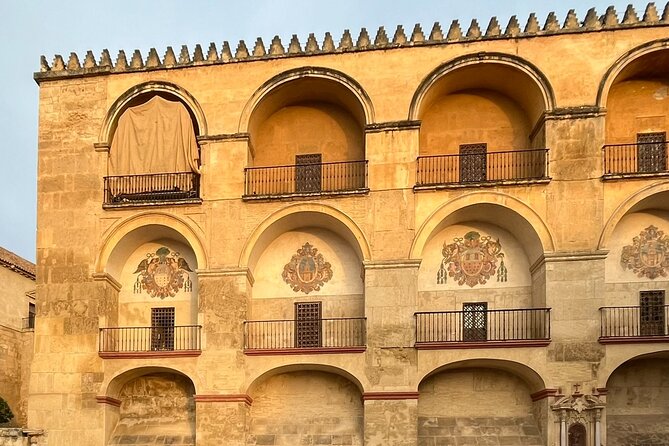
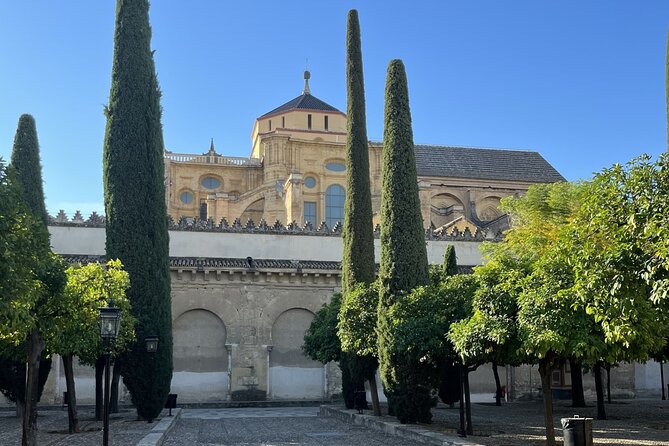
The day’s emotional anchor is the Mosque-Cathedral of Córdoba, with the route leading you to a Mirador Mezquita viewpoint. This is where you look out and really take in the hybrid story of the site, where Islamic and Christian influences share the same space.
What I like about starting here is clarity. Once you see the scale and the blend of styles from a viewpoint, the rest of your walking day makes more sense. Streets, courtyards, and side chapels start to feel like supporting characters, not random stops.
Practical note: this zone can take time, and it can also be crowded. Since the audio is offline, you can keep listening even while you reposition. If your phone battery is not great, this is a good moment to check your charge.
Roman Bridge views, then the Roman Temple site
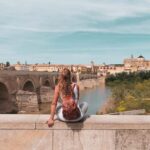
Next you cross the Roman Bridge of Córdoba as you transition into the old town. The value here is perspective. The river sets the stage for why Córdoba mattered across centuries, and the bridge is a physical reminder of continuity in a city that keeps reinventing itself.
From there, you reach remnants of the Roman past at the Roman Temple. Even if you cannot picture the full original grandeur, the archaeological site helps you imagine what came before the medieval waves. It’s a helpful reality check, because Córdoba is often marketed through Islamic and later Christian stories. Seeing the Roman layer keeps your understanding balanced.
If you are the type who likes to take photos from one consistent angle, this is a good part of the route to do it. The light and the river context make your images tell a story, not just show a landmark.
Córdoba patios, Calleja de las Flores, and the Orange Tree Courtyard
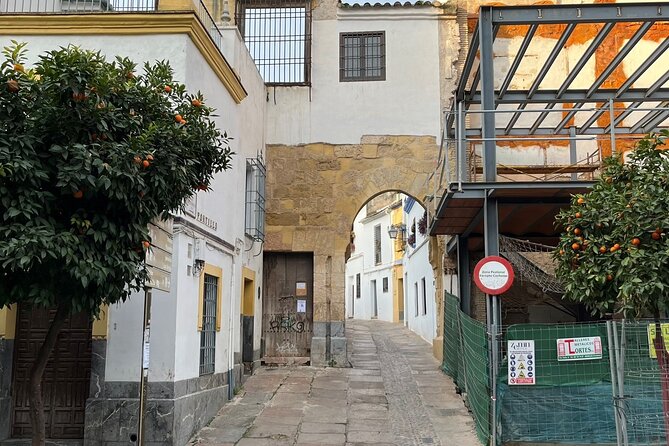
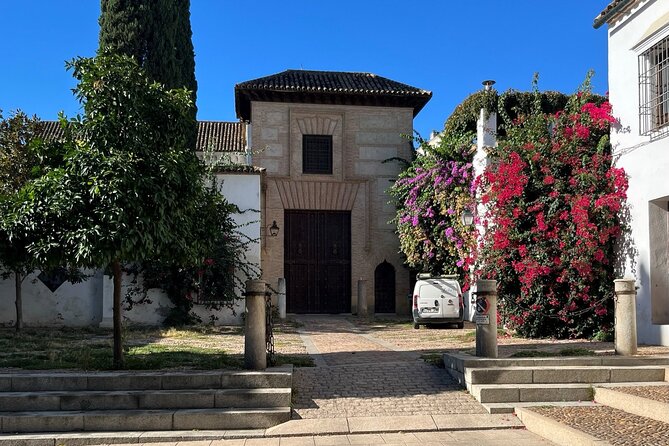
One of the most Cordoban parts of the route is its attention to patios and courtyards. You go from Cordoban patios with their bright colors and fragrant plant life to the flower-lined alley known as Calleja de las Flores.
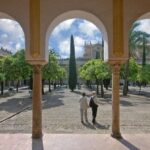
Then comes a quieter moment: the Orange Tree Courtyard. This is a calm pocket where the symmetry and the citrus trees make the space feel ordered and fresh. It’s not just pretty, it’s functional. Patios like these reflect how people shaped light, air, and daily comfort in courtyard homes.
Here’s why this section works well on a self-guided tour: you can pause when the mood hits. If you want to spend 10 minutes reading the audio and sketching details, you can. If you want to wander slower because the flowers are stunning that day, you can do that too.
If you are traveling in summer heat, the patio courtyards can feel like a reset. Bring water, and plan short listening breaks so you do not overheat while standing still.
San Basilio neighborhood streets and the Episcopal Palace
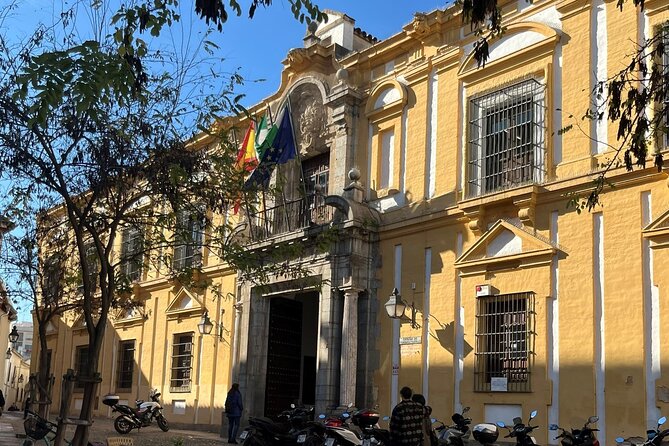
The tour moves into San Basilio, a neighborhood known for winding streets and whitewashed buildings. This part is about walking rhythm. You are learning to read a maze, and the audio helps you keep the route from turning into just wandering.
After that, you reach the Episcopal Palace, described on the route as an architectural gem that represents ecclesiastical power. Even if you are not an architectural specialist, you can pick up the contrast by noticing the more formal, institutional feeling compared with courtyard and residential spaces.
I like this mix because it prevents “sight fatigue.” Instead of only big monument stops, you get street texture, then a shift back into a major historical power symbol.
Jewish Córdoba: the Synagogue and the House of Sefarad
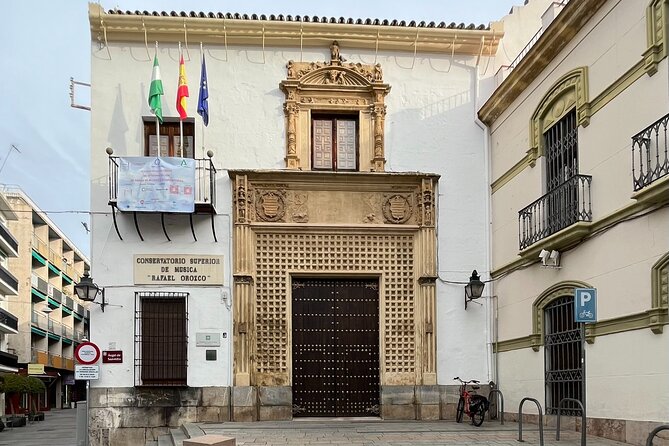
If you want a truly different angle on Córdoba, this is the section. The route includes historic Córdoba Synagogue, which ties directly to Córdoba’s multicultural heritage. It’s the kind of stop that makes you slow down, because places like this carry meaning beyond design.
Right after that, you go to the House of Sefarad, a museum that preserves Sephardic Jewish heritage. The value here is context. You are not only looking at a building, you are learning what Sephardic culture contributed and how that legacy is remembered.
This pairing works especially well in a self-guided tour because you can control pacing. If you want to sit longer with the museum explanations, you can. If you prefer a faster read-through and more time outdoors, you can.
Casa Andalusí and the Caliphal Baths for everyday-medieval Córdoba
Two stops that feel very hands-on are Casa Andalusí and the Caliphal Baths.
Casa Andalusí is a restored medieval house that offers a glimpse into Andalusian architecture and lifestyle. Even from the outside, you can sense why house design matters. Inside, the audio helps you connect details to how people lived, moved, and organized space.
Then you move to the Caliphal Baths, described as ancient Arab baths with intricate tilework and arches. This is one of the best “architecture through function” moments on the route. Baths were not just decoration. They were part of how communities handled hygiene, social routines, and relaxation.
If you like interior details, this is a must-not-rush portion. Audio works well here, too, because you can listen while you look, instead of trying to read everything in a fixed time window.
From the Castle of the Christian Monarchs to Royal Stables
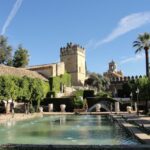
The route includes the Castle of the Christian Monarchs, described as a fortress tied to Christian rulers, with origins as a Caliphal palace and a role linked to the Spanish Inquisition. That layered description is exactly why it matters on this walking day. Córdoba is not one story. It is a series of changes that happened in the same spaces.
After the castle zone, you reach the Royal Stables, where Andalusian horses have been bred and trained for centuries. Even if you are not a horse person, you can appreciate what this says about local culture. This stop also breaks up the day with something different from religious architecture and museum rooms.
If you have stamina, take a few extra minutes here. Animals, even when they are not the main focus of the place, tend to make a site feel more real.
Calahorra Tower, the Bell Tower, and optional archaeology
You pass the Calahorra Tower, historically tied to defense of the Roman Bridge. This is one of those “bridge guardian” reminders that makes you notice how infrastructure protects a city.
Then you come to the Bell Tower of Córdoba, described as an architectural masterpiece and a symbol of cultural heritage, with chimes that carry through the historic center. Even if you do not perfectly catch every sound, the idea is to use the tower as a mental marker. When you hear or notice the chimes, you have a sense of how the old town signals time and life.
You also have an optional stop at the Archaeological Museum. If you want a more structured explanation of Roman, Islamic, and Christian heritage, this is the place to add it. If you prefer keeping your day outdoors and moving, you can skip it and still feel like you completed the major chapters.
Plaza del Potro to Plaza de las Tendillas: where to pause and breathe
The second half of the route shifts from monuments to open-air squares.
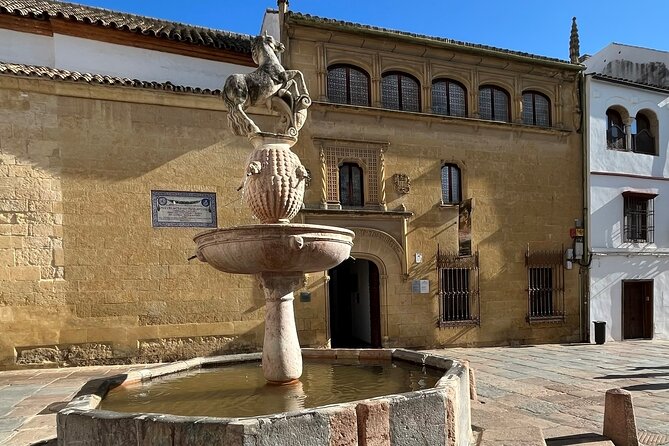
You visit Plaza del Potro, a square described as inspiring artists and writers for centuries. It’s a good moment to sit, reset your feet, and let what you learned land. Next is Plaza de la Corredera, one of the most iconic squares, with a market feel and plenty of café life around it.
Then you reach Plaza de las Tendillas, described as the commercial heart of Córdoba. Even when the pace is lively, the audio tour keeps you connected by framing what you see instead of just walking past it.
For me, the practical win of ending near plazas is simple. If you want to linger, you can. If you want to wrap up and eat somewhere you actually choose, you are already near the action.
Saint Bartholomew Chapel and the Mudéjar style link-up
Near the end, you pass the Saint Bartholomew Chapel, noted for Mudéjar architecture that blends Islamic and Christian influences. This is a good final “style check,” because you can compare it against what you saw earlier in the Mosque-Cathedral zone.
Mudéjar details often feel subtle if you only glance at them. With audio guiding your attention, you are more likely to spot the blending of motifs and design logic rather than treating it like a decorative mix.
What equipment you should bring (and what you can skip)
The tour is built around the app and offline audio. So your essentials are basic.
Bring:
- a smartphone with the app ready
- headphones you actually like
- a charged battery, and a plan for public charging if needed
You do not need:
- transportation from a tour bus, since it is a walking route
- food included, since the route does not provide it
Service animals are allowed, and the tour is marked as near public transportation, so you can break up the day if you want a flexible arrival plan.
Who should book this self-guided audio tour
This is a great fit if you:
- want a strong overview without booking a formal guided group
- like walking at your own speed, especially for patios and courtyards
- enjoy history when it comes with “look here” explanations tied to real places
- prefer an easy tech setup with offline audio and GPS help
It may be less ideal if you:
- hate using phone maps while walking, since you will rely on the app to start and track the route
- want someone physically leading you face-to-face
- want food included, since it is not part of the package
Final call: should you book City of Caliphs in Córdoba?
If you want a structured way to see Córdoba’s main layers, I think this is a smart buy for $11.99. The big strengths are the offline audio, the GPS that helps you get back on track, and the route that mixes major monuments with patio life and neighborhood streets.
I would book it if you have half a day, you like walking, and you want your understanding to click from Mosque-Cathedral views all the way to squares and Mudéjar details. Skip it only if you prefer a live guide every step of the way, or if you know you will not carry your phone and headphones.
FAQ
How long is the City of Caliphs walking tour?
It takes about 3 hours to 3 hours 30 minutes.
What is the price per person?
The price is $11.99 per person.
Is the tour available in English?
Yes, it is offered in English.
Where do I start and where does it end?
You start at Torre de la Calahorra Puente Romano, s/n, Sur, 14009 Córdoba, Spain, and the tour ends back at the meeting point.
What is included in the tour?
You get lifetime access in English, an app for Android and iOS, and offline access to audio, maps, and geodata.
What do I need to bring myself?
You need your own smartphone and headphones.
Does the tour include transportation or meals?
No. Transportation, food, and drink are not included.
Is there an optional stop?
Yes. The Archaeological Museum is listed as an optional stop.
Is this tour private?
It is listed as a private tour/activity, with only your group participating.
What is the cancellation window for a full refund?
You can cancel up to 24 hours in advance for a full refund. If you cancel less than 24 hours before the start time, the amount paid will not be refunded.
More Tour Reviews in Cordoba
Not for you? Here's more nearby things to do in Cordoba we have reviewed



More Córdoba Tours from Seville worth a look.
 ★ 4.6Córdoba: Skip-the-Ticket-Line Mosque-Cathedral Guided TourFrom $319,634 reviews
 ★ 4.7Cordoba Mosque-Cathedral: Skip-the-Line Guided TourFrom $356,610 reviews
 ★ 4.7Córdoba: Jewish Quarter, Mosque, and Alcázar TourFrom $504,279 reviews
 ★ 4.5Cordoba: Equestrian Show General EntryFrom $212,333 reviews
 ★ 4.1Cordoba: Mosque-Cathedral E-Ticket with Audio GuideFrom $212,124 reviews
 ★ 4.6Cordoba Mosque & Jewish Quarter Tour with TicketsFrom $401,996 reviews
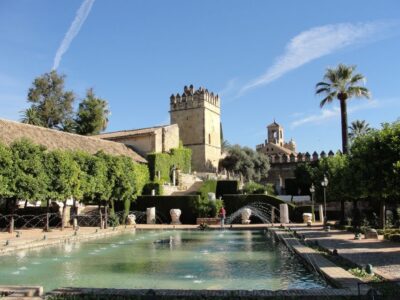 ★ 4.2Cordoba: Alcazar Guided Tour and Skip-the-Line TicketFrom $231,792 reviews
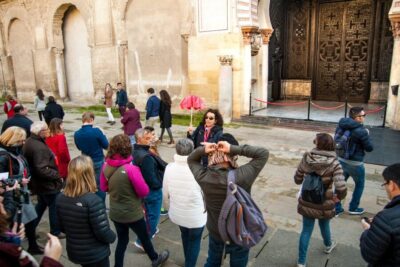 ★ 4.7Córdoba: Skip-the-Line Great Mosque-Cathedral History TourFrom $381,690 reviews
Continue by place or experience