
REVIEW · CóRDOBA TOURS FROM SEVILLE
Úbeda and Baeza private tour in a day from Córdoba with tickets.
Two UNESCO towns in one day. You’ll crisscross the Spanish Renaissance heartland, then reward the walking with olive oil tasting and free time for tapas in Baeza. I love how the pacing gives you real monuments, not just photo stops, and I love that some entries are already handled in the plan. The main catch is simple: it’s a long day, around 6 to 10 hours, and lunch isn’t included.
I also like the “private tour” angle here. You’re not sharing buses with strangers, and pickup is offered with a stated start time of 8:00 am, so the day feels organized from the first minute. The guide format matters too, since the experience leans hard on storytelling, like Adrian’s quirky sense of humor and his patience in weaving the towns’ connections. You’ll hear family links to the region as well, not just facts from a plaque.
The itinerary is packed, but it’s built around what you can actually see. Expect short stops in the squares, then longer time where the buildings matter, like the Holy Chapel of the Saviour in Úbeda and the cathedral interior in Baeza. Just plan your day around that structure, because the time at each spot is tight and you’ll need to move when the guide says move.
Key things I’d zoom in on
- Private transportation and pickup offered so you start the day already on rails.
- UNESCO-grade town centers in both Úbeda and Baeza, with plazas you can orient yourself in fast.
- Ticketed time where it counts, including the Holy Chapel, the potter’s workshop, the cathedral, and the olive oil tasting.
- A guide-led route that connects buildings, not just a checklist of sights.
- Real free time in Baeza for lunch and tapas, not a rushed stop with no breathing room.
- English service is explicitly offered, which matters if you want the story, not just the architecture.
Price and what $407.35 buys you
At $407.35 per person, this is not a budget outing. The value comes from two areas: private transportation and the way the admissions are handled.
You get a full day organized around Úbeda and Baeza, and most entry points are listed as free, while key moments are included with admission. In practice, that means you spend less mental energy asking which tickets you need and more time actually looking at the buildings. You also get a guide who can turn stonework into stories, and the reviews are consistent on that point, especially with guides such as Adrian and Marta being singled out for their humor, patience, and local ties.
Is it worth it for everyone? If you enjoy architecture and you like guided explanations, yes. If you want a casual stroll with lots of independent wandering, you might feel the schedule is busy, since the stops range from 5 minutes to 30 minutes. That doesn’t make it bad, it just changes what you’ll get out of the day.
You can also read our reviews of more tours and experiences in Cordoba.
The morning start: leaving Córdoba at 8:00 am
The day begins with a clear start time of 8:00 am, and pickup is offered. That’s a big practical win. You don’t have to worry about arranging your own intercity transport or timing the drive. You’re simply on the route and the guide can set expectations early.
It also shapes your energy. You’ll be in “see, listen, walk, repeat” mode for most of the day, so I’d treat breakfast like a real event. And once you’re in the towns, expect cobbled streets and lots of turning corners, since both places are designed around their plazas and historic streets.
Úbeda: UNESCO monuments and the feel of Renaissance Spain
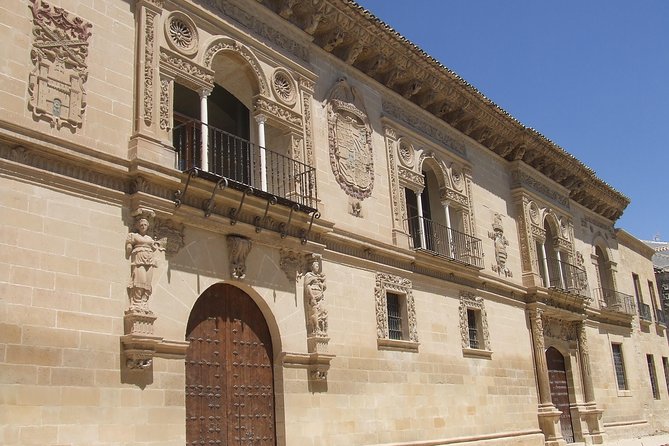
You start in Úbeda, and you’ll get there after passing a sea of olive trees and arriving in a town that UNESCO has clearly marked for its monumental character. Úbeda works because the center is legible. Plazas give you quick orientation, then the buildings tell you why they matter.
Plaza Vázquez de Molina and the square-and-chapel rhythm
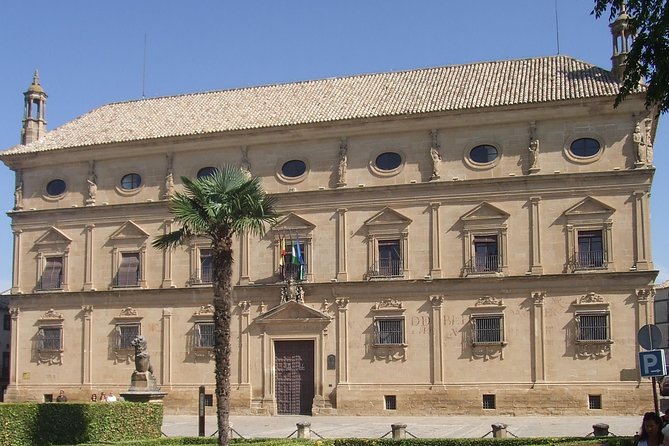
A stop at Plaza Vazquez de Molina sets the tone. It’s described as one of the most monumental squares in Spain, and in towns like this, the square is not just a pause. It’s where you learn the city’s geometry, who built what, and how power moved around the town center.
From there, the route becomes “look up, then look closer.” You’ll pass major landmarks tied to institutions:
- Palace del Dean Ortega, noted as the current National Tourism Parador
- Palacio Juan Vazquez de Molina, currently the city council
These are short stops, but the effect is useful. Even when time is limited, you learn that Úbeda’s Renaissance story is not only about churches. It’s also about civic buildings and how local government and hospitality occupy historic spaces.
The Holy Chapel of the Saviour: the one that deserves your full attention
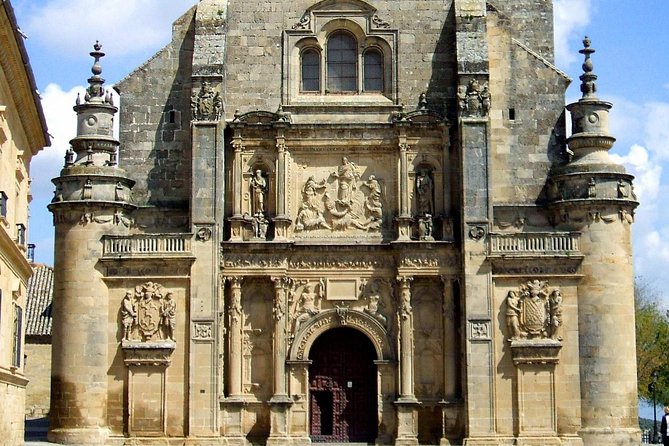
The best “slow down” moment in Úbeda is the Holy Chapel of the Saviour. It’s included with admission, and it’s identified as the biggest private funeral chapel in Spain and a standout work of the Spanish Renaissance.
This is the kind of place where the guide’s explanations can change how you experience it. Instead of seeing ornament, you understand why it’s here, who it was for, and what kind of Renaissance ambition produced it. Even if you’re not a museum person, I’d make room in your brain for this stop. It’s one of those interiors that makes the rest of the day click.

Iglesia de San Pablo and the square logic
Next comes Iglesia de San Pablo, in one of the city’s important squares. The time is set at about 20 minutes, which is enough to get inside if it’s open as part of the plan. It’s also enough for you to see how churches anchor the town’s layout.
When you’re short on time, my advice is simple: don’t try to memorize every detail. Instead, note the relationship between the church, the main plaza, and the nearby palaces. That map-in-your-head is what will help later when you move to Baeza.
Alfar Pablo Tito: craft, museum context, and a break from pure monument viewing
After churches and palaces, you get something refreshingly different: Alfar Pablo Tito, a potter’s workshop stop. It includes admission, and you’ll have time to see the museum and an exhibition.
This is a valuable counterbalance. Architecture can make a day feel heavy, even when you love it. A workshop visit gives your eyes a new job. Instead of chasing decorative stonework, you’re learning how craft continues a local tradition.
It also makes a good moment for questions. If your guide is like Adrian or Marta in the reviews, they’ll connect this craft stop to the broader regional identity, including how local families and professions shape the culture you see in the streets.
Baeza: UNESCO streets, Machado’s classroom, and cathedral goldsmithing
Then it’s onward to Baeza, another UNESCO town with a major monumental legacy. The transition matters psychologically too. After Úbeda’s emphasis on standout chapel and palace power, Baeza feels more like a layered teaching town, with literature and learning woven into the route.
Plaza del Pópulo and the city gate details
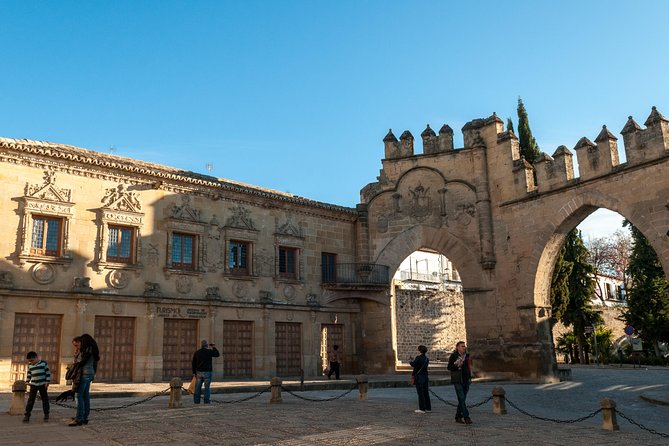
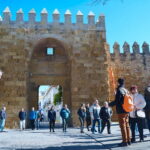
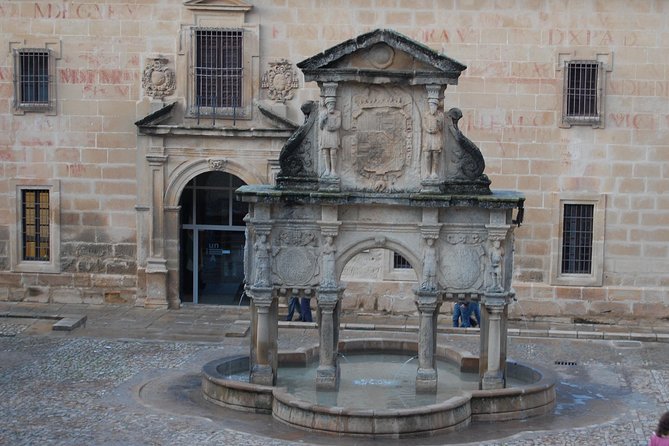
Your Baeza walking starts at Plaza del Populo, described as one of the most monumental squares in the city. The details you’ll be able to see include Lions’ Fountain, the Old Butchers, the Public Notaries, the arch of Villalar, and the Jaén’s Gate.
This is exactly the kind of stop I like on a guided day: the guide points out specific pieces, and you end up spotting more than one thing with your own eyes. Even if the stop is about 20 minutes, it gives you a mental checklist for what to notice as you move around the town.
Antigua Universidad de Baeza and Antonio Machado’s teaching room
A big highlight is Antigua Universidad de Baeza, where you’ll know the classroom where Antonio Machado taught. It’s timed around 20 minutes.
If you’re even mildly interested in Spanish literature, this stop has emotional value. A classroom is small and human, in contrast to palaces and chapels. It makes the whole UNESCO label feel less like paperwork and more like lived place.
Palacio de Jabalquinto and the Gothic-to-Renaissance transition
Then you’ll pass by Palacio de Jabalquinto, noted as one of the best buildings of the last Gothic in Spain. It’s a short stop, about 15 minutes, but it still matters. Gothic lines and Renaissance ambitions are easier to compare when you see them next to each other in the same day.
Plaza de Santa María: the center that holds everything together
Next is Plaza de Santa María, described as the most important square, containing the main buildings. This is where you can catch your breath and realize how the city’s core is designed to funnel you toward the big sights.
And yes, you’ll have a lot of squares today, but this one functions like the map center. If you remember one plaza in Baeza, make it this one.
Cathedral de Baeza: the ticketed interior stop that anchors the day
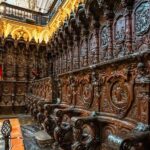
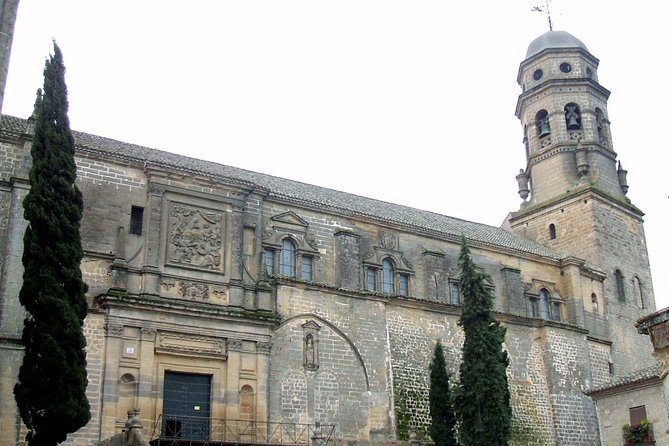
The route culminates with Cathedral de Baeza, with admission included. It’s described as the first cathedral in Andalusia and it houses an important work of Spanish goldsmithing, the Corpus Christi Processional Custody.
A cathedral can turn into a quick “look and leave” stop if the guide doesn’t make it legible. But this one is positioned as a real highlight, with 30 minutes planned. That’s enough time to see the craftsmanship and understand why that custody is singled out.
If you care about the “why” behind art, the guide’s role becomes crucial. The best guides explain what to notice and what to ignore, so you don’t end up standing there feeling lost.
AOVE Boutique – Venta de aceite de oliva: olive oil tasting with a specialist
Right after the sightseeing rush, you get the sensory payoff: AOVE Boutique – Venta de aceite de oliva. Admission is included, and you’ll taste considered best olive oils in the world, explained by a specialist.
This stop is great because it gives you a souvenir that’s actually useful. And it also connects back to the region. You’ll have seen those olive trees earlier, and now you understand why they matter economically and culturally.
If you’re buying olive oil later, don’t rush. Taste slowly, pay attention to what the specialist says about differences, and ask questions if you get the chance. You don’t need to become an expert, you just want to leave with a sense of what you like.
Free time and lunch: how to handle the Baeza break
In the plan, you’ll get time in Baeza to eat and taste famous tapas. Lunch itself is not included, so you’ll choose on your own during that free window.
This is one of the few moments where you can slow your pace. Use it strategically:
- Pick a spot close enough that you are not sprinting back to the group meeting point.
- Consider tapas as your way to sample multiple flavors without committing to a single big dish.
If you hate decision-making under time pressure, this is where a good guide helps even without calling it out. In the reviews, guides like Marta are described as helping with lunch choices, plus interpretation at the olive oil shop. That style can make the free time feel less like chaos.
Time management: short stops add up
One thing I’d flag is how the day is structured. There are many “quick” moments, some as short as 5 minutes. That includes stops like Palace del Dean Ortega and Baeza town hall.
This can be fantastic if you like a guided sweep, because you get context quickly. It can feel rushed if you’re the type who wants to linger at every altar or take long photo breaks. Either way, your best move is to prioritize. Decide ahead of time what you care about most:
- If you’re an architecture person, focus on the chapel and cathedral.
- If you like culture beyond buildings, keep your attention on the classroom stop and the potter workshop.
- If you love food stories, make the olive oil tasting your anchor moment.
Guides make it real: Adrian, Damaso, Marta, and Thomaso
The consistent praise in the reviews is about the people. Names show up clearly: Adrian and Damaso in one standout review, and Marta with Thomaso in another. What I take from that pattern is that the tour is built around guide connection, not just transportation and tickets.
Adrian is described as funny and patient, with a local sense of storytelling, plus an affection for cats and a background described as a philologist. Marta is described as a delight and a consummate host, helping interpret at the olive oil store and pointing you toward lunch. Damaso and Thomaso are credited with strong driving skills, which you appreciate more than you think on a full day.
That doesn’t mean every guide will match those personalities exactly. But it does suggest the operator invests in human explanations, and that’s what you’ll feel when the buildings turn into a connected story.
Should you book this Úbeda and Baeza private tour?
Book it if you want a high-impact day with UNESCO towns, guide-led context, and key admissions handled for you. It’s especially a smart choice when you care about Renaissance architecture and want the “how it fits together” explanation, not just the postcard view.
Skip it or reconsider if you:
- dislike long days around 6 to 10 hours
- need a fully included lunch setup
- prefer unstructured wandering over timed stops
If you do book, go in with a plan. Pick your top three stops before you arrive, and let the rest of the itinerary support those moments. You’ll get more out of the day, and you won’t feel like you’re just trying to keep up.
FAQ
FAQ
How long is the Úbeda and Baeza private tour?
The duration is listed as approximately 6 to 10 hours.
What time does the tour start?
The start time is 8:00 am.
Is pickup included?
Pickup is offered.
Are tickets included for the main sights?
Admission is included for some stops, including the Holy Chapel of the Saviour, Alfar Pablo Tito, the Cathedral de Baeza, and the AOVE olive oil tasting. Other stops are marked as ticket free in the plan.
Is lunch included?
No, lunch is not included. You will have free time in Baeza to eat, including tapas.
What is the cancellation policy?
Free cancellation is allowed, and you can cancel up to 24 hours in advance for a full refund. If you cancel less than 24 hours before the start time, the amount paid is not refunded.
Is the tour offered in English?
Yes, the tour is offered in English.
More Tour Reviews in Cordoba
Not for you? Here's more nearby things to do in Cordoba we have reviewed



More Córdoba Tours from Seville worth a look.
 ★ 4.6Córdoba: Skip-the-Ticket-Line Mosque-Cathedral Guided TourFrom $319,634 reviews
 ★ 4.7Cordoba Mosque-Cathedral: Skip-the-Line Guided TourFrom $356,610 reviews
 ★ 4.7Córdoba: Jewish Quarter, Mosque, and Alcázar TourFrom $504,279 reviews
 ★ 4.5Cordoba: Equestrian Show General EntryFrom $212,333 reviews
 ★ 4.1Cordoba: Mosque-Cathedral E-Ticket with Audio GuideFrom $212,124 reviews
 ★ 4.6Cordoba Mosque & Jewish Quarter Tour with TicketsFrom $401,996 reviews
 ★ 4.2Cordoba: Alcazar Guided Tour and Skip-the-Line TicketFrom $231,792 reviews
 ★ 4.7Córdoba: Skip-the-Line Great Mosque-Cathedral History TourFrom $381,690 reviews
Continue by place or experience