
REVIEW · CóRDOBA TOURS FROM SEVILLE
Cordoba: Medina Azahara Guided Tour without transport
Ruins feel harder to read without help. A guided look at Medina Azahara, the 10th-century fortified city on Cordoba’s edge, turns scattered stone into a real story, with professional explanations and 160-plus museum pieces that add context fast. Even the nickname Shining City makes more sense once you see how the site was laid out and why it mattered.
The main thing to watch is timing at the meeting point. If you arrive late or have trouble locating the guide holding the green umbrella, you can lose the early museum start and the group may move on quickly.
Key highlights worth your time
- A pro guide who helps you spot what you’d miss in the ruins
- Up-close viewing of the fortified-city remains, not just photos from far away
- Museum time with 160-plus original pieces, plus explanations tied to what you see outside
- Radio guide system if the group gets bigger than 10 people
- Cordoba’s Islamic-era story told with local detail and practical clarity
Why Medina Azahara reads like a story with a guide
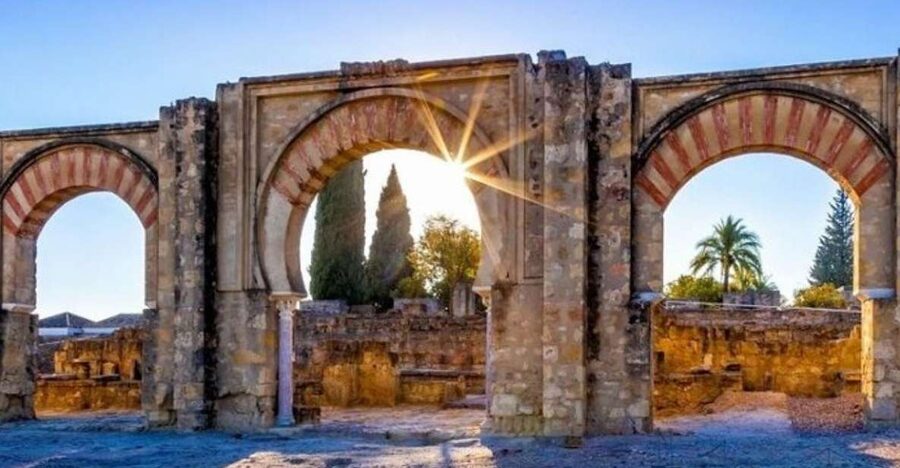
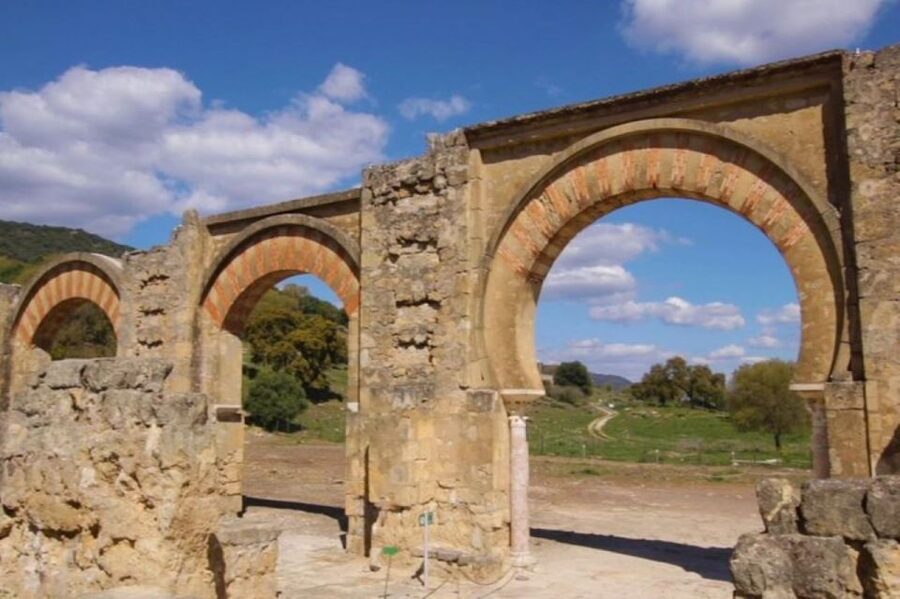
Medina Azahara is one of those places where your eyes can get lost. The site is full of fragments, walls, and foundations, and without a guide you risk walking the routes like you’re sightseeing in a museum with the labels missing. With a guide, you start connecting the dots, so the ruins feel planned rather than random.
I especially like the way the tour frames the city’s purpose on Cordoba’s outskirts. You hear why it was built, how it functioned, and why it earned the image of the Shining City in its day. It’s a big topic, but the guide approach keeps it grounded in what you can actually see.
You can also read our reviews of more tours and experiences in Cordoba.

Meeting at Medina Azahara reception, and finding that green umbrella
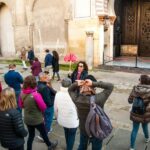
This tour meets at the Medina Azahara reception. Look for your guide holding a green umbrella, and aim to be there a little early so you can check in without rushing.
Because the tour has a museum component, arriving right on the clock matters more than you might think. If the group is already inside for the start, you could have a scramble to catch up before the ruins portion begins. If you’re also juggling midday heat, build in extra time for the short walk from check-in to the group.
One more practical note: this specific experience is sold without transport. If you later choose an option that includes a bus, know that drop-off and walking to the archaeological entrance may not be identical to the reception check-in point. When transportation is involved, the key is to confirm exactly where you’ll stand when the guide calls the group.
The 2-hour ruins walk: a 10th-century fortified city, up close
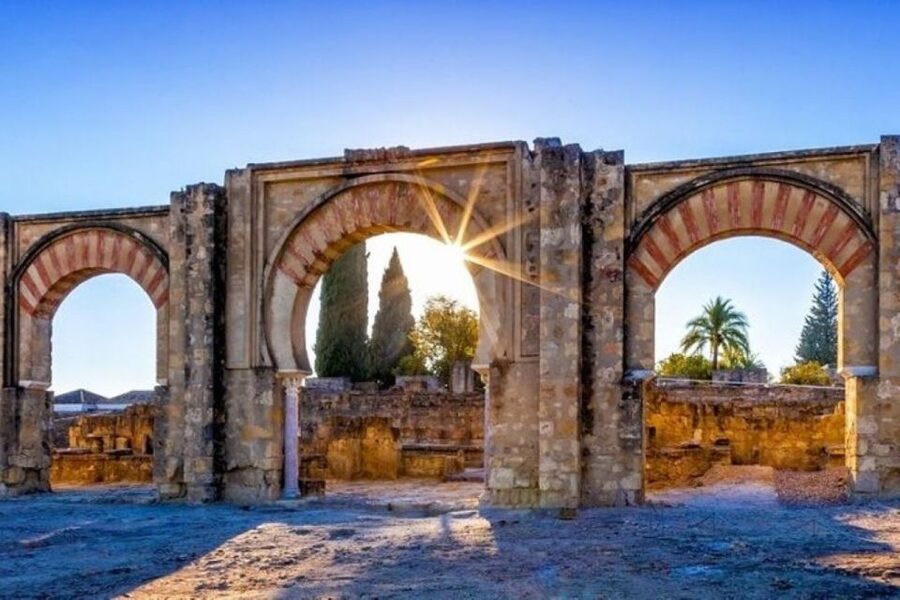
The core of the experience is the guided walk through Medina Azahara itself, with about 2 hours at the site. This is where you’ll learn how to read the remains like a map. The guide points out the kinds of structures that once organized daily life and the defensive logic behind the city’s layout.
Seeing the ruins from close range changes everything. You stop thinking in terms of isolated monuments and start noticing patterns, alignments, and spatial relationships. That’s what makes the site feel like a planned capital rather than a pile of old stones.
You should also expect the route to be practical, not cinematic. The ground can be uneven and the site can feel exposed to sun, so the tour’s pace is built for walking and stopping at key spots. If you’re someone who likes facts tied to specific features, this format really works.
Visitor center and museum time: 160-plus original pieces
After the ruins walk, you head toward the visitor center area for museum time. This is a big part of the value because it adds physical proof to the story you just heard outside.
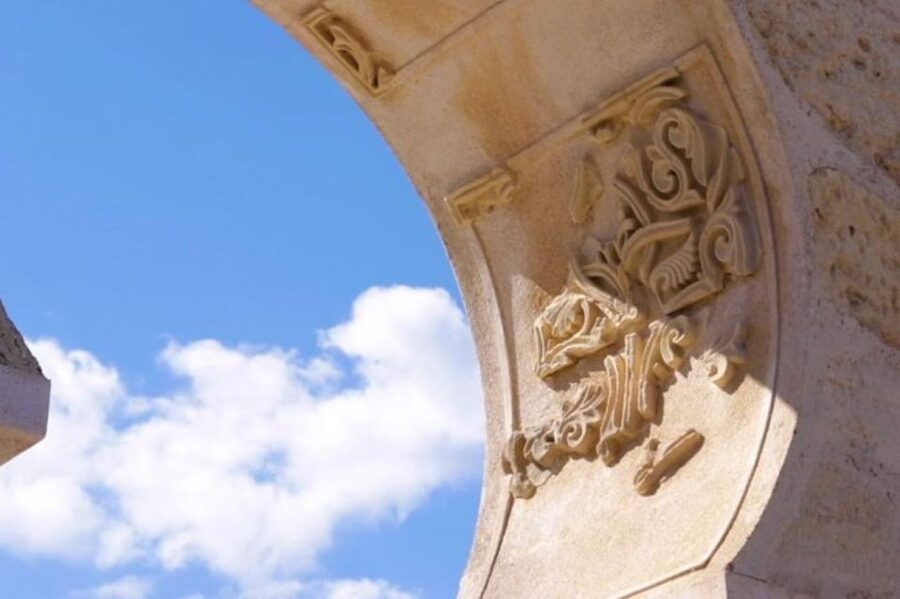
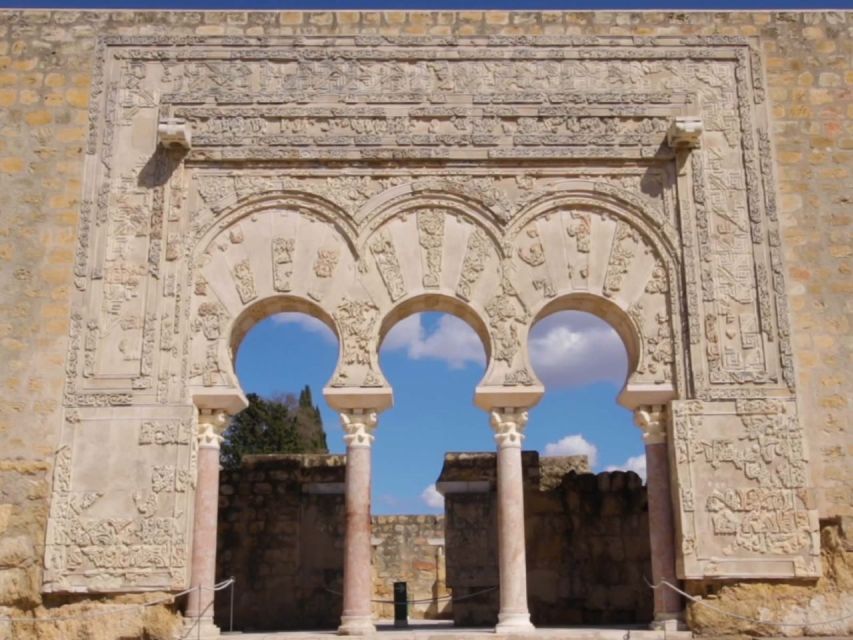
The museum holds more than 160 original pieces from Medina Azahara’s golden days. That matters because it lets you understand what the ruins once supported and how decoration, materials, and craftsmanship fit the bigger picture. The guide doesn’t just point at objects, they connect them back to what you saw in the landscape of stone.
Some days, you may notice barriers or sections that are not accessible. That’s normal at archaeological sites where conservation and public access change over time. If something is closed, the guide usually compensates by focusing attention on the elements you can still see clearly.
Price and value: what $19 really buys here
At around $19 per person, this tour packs in a lot for the time you have. You’re paying for three things that add up: the entrance fee, a live guide, and the guided structure that turns ruins into meaning. Without that support, Medina Azahara can feel like a long walk with limited pay-off.
The overall duration is about 3 hours, so it’s also a manageable half of a sightseeing day. That’s a sweet spot if you want a serious cultural stop but don’t want a full-day commitment.
The “without transport” part is the trade-off. You’ll need to get yourself to the reception at Medina Azahara. If you already plan to be near Cordoba’s outskirts anyway, it’s usually the smarter way to go. If you need door-to-door convenience, you may want to compare against the option that includes a bus, just keep an eye on where the drop-off happens and how long you might walk.



Guide quality and group setup, from Saray to Paula to Pilu
A big reason this tour performs well is guide quality. In Spanish, you’ll get explanations that stay focused on what the site can teach you, not just broad talking points. Names that have come up include Saray, Maria G., Paula, and Pilu, and the common thread is clear communication and a guide who pays attention to questions.
There’s also a sensible setup for group size. If the group exceeds 10 people, you’ll use a radio guide system. That’s a small detail, but it makes the tour feel smoother and helps you hear explanations even during busier moments.
The one downside is logistics can still be imperfect in the real world. Some schedules can run a little late if groups arrive from farther away. I’d handle that by building a buffer for check-in, and by taking it as a walking tour where you want to start calm, not sprinting.
What to bring, plus who should avoid it
This is not the kind of tour you do in flip-flops. Bring comfortable shoes because you’ll be walking over uneven ground. Pack a sun hat and water, especially if you’re visiting in warmer months.
The tour is not suitable for people with mobility impairments and wheelchair users. That’s important to respect, not just as a rule but because the site conditions and walking routes can make participation unsafe.
If you hate heat and long outdoor segments, you might prefer a morning start. If you’re flexible and like stepping out of Cordoba into an archaeological zone, this tour fits well.
Should you book this Medina Azahara guided tour without transport?
Book it if you want the most meaning per hour. The site is impressive, but its layout takes effort to understand, and the guide is what makes the experience click. The museum stop with 160-plus original pieces is also a strong reason to choose the guided format over a self-paced visit.
Skip it or reconsider if you cannot do outdoor walking comfortably, or if you strongly prefer a strict timetable where you need everything perfectly synchronized. Also consider whether you can reliably reach the meeting point at the reception on time, since the tour depends on you being there to join the group.
If you’re the type who likes your sightseeing to come with clear explanations tied to what you’re standing in front of, this is a solid, good-value way to experience Medina Azahara and the story behind the Shining City nickname.
FAQ
How long is the Medina Azahara guided tour?
The total duration is about 3 hours, with a guided tour of around 2 hours at the archaeological site.
Where do I meet the guide?
Meet at the Medina Azahara reception. Look for your guide holding a green umbrella.
Is transport included?
For this option, it’s without transport. The tour includes a bus from Cordoba only if you select the transport option.
What’s included in the price?
Included are the Medina Azahara entrance fee, the tour guide, and (if you choose it) bus transport from Cordoba. If the group exceeds 10 people, you also get a radio guide system.
What isn’t included?
Food and drinks are not included.
What language is the live guide?
The live tour guide is Spanish.
Is there a radio guide system?
Yes, a radio guide system is provided when the group size exceeds 10 people.
Is the tour suitable for wheelchair users or mobility impairments?
No. The tour is not suitable for people with mobility impairments and wheelchair users. You’ll need to be able to walk the outdoor areas at the site.
More Tour Reviews in Cordoba
Not for you? Here's more nearby things to do in Cordoba we have reviewed








More Córdoba Tours from Seville worth a look.
 ★ 4.6Córdoba: Skip-the-Ticket-Line Mosque-Cathedral Guided TourFrom $319,634 reviews
 ★ 4.7Cordoba Mosque-Cathedral: Skip-the-Line Guided TourFrom $356,610 reviews
 ★ 4.7Córdoba: Jewish Quarter, Mosque, and Alcázar TourFrom $504,279 reviews
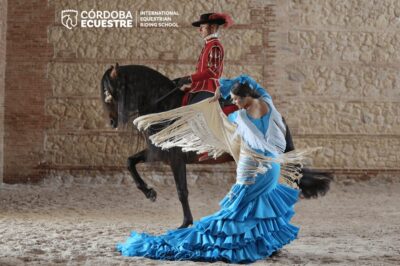 ★ 4.5Cordoba: Equestrian Show General EntryFrom $212,333 reviews
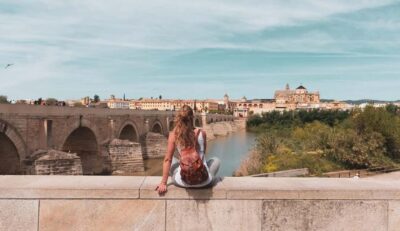 ★ 4.1Cordoba: Mosque-Cathedral E-Ticket with Audio GuideFrom $212,124 reviews
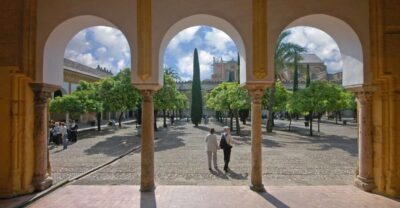 ★ 4.6Cordoba Mosque & Jewish Quarter Tour with TicketsFrom $401,996 reviews
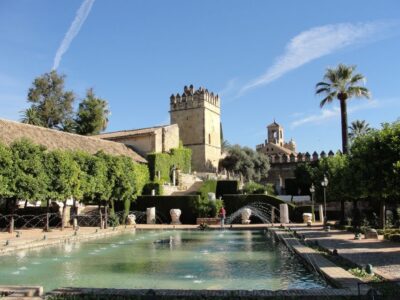 ★ 4.2Cordoba: Alcazar Guided Tour and Skip-the-Line TicketFrom $231,792 reviews
 ★ 4.7Córdoba: Skip-the-Line Great Mosque-Cathedral History TourFrom $381,690 reviews
Continue by place or experience