
REVIEW · ANDALUSIA DAY TRIPS
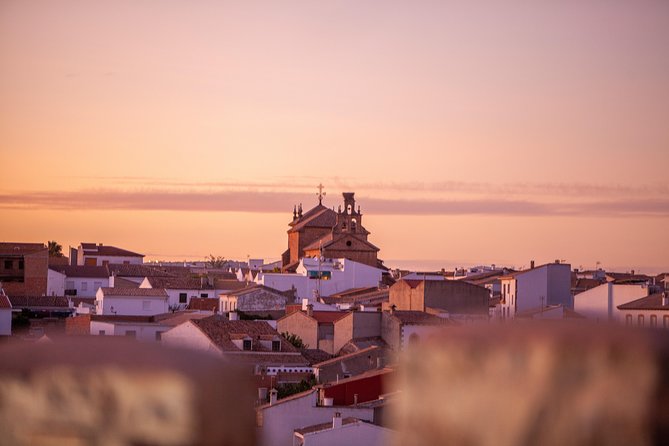
Discover 3 artworks in Baños de la Encina
A tour like this is short, but it hits hard. You get three real, touch-your-eye cultural stops in Baños de la Encina, starting with the Almohad-era Castle of Bury al-Hamma and ending inside the Baroque Camarín at the Ermita de Jesús del Llano. I especially love how the castle walls still read like a defensive system, and how the hermitage interior turns mirrors and stucco into the main event. The one thing to keep in mind is that each stop has a set time window, so you may feel a little rushed if you like to linger.
The best part is the pacing and the guide. In small groups of up to 50, you move from fortress to church to hermitage, with guided context that makes the buildings feel less like set dressing and more like evidence of who lived here and how they worshipped. Based on what people highlight, guides like Chema and Jose Fernando tend to explain things in a way that stays lively, not lecture-y, and that matters on a 2 to 3 hour walk.
Key points at a glance
- A fortress that still looks defensible, not ruined
- San Mateo church blends Gothic and Renaissance features
- Jesús del Llano Camarín is famous for mirrors and Baroque plasterwork
- You get guided access to all three sites with entry tickets included
- Up to 50 people keeps it easier to hear and follow along
A 2 to 3 Hour Art Walk in Baños de la Encina
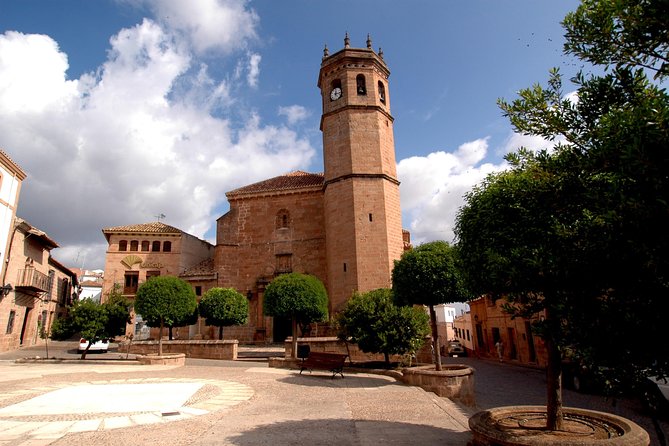
This is a compact guided route that’s built for seeing “architecture as art.” You start at Av. Jose Luis Messia, 2B (Baños de la Encina) and finish back at the same spot, so you never have to guess where you are headed next.
You’re looking at roughly 2 to 3 hours total, and the timing is tight enough to feel like a planned circuit, not a half-day wandering game. Admission tickets are included for each main stop, which is a big value perk when you are paying for three separate sites in one go.
Also, you do not need to be a history nerd to enjoy this. The castle gives you the story of stone, walls, water, and control of routes. The church and hermitage then shift the focus to religious art, especially details like altarpieces, fonts, and the Baroque dressing room where mirrors take over.
You can also read our reviews of more tours and experiences in Andalucia.


Stop 1: Castillo de Bury al-Hamma, Almohad Walls and Water Cisterns
The castle is the first wow moment because it dominates the town approach. From the outside you can see its strong, crenellated wall, the fourteen towers, and the extra Christian Tower of Tribute, all sitting in a silhouette that feels built to hold ground.
What I like here is that the place is not presented as one single time period. The site shows traces of occupation going back before the Almohads, including mentions of Copper Age vestiges and Iberian walls, then it moves into an Almohad urban complex in the 12th century. Even better, the text points to practical infrastructure inside the walls, like a double “water ark” or cistern. That detail matters because it makes the castle feel lived-in and strategic, not just decorative stone.
The construction info is especially interesting. The walls are described as rising from tapial, with a high proportion of lime and earth, plus “Chinese river” materials and water. Whether you love technical building notes or not, it supports the theme: durability was the point.
You will also get the layered takeover story. After it became definitively Castilian following the take in 1225 by Fernando III, additions included an alcazarejo and stone work on one Arab tower, creating what’s described as the Tower of Homage or Fat Beacon. The castle was declared a National Monument in 1931, which helps explain why it still feels comparatively intact.
Practical tip: the castle stop is about 45 minutes, so treat it like a concentrated visit. Wear good walking shoes and keep your camera ready early, since the best “read the whole structure” views often happen as you first arrive.
Stop 1 Value: Why the Castle Works Even If You Hate Crowds
This is not just a walk around a viewpoint. You get the sense of how people moved, stored water, and controlled passes through the Sierra Morena and the Guadiel depression during the 12th century.
That makes the castle a smart first stop because it gives you a foundation before you shift into churches and religious art. When you see the churches later, you can appreciate them as part of the same human story, not as random stops on a route.
One consideration: because the overall tour stays timed, you might not be able to re-check every angle of the fortress the way you would on a solo visit. If you are the type who likes to take 30 minutes just to stare at one tower, this route may feel a bit structured.
Stop 2: Iglesia de San Mateo, Gothic Bell Tower and Renaissance Door
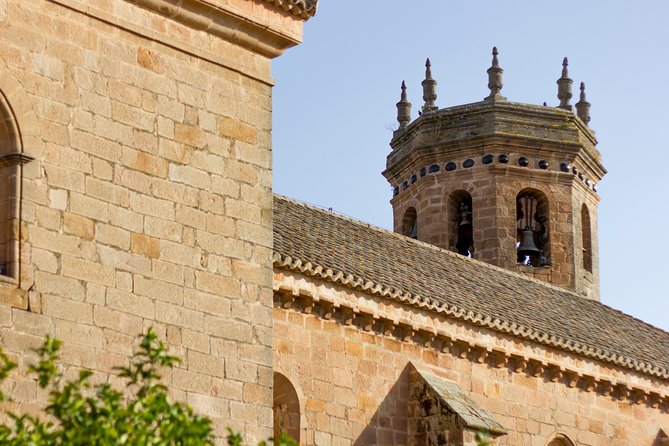
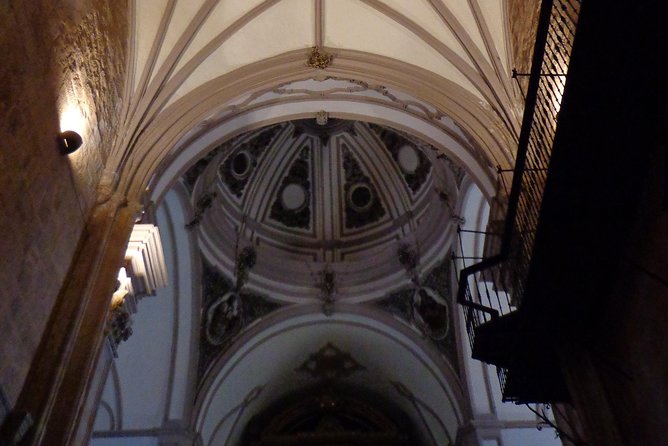
After the fortress, you step into a totally different mood. The Iglesia de San Mateo is described as having Gothic and Baroque revival influences mixed together inside, so you are not looking at one uniform style.
The highlights are concrete and art-focused. You’ll notice the bell tower with a Gothic body, then a Renaissance door. Inside, the big star is a major altarpiece attributed to Palma Burgos, with special attention on the Tabernacle, plus the baptismal font and the pulpit.
I like that the tour does not just say, “Look at the church.” It tells you what to focus on. On a timed visit of about 20 minutes for this stop, having specific targets helps you actually see something rather than getting mentally lost in the space.
One thing to consider: churches can feel visually busy. If you arrive scanning with no plan, you can end up admiring everything and noticing nothing. Let the guide point you toward the Tabernacle, font, and pulpit, because those are the exact elements you will remember later when you picture the trip.
Stop 2 Detail That Makes It More Than Pretty Walls
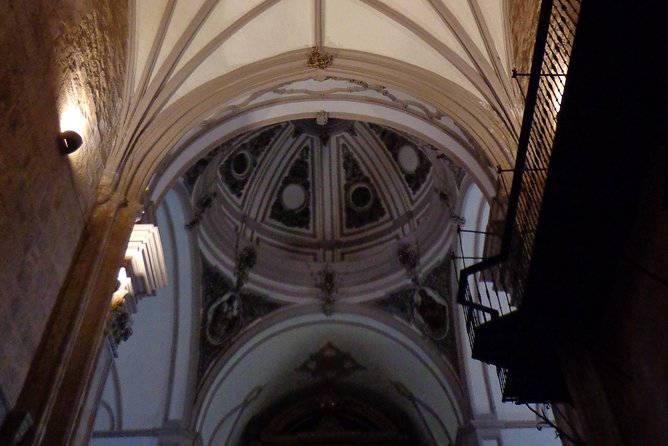
This church stop is valuable because it connects art to function. A baptismal font is about entry into the community. A pulpit is about teaching and voice. The Tabernacle is about what is protected and revered. Even in a short visit, that framing gives you a way to interpret the artwork instead of treating it like background decoration.
Also, this stop balances the tour. The castle gives you defense and survival. The church gives you ritual and instruction. Then the hermitage throws you into a full-on Baroque interior experience.



Stop 3: Ermita de Jesús del Llano and the Camarín Mirrors
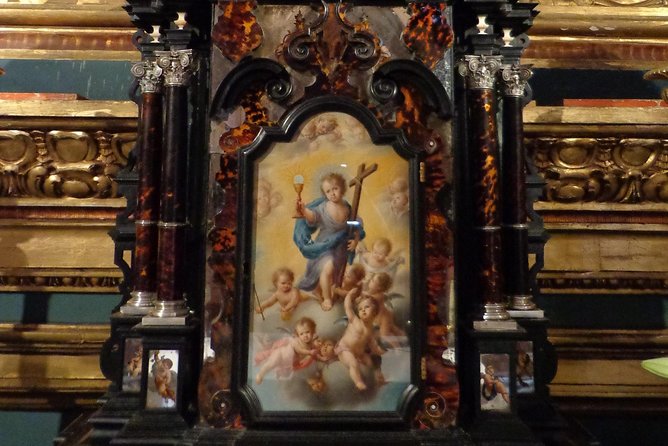
Now for the art you will probably talk about later. At the Ermita de Jesús del Llano, you focus on the Baroque dressing room, known for its plasterwork and decoration style.
The access is part of the effect. You reach the space via a staircase of no more than 20 steps, then enter an anteroom with Baroque touches: stucco, mirrors, and a mocarabe dome that leads you toward the door of the Camarín.
Then you enter the dressing room, described as the peak of 17th Andalusian Baroque. Expect a heavy mix of ornament: exotic birds, garlands, angels, cherubs, niches. But the real headline here is the mirrors. The description emphasizes how mirrors appear in a way that closes in visually from different heights, using the ground-floor polygonal shape and the mocárabe vault to create a dramatic, almost theatrical space.
What I find smart is the tour’s attention to technique, not only appearance. The text mentions stucco and the stipe (a stake or trunk used) as part of the construction approach, and that this technique is associated with the well-known Tabernacle of the Cathedral of Granada. That gives you a link across Andalusia, so you leave understanding the style as part of a broader artistic tradition.
The hermitage stop is about 30 minutes, which is long enough to look closely if you pay attention to the guide’s cues. It is still timed, so if you want to photograph every mirror angle, you will need to choose your moments.
Practical note: this is an interior with lots of reflective surfaces. If you use your phone camera, try stepping a little to reduce glare and give yourself a cleaner shot of the vault and mirrors.
The Walk Through Stately Homes in the Historic Center
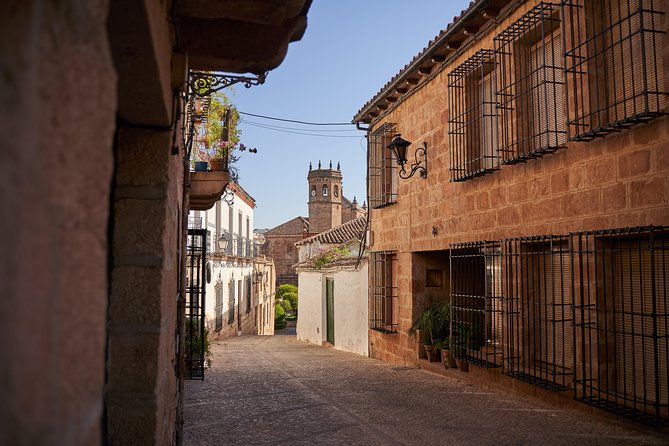
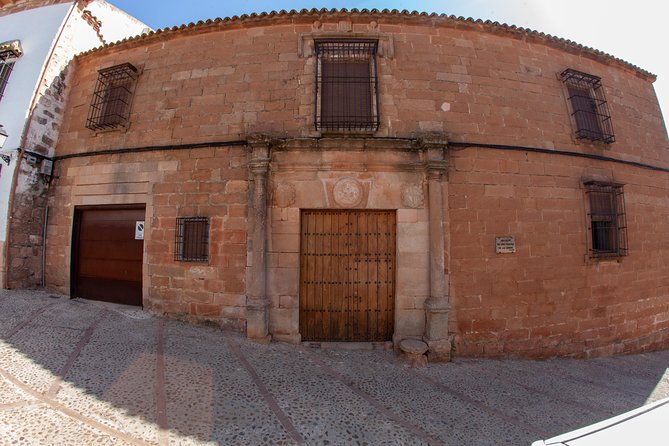
Between the major sites, you take a walk that lets you slow down just enough to see Baños de la Encina as more than a set of monuments. The route is described as stopping so you can contemplate the stately homes of the historic center.
I like this in a tour like this because it keeps the day human-sized. You are not only going from one big monument to the next. You also get a sense of how the town looked and how wealth, religion, and power would have been visible in everyday streets.
If you enjoy architecture, take note of how the town’s layout relates to the castle position. The fortress sits where it can watch the approaches. Then, in the center, the town’s prominent houses show you where influence concentrated after those earlier defensive systems stabilized.
Group Size, Timing, and What $16.59 Actually Buys You
This is priced at $16.59 per person, and the duration is about 2 to 3 hours. Average booking is around 15 days in advance, which suggests you should plan ahead, especially if you are visiting on a busy week.
For the money, the value is the “three-for-one” structure. You are seeing three major stops, and the entry tickets for each are included. That saves you the hassle of separate payments and reduces the risk of losing time hunting down ticket desks.
Group size matters here. With a maximum of 50 travelers, it is still large enough that you should expect some movement through doorways and corridors. But it’s not so huge that the tour becomes a single long line where you cannot hear. The best guides make timing work, and the feedback you can track on this experience points to guides like Chema and Jose Fernando being especially good at keeping explanations clear and enjoyable.
Who Should Book This Tour, and Who Might Skip It
I think this tour suits you if you like structured sightseeing with clear focus. You want three distinct art and architecture stops, and you want someone to translate what you are looking at while you walk.
It also fits well if you are traveling with limited time. Two to three hours is enough to feel you did something meaningful without turning the day into an all-day logistical project.
You might consider skipping if you are the type who needs long, silent time in museums or sacred spaces. The visit is intentionally timed, with about 45 minutes at the castle, 20 minutes at the church, and 30 minutes at the hermitage. You can still enjoy everything, but you cannot treat it like a slow, independent wander.
Should You Book the Baños de la Encina Art Stops Tour?
If you want a high-value cultural circuit with three standout sites and admission tickets included, I’d book it. The castle stop gives you fortress logic and building layers, the church focuses your attention on specific artworks like the Palma Burgos altarpiece and the Tabernacle, and the hermitage Camarín is the kind of Baroque interior you remember because of mirrors and plasterwork.
Book ahead if you can, keep your shoes comfortable, and let the guide steer your attention. With a guide who explains well, this becomes more than a checklist of monuments. It turns into a coherent story of how this town built, worshipped, and decorated itself over centuries.
FAQ
What is the duration of the tour?
It lasts about 2 to 3 hours.
How much does it cost?
The price is $16.59 per person.
What are the main stops on the tour?
You visit the Castle of Bury al-Hamma, the Church of San Mateo, and the Hermitage of Jesús del Llano.
Are admission tickets included?
Yes. Admission tickets are included for the castle, the church, and the hermitage.
Where do I meet the group?
The tour starts at Av. Jose Luis Messia, 2B, 23711 Baños de la Encina, Jaén, Spain, and ends back at the same meeting point.
Is there a group size limit?
Yes, the tour has a maximum of 50 travelers.
Is free cancellation available?
Yes. You can cancel up to 24 hours in advance for a full refund. Cancellation cut-off times are based on the experience’s local time.
More Tour Reviews in Andalucia
Not for you? Here's more nearby things to do in Andalucia we have reviewed



More Andalusia Day Trips worth a look.
 ★ 4.6Caminito del Rey: Entry Ticket and Guided TourFrom $348,149 reviews
 ★ 4.9Nerja, Torrox, or Torre del Mar: Caminito del Rey Day TripFrom $81762 reviews
 ★ 4.9Almeria: Horse Riding Tour Through the Tabernas DesertFrom $53406 reviews
 ★ 4.5From Malaga: Seville Day Trip and Optional Monument TicketsFrom $44340 reviews
 ★ 5.0Ronda, Setenil and Sevilla Small Group Tour from MalagaFrom $118334 reviews
From Málaga: Caminito del Rey Day Trip by BusFrom $85317 reviews
★ 5.0Ronda, Setenil and Sevilla Small Group Tour from MalagaFrom $118334 reviews
From Málaga: Caminito del Rey Day Trip by BusFrom $85317 reviews
 ★ 4.3From Malaga: Seville Day Trip with Real Alcázar TicketsFrom $42280 reviews
 ★ 5.0Seville Hot-Air Balloon Ride with Breakfast, Cava & Hotel Pick upFrom $284184 reviews
Continue by place or experience