
REVIEW · ITáLICA RUINS FROM SEVILLE
Game of Thrones filming locations, Itálica, Seville
Game of Thrones fans, take note.
This tour links Seville to Italica, one of the rare places in Spain that became a TV set, then adds a surprise second stop that feels far removed from dragons.
What I like most is the mix of big cinema flavor and real-world ruins. You get access to the Roman amphitheater and related archaeological areas, plus a ticketed visit to a monastery packed with Mudejar, Gothic, and Baroque art.
One thing to consider: if you’re expecting constant, detailed Game of Thrones talk at every stop, this itinerary may feel more like Roman archaeology with a GOT tie-in, followed by medieval art.
Key things to know before you go
- Italica is the GOT focus, including the Dragon-Pit connection tied to seasons 7 and 8
- You visit major amphitheater features, not just a quick look from the edge
- One stop is very GoT-coded, the other is more art and architecture than TV trivia
- Admission tickets are included for both Italica and the Monasterio de San Isidoro del Campo
- Air-conditioned coach plus bottled water helps on hot Seville days
- Groups can be up to 50, so expect some noise and shared pacing
From Seville to Italica, why this tour actually works
Seville makes a great base for excursions, and this one is built around a straightforward idea: show you a place where global TV used to film, then anchor the day in tangible history you can walk through.
The payoff is twofold. First, Italica gives you that wow moment you want as a screen fan, because you’re standing inside a Roman setting that has been used as a recognizable backdrop. Second, the monastery stop adds a different kind of culture, with art and architecture from multiple eras in one compact visit.
The main consideration is your expectations. This is not a pure “episode-by-episode GOT tour.” You’ll get the connection, but you’re also spending real time on archaeology and medieval art, which is the point for many people.
You can also read our reviews of more tours and experiences in Seville.



Price and logistics, what 63.61 buys you
At $63.61 per person for an approximately 4-hour outing, the value mostly comes from what’s included. You have admission tickets bundled for Italica and the Monasterio de San Isidoro del Campo, and you’re transported by an air-conditioned coach with bottled water.
That matters in Seville because heat and walking add up fast. When the temperature climbs, you want transport that keeps you comfortable between sites, not a day that turns into a long slog.
Logistics are simple: the tour starts at 10:00 am at C. Trajano, 6, Casco Antiguo, and it ends back at the meeting point. A mobile ticket is provided, and English is offered.
The day plan, how the 4 hours are shaped
This tour is designed as two distinct blocks, each labeled as about 2 hours. The first half focuses on Italica’s Roman remains, with guided access to amphitheater-related areas and walkable streets and structures. The second half shifts gears to a monastery visit that’s about art, architecture, and interior treasures.
That rhythm is good for most travelers. You’re not bouncing around constantly, and you get a clear sense of when you’re moving through sun-exposed ruins versus when you’re entering more sheltered spaces for a slower, more detailed experience.
Group size matters too. With a maximum of 50 travelers, you should expect a shared pace and a “see it, then move on” flow rather than a quiet, slow, one-on-one style tour.
Stop 1, Archaeological Ensemble of Italica and the Dragon-Pit link
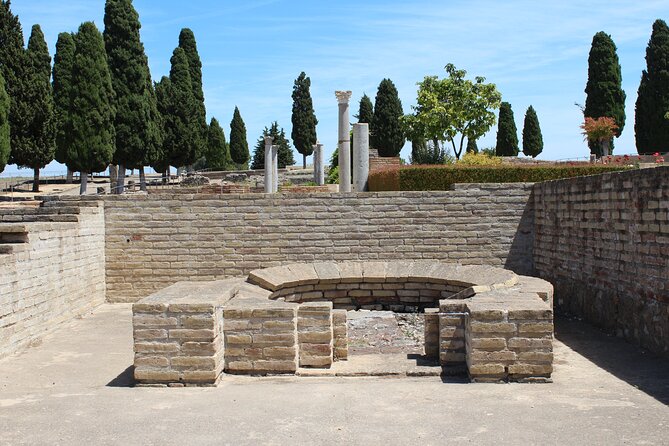
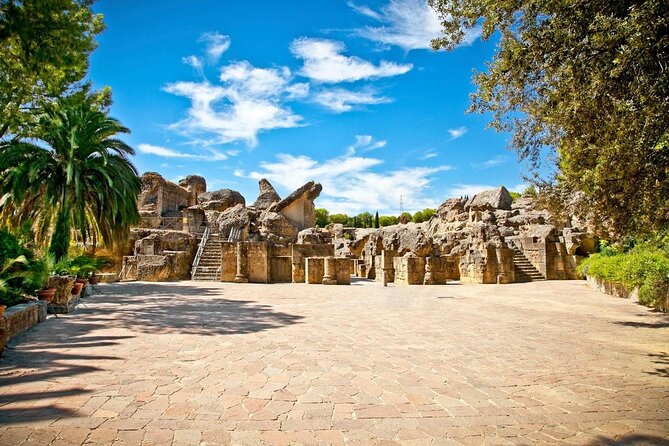
Italica is the kind of place that makes Rome feel close to home, even though it’s far beyond the modern city. It’s described as the first Roman city founded outside Italian territory, and it’s known as the cradle of emperors Trajan and Hadrian.
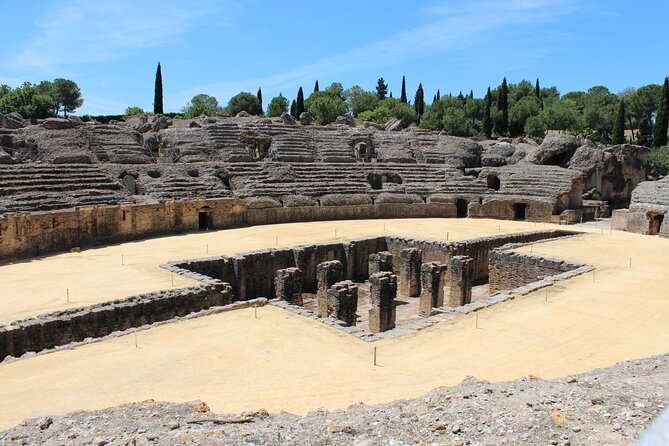
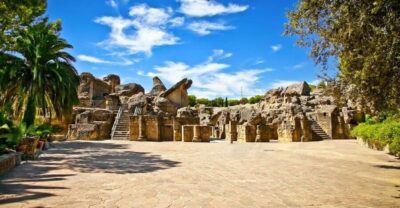
From a GOT fan point of view, the star detail is the filming connection: Italica was used for the seventh and eighth seasons, including the name Dragon-Pit, referenced with the Landing of the King. Even if you don’t follow every plot detail, this is the kind of connection you can use to anchor your imagination while you look at the architecture.
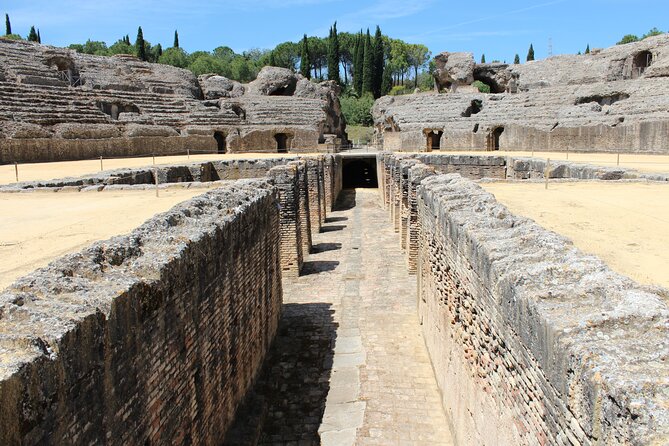
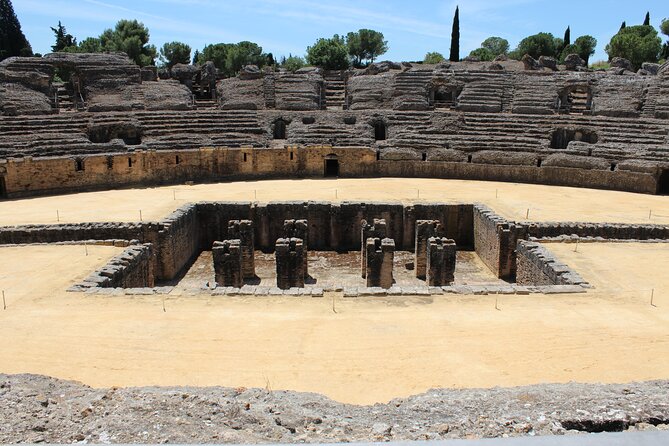
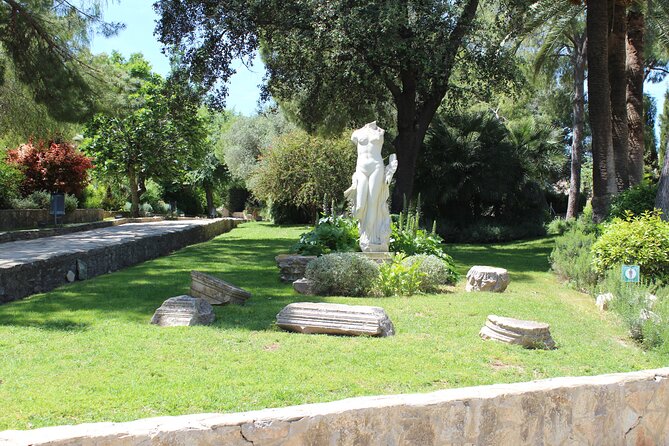
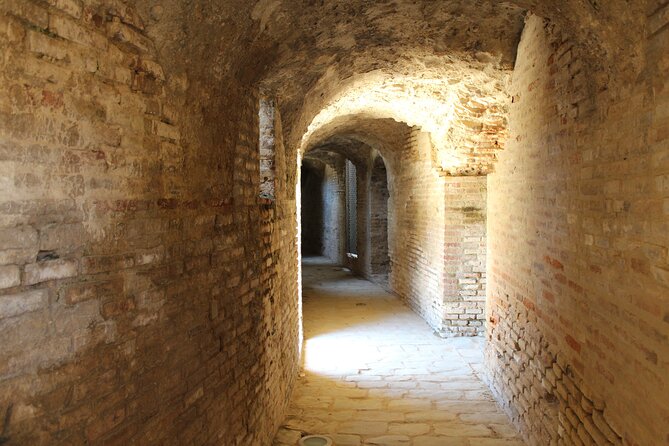
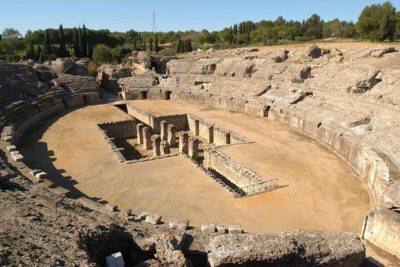
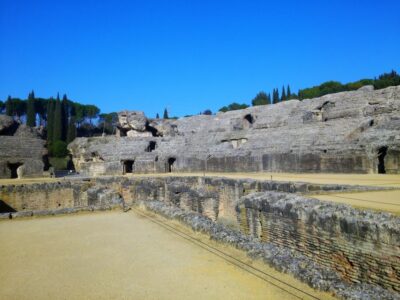
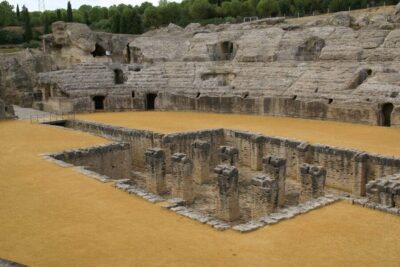
What you’ll actually do at Italica is more than photos and a quick overlook. The access includes the arena and vomitories of the third biggest Roman amphitheater in the world, and the tour also emphasizes major areas tied to everyday Roman life in this city: Roman avenues and streets, thermal baths, furnaces, Roman domes, and the Roman Theater.
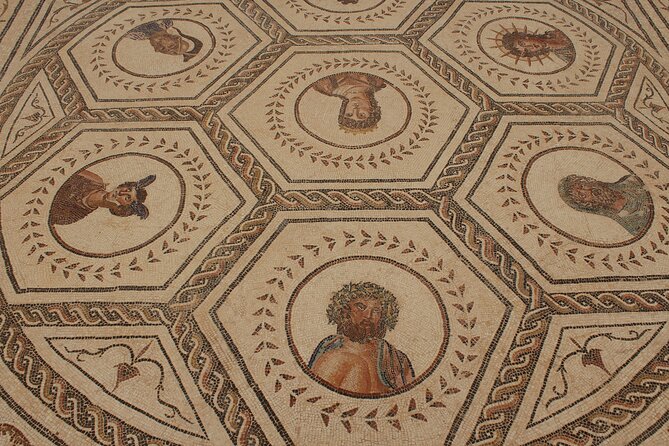
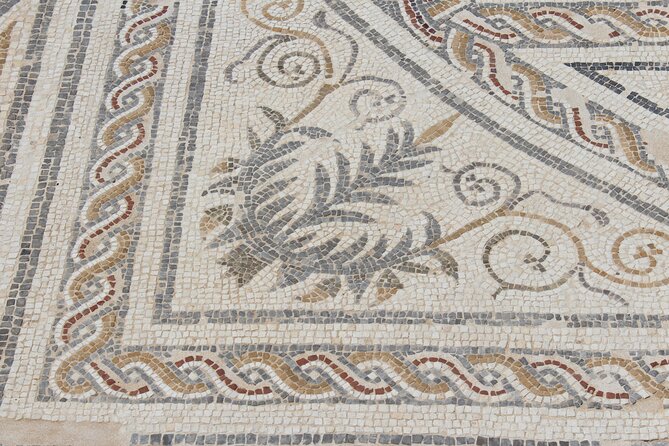
A standout feature for many visitors is the mosaics. The tour specifically points to mosaics in the best state of conservation in Spain. Translation: you’re not just looking at scattered fragments. You’re seeing the kind of preservation that makes Roman floor art feel alive instead of faded.
Practical tip: wear shoes with grip. Even when ruins are easy to navigate, you’ll be on uneven stone and ancient pathways for a chunk of time.
How to get the most out of the GOT angle here
If you want the “TV moment,” go in with the understanding that you’ll get the connection but your time on-site is still guided as archaeology and architecture. I think that’s a good thing, because the amphitheater becomes more memorable when you understand its original purpose.
If you’re mainly chasing dialogue and scene-specific breakdowns, you might feel underfed. The best strategy is to mentally treat the Dragon-Pit link as your storyline hook, then let the Roman design do the heavy lifting.



Stop 1 reality check, the amphitheater is the main show
It’s worth saying clearly: this itinerary heavily centers on one GoT filming location at Italica. That’s not a problem if you love Italica as a site. It can be frustrating if you thought the day would include multiple distinct filming sets across different areas.
The amphitheater experience is where the value concentrates. The fact that you access features like the arena and vomitories makes a difference. You’re not stuck outside behind a fence, and you’re not limited to a single viewpoint.
The mosaics and structures likely take longer than you expect too. Even if your feet are ready to move, your eyes will keep finding details worth pausing for: patterns, layouts, and the way the city blocks and spaces still make sense when you’re walking through them.
Stop 2, Monasterio de San Isidoro del Campo, medieval art with a few surprises
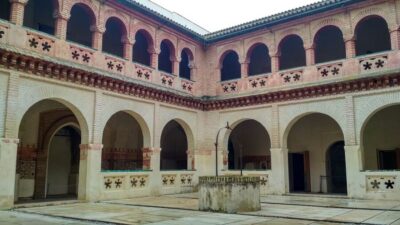
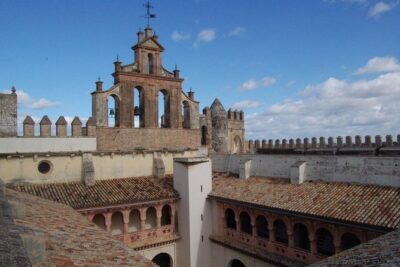
After Roman ruins, you move into a monastery that feels like a different planet of time periods. The Monasterio de San Isidoro del Campo is described as a medieval fortress with treasures from the Mudejar, Gothic, and Baroque periods.
That mix is exactly why this stop works for many people. It isn’t simply an old building. It’s a layered place where styles overlap, which helps you see Spain’s history as something that changes and adds on, rather than a single static era.
The tour includes admission, and it focuses on paintings and sculptures of high historical and cultural value. You can expect a structured viewing experience, with the guide helping connect what you’re seeing to the different eras represented on the site.
One nice bonus of this second stop is pacing. You’ve spent time walking through outdoor archaeology, and the monastery visit tends to slow your day down. It also gives you a “what did people do here when the Roman world was gone” perspective, which makes the whole tour feel more complete.
What this stop is best for
If you’re the kind of traveler who likes architecture details, carved works, and art that reflects changing influences, you’ll probably enjoy this part a lot. It’s also a good fit if you didn’t come primarily for TV connections and you want a day that still feels special.
If you came for Game of Thrones set-hunting only, this stop may feel like an unexpected detour. That’s not because it’s small or uninteresting. It’s because it isn’t trying to act like a TV location.
Transportation, group size, and the heat factor in Seville
Seville’s weather can be intense, especially during midday hours. This tour helps with the basics: air-conditioned coach and bottled water are included, so you’re not relying on convenience stores between stops.
The maximum group size of 50 travelers also matters. You’ll likely hear the guide clearly, but you won’t have the calm, quiet pace of a private tour. If you prefer small groups, you’ll want to compare options, but this size keeps the tour lively and efficient.
Also, since the tour starts at 10:00 am, you’re getting an earlier start than many half-day plans. That can help you enjoy more of Italica before the afternoon heat ramps up.
Practical tip: bring sunscreen and a hat even if the coach is comfortable. You still spend time outdoors at Italica.
Guide style, what you should expect from the narration
You’re promised behind-the-scenes facts about the TV show during the experience. That’s great, and it’s likely the reason many people book in the first place.
Where people can feel mismatched is in how the guide balances TV chatter versus on-site history. Italica is a rich Roman place, and the tour’s structure gives time to mosaics, thermal baths, domes, and theater elements. If your idea of a GOT tour is heavy on scenes and character beats, you might want a tour that is more explicitly scripted around the show.
On the other hand, if you’re happy with the show connection as context and you also want to understand what you’re looking at, the guide’s focus can make the day more satisfying, because the architecture becomes easier to visualize as “set design” rather than just “cool ruins.”
Who this tour suits best
This is a strong match for three types of travelers.
First, Game of Thrones fans who like the show but also genuinely enjoy history. The Dragon-Pit link plus the amphitheater access gives you a clear reason to be there.
Second, people who want a straightforward half-day with included admissions, a clean meeting point, and a coach that reduces heat stress.
Third, solo travelers. The experience is offered in English, service animals are allowed, and the sites are accessible enough for most travelers based on the provided info. You’re in a group, so it’s easier than DIY routes when you’re new to the area.
If you are the kind of traveler who wants only TV set hunting, and you expect several different filming sites in one day, you should read the itinerary expectations carefully. Here, Italica is the main GOT stop, and the monastery is a separate, meaningful theme.
The best value moments, and the likely tradeoffs
Here’s where I think the value really shows.
You get two included admissions, access to a major amphitheater setting, and a second stop that adds art and architecture from multiple periods. For $63.61, that combination is hard to beat as a simple half-day plan from Seville.
The tradeoff is attention. You only have about 4 hours total, split into two blocks, so the tour can’t linger equally on every detail. The narration also has to cover Roman sites and then shift to the monastery.
So the question isn’t whether this is a good tour. It’s whether your priorities line up. If you want a balanced blend of TV connection plus real-world cultural sites, this fits well. If you want an all-out GOT day with constant scene-specific commentary, you may feel like you wanted more of one thing and got more of two different things.
Should you book this Seville Game of Thrones tour to Italica?
Book it if you want a half-day with included tickets, comfortable transport, and access to Italica’s amphitheater areas where the Dragon-Pit connection comes alive. This is ideal when you’re mixing GOT curiosity with a real interest in Roman ruins and then you’re open to a strong second stop in a monastery setting.
Consider another option if Game of Thrones is your sole reason for traveling, and you need constant, detailed show talk at every point. In this format, Italica is the big GOT anchor, and the Monasterio de San Isidoro del Campo shifts the day toward medieval art rather than TV scenes.
If you’re on the fence, use this rule: if you’re happy to treat the show link as a hook and you’ll still enjoy the sites as sites, you’re likely to be satisfied.
FAQ
What sites does the tour visit?
The tour visits the Archaeological Ensemble of Italica and the Monasterio de San Isidoro del Campo.
How long is the tour?
It runs for approximately 4 hours.
Is admission included?
Yes. Admission tickets are included for both Italica and the Monasterio de San Isidoro del Campo.
What language is the tour offered in?
The tour is offered in English.
Where is the meeting point?
The meeting point is C. Trajano, 6, Casco Antiguo, 41002 Sevilla, Spain, and the tour ends back at the same meeting point.
What time does the tour start?
The start time is 10:00 am.
Does it include comfort items during transport?
Yes. The tour includes an air-conditioned coach and bottled water.
More Tour Reviews in Seville
Not for you? Here's more nearby things to do in Seville we have reviewed




More Itálica Ruins from Seville worth a look.
 ★ 4.5From Seville: Italica Roman City & Medieval Monastery TourFrom $461,051 reviews
 ★ 4.5Historical Italica: Half-Day Guided Tour from SevilleFrom $47416 reviews
 ★ 4.3Game of Thrones and Roman Empire Italica TourFrom $21372 reviews
 ★ 4.5Visit to Italica Roman Ruins Tour tickets includedFrom $19285 reviews
 ★ 4.2Italica Roman Ruins City TourFrom $21147 reviews
 ★ 4.4From Seville: Italica Roman City TourFrom $51139 reviews
 ★ 4.9From Seville: Half-Day Guided Bike Trip to ItalicaFrom $53126 reviews
 ★ 5.0Private hald day tour to the historic roman city of ItalicaFrom $9343 reviews
Continue by place or experience