
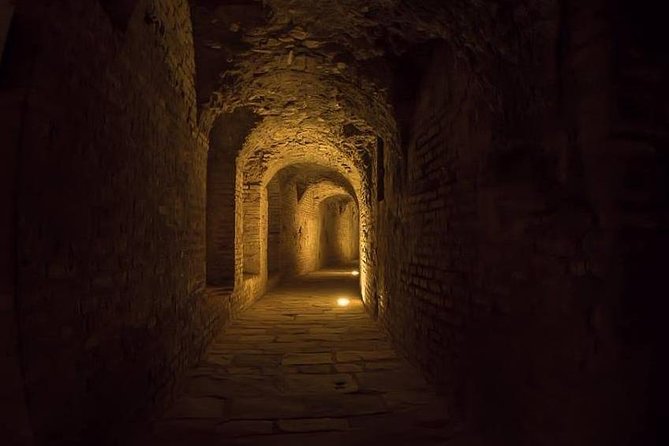
REVIEW · ITáLICA RUINS FROM SEVILLE
Italica 2-Hour Private Guided Tour
Roman ruins near Seville feel shockingly real. On this 2-hour private guided tour you’ll walk Italica’s preserved quarters and monuments, including Roman bath spaces and mosaic-filled houses dating to 206 A.D.
I like that you start in central Seville and end back near the meeting point, without juggling transfers all afternoon.
I love how the guide explains the place like a story, linking Italica’s origin to the Romans and the later fame of emperors like Trajan and Hadrian. I also love the visual payoff in the House of the Planetarium, where the mosaics are a clear highlight even if you only do one Roman ruin site.
One consideration: the ruins are memorable, but the tour window is tight at about 1 hour 30 minutes to 2 hours. If you’re used to huge sites and want endless wandering, you may feel you want more time on your own.
Key things I’d plan around
- Private, English-guided pacing keeps you moving through the right parts without confusion
- 206 A.D. origin story explains why Italica exists in the first place, not just what’s standing now
- House of the Planetarium mosaics give you an immediate wow factor
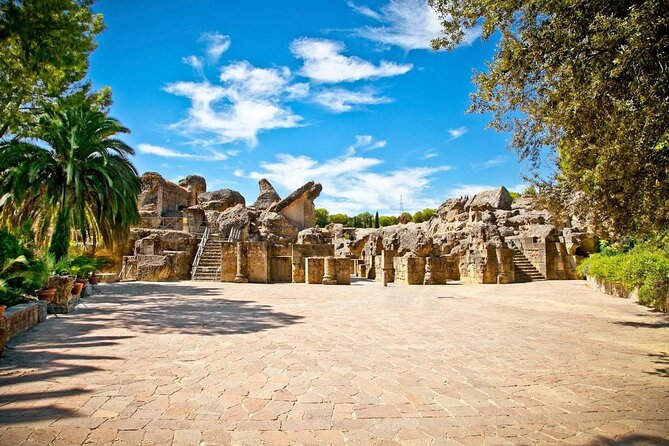
- Amphitheater games and the Trajan monument connect architecture to Roman power and public life
- Bath complex, gym, and bread oven show daily routines, not only big monuments
First impressions: Italica is close, but it feels far back
Italica sits just outside Seville, close enough that you can do it without sacrificing an entire day. That matters, because a lot of Roman ruin trips take serious time on logistics. Here, the travel is described as a short distance, and the whole experience lands in the sweet spot for many schedules: about 1 hour 30 minutes to 2 hours.
What really helps is the private setup. You’re not waiting for the slowest walker, and you’re not stuck listening to someone else’s questions. Your guide sets the tempo as you move from one key area to the next, so the site stays coherent.
And yes, the ruins are genuinely impressive. Italica is known for its preservation, and you feel it right away when you start seeing spaces that were built for everyday use, then imagine them functioning 2,000 years ago.
You can also read our reviews of more tours and experiences in Seville.



Price and what you actually get for $106.82
At $106.82 per person, this isn’t the cheapest thing to add on. The value comes from three practical points:
- You get a professional guide who handles the story and the route.
- Tickets are included, so you’re not piecing together admissions on the fly.
- It’s private, meaning you’re paying for access and interpretation, not just entry.
If your goal is to visit a Roman site with confidence, not guesswork, this price starts to make sense. If your goal is to take photos and wander with no structure, you might prefer to visit independently. But if you want the site explained, the guide time is the product here.
Starting out in Seville and getting to Italica
The day starts with meeting your group in central Seville, then heading to Italica by a short transfer. The tour starts at 10:00 am.
Even if transportation to and from the attraction isn’t included, you’re not completely on your own. One helpful practical tip shared for getting to the meeting area is to use the M17OA bus from the city bus station. It runs about every half hour, and it’s the last stop as the bus turns around. That can be a lifesaver if you don’t want to pay for extra pickup.
If you’re trying to keep things smooth, I’d plan on arriving early enough to find your meeting point without stress. Noon plans in Seville tend to expand fast, and you’ll want your mind clear for the ruins.
The big stop: the Amphitheater area and Italica’s origin (206 A.D.)
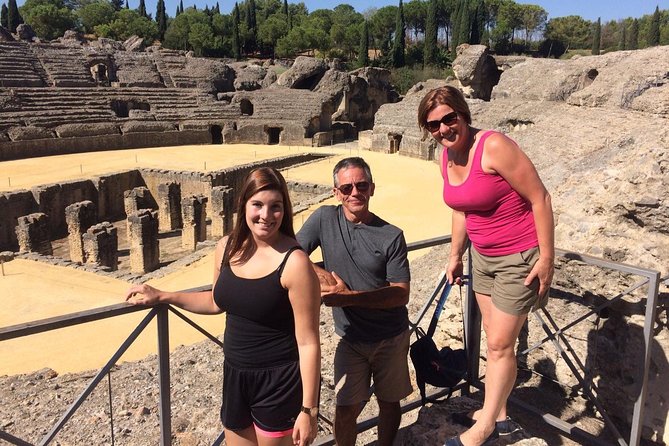
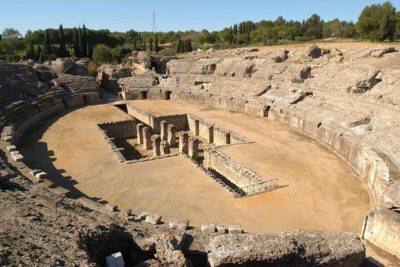
Your tour focuses heavily on the core ruins, starting with the Anfiteatro de Italica, and this is where the “wow” often hits first.
Here’s what I find most useful about approaching this part with a guide: they don’t just point out stone. They explain the setting. Italica’s story is tied to Roman control of the region and to its founding context, going back to 206 A.D., when it became linked to creating a place for wounded soldiers after a battle.
What you’ll do here
You’ll learn how the Romans organized and controlled this area, then explore the amphitheater area and surrounding features yourself. The tour includes standout elements such as:
- the amphitheater, where Roman games were held
- the Trajan monument, which helps connect local prestige to imperial Rome
- the House of the Planetarium area for mosaics, if your route brings it into this first stretch
- additional public and daily-life spaces tied to the bath and city fabric





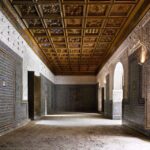
A fair heads-up
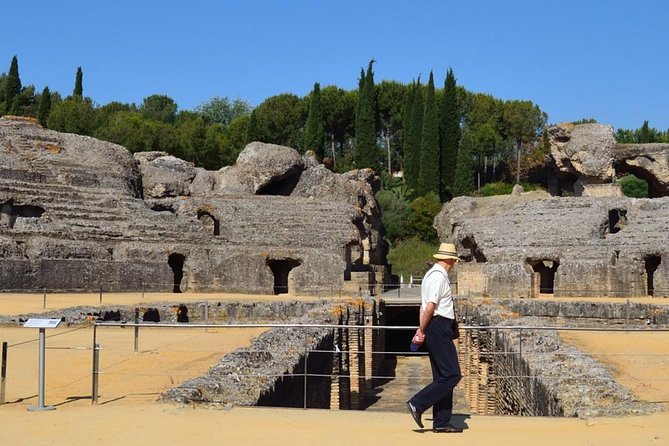
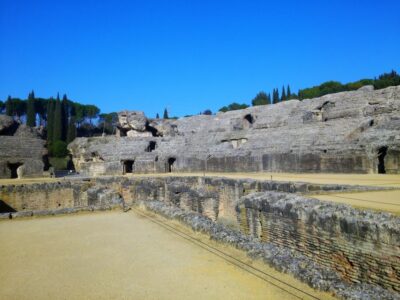
The amphitheater is impressive, and a significant portion survives. Still, the site is not “endless.” If you’re comparing it to the biggest mega sites in Italy, you might feel there isn’t time for as much roaming. That’s not a problem if you treat the guide as your guidebook and move efficiently through the key structures, and it is a problem if you want hour after hour of self-guided wandering.
House of the Planetarium mosaics: the moment you stop and stare
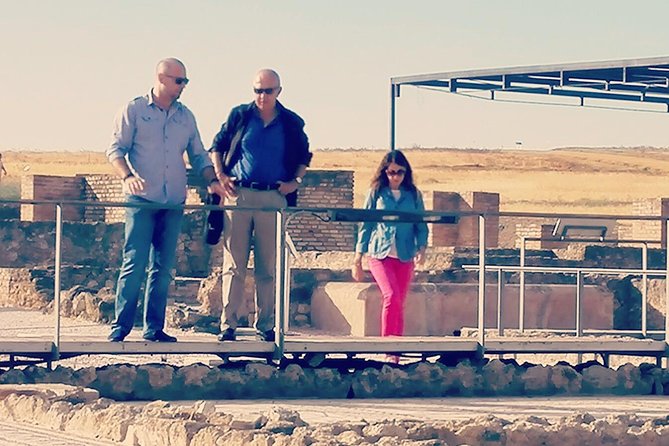
This is the stop I’d use as your internal time marker. It’s where the tour becomes visually rewarding in a way that doesn’t require expertise.
The House of the Planetarium is famous for its preserved mosaics. Even if you only know Roman art from a textbook, you’ll recognize the effort and planning behind it. This is also a good reason to pick a guided tour: a guide can help you “read” what you’re looking at, instead of treating it like a random floor pattern.
Why mosaics matter here
Roman mosaics weren’t just decoration. They carried identity, taste, and status. In a ruin site tour, mosaics are one of the most direct ways to feel how Roman households lived and displayed themselves. And because the House of the Planetarium is singled out for its preservation, you get a clearer payoff than you would at a less maintained site.
Thermal baths, gym, and the bread oven: seeing daily life, not just monuments
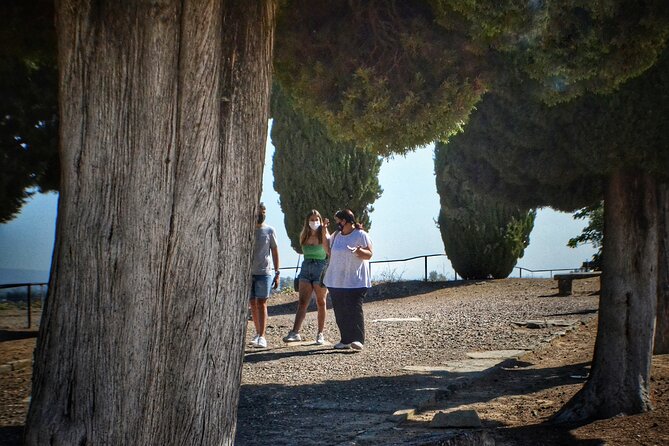
One of Italica’s strongest selling points is that it’s not only about a few dramatic showpieces. You’ll also walk through the grand bath complex, plus related spaces like the gym, a former bread oven, and the remnants of city streets.
This is where the site feels alive, because bathing and training were routine parts of Roman public and semi-public life. A bath complex also lets you imagine social behavior. People didn’t just clean. They talked, relaxed, and moved through the day.
What to look for
As you move around, pay attention to how the different spaces connect. Even if you can’t map every room, you can usually tell which areas were meant for movement, which were for heat and water, and which were for rest.
The mention of a bread oven is also a great reminder that a city is more than marble. Food production, at least at the neighborhood level, was part of daily function. It’s the kind of detail that makes the ruins feel more human.
Two restored Roman houses and the city street pieces
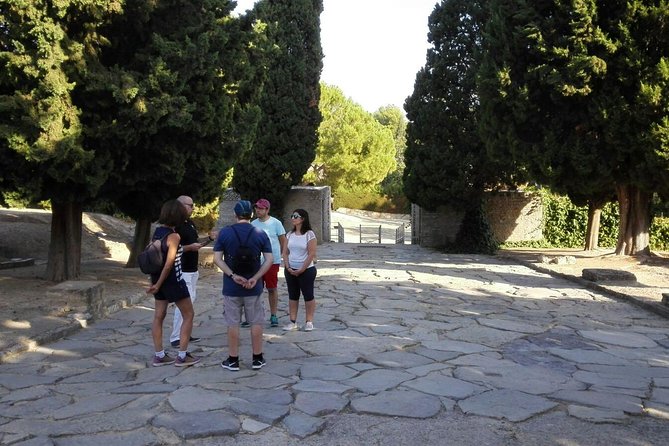
The tour doesn’t just toss you into ruins and walk away. You’ll see two restored Roman houses and bits of the city streets.
Restored houses do two things for your experience:
- They help your brain make sense of what you’re seeing.
- They show you how “home” could be laid out in a Roman setting.
And the street remnants matter because they give scale. Without streets, a ruin can feel like a collection of artifacts. With streets, you start to understand the place as a real neighborhood that people walked through, bought things, argued, and planned their day.
Trajan monument and the Roman power story
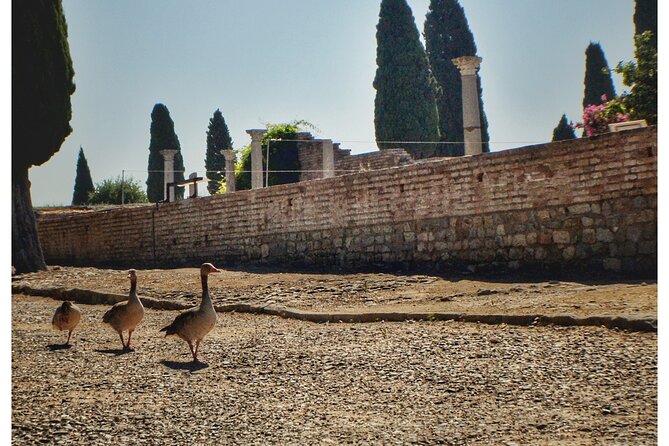
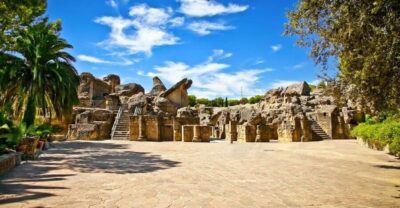
The Trajan monument isn’t just a photo spot. With a good guide, it becomes a lesson in Roman messaging.
This is where a private tour pays off again. You get time to understand what the monument meant for locals and why it mattered in the wider Roman empire. Italica’s connection to major emperors like Trajan and Hadrian adds weight to that explanation, and the guide ties it together while you’re standing there.
If you like Rome’s “big picture,” this portion is a satisfying anchor. It keeps the tour from becoming only a tour of pretty stones.
A quick word about Game of Thrones footage
One fun angle that came up in guide storytelling is that Italica was used for filming a Game of Thrones setting. In one case, a guide even showed a video clip during the tour.
If you’re a fan, bring that curiosity. The guide may point out film-connection details as they explain Roman spaces, which can make the ruins feel more recognizable. Even if you’re not a fan, it’s a reminder that these Roman locations still shape modern visuals.
Guide quality: punctual, friendly, and helpful with photos
This tour earns top marks largely because of the guides. I’m glad you can meet different personalities, since Roman ruins can feel flat if you get stuck with a monotone guide.
Some specific examples from guide experiences:
- David stood out for being polite and knowledgeable, and he also helped visitors get back into the city. One reviewer added that he’s a photographer, which translated into better photos.
- Carmen earned praise for being punctual, friendly, and strong on both Italica and Roman empire context.
- Alex was described as on time and very informative, and the time flew by even when the weather wasn’t perfect.
- Javier was called personable and professional, with clear explanations that made the tour feel easy to follow.
- Miguel was praised for enthusiasm and for explaining the site layout well.
The big takeaway for you: if you care about getting your bearings and leaving with good understanding and good photos, this tour is set up for that.
Timing, weather, and how to plan your day
The tour runs about 1 hour 30 minutes to 2 hours, starting at 10:00 am. The experience data also says it requires good weather. If weather is poor, you’ll be offered a different date or a full refund.
That “good weather” note matters because ruins are outdoors and walking is part of the plan. I’d schedule this earlier rather than later in the day. Early visits tend to feel more comfortable, and you’ll also give yourself time to enjoy Seville afterward without rushing.
Also, bring water and wear shoes you can walk in. You’re moving through uneven stone and open spaces, and your comfort will affect how much you enjoy the guide’s explanations.
What I think is worth prioritizing during your 2 hours
You can’t do everything at a Roman ruin site, and that’s why the guide route matters. If you want to maximize the time you have, I’d focus on three mental checkpoints:
- Find the mosaics first, especially at the House of the Planetarium. Even quick viewing becomes more meaningful when you know what you’re looking at.
- Listen for the imperial tie-ins when the Trajan monument and emperor context come up.
- Treat bath and daily-life spaces as the real heart, not just background. That’s where the site becomes more than a museum floor.
If you do those things, you’ll come away feeling you understood Italica, not just visited it.
Who should book this tour
This is a great fit if you:
- want a structured visit without mapping ruins on your own
- care about Roman context, especially Trajan and Hadrian
- like photo-friendly guidance and clear explanations
- want a private experience that keeps the pace comfortable
It might not be the best match if you:
- want a long, slow wander with no interpretation
- expect Italica to feel as massive as the biggest Roman sites you might know from elsewhere
- prefer to handle directions and logistics entirely by yourself
Should you book Italica with a private guide
I think you should book if you want the fastest path to understanding and enjoyment. The price is not low, but you’re paying for the interpretation, the ticket inclusion, and the private attention that keeps things from turning into a confusing self-guided maze.
If you’re the type who likes to walk into ruins and quickly get your bearings, you’ll likely love this format. If you’re already an expert Roman ruin enthusiast who wants to linger for hours, you might prefer a longer independent visit. For most people doing Seville in a realistic amount of time, this private 1 hour 30 minutes to 2 hours plan is a smart, high-impact choice.
FAQ
How long is the Italica private guided tour?
It runs about 1 hour 30 minutes to 2 hours, with the start time listed as 10:00 am.
What is included in the ticket price?
The tour includes a professional guide, a private tour format, and tickets (admission).
Is this tour in English?
Yes, the tour is offered in English.
Where do we meet, and where does the tour end?
You start at Italica (V)41970, Seville, Spain, and the tour ends back at the meeting point.
Is hotel pickup or drop-off included?
No. Hotel pickup and drop-off is not included, and transportation to and from attractions is noted as not included.
Is this a private tour?
Yes. It is a private tour/activity, and only your group will participate.
What happens if weather is bad or I need to cancel?
The experience requires good weather. If it is canceled due to poor weather, you’ll be offered a different date or a full refund. You can cancel for a full refund up to 24 hours in advance of the experience’s start time.
More Tour Reviews in Seville
Not for you? Here's more nearby things to do in Seville we have reviewed










More Itálica Ruins from Seville worth a look.
 ★ 4.5From Seville: Italica Roman City & Medieval Monastery TourFrom $461,051 reviews
 ★ 4.5Historical Italica: Half-Day Guided Tour from SevilleFrom $47416 reviews
 ★ 4.3Game of Thrones and Roman Empire Italica TourFrom $21372 reviews
 ★ 4.5Visit to Italica Roman Ruins Tour tickets includedFrom $19285 reviews
 ★ 4.2Italica Roman Ruins City TourFrom $21147 reviews
 ★ 4.4From Seville: Italica Roman City TourFrom $51139 reviews
 ★ 4.9From Seville: Half-Day Guided Bike Trip to ItalicaFrom $53126 reviews
 ★ 5.0Private hald day tour to the historic roman city of ItalicaFrom $9343 reviews
Continue by place or experience