
REVIEW · ITáLICA RUINS FROM SEVILLE
Itálica: 3-Hour City of Emperors Tour from Seville
Emperors walked here once. In 3 hours from Seville, you’ll see why Itálica is still so easy to get excited about, especially the amphitheatre and mosaics.
With round-trip transport handling the boring bits, you can spend your energy on the real payoff: walking a Roman footprint that connects to Trajan and Adriano, plus even a TV-world reference.
I love the way this tour keeps the group small, up to 8, so the guide can actually pace the story instead of rushing past it. I also like the practical setup, from pick-up to drop-off, because the site sits about 7 km outside Seville and you’re not hunting for buses or taxis.
One thing to consider: if your group has a mix of Spanish and English, you might feel some repetition as the guide covers the same points in two languages. In that case, the most popular stop, the amphitheatre, can feel tighter than you’d hope.
Quick hits before you go
- Game of Thrones amphitheatre setting: you’ll be standing where productions chose to film
- Small-group feel: limited to a tiny group so questions don’t get lost
- Thermal baths and mosaics: not just one pretty ruin, you see several key remains
- Emperor-era storytelling: Trajan and Adriano are part of the guide’s narrative
- No ticket-line stress: entrance tickets are included and you skip the line
How the 3-hour Itálica tour runs in real life
This is a focused, half-sprint kind of visit. You’re not spending the day wandering; you’re getting a guided walk through the main highlights of Itálica, plus context for how a Roman city grew, prospered, and eventually faded.
Because the tour lasts 3 hours, the guide has to make choices. That’s good news for you if you want “the important stuff” without a time sink. It also means you should mentally prepare for a short, high-impact route rather than a slow, do-everything exploration.
The pace tends to feel efficient, not frantic. You’ll have enough time to look closely at the structures that still read clearly after all these centuries, including the amphitheatre remains, and you’ll also get time for the thermal areas and mosaics. The trick is knowing what you want most ahead of time.
You can also read our reviews of more tours and experiences in Seville.



Getting to Itálica from Seville without the headache
The best part of starting with round-trip transfers from Seville is that it removes the biggest friction point: getting there and getting back on time. You meet at a specific point, then the logistics are handled.
Your meeting spot is the City Expert shop on the corner of Av. de la Constitución and Calle Miguel Mañara. From there, you’re transported to Itálica, you tour, and you return to Seville with the same convenience.
This matters because Itálica is not in the center. It’s a short hop outside the city, and when you add waiting for taxis or figuring out transport, that “quick visit” can suddenly become a half-day. With transfers, your time stays protected.
Small-group tours also change the vibe. With a tiny group, the guide can keep track of who’s listening, who has questions, and who needs a moment to catch up. That makes the tour feel less like a lecture and more like an actual guided walk.
The amphitheatre: the biggest stop and the one you’ll remember
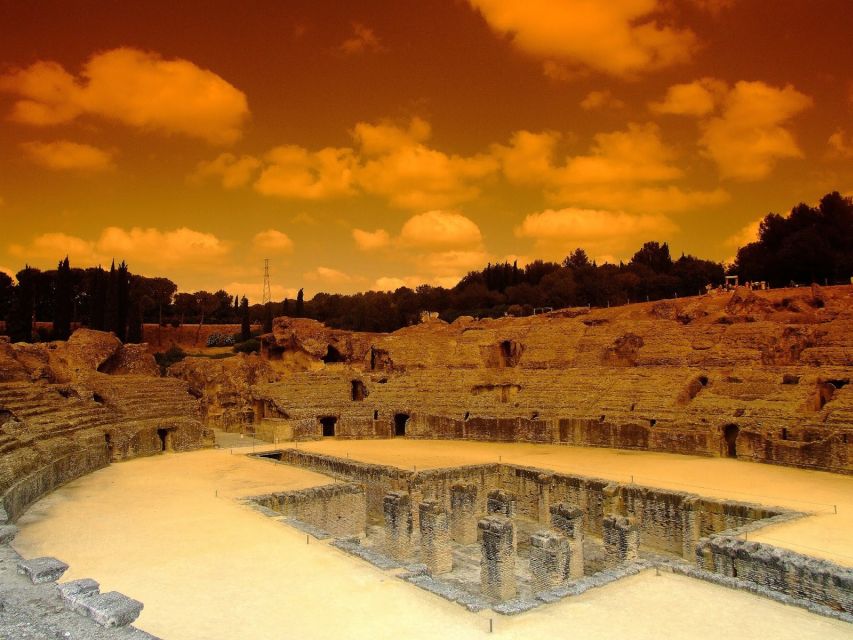
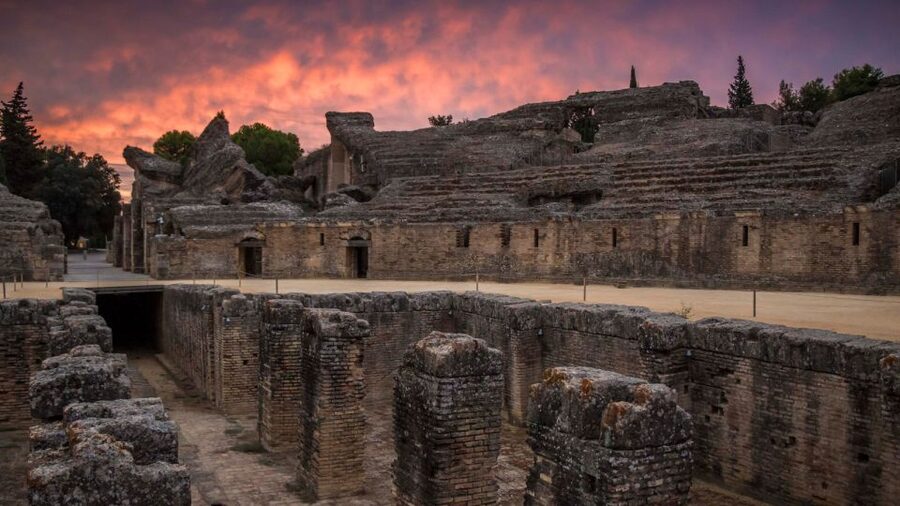
If you only have time for one Roman feature at Itálica, make it the amphitheatre. This is the place people get excited about for a reason: it’s still striking, and it’s tied to modern pop culture as well.
The tour highlights that this amphitheatre has been used as a setting for Game of Thrones. Standing in that space, you can start mapping what you’ve seen on screen onto what you’re actually seeing in stone and scale. It’s not about hunting for exact shots; it’s about understanding the atmosphere of Roman spectacle and how the setting supports it.
Look for how the space is shaped. Amphitheatres were engineered for crowd visibility and for sound to travel across seating tiers. Even when ruins don’t show everything, the layout helps your imagination do its job. With a guide, you’ll also hear stories that connect the amphitheatre to the city’s real-world life, not just the visual effect.
Practical heads-up: the amphitheatre is frequently the highlight, and in most cases it gets a proper chunk of time. Still, one potential downside showed up in the experience of people who booked mixed-language groups. If your group is split between Spanish and English, you might notice the guide repeating key parts, and the amphitheatre window can feel shorter. If this is your must-see, it’s smart to choose a time slot when you’re confident your group will be mostly your language.
Mosaics and thermal baths: the parts that make Itálica feel lived-in
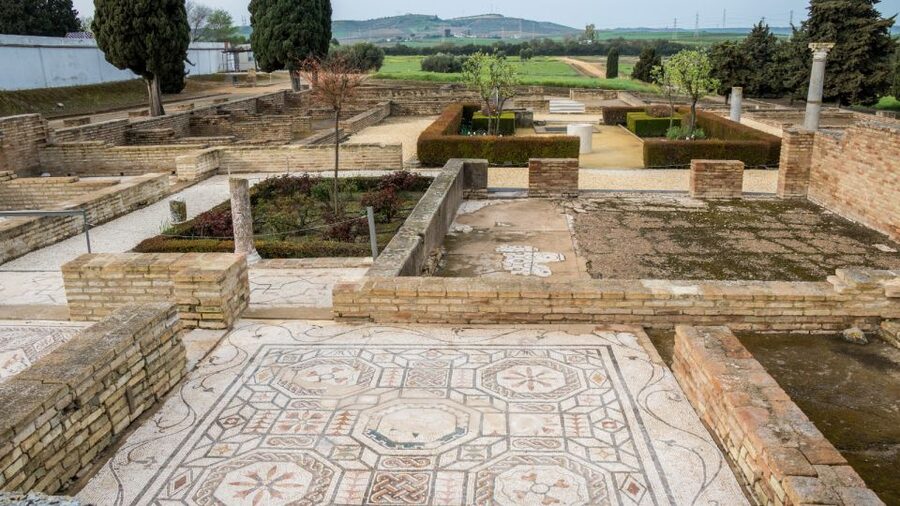
The amphitheatre is the attention grabber, but Itálica isn’t just a big empty stage. The tour also focuses on the day-to-day and the pleasure-side of Roman life, especially through thermal baths and mosaics.
Thermal baths are more than a “cool ruin.” They reflect social habits, maintenance of public life, and the Roman idea that cities should offer comfort. When you see remains tied to bathing spaces, you get a better sense of how people moved through the city and spent time there. It’s the difference between seeing a monument and understanding routines.
Then come the mosaics. These are the kind of remains that reward close looking. The tour frames them as “exquisite mosaics,” and you’ll likely spend time visually tracing patterns rather than rushing past them. Even if you’re not a mosaic scholar, you’ll recognize that this was decorated living, not bare survival.
A quick note on a rule you’ll follow on site: touching exhibits isn’t allowed. It’s common at archaeological places, but it matters here because mosaics and delicate surfaces are often the things you most want to examine. Plan for viewing only, and bring along the habit of looking with your eyes, not your hands.
The rise and fall story: Trajan, Adriano, and why it matters
This is the part that turns ruins into a narrative. The guide explains the city’s rise and fall, including references to emperors Trajan and Adriano. You’re also told about far-reaching political and economic decisions that shaped Itálica, with emphasis on an early era on the peninsula.
What I like about this approach is that it gives you a framework for interpretation. Without context, a Roman site can look like scattered stones. With context, you start seeing the why: why people settled, why resources mattered, why cities flourished, and why they eventually lost their grip.
The tour’s story structure also helps you connect dates and power. Even if you don’t memorize a timeline, you’ll walk away with the sense that the city mattered to the empire, not just to a local neighborhood. That’s what makes the visit feel more meaningful than a quick photo stop.
And because the tour is only three hours, the guide’s job is to pick the most digestible story beats: who mattered, what choices changed the city, and what physical remains still let you read those changes today.





Small group size and bilingual guiding, what to expect
You’ll tour with a small group, limited to up to 8 people, and the experience is set up so the guide can give a live commentary rather than a canned script. It’s also described as having a bilingual guide who works in Spanish and English.
This setup is usually a win. In smaller groups, guides can pace the walk, slow down at key stops, and answer questions without turning your tour into a traffic jam. Several guide names come up in the experience of people who have done this before, including Carmen, Maria, and Lara, and the common theme is clarity and engagement.
That said, the biggest practical consideration is language balance. If the group composition forces the guide to repeat core explanations for each language, you might experience a bit of time squeeze at the most crowded stop. The amphitheatre is the likely place this shows up, because it’s where everyone wants the same attention.
If you prefer a no-repetition experience, aim for a booking time that suits your language. If you’re flexible, you’ll still get a lot out of it, because the physical site does much of the communicating, even when language shifts.
What’s included, what’s not, and how to plan your day
Let’s talk value, not just price. The tour costs $59 per person for 3 hours, and it includes round-trip transport from Seville, a guide, an entrance ticket, and skip-the-ticket-line entry. For a day trip where the biggest pain point is logistics, this package pricing tends to feel fair.
The “not included” part is simple: food and drinks. That doesn’t mean you need to skip eating, just that you should plan to grab something before or after. Since the tour is only three hours, you’re unlikely to miss meals if you schedule it between lunch and dinner, or vice versa.
Also, what you bring matters:
- Comfortable shoes are non-negotiable for an outdoor archaeological walk
- Breathable clothing helps because you’ll be outside for most of the experience
And remember the one site rule: no touching the exhibits. You’ll see fragile surfaces and you’ll want to handle them. Don’t. It’s better for the site and it makes your visit more respectful.
Who this tour is perfect for, and who should skip it
This tour is a good fit for you if:
- You want a Roman site visit from Seville without transport headaches
- You like guided storytelling tied to specific landmarks
- You want the amphitheatre plus mosaics and baths in a single outing
- You’re staying in Seville for a couple of days and want one “big Roman hit” on a schedule that doesn’t sprawl
It’s also a solid option for families compared to longer, self-guided walks, since clear explanations and patience from guides such as Carmen have shown up in how people describe the experience.
Skip or reconsider if:
- Mobility impairments apply, because the tour is not suitable for people with mobility impairments
- You hate the idea of time limits. This is designed to be 3 hours. If you want to linger for an hour at each point, this format might feel rushed
Price and logistics: is $59 a smart buy?
For many visitors, the question isn’t whether Itálica is worth it, it’s whether the format is worth your time. Here, the price makes sense because you’re paying for three things that are usually separate headaches:
- Transport from Seville and back
- A guide who provides context during the walk
- Entrance ticket plus skip-the-line entry
If you tried to piece together transport and tickets yourself, you might save some money, but you’d also introduce more friction. This tour cuts that friction, which is worth something when you’re only in Seville for a short time.
So I’d frame it like this: if you value guided interpretation and want it organized from door to door, $59 feels like a reasonable deal. If you’re the type who wants total control and you’re comfortable figuring out everything on your own, you may feel less incentive to book a guided format.
Should you book this Itálica 3-hour tour from Seville?
I’d book it if you want the main Itálica highlights with a guide, plus the convenience of transfers and included entry. The amphitheatre is the headline, the mosaics and thermal baths add real variety, and the emperor-era context helps the ruins feel connected instead of random.
Book it especially if your time in Seville is limited. In a compact 3 hours, you get a memorable Roman stop that is close enough to fit smoothly into a real trip schedule.
I’d hesitate only if you strongly care about maximum time inside the amphitheatre and you’re sensitive to language repetition in mixed groups. If that’s you, pick the tour that matches your language preference as closely as possible, and go in expecting a smart, efficient format.
FAQ
How long is the Itálica tour from Seville?
The tour lasts 3 hours.
What’s included in the $59 per person price?
The price includes round-trip transport from Seville, a guide, and an entrance ticket. It also includes skip-the-ticket-line entry.
Where do I meet for the tour in Seville?
Meet at the City Expert shop on the corner of Av. de la Constitución and Calle Miguel Mañara.
Is the ticket line skipped?
Yes, the tour includes skip-the-ticket-line entry.
What languages does the guide speak?
The live tour guide provides Spanish and English.
What should I bring, and what rules apply at the site?
Bring comfortable shoes and breathable clothing. Touching the exhibits is not allowed.
What if my plans change, and is it suitable for mobility impairments?
You can cancel up to 24 hours in advance for a full refund. The tour is not suitable for people with mobility impairments.
More Tour Reviews in Seville
Not for you? Here's more nearby things to do in Seville we have reviewed











More Itálica Ruins from Seville worth a look.
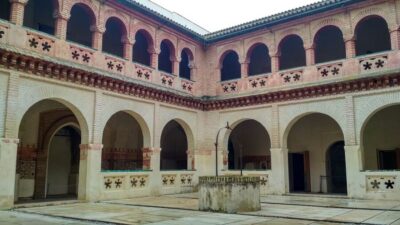 ★ 4.5From Seville: Italica Roman City & Medieval Monastery TourFrom $461,051 reviews
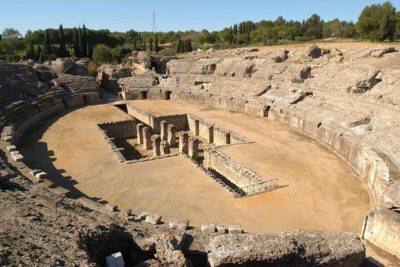 ★ 4.5Historical Italica: Half-Day Guided Tour from SevilleFrom $47416 reviews
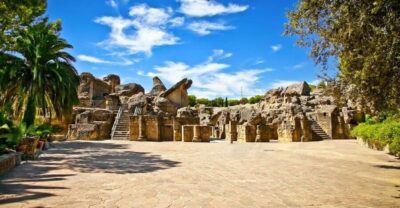 ★ 4.3Game of Thrones and Roman Empire Italica TourFrom $21372 reviews
 ★ 4.5Visit to Italica Roman Ruins Tour tickets includedFrom $19285 reviews
 ★ 4.2Italica Roman Ruins City TourFrom $21147 reviews
 ★ 4.4From Seville: Italica Roman City TourFrom $51139 reviews
 ★ 4.9From Seville: Half-Day Guided Bike Trip to ItalicaFrom $53126 reviews
 ★ 5.0Private hald day tour to the historic roman city of ItalicaFrom $9343 reviews
Continue by place or experience