
REVIEW · ITáLICA RUINS FROM SEVILLE
Italica Roman City Tour from Seville
Roman ruins near Seville feel like time travel. This Italica Roman City Tour takes you just outside the city to one of Spain’s most important Roman sites, with a guide who turns stone into stories and a skip-the-lines setup that saves your holiday time.
I love how the stop is built around big, memorable anchors: the amphitheater with its 25,000-seat scale, plus the Traianeum, mosaics, and the classic statues tied to Roman life and religion. You also get the kind of art-historian-style explanations that help you understand what you are actually looking at, not just what you are standing near.
My main caution is physical and practical. The site involves walking on rough, uneven ground and you should plan for heat and a bit of climbing, and if you get motion sickness, the bus ride can be a challenge on windy roads.
Key highlights and what they mean for you
- Birthplace of Trajan and Hadrian: You are visiting a city tied directly to emperors, not just generic ruins.
- Amphitheater scale: With 25,000 seats, it is the kind of sight that makes the Roman world feel real fast.
- Traianeum, mosaics, and public baths: The guide helps connect architecture, religion, and daily life.
- Professional art historian guidance: Explanations tend to be story-led, so the ruins do not feel empty.
- Air-conditioned transport plus line skipping: You spend less time waiting and more time looking.
- Small-group feel, big-ruins pace: Max 55 people, with a schedule that keeps moving but still gives time to see.
Why Itálica from Seville fits a half-day schedule
This is a 4-hour outing that works well when you want a major Roman site without losing an entire day. Seville is close, with the drive taking about 15 to 20 minutes each way, so the logistics are not punishing. You start at 10:00 am, and the tour ends in a different location than where you began, which is useful to know when you are planning your afternoon.
The tour is set up for a group size of up to 55 people, and that matters more than you might think. Large enough to be efficient, small enough that you can usually gather and follow the guide without getting lost in the crowd. And because the group is taken by air-conditioned vehicle, you avoid turning the ride into a sweaty marathon.
Value-wise, the price is hard to dismiss because admission is included, and you also get a guide who is there to interpret the site. On a half-day, that is usually the difference between seeing ruins as background scenery and actually understanding why they matter.
You can also read our reviews of more tours and experiences in Seville.



Entering a Roman city founded for power, not tourism
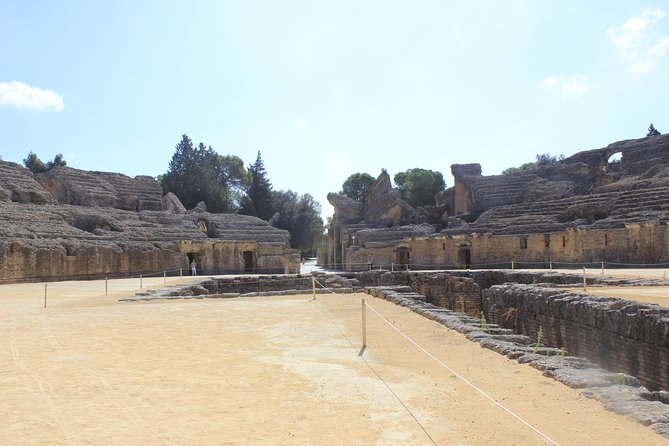
The Archaeological Ensemble of Itálica is not just a scatter of walls. It is the remains of a real Roman city, founded in 206 BC by Roman general Publius Cornelius Scipio Africanus. The payoff here is that this is also the birthplace of emperors Trajan and Hadrian, so the guide’s job is not abstract. Every street, public building, and monument is connected to how Rome wanted cities to look, function, and impress.
As you walk through the old streets of Itálica, the site reveals layers. You see the logic of Roman urban planning, where homes sit near public spaces, and where the city’s status shows up in the scale of communal buildings. Even when details are weathered or broken, you can often spot patterns because Roman sites are designed to repeat their ideas across the empire.
What I like about this kind of guided approach is that you are not left guessing. You get help reading the layout and understanding what each structure likely served. That turns a walk through rubble into a walk through a functioning city.
Practical tip: wear shoes that can handle uneven surfaces. Itálica is not a smooth museum floor. There are level changes and rough ground, so sturdy, grippy soles make the visit easier and safer.
Amphitheater and Traianeum: the stops that make the ruins click
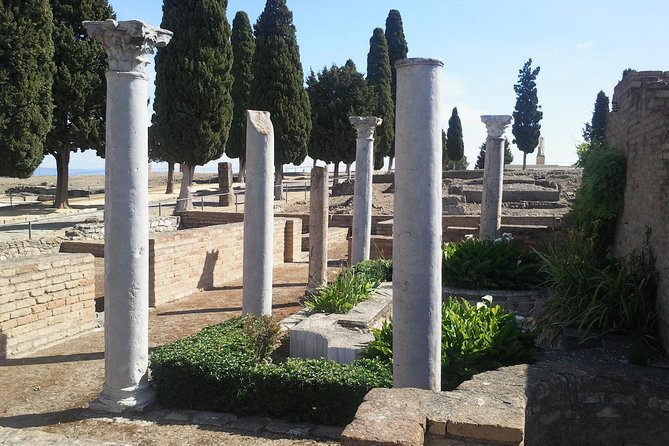
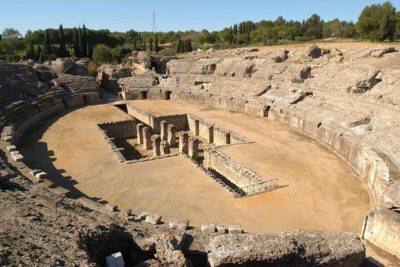
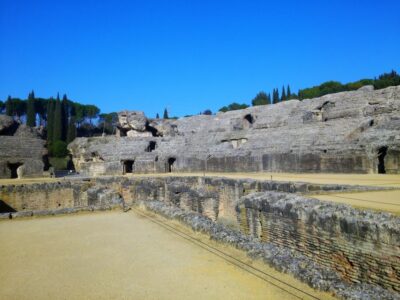
If you remember only one part of Itálica, make it the amphitheater. It once held 25,000 spectators, and it was the third-largest amphitheater in the Roman Empire. That huge number is not just trivia. When you see the surviving structure, your brain instantly connects it to large crowds, public performances, and the social energy of Roman public life.
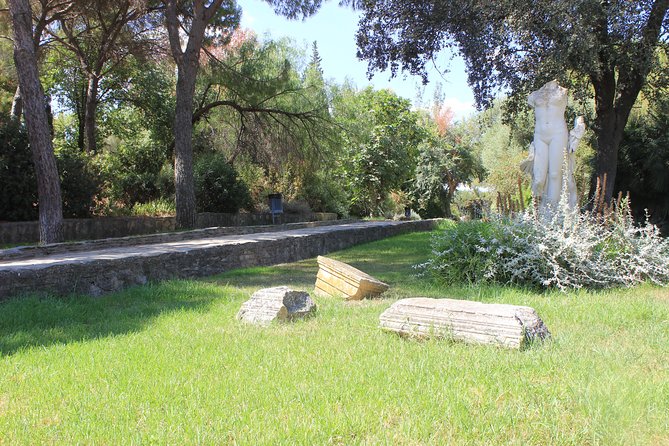
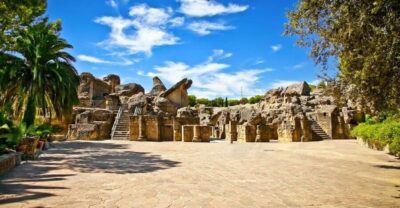
Your guide should also lead you through the monuments around it, especially the Traianeum. This is the kind of site that becomes far more interesting once you understand what it was designed to communicate. You also have a chance to see mosaic floors, plus statues linked to Roman themes and figures, including Diana, Venus, and Trajan.
Photo moment advice: plan to take pictures at two different times. First, grab an establishing photo early while the light is fresh. Then do a second round after the guide points out key details, when you know where to stand to show the structure’s best angles.
Also, restoration here is not careless. The surviving and partially rebuilt areas show a level of attention that helps you visualize the original setting. That matters, because at many ruins you are stuck imagining everything from scratch.
Baths, mosaics, and the feel of daily life at Itálica
Roman cities were not only about temples and theaters. They were about routines, comfort, and social habits. At Itálica, you can see public baths, which are often one of the most revealing features of Roman life. A bath complex shows you how Romans invested in communal spaces and how architecture supported social interaction.
The mosaics add another layer. When you spot the decorative floors, you start to understand that art and everyday function were linked. These details help you see beyond the big landmarks and into how people lived, walked, and spent time in the city.
Even if you are not a serious Roman-studies person, the guide’s job is to connect dots. The best tours make you feel how an emperor’s birth city could still be about ordinary routines like bathing, gathering, and moving through public corridors.
One thing to keep in mind: you are walking through archaeology, not a fully enclosed site. Sun exposure can be intense. Bring water if it is allowed on your day and consider a hat, because the ruins do not always give you continuous shade.
Santiponce’s partially reconstructed theater
The tour route can also include a look at the partially reconstructed Roman theater in Santiponce. This is a strong bonus for people who like seeing how restoration changes your understanding. Even partial reconstruction helps you grasp the original shape and what performances would have looked like.
The benefit of seeing it is that it complements the amphitheater. You get to compare two kinds of public entertainment and think about how Roman culture filled its public spaces. The downside is simple: when you add extra stops, time gets tighter. So if you are the type who wants every minute inside the main archaeological ensemble, you will want to keep an eye on how the schedule plays out on your specific departure.




The monastery stop, time limits, and what to expect on the clock
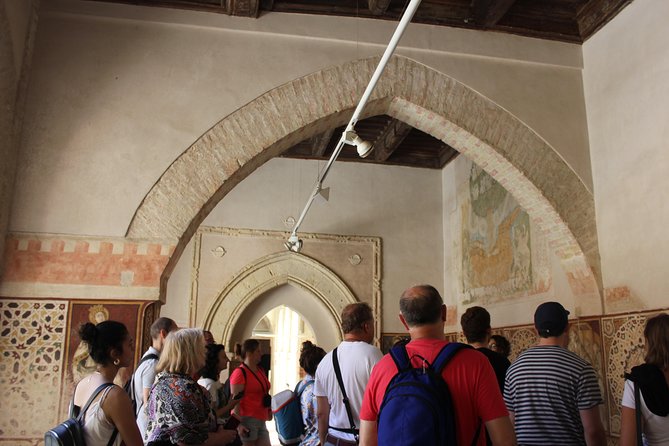
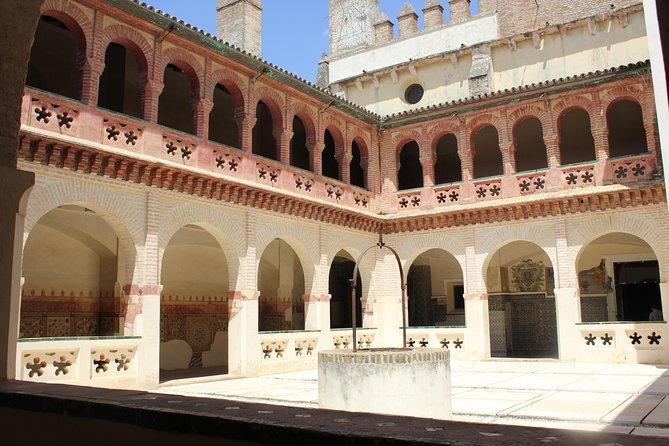
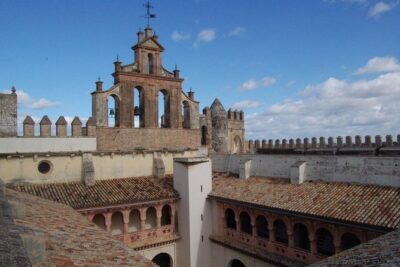
The tour is sold as about 4 hours, but your day is not only Italica. You have travel time plus time on site, and depending on the departure you may also add a monastery visit. On some departures, a stop at San Isidoro del Campo appears as a short added segment.
Here is how to think about your time: you will likely spend a meaningful chunk of the half-day on Itálica, but not the entire window inside the ruins. Plan that your guided portion and your photo time are balanced, not unlimited. If you specifically want the maximum possible time at the archaeological ensemble, confirm whether your departure includes the monastery and how much time you will have where you want it most.
If you are sensitive to pacing, pick your expectations carefully. This tour keeps a steady rhythm, which is great for many people, but it is not designed for slow wandering.
Guides, languages, and how to get the most from the commentary
The standout in the reviews is the guide factor. Guides such as Jesus, Catherine, Luca, Alberto, Jose, and Adrián are described as funny, engaging, and strongly focused on connecting you to what you are seeing. That is exactly what you want for a Roman ruin tour, because the stones only become memorable when someone explains what they represent.
Language is also important. The tour is offered in English, but the operator notes that in some unexpected circumstances the tour may be conducted in two different languages to help facilitate changes. That means you should not assume every single moment is fully synchronized for English only, especially if something disrupts timing.
A practical way to handle this: stay close to your guide. If you drift, you lose some context. And if you run into heavy accents, do not guess. Ask the guide to repeat a key detail or reframe it. Many of the guides named above are described as patient, and they know the difference between talking at a group and teaching them.
Also remember: one or two experiences report organization issues like lateness or confusion, which is not the norm you want. If you are traveling with tight plans after the tour, build in buffer time so a minor delay does not ruin your afternoon.
Transport on windy roads, motion sickness, and comfort tricks
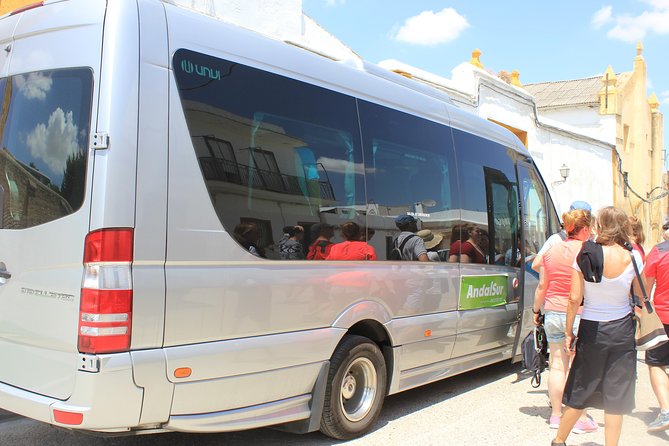
This part is not glamorous, but it can decide whether you enjoy the day. Some people noted motion sickness because the roads can be windy and the bus sways. If that is you, take it seriously.
What you can do:
- Consider motion sickness medication if you normally use it on curvy roads.
- Sit where you feel least movement, usually toward the front.
- Focus on the horizon instead of your phone screen.
Comfort-wise, the air-conditioned vehicle is a plus. Even in good weather, the combination of sun on-site and a longer ride can wear you out. Staying cool on the bus helps your energy level once you arrive at the ruins.
Then there is the walking. Reviews emphasize sturdy shoes for rough, uneven ground and level changes. That is not optional advice. The ruins demand solid footing.
Price and logistics: is $46.85 a good deal?
At $46.85 per person for about 4 hours, the value depends on what you compare it to. This price includes:
- Professional art historian guide
- Admission ticket included
- Guaranteed to skip the long lines
- Air-conditioned vehicle
For a half-day trip outside the center of Seville, this is often a practical package price. The biggest value is not the transport, it is the combination of admission plus interpretation. If you show up on your own, you still need to figure out what you are looking at, and you might lose time to entry lines.
Also, this tour is commonly booked about 28 days in advance on average. That signals solid demand, and it can be a good idea to reserve sooner if your trip dates are fixed.
If you are the type who learns best from guided explanations, this price is easier to justify. If you prefer to explore independently with a guidebook, you might decide to visit Itálica on your own to control your pacing. But if you want someone to connect emperors, art, architecture, and everyday life, this is the right format.
Who should book this Itálica tour, and who should skip it
Book it if:
- You want Roman history with clear context, not just sightseeing.
- You love architecture, public buildings, mosaics, and monuments like the amphitheater and Traianeum.
- You like a structured half-day that still allows time for photos.
- You can handle moderate walking over uneven ground.
Consider a different option if:
- You are prone to motion sickness and curvy bus rides make you miserable.
- You want a long, unhurried time only at Itálica. This tour is designed as a tight schedule and may include extra stops like the monastery on some departures.
- You strongly prefer fully English-only handling the whole day, with no language switching.
And for families or mixed-age groups: it can work, but only if everyone is comfortable with rough surfaces. Bring shoes that grip, and plan for heat.
Should you book? My decision rules for Itálica from Seville
I would book this tour if your main goal is to see Itálica with expert interpretation and get the highlights in a sensible half-day window. The combination of line skipping, included admission, and guide-led storytelling makes it a good value for most people who are time-budgeted in Seville.
Before you go, decide two things:
- Can you handle uneven ground for a couple of hours?
- Are you okay with a schedule that may trade some time for transport and possibly a monastery stop depending on departure?
If the answers are yes, you are likely to walk away feeling like you truly understood what this Roman city meant. And if your guide is one of the ones praised for humor and clarity, it can easily become a standout moment of your Seville trip.
FAQ
How long is the Italica Roman City Tour from Seville?
It runs for about 4 hours, approximately.
What time does the tour start?
The start time is 10:00 am.
Is admission to Itálica included?
Yes. Admission ticket is included.
Does the tour include a guide?
Yes. You get a professional art historian guide.
Is this tour offered in English?
Yes. It is offered in English.
Is line skipping included?
Yes. The tour is guaranteed to skip the long lines.
What is the group size limit?
The tour has a maximum of 55 travelers.
How much walking should I expect?
You should have moderate physical fitness level. The site involves walking on rough, uneven surfaces with level changes.
What is not included in the price?
Breakfast is not included.
What if weather is poor?
This experience requires good weather. If it is canceled due to poor weather, you are offered a different date or a full refund.
More Tour Reviews in Seville
Not for you? Here's more nearby things to do in Seville we have reviewed










More Itálica Ruins from Seville worth a look.
 ★ 4.5From Seville: Italica Roman City & Medieval Monastery TourFrom $461,051 reviews
 ★ 4.5Historical Italica: Half-Day Guided Tour from SevilleFrom $47416 reviews
 ★ 4.3Game of Thrones and Roman Empire Italica TourFrom $21372 reviews
 ★ 4.5Visit to Italica Roman Ruins Tour tickets includedFrom $19285 reviews
 ★ 4.2Italica Roman Ruins City TourFrom $21147 reviews
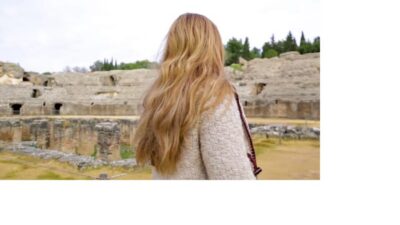 ★ 4.4From Seville: Italica Roman City TourFrom $51139 reviews
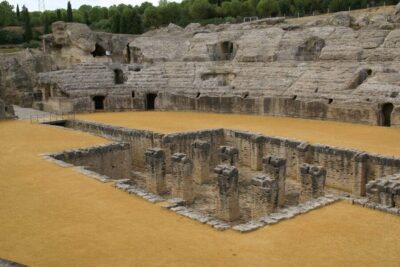 ★ 4.9From Seville: Half-Day Guided Bike Trip to ItalicaFrom $53126 reviews
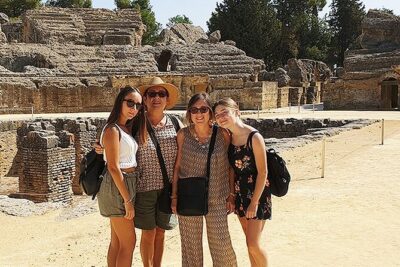 ★ 5.0Private hald day tour to the historic roman city of ItalicaFrom $9343 reviews
Continue by place or experience