
REVIEW · JEREZ TOURS FROM SEVILLE
Jerez: City Guided Tour and the Alcazar
Jerez history fits in two good hours. This Alcázar of Jerez tour strings together Mudejar-era ideas and Almohad architecture, then carries you through the old town so you understand what you are looking at. I especially love how you get skip-the-ticket-line access to the Alcázar, and how the visit moves past photos to key spots like the Mosque rooms, the Arab baths, and the tower views from Villavicencio.
One possible drawback: it is a walking route. If you are slow getting started or you hate moving on after each stop, this one can feel time-tight, so bring comfortable shoes and show up on time.
Key things I’d focus on
- Skip-the-line Alcázar entry so you spend time seeing, not waiting.
- Almohad + Mudejar mix explained with clear, human-scale stories.
- Iconic Alcázar spaces including Mosque areas, Arab baths, and Islamic-inspired gardens.
- Strong city overview in 2 hours covering Plaza del Arenal, Plaza del Arroyo, Plaza de la Asunción, and more.
- Great guide energy in multiple languages with English and Spanish options, often led by guides like Victoria, Rosa, and Celeste.
- Easy add-on potential because your walk naturally points you toward places to revisit, like the Cathedral later.
Plaza del Arenal start: the best way to get oriented fast
The tour kicks off in front of the equestrian monument, near Plaza del Arenal. It is a good choice for a first walk in Jerez because the plaza is a longtime meeting point, so you feel the city’s public heartbeat right away. You start with context, not just sightseeing.
You’ll want to arrive a few minutes early, not just because it is requested, but because the first minutes set the tone. Guides move quickly from “what this place is” to “what happened here,” so being on time helps you keep up.
You can also read our reviews of more tours and experiences in Jerez De La Frontera.



Alcázar of Jerez: fortress walls, alliances, and the big story
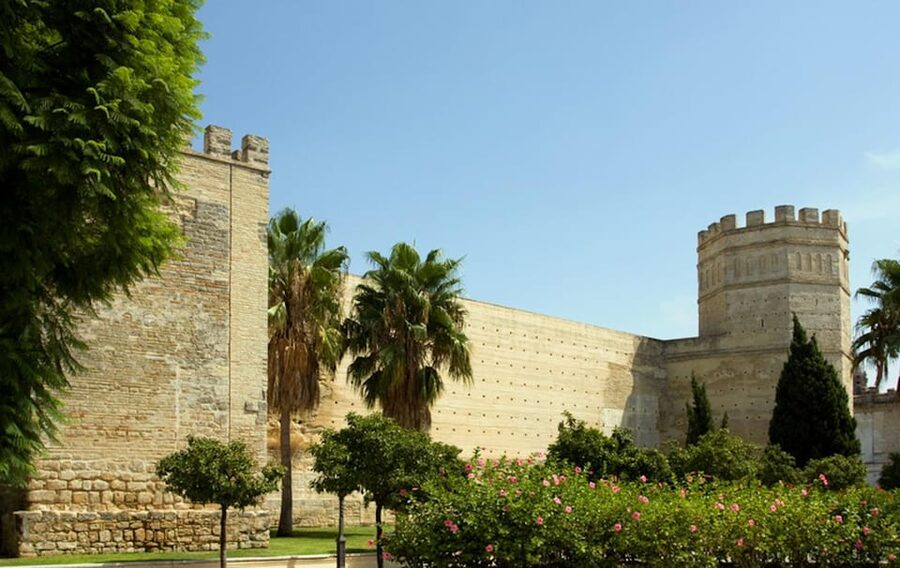
The heart of the experience is the Alcázar of Jerez, an imposing vestige of 12th-century Almohad architecture. Outside, you’ll look at the sturdy walls and the iconic entrance gate, and you’ll get the kind of explanations that make defensive stone feel like real history instead of a background.
What I like about this part is the way the guide connects the monument to battles, alliances, and legends tied to Jerez’s destiny. That framing matters. When you later step inside and see the layout, you start noticing how spaces were designed for daily life, power, and protection, not just decoration.
Entering the Alcázar: Mosque spaces, tower views, and Arab baths
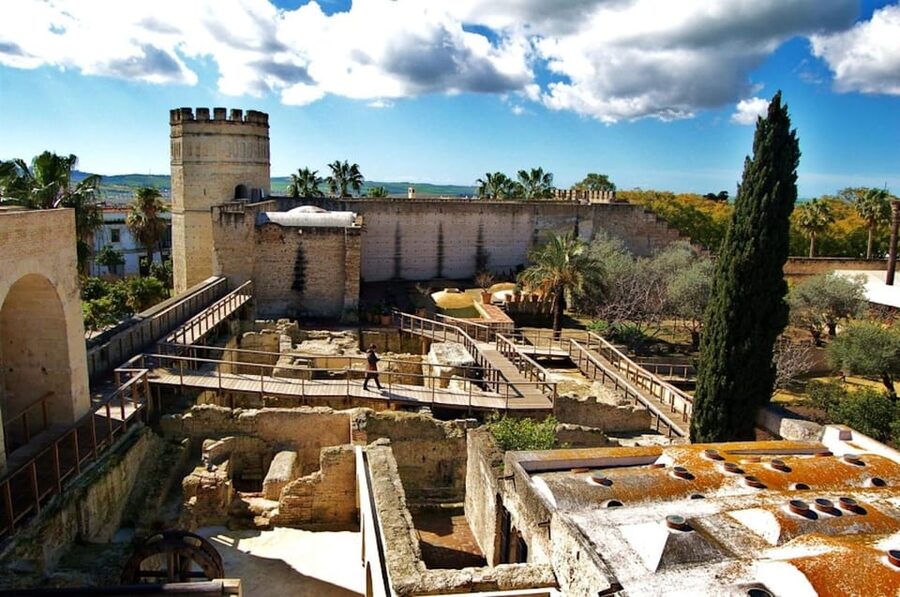
Once you step inside, the Alcázar shifts from “big exterior” to “you can almost feel daily life.” The tour is structured so you move through several different kinds of spaces, each with its own personality.
The Mosque areas
You’ll visit the majestic Mosque spaces, which are key to understanding why the Alcázar feels both fortress-like and spiritually symbolic. If you like architecture that tells a story, this is one of the stops that makes the whole monument click. The guide’s explanations help you connect the visible features to the era that shaped them.
Palace of Villavicencio and the tower
Next comes the Palace of Villavicencio, including impressive views from the tower. Even if you have seen plenty of viewpoints in Spain, this one adds something different because you are looking out from within a historical power site, not just from a hill.
I’d take your time here, because short views can trick you. You want enough time to spot the scale of Jerez and understand where the old town sits in relation to the Alcázar.






Arab baths
The Arab baths are another major highlight. They help you grasp the “lived-in” side of the site, where comfort and ritual mattered as much as defense. This is the kind of stop that often surprises people who expect only grand halls and walls.
Islamic-inspired gardens
Then you shift again to the Islamic-inspired gardens. The vibe is calmer, and the whole stop works like a mental reset after the more serious feel of fortress and palace spaces. It is not only pretty. It reinforces how the Alcázar evolved over centuries, mixing functions and tastes as Jerez changed.
Cathedral Redoubt: baroque drama after medieval stone
After the Alcázar, the tour heads to the Cathedral Redoubt, described as a baroque jewel that blends Renaissance and neoclassical influences. This stop is valuable because it shows how Jerez kept transforming. You are not stuck in one century, and you are not repeating the same style theme again and again.
Baroque architecture can sometimes feel like a lot on a short visit, but the guided explanations help you notice what makes this one special. Think of it as a bridge, from the fortress logic of earlier eras into later civic confidence.
Plaza del Arroyo and the quieter palace-lined corners
Next is Plaza del Arroyo, a charming place surrounded by stately palaces, known for its tranquility. This is one of those “slow down and look” moments that makes the entire walk feel less like a checklist.
I like this part because it gives you a break from the biggest monuments. You can look at the facades, absorb the scale, and get a better sense of how the city’s elegant streets and squares connect.
Plaza de la Asunción: San Dionisio and Cabildo Viejo
From Plaza del Arroyo, you walk to Plaza de la Asunción. Here you’ll see the church of San Dionisio, a Gothic-Mudejar example, and the historic Cabildo Viejo.
This is a smart pairing. San Dionisio helps you spot Mudejar traces in a style that feels different from what you saw in the Alcázar. Then Cabildo Viejo puts medieval civic life into focus, so you start seeing Jerez not only as an architectural museum, but as a city that ran on institutions, ceremonies, and community decisions.
If you enjoy comparing styles, this section rewards you. You can stand in one plaza and track how influence changes without the city feeling fragmented.
Consistorio de Jerez: the Renaissance power finish
The tour culminates at the Consistorio de Jerez, a Renaissance building reflecting the power and grandeur of the city in its golden age. Ending here makes sense because you start the walk with the “meeting point” energy of Plaza del Arenal and end with a symbol of civic authority.
It also gives you a satisfying sense of closure. By the time you reach the Consistorio, you have seen fortified space, sacred space, civic-religious space, and everyday neighborhood space. That mix is why this tour works even if you only have a short time in town.
What makes the guides work: clear explanations and real personality
The biggest pattern in the experience is guide quality. People consistently mention guides like Victoria, Rosa, and Celeste, and the through-line is friendly delivery plus strong explanations in English and Spanish.
I think this is exactly why the tour is worth it. The monument is not only about what it looks like. It is about understanding why it looks that way. A good guide helps you read the buildings like clues.
If you take this tour early in your visit, that payoff is even bigger. You end up with names of places, style clues to watch for, and a sense of where to spend more time later.
Price and value: why $29 feels fair
At around $29 per person for a 2-hour guided walk, this is priced like a smart “first taste” of Jerez. You are paying for three things: a live guide, the structure of the route, and entrance to the Alcázar of Jerez (with skip-the-ticket-line access).
What you are not paying for is transport, hotel pickup, or food and drinks. That is typical for a walking tour, and it also keeps the price lower than a full-day excursion. If you plan to grab tapas on your own after, you are not locked into an expensive bundled meal.
So who gets value? If you like historical sites but you also want context fast, you get your money’s worth in the first 30 to 45 minutes. If you mainly want photos and you already know everything about Almohads and Mudejars, you might feel the time is simply packed. Most people land in the middle, and that middle is exactly where this tour performs.
Logistics that matter for a smooth 2-hour walk
This is a 2-hour experience, which is a sweet spot for a city like Jerez. It is long enough to cover multiple major points, yet short enough that you still have energy for an afternoon wander.
A few practical notes from the tour details:
- You meet in front of the equestrian monument.
- Comfortable shoes are recommended.
- The tour is wheelchair accessible.
- Pets are not allowed (assistance dogs are allowed).
- Children under 12 must be accompanied by an adult.
- English and Spanish are available, and on some occasions it may run in two languages.
The most important tip is pacing. Even with a guide, you still need to keep up between stops. If you have mobility challenges, you can still do it, but you should plan around the walking time.
Who should book this Jerez Alcázar guided tour
This tour is ideal if you:
- Want an organized first look at Jerez rather than guessing your way around.
- Love the Alcázar but want the story behind the Mosque spaces, Arab baths, and gardens.
- Appreciate seeing how styles overlap, like Gothic-Mudejar at San Dionisio after the Almohad-era core.
It also works well as a “prime planning tool.” Finish the tour, and you’ll know what to revisit. People often leave with a direct next step for the day, like going to nearby major churches and cathedrals after getting the right context.
If you are traveling with kids, keep in mind the under-12 accompaniment rule, and also that the tour is still a walk with multiple stops. For a very young child who tires quickly, you might prefer a shorter option, if available.
Should you book the City Guided Tour and the Alcázar?
If you want a solid, guided overview of Jerez in a short time window, I’d book this. The combination is efficient: Alcázar entry, key interior highlights, then a route through plazas that explains how the city shifted across centuries.
The strongest reason to choose it is the guide impact. Names like Victoria, Rosa, and Celeste show up in real feedback for a reason: they keep the pace friendly and the details clear. For first-time visitors, that is what turns stone and tiles into a place you can actually picture.
If you are picky about walking and you hate time constraints, consider whether a 2-hour route fits your style. Otherwise, this is one of the best value ways to understand Jerez fast, then keep exploring on your own.
FAQ
How long is the Jerez city guided tour and Alcázar visit?
It lasts 2 hours.
Where do I meet the guide?
You meet in front of the equestrian monument.
What is included in the $29 per person price?
The price includes the guide service and entrance to the Alcázar of Jerez. Transport, hotel pick-up, and food and drinks are not included.
Does the tour skip the ticket line?
Yes, it includes skip-the-ticket-line entry to the Alcázar.
Is the tour wheelchair accessible?
Yes, it is wheelchair accessible.
Are pets allowed on this tour?
Pets are not allowed, but assistance dogs are allowed.
More Tour Reviews in Jerez De La Frontera
Not for you? Here's more nearby things to do in Jerez De La Frontera we have reviewed










More Jerez Tours from Seville worth a look.
 ★ 4.7Jerez de la Frontera: Andalusian Horse Dance and MuseumsFrom $381,289 reviews
 ★ 4.8Jerez: Yeguada de la Cartuja Carthusian Horses TourFrom $22970 reviews
 ★ 4.6Jerez: Royal Andalusian School of Equestrian Art AdmissionFrom $18882 reviews
 ★ 4.8Jerez: Bodegas Fundador Guided Tour with Tasting SessionFrom $21714 reviews
 ★ 4.4Jerez: Guided Winery Tour with Wine TastingFrom $22636 reviews
 ★ 4.6Jerez de la Frontera: Sherry Winery Tour with TastingFrom $29309 reviews
 ★ 4.5Jerez: Historic Center Guided TourFrom $26272 reviews
 ★ 4.6Jerez: Bodegas Álvaro Domecq Guided Tour with Wine TastingFrom $26265 reviews
Continue by place or experience