
REVIEW · CóRDOBA TOURS FROM SEVILLE
Patios & Perfums of Cordoba Festival Tour
Want a garden walk behind closed doors? This 2.5-hour evening tour is a smart way to see Córdoba’s private patios during the Patio Festival, paired with clear explanations of garden design and local tradition. I like that it mixes flower-filled courtyards with major Fernandinean church landmarks, and you also end with a Montilla-Moriles wine stop and tapa. One thing to consider, though, is that the meeting point is not right at the historic core, and on busier festival nights you may still hit some waiting.
Even better, the group is capped at 20 people, so you are not just shuffling with a crowd. It is offered in English, and the mobile ticket makes it easy to check in quickly. If your day is multilingual, you might notice the guide switching languages for part of the route.
Key Things You’ll Notice
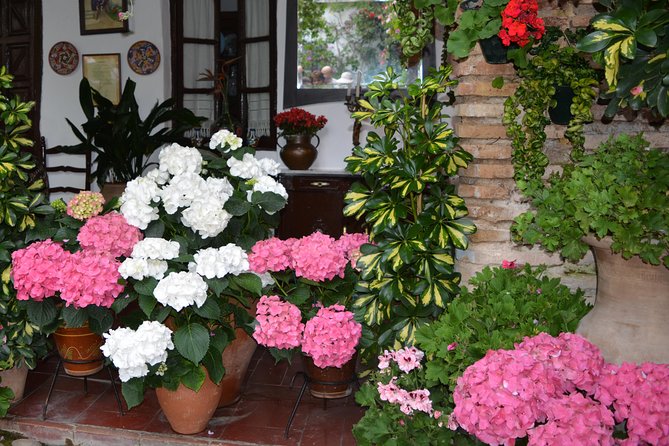
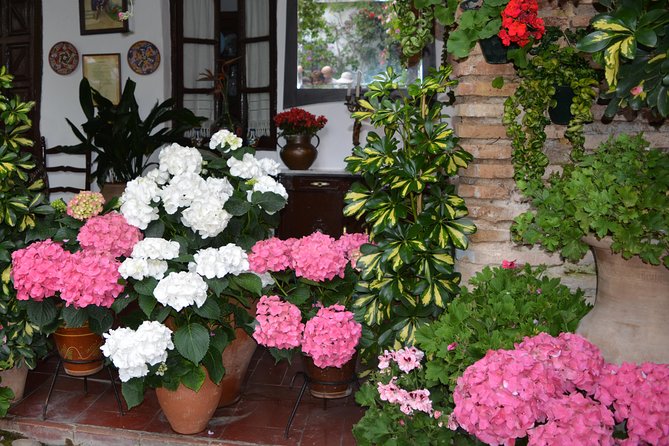
- Private patios, not public showrooms, with the focus on the courtyard owners’ choices in plants, color, and layout
- Garden design + festival context, so you understand why each patio is judged and how the tradition works
- Fernandinean church stops that frame the city’s layered architecture, including Mudéjar elements
- A Montilla-Moriles wine and tapa moment in a typical local tavern setting
- Small-group pacing, often built to reduce idle time between courtyards
- A premium upgrade option that includes a free gift (when selected)
Córdoba Patio Festival, But With a Plan
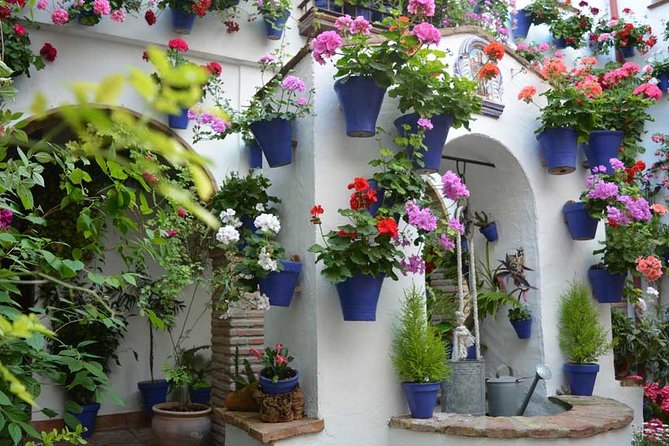
Córdoba’s Patio Festival is all about repetition with imagination: the same city streets, the same old buildings, but then hundreds of households switch their courtyards into living art. This tour works because it gives you a route that makes sense for an evening visit, rather than hoping you bump into the best patios by luck.
What I like most is the pairing of patios with the city’s landmark churches. You get a sense of how courtyard life fits into Córdoba’s identity, from old mosque foundations to later Christian redesigns. And because the tour heads into selected houses (typically 10 to 15 patios), you are not spending your time wandering around trying to find open doors.
The whole “perfums” angle also makes practical sense. Even if scent is not the main program, flower-heavy courtyards bring strong aromas, and you feel that the moment you step inside. Bring your nose as well as your camera.
You can also read our reviews of more tours and experiences in Cordoba.
Price and What $23.97 Buys You
At about $23.97 per person for roughly 2 hours 30 minutes, you are paying for three things that add real value.
First, you get a guided route through private courtyards. The Patio Festival is one of those events where many patios are free to enter during the official contest, so you could technically do it on your own. But a good guide helps you connect what you see, from plant choices to courtyard layouts and why certain homes stand out.
Second, this tour includes an admission ticket element for the Patio Festival portion. That matters because it removes one layer of “what do I need to buy” from your evening.
Third, there is a food and drink stop at the end, featuring D.O. Montilla-Moriles wine and a tapa. If you want a festival night that ends with something satisfying, this is built for that.
A small heads-up: if you opt for the premium upgrade, it includes a free gift. One guest reported missing it, so if you choose premium, it is smart to double-check you receive the gift at the conclusion of the tour.
Getting There: Manolete Start to San Lorenzo Finish
The tour starts at Monumento a Manolete, Pl. del Conde de Priego, 1, Centro, Córdoba with a 7:00 pm departure. It ends in the San Lorenzo area, near San Lorenzo Church, and the guide helps people get to the next places they want to see.
This routing is convenient if you like a structured evening. It is less convenient if you are basing yourself close to the Mosque-Cathedral and want zero walking. Plan on a decent walk or a short ride, because the start point sits farther out than the first courtyard areas people naturally think of.
The upside of a farther start is that you do not start your evening sprinting. You also often get a smoother flow into early courtyards before peak crowd pressure builds.
Stop 1: Patios de Córdoba, 10 to 15 Private Courtyards
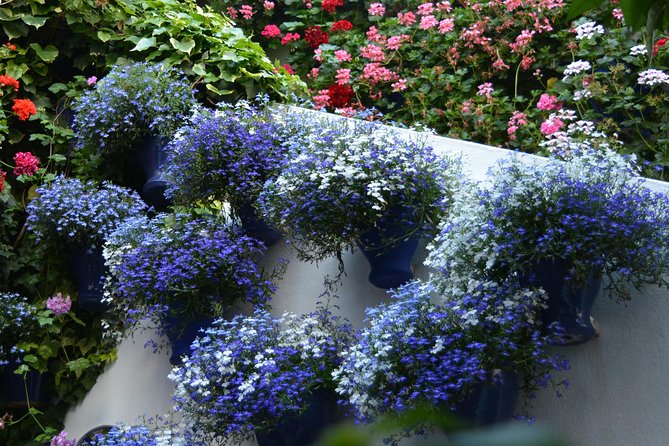
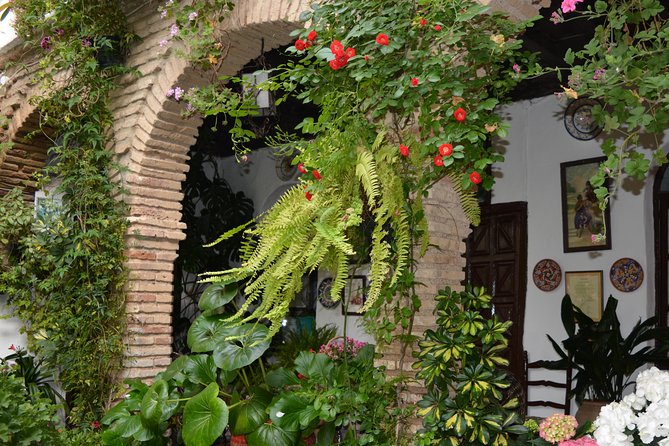
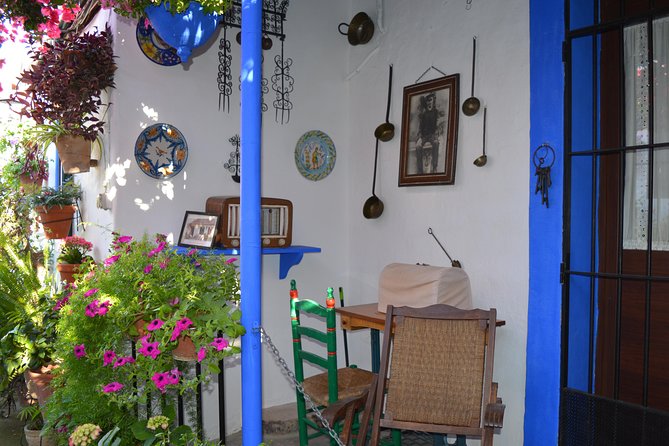
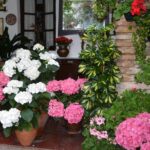
The heart of the tour is the Patio Festival route through standout homes. The festival happens every year in May, lasting for two weeks, and it is built on a long-standing Córdoba tradition. Patios here means courtyards, and during the festival many homes decorate them with abundant flowers and plants.
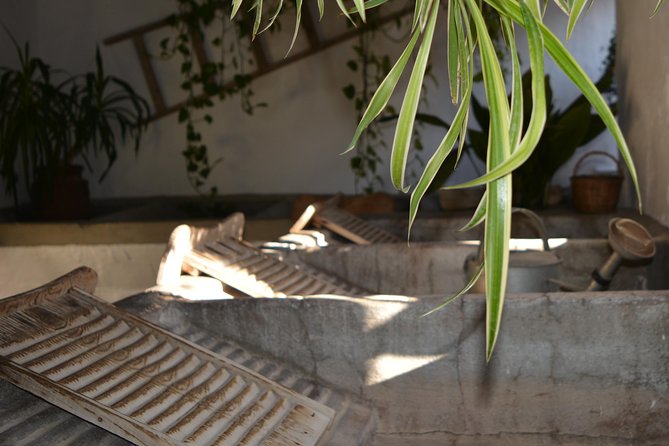
During your guided walk, you visit about 10 to 15 particular houses, selected for their beauty. This is where you will notice why Córdoba’s patios feel different from “pretty gardens” elsewhere. Many courtyards are inside residential buildings that evolved over centuries, so the layout is already shaped by architecture, light, and shade. The plants are not just decoration, they fill the spaces that the buildings naturally provide.
You will also get festival context. A recurring theme from strong guides is that they explain how patios are judged, how families participate over time, and what makes a courtyard win attention.
Practical tip: wear shoes you can walk in easily. Courtyard hopping involves short stairs, narrow passages, and time spent standing where you can see inside. Even when the wait is short, you will be on your feet.
Santa Marina: Fernandinean Church and Mixed Architectural Styles
After the main patio momentum begins, the tour works in church landmarks that help you understand Córdoba’s layers. One stop is Santa Marina, a so-called Fernandinean Church built after Ferdinand III conquered Córdoba from the Moors in the 13th century.
This building is a mix: it includes proto-gothic, Mudéjar, and, to a lesser degree, late-Romanesque elements. That combination matters because you are not just “doing churches.” You are connecting architecture to the city that produces these patios. Even if you do not catch every term, you will feel the visual rhythm of different eras layered into one structure.
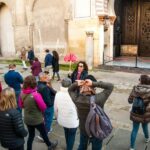
The tour meets near the square in front of this church. If the church is open when you arrive early, you might have a chance to see inside. That is not guaranteed, but it is a nice optional bonus if you get there with a little breathing room.
Church of St. Augustine and San Agustin Square Pauses
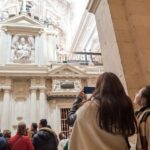
Next comes the Church of St. Augustine, with construction starting in 1328 in a Gothic style. You will pause for a few minutes in San Agustin Square and then continue to patios around that area.
This kind of stop is useful, especially for first-time visitors. Patio Festival routes can feel like a sequence of beautiful doors. The church pause breaks that rhythm and gives your brain a landmark to anchor the evening. You also get a glimpse of how the patio tradition lives beside major religious architecture rather than in a separate “festival zone.”
Also note the pacing: you are not stuck in one place forever. The tour is structured so you keep moving between patio clusters, which is one reason many people enjoy it as an evening activity instead of a half-day slog.
San Lorenzo: A Mosque Replaced, A Church Restored
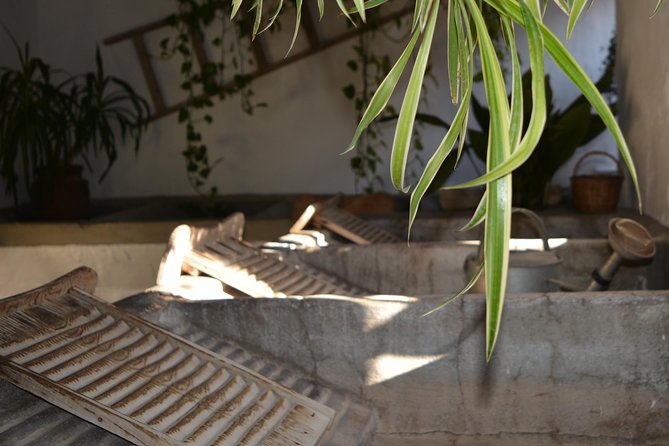
One of the most interesting framing stops is San Lorenzo. It is described as one of Córdoba’s most beautiful churches, also categorized among the Fernandinean Churches.
What makes San Lorenzo especially meaningful for this tour is its foundation story. The church was founded on an older mosque, which replaced an even earlier Visigothic church. That means the building is basically a timeline, and you feel that timeline when you walk through Córdoba and then step into courtyard spaces that were shaped by successive eras.
During the tour, you will see the outside and then visit more patios in the area. When the route finishes, it ends around San Lorenzo, and the guide helps you reach your next stop.
If you love understanding how places connect, this is a good ending point. It ties together the evening themes: tradition, architecture, and everyday residential life made public for a festival.
Wine and Tapa: Montilla-Moriles at a Local Tavern
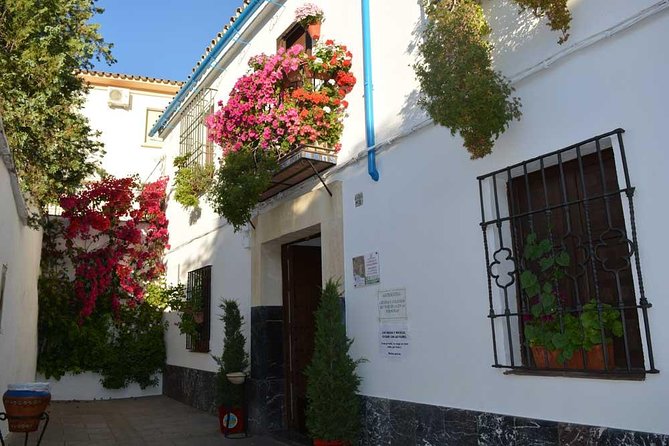
Near the San Lorenzo area, the tour includes a pause at a typical local tavern for D.O. Montilla-Moriles wine and a tapa.
This part is worth planning for, even if you are not a big wine drinker. Montilla-Moriles is a region name tied to Córdoba’s wine culture, and tasting it at the end of a patio walk feels like the natural payoff. You get a break from walking, plus a chance to try local flavors without having to decide where to go.
Two practical notes from the real world:
- There is a minimum drinking age of 18, so if anyone in your group is under that age, check in advance how the tasting portion is handled.
- Some guests have reported that they did not receive the tapa they expected, even when wine was provided. If the food portion matters to you, I would ask the guide at the start (or confirm at the meeting time) what will be served.
How the Group Size Affects Your Evening
The tour caps at 20 travelers, which is a major reason it works well. In a smaller group, the guide can step closer when explaining courtyard details, and the whole group can move efficiently through narrow streets.
Still, the festival can get crowded. One downside you can run into during busy nights is that you might spend time standing while the flow inside a few courtyards reaches capacity. The tour is designed to keep that to a minimum by choosing courtyards strategically and adjusting the order when needed.
If you are the type who hates waiting, aim for a day when you expect lighter crowds. If you are flexible, the explanations you get while waiting can turn that time into something useful rather than dead time.
The Guides Make It: Natalia, Elena, Auxi, and More
This is the part that repeatedly elevates the experience. The strongest guides are not just reciting dates. They explain what you are seeing and why. They also seem to love the subject, which makes the courtyards feel like more than photos.
Names that come up include Natalia, Elena, Auxi, Isabel, Manuel, and Maria. Multiple guests highlight guides who spoke clearly, navigated queues well, and brought extra context about the festival rules and participating families.
If you care about garden design, this is especially important. A patio can look gorgeous in a picture, but a guide can tell you what design choices matter: how plants are arranged against walls and arches, how color is balanced, and how courtyards create microclimates.
There is one caveat to watch for: a guest reported that even though they signed up for English, part of the tour switched to French. If language is critical for you, double-check the day’s language plan before you go.
Should You Book This Patio Festival Tour?
Book it if you want:
- A guided path through 10 to 15 private courtyards rather than roaming
- Garden design context so you understand what makes a patio special
- A festival evening that ends with Montilla-Moriles wine and a tapa
- A small group pace that helps you see more without feeling rushed
Skip or consider carefully if:
- You are staying right at the historic core and do not want a longer walk to the start
- You expect zero waiting at any stop. Festival nights can still create line pressure.
- You are very sensitive to language switching on the day.
My practical take: this tour is a strong way to turn the Patio Festival into an organized evening with meaningful stops. You pay for the thinking behind the route and the explanations in between the flowers.
FAQ
FAQ
What’s the duration of the Patios & Perfums of Cordoba Festival Tour?
It lasts about 2 hours 30 minutes.
When does the Córdoba Patio Festival happen?
The Patio Festival takes place every year in May during two weeks.
How much does the tour cost?
The price is $23.97 per person.
What language is the tour offered in?
The tour is offered in English.
How many courtyards or houses do you visit?
The guided route typically includes visits to 10 to 15 particular houses.
Where do you start and where do you finish?
You start at Monumento a Manolete, Pl. del Conde de Priego, 1, Centro, 14001 Córdoba and finish in the San Lorenzo area (near San Lorenzo Church).
What time does the tour start?
The start time is 7:00 pm.
Is there a ticket included for the patios?
The Patio Festival admission ticket for the courtyard visits is included as part of the stop details, listed as free.
Is wine included, and is there an age requirement?
Yes, there is a tasting with D.O. Montilla-Moriles wine. The minimum drinking age is 18.
What is the group size limit?
The tour has a maximum of 20 travelers.
What is the difference between the standard tour and the premium upgrade?
The premium upgrade includes a free gift in addition to the guided tour.
More Tour Reviews in Cordoba
Not for you? Here's more nearby things to do in Cordoba we have reviewed


More Córdoba Tours from Seville worth a look.
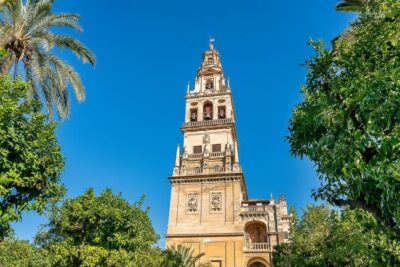 ★ 4.6Córdoba: Skip-the-Ticket-Line Mosque-Cathedral Guided TourFrom $319,634 reviews
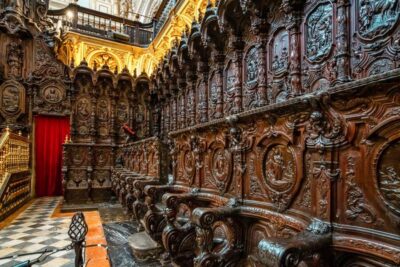 ★ 4.7Cordoba Mosque-Cathedral: Skip-the-Line Guided TourFrom $356,610 reviews
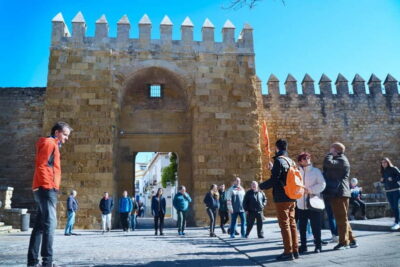 ★ 4.7Córdoba: Jewish Quarter, Mosque, and Alcázar TourFrom $504,279 reviews
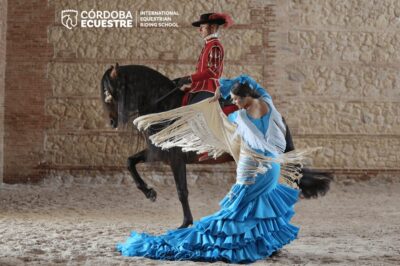 ★ 4.5Cordoba: Equestrian Show General EntryFrom $212,333 reviews
 ★ 4.1Cordoba: Mosque-Cathedral E-Ticket with Audio GuideFrom $212,124 reviews
 ★ 4.6Cordoba Mosque & Jewish Quarter Tour with TicketsFrom $401,996 reviews
 ★ 4.2Cordoba: Alcazar Guided Tour and Skip-the-Line TicketFrom $231,792 reviews
 ★ 4.7Córdoba: Skip-the-Line Great Mosque-Cathedral History TourFrom $381,690 reviews
Continue by place or experience