
REVIEW · RONDA, SETENIL & WHITE VILLAGES
Ronda: 2-Hour Private Walking Tour
Ronda hits different up close. This 2-hour private walking tour puts you with an expert local guide, linking bullfighting stories, layered city history, and gorge views you can actually take in at street level.
What I like most is the mix of big sightlines and human scale. You get two standout view moments, Alameda del Tajo and later Puente Nuevo, where the setting does the talking. I also like the way guides such as Gema, Tanya, and Ramon bring Ronda to life with humor and practical ideas, including what to see next and where to eat.
One consideration: it is a real walking tour and it is not suitable for people with mobility impairments, so bring comfortable shoes and expect uneven old-stone streets and some steps.
Key highlights you will actually feel
- A guide who lives in Ronda and can explain what you see, not just what you read, including leaders like Gema, Tanya, Ramon, and Suzanna
- Bullring context from the outside, tied to Ronda being considered the birthplace of traditional bullfighting
- Puente Nuevo viewpoints over the gorge, plus stops for the emblematic balconies of the hanging houses
- Street-level time travel, with marks attributed to Celts, Phoenicians, Romans, and Moors as you move through town
- Mondragón Palace and the Local Museum stop, so the sightseeing connects to what the building holds
- Smart pacing for photos, and guides who can adjust if weather turns challenging
Starting at La Merced Church, then getting Ronda’s “shape” in two hours
Your tour begins near La Merced Church at Plaza de la Merced, where you meet your guide and get oriented fast. Ronda is built on dramatic terrain, so the best way to understand it is to walk it. In just two hours, you will see how viewpoints, bridges, and old squares all connect.
Because this is a private group, the pace is controlled. If you have questions, you can ask them on the spot, and your guide can shift focus a bit based on what interests you most. In the past, guides like Gema and Tanya have been praised for brilliant English and a friendly style that keeps the tour moving without feeling rushed.
The only “catch” is that two hours is still two hours. You will cover major sights, but it is not built for long museum time or for lingering forever at one viewpoint. If you love to take it slow, plan to return to your favorite stop later.
You can also read our reviews of more tours and experiences in Ronda.
Alameda del Tajo: the park where bullfighting lore meets mountain views
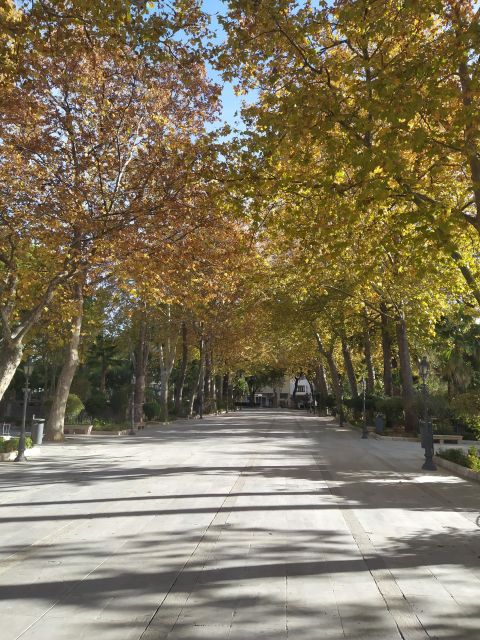
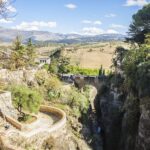
First up, you walk to Alameda del Tajo, Ronda’s main park and one of the best starting points for understanding why people come here. You are not just looking at a pretty view, you are learning why this town’s geography matters to its identity. Your guide talks about bullfighting right as the scenery opens up.
This is also where you get those classic mountain-and-sky sightlines from Ronda’s higher ground. It helps you understand the town’s “edge,” how Ronda hangs over its drop-offs, and why a bridge like Puente Nuevo becomes so important. If you care about photography, this is a good moment to settle in, take a few frames, and let the setting sink in before you move deeper into the streets.
Practical tip: bring water if you run hot, even if the weather looks mild. Parks and viewpoint areas can be windier and cooler than you expect, but walking starts adding up quickly.
Paseo de Ernest Hemingway: why the statue is here
Next you continue along Paseo de Ernest Hemingway. The experience here is not only the stroll, it is the story behind it. You pass the area where you will see a statue honoring the American author, and your guide explains the connection.
I like this stop because it breaks the pattern of “just another monument.” Ronda has deep roots, but it also has cultural touchpoints that reached beyond Spain. The Hemingway link makes you see Ronda as more than a local landmark. It is also a place that inspired writers and outsiders who came looking for something specific.
Watch for how your guide ties the literary reference back to what you are about to see next, especially when you get to the bullfighting sites. That setup makes the rest of the walk click.
Outside the bullring: one of Spain’s oldest, tied to traditional bullfighting
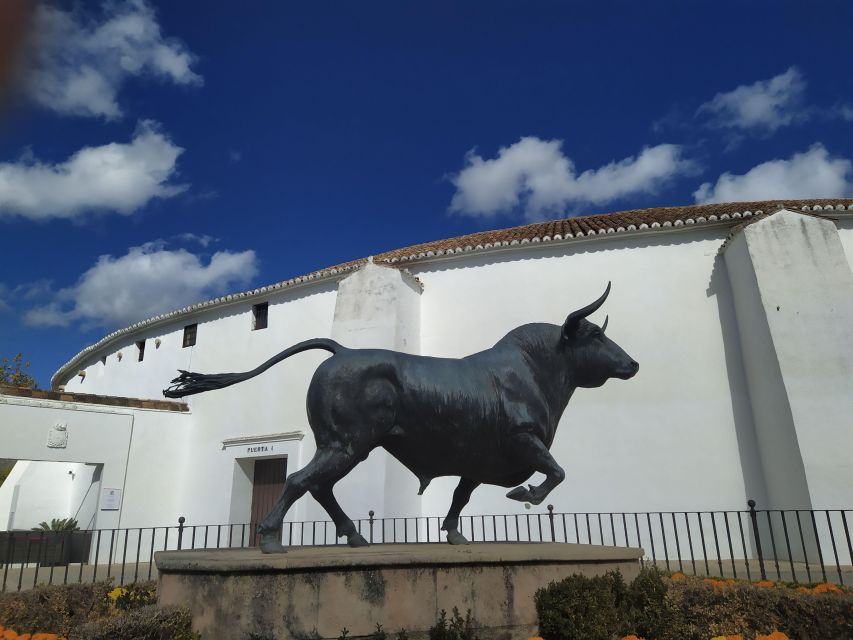
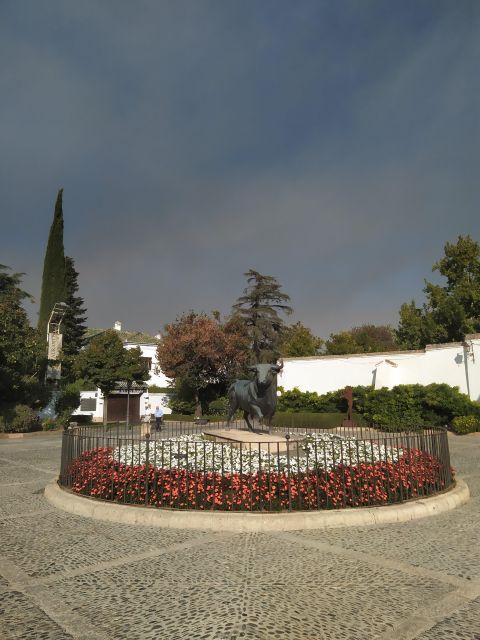
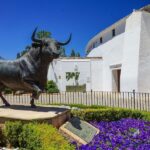
From there, you head outside the bullring, described as one of the oldest in Spain and considered the birthplace of traditional bullfighting. This matters because it changes how you interpret the building. You are not just looking at an arena. You are standing at a starting point.
Even if bullfighting is not your thing, you can still get value here. It is part of Ronda’s cultural mechanics, the same way a major sports venue is part of a modern city’s identity. Your guide’s job is to explain what tradition means in this context, what people connect to, and how that history shaped Ronda.
A small consideration: if you prefer tours that avoid contentious topics, you should know the route includes bullfighting discussion. The benefit is that the conversation happens from a historical and cultural lens, not as a sales pitch.
Puente Nuevo and the hanging houses: Ronda’s gorge moment
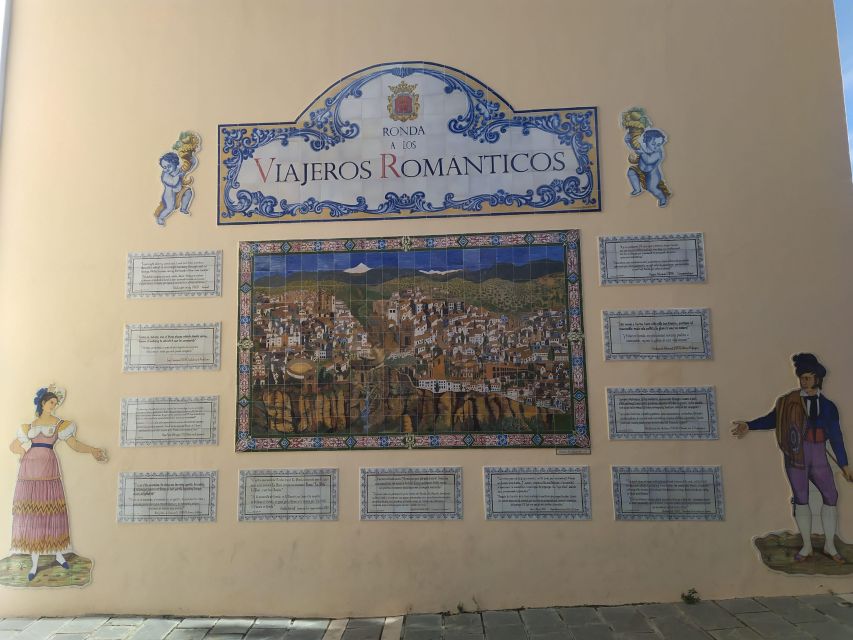
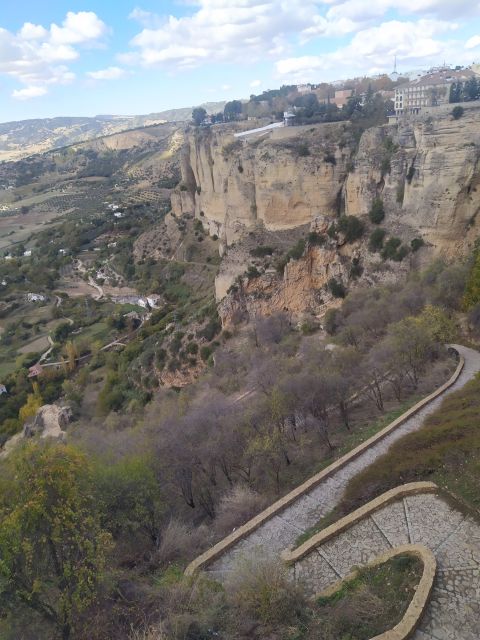
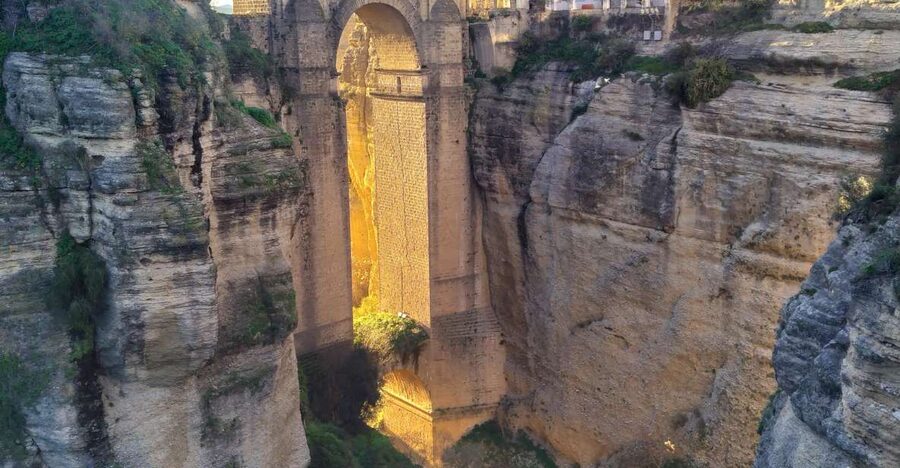
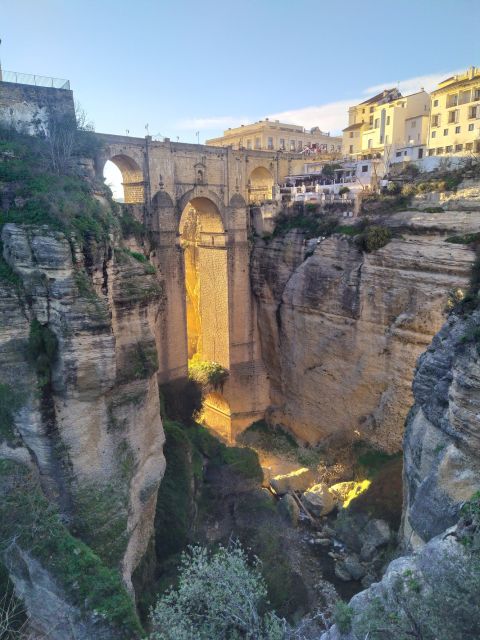
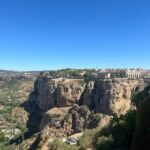
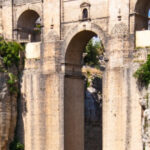
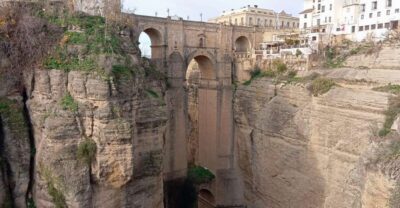
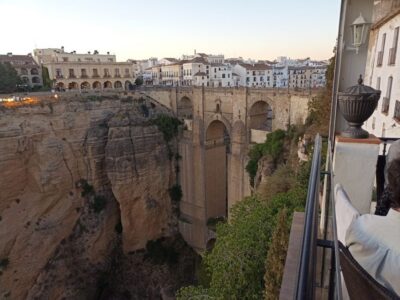
Then comes the headline stop: Puente Nuevo, the New Bridge. This is where you get the dramatic gorge views and the famous perspective on Ronda’s cliffside architecture. Your guide brings you to the right vantage points so you can see both the depth below and the emblematic balconies of the hanging houses.
This is also a moment for understanding how Ronda works as a system. The bridge is not an isolated photo spot. It connects the old town to the wider viewpoint network, and it explains why you keep moving from heights to streets. Seeing the gorge from multiple angles is what makes Ronda feel real.
I also like that this stop is visually rewarding without needing extra tickets or a long climb. Two hours can be short on paper, but Puente Nuevo is the kind of sight that makes the time feel justified.
If weather is tricky, your guide may adjust timing and positioning for safety and comfort. Past guests have mentioned that guides stayed flexible when conditions changed, which is a smart sign if you are traveling in shoulder season.
Old town layers: Celts, Phoenicians, Romans, and Moors on your walking route
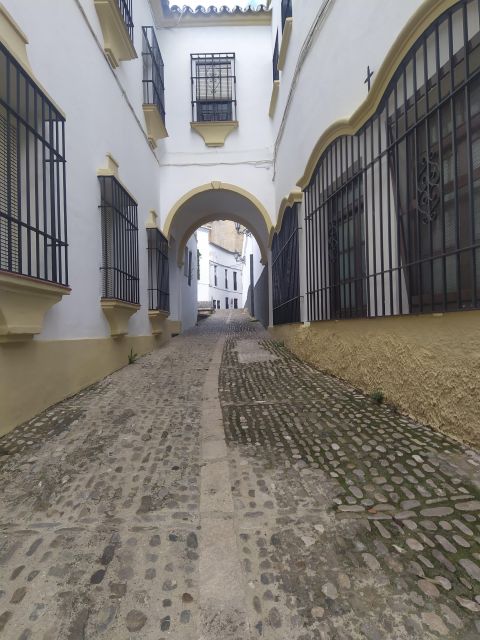
As you walk around the old town, you will admire the marks left by different civilizations over centuries: Celts, Phoenicians, Romans, and Moors. You can treat this as a history lecture, or you can treat it as a way to train your eyes.
Here is the practical value: instead of trying to memorize dates, your guide points out what you can see in the city fabric. That makes history stick. When you hear why a street or building relates to earlier eras, your brain starts to map Ronda in layers.
This is also where private touring pays off. In a group, you often hear the story and move on. With your own guide and your own pace, you can ask a quick question like how a given influence shows up here versus somewhere else.
Tip: keep your phone ready, but do not forget to look up. The most interesting details are often at the human scale, not only in the far distance.
Mondragón Palace and the Local Museum stop you can build on
You will step into the orbit of Mondragón Palace, one of Ronda’s most visited buildings, home to the Local Museum. Even if you do not spend hours inside, the value of the stop is that it ties Ronda’s architectural presence to what the building actually holds.
This helps you plan your next move. If you end up loving the vibe of the palace and the museum theme, you will know exactly where to go for a longer visit after the tour. If you prefer photos and streets over indoor time, you still get the context that makes the palace meaningful.
A drawback to keep in mind: the tour is designed for highlights within a short time window. So if you are the type who loves spending a lot of time in museums, treat this stop as a compass, not as your full cultural deep dive.
Plaza de la Duquesa de Parcent: the big church and town hall connection
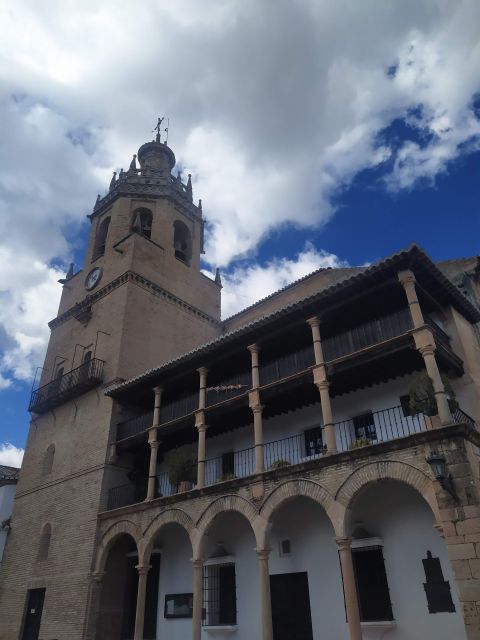
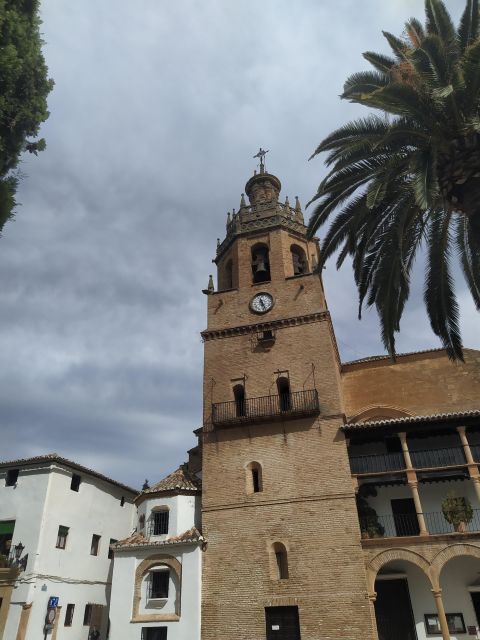
Next comes Plaza de la Duquesa de Parcent, a square famous for having the biggest church in Ronda and for being the place for the town hall. Squares are where you can feel how civic life flows into everyday walking life, and this one has both architecture and local governance in the same frame.
This stop is useful because it balances the more dramatic viewpoints with something grounded. You see how Ronda’s identity is not only about cliffs and bridges. It is also about institutions and public space.
Even if you do not go into the church, the square stop helps you understand the layout of the center and where major buildings sit relative to the older streets.
The revered virgin stop and the final walk to Plaza del Socorro
Before you wrap up, you will pass an important virgin that matters to the people who live in Ronda. The tour does not treat this like a random photo stop. Your guide points it out for a reason, and it adds a distinctly local, everyday spiritual layer to the walk.
Then you finish at Plaza del Socorro, a central point in town. From there, you can split directions based on where you are staying, whether you want to return to Puente Nuevo for night views, or whether you would rather spend the rest of your day exploring at your own rhythm.
One nice thing about ending in a central square: it makes it easy to keep your day flexible without feeling trapped on a long return route.
Price and value: $141 per private group up to 10
The price is $141 per group, for a private tour of about two hours, with a local guide. Because it is per group and supports up to 10 people, the value can look very different depending on how you travel.
If you are traveling as a couple, you are paying for a private experience, and that can be worth it when you want real interaction and a guide tailoring the pace. If you travel with a small family or a couple of friends, the cost spreads out quickly, and the “per person” feeling becomes more reasonable.
Compared with joining a standard group walking tour, the big difference is control. You are not competing for attention. You can ask questions about the bullring, Hemingway’s statue, or why the bridge and hanging houses matter, and your guide can keep your route aligned with what you care about most.
Main value takeaway: you are buying time efficiency plus local storytelling in one compact walk. Two hours is enough to hit the essential sights, and it can also help you decide where to spend additional time later.
Who this Ronda private walk is best for
This tour fits you well if you want:
- A guided orientation to Ronda’s key sights without feeling like you are sprinting through town alone
- Panoramic views paired with context, not just photo stops
- A private group where you can ask questions and get practical recommendations from a local
It is a weaker fit if:
- You have mobility limitations, since it is not suitable for people with mobility impairments
- You want a tour that replaces a full museum day or a long, slow wandering session
If you only have a day in Ronda, this is a smart way to get your bearings. If you have two or more days, you will finish with a short list of where to go next, based on what your guide emphasizes.
Should you book this private Ronda walking tour with Andalucia Visit?
Yes, if you like your city tours with a local voice and you want the essential Ronda sights stitched into one easy walk. The biggest selling point is the combination of Puente Nuevo views, the bullring historical framing, and the old-town storytelling that connects different eras as you move.
I would book it especially if you value having a guide who is comfortable in English (and often other languages) and who can keep a good rhythm. Past guests have praised guides like Gema, Tanya, and Ramon for humor, flexibility, and strong recommendations, and that matches the kind of private experience this tour is designed for.
If you are traveling with mobility constraints, you may want to choose a different format that is easier on walking. Otherwise, get your comfortable shoes ready, bring an open mind for bullfighting history as part of local culture, and use the tour as your fast track to understanding why Ronda keeps calling people back.
FAQ
How long is the Ronda 2-hour private walking tour?
The tour lasts 2 hours.
Where does the tour start?
You meet at La Merced Church, also described as Plaza de la Merced.
Is the tour private?
Yes. It is a private group tour.
How many people are included per group?
The price is listed per group up to 10 people.
What languages are available?
The live tour guide is available in English, Spanish, and French.
What should I bring?
Wear comfortable shoes.
Is the tour suitable for people with mobility impairments?
No, it is not suitable for people with mobility impairments.
Can I cancel and get a full refund?
Yes. You can cancel up to 24 hours in advance for a full refund.
More Tour Reviews in Ronda
Not for you? Here's more nearby things to do in Ronda we have reviewed

More Ronda, Setenil & White Villages worth a look.
 ★ 4.5From Seville: Pueblos Blancos and Ronda Full-Day TripFrom $523,849 reviews
 ★ 4.4From Seville: Ronda+Setenil de las Bodegas Day TripFrom $533,562 reviews
 ★ 4.8From Malaga: Ronda and Setenil Tour with Scenic TrainFrom $282,895 reviews
 ★ 4.5White Villages and Ronda Day Tour from SevilleFrom $952,049 reviews
 ★ 4.5Ronda: Guided Walking Tour with English or Spanish GuideFrom $29423 reviews
 ★ 4.5White Villages and Ronda Guided Day Tour from SevilleFrom $95415 reviews
 ★ 5.0Ronda, Setenil and Sevilla Small Group Tour from MalagaFrom $118334 reviews
 ★ 5.0White Villages and Ronda Day Trip from SevilleFrom $107295 reviews
Continue by place or experience