
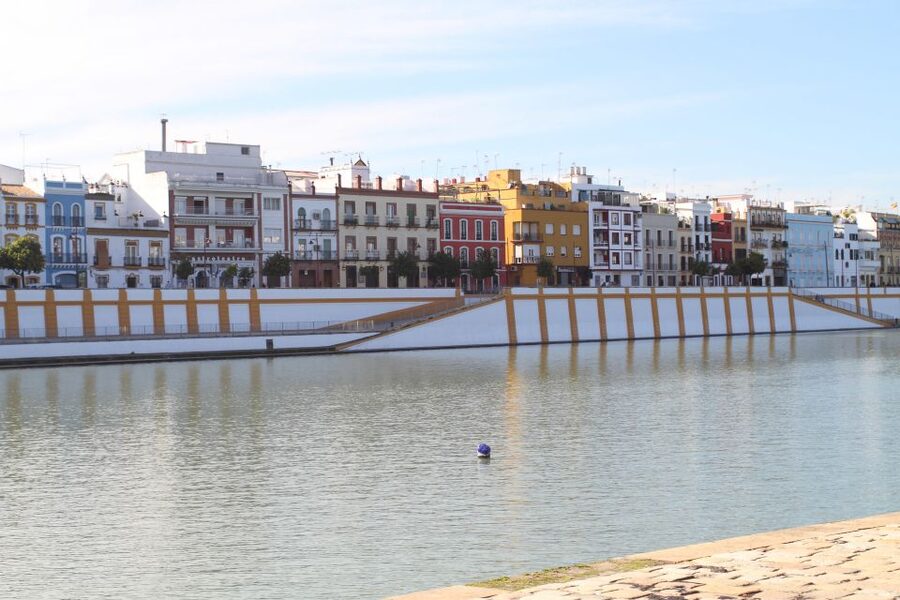
REVIEW · ITáLICA RUINS FROM SEVILLE
Seville: 4–Hour Italica Tour
Roman Seville gets moving on two wheels. I love the bike ride from central parks and river paths to Italica, and I love how you step into Roman mosaics and the massive amphitheatre. The only catch is that the cycling includes narrow streets and some traffic, so you should feel comfortable on a bike.
I also like the way this tour is guided, with a bilingual team and a pace that keeps everyone together. If you get Rigo, his excitement, deep understanding of Italica, and easygoing style can turn the visit into something that feels personal, plus he will point you toward places to see after the tour.
Quick Key Points at a Glance
- A bike route that links Seville to Italica fast without making you spend the afternoon on transport
- River and park views from the saddle plus time for photos and pauses
- A cultural stop at Monastery of San Isidoro del Campo before you enter the ruins
- Skip-the-line entry to Italica so you spend more time looking and less time waiting
- Mosaics, sculptures, and one of the Roman world’s largest amphitheatres
- Guides who keep the ride comfortable with a human pace, not a race
Why a 4-hour bike-to-Italica tour makes sense in Seville
Seville is built for walking and lingering, but a bike tour adds a useful superpower: it lets you cover ground while still keeping the experience intimate. In about half a day, you get a mix of everyday Seville scenery, then a hard turn into the Roman past at Italica.
What I like most is the flow. You do not just hop in a van and jump to the ruins. You start in the city, ride through parks and along the river, then you land at Italica ready to look closely. That order matters, because when you arrive, the amphitheatre and mosaics feel less like distant relics and more like a place that was part of daily life.
One practical note: the route includes biking through tighter streets and traffic for at least part of the ride. If you are even slightly nervous around cars, plan to take it slow and follow your guide’s instructions.
You can also read our reviews of more tours and experiences in Seville.


Getting started at Centerbici Stire and what’s included
The tour meets at Centerbici Stire, address C/ Espronceda. 5, 41004 Sevilla. The tour also ends back at the meeting point, which is a real comfort in a city where one wrong turn can steal time.
You are not arriving empty-handed. Bike rental is included, and you also get a water bottle. Helmets are included for children (not for adults, at least as described), so if you are bringing kids, this is one less thing to plan.
Also, you get a bilingual guide, and the activity lists language options including Spanish, English, French, German, and Italian. That matters because Italica is not just a pretty ruin. There are details to notice, and good guides help you see what you might otherwise miss.
The ride through Seville parks and along the river
The first chunk of the tour is your warm-up, both physically and mentally. You ride through the center of Seville, then head for parks and river paths. This is where you get that Seville feeling of open air and local rhythm, not just monuments on a schedule.
Expect a biking route that mixes scenic stretches with the kind of real-city navigation that makes a bike tour feel authentic. The listing specifically calls out riding along a path across the river and through parkways, so you are not stuck riding only on one flat strip of road.
I also appreciate the structure here. The ride is not filler. It sets up the contrast: bright, living Seville outside, then Roman stone and mosaics inside Italica. If you like connecting places rather than just checking boxes, this segment is one of the best values in the whole experience.
San Isidoro del Campo: a quiet pause before the ruins
At some point before you reach the Roman entrance, you will see the Monastery of San Isidoro del Campo. Even if you are not a specialist, monastery architecture often gives you a helpful lens. It reminds you that Seville’s layers do not sit in separate museums. They stack in the same city space, across centuries.
Practically, it also breaks the ride. You get a breather and time to shift your attention from biking to looking. That transition matters because Italica rewards attention. The mosaics and sculptures are described as perfectly preserved in key areas, which means you will want to slow down once you enter.
If you are traveling with someone who worries about “too much ancient stuff,” this monastery moment gives the tour a little balance. It is still historic, but it feels different from Roman ruins.
Entering Italica: first impressions you can actually use
Italica is not just another stop on a Roman itinerary. It is described as the first city in the Roman Empire built outside the Italian peninsula, and that is part of why the name connects to its origin. It is also described as the cradle of emperors Trajan and Hadrian. Those are big names, but here is the trick: you only get the meaning if you know what to look for once you arrive.
When you enter, you will admire mosaics and sculptures that are described as especially well preserved. This is one of those places where seeing the size and placement of things helps you understand what you are looking at. Your guide should help you connect the visual details to the story.
A very practical perk: the tour includes entrance to Italica and you skip the ticket line. That saves time and keeps you from losing momentum right at the moment you want to start exploring.
The Italica amphitheatre: the Roman spectacle part
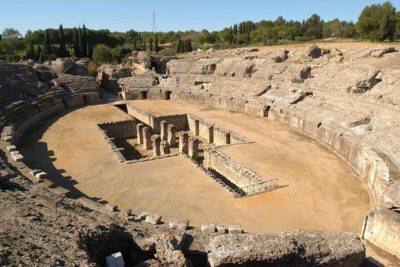
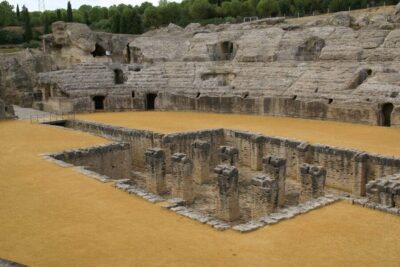
The star visual payoff is the large amphitheatre, described as one of the largest in the entire Roman Empire. Even if you have seen other Roman amphitheatres, this is the part that tends to make people stop and look upward.
What makes an amphitheatre visit valuable is how it teaches spatial thinking. You start to imagine the crowd angles, how sightlines would work, and why the architecture mattered. With Italica, your guide can also connect the amphitheatre to the fact that this place produced emperors. It is not just a site of ruins. It hints at status, power, and public life.
The biggest drawback here is not the ruins, it is your attention span and your energy level. The tour is only four hours, so once you enter, keep your eyes open and do not get lost wandering alone too quickly. If you want the best payoff, stay close enough to hear the guide and pace yourself for photos without turning the visit into a marathon.
The guide matters, and Rigo is a standout example
One of the strongest signals from the experience is how much the guide shapes the day. A guide sets the pace, and also the quality of what you notice. The tour description includes a bilingual guide, but the real difference shows up in execution.
If you get Rigo, the tour is described as being guided at a comfortable pace, with deep understanding of Italica. The style is also described as easygoing and personable, with excitement that is contagious in the best way. That kind of energy helps because Italica can be visually complex, especially if you are trying to compare mosaics, sculptures, and the amphitheatre layout.
Another practical thing: Rigo is also noted for making recommendations after the tour. That matters if you are trying to use the remaining hours in Seville well, rather than wandering randomly.
Price and value: is $57 a smart use of your time?
At $57 per person, this tour is priced like a midrange guided experience. The value comes from the bundle: bike tour, bicycle rental, entrance to Italica, a bilingual guide, and skip-the-line entry, plus a water bottle.
The question to ask yourself is not only whether you like the ruins. You also need to consider whether you want to manage bike logistics on your own and figure out how to get to Italica efficiently. This tour solves that by turning transport and planning into part of the ride itself.
For me, the value is strongest if you like active sightseeing and you want the Roman site without losing half a day to transit stress. If you prefer to minimize physical effort, you might prefer a non-cycling option.
Also remember the time constraint. This is a four-hour format, so it is great for people who want a focused, well-guided hit, not a slow, independent day at the site.
Who should book this Seville bike tour to Italica
This tour is best for you if:
- You enjoy cycling and you can handle some tight streets and traffic conditions during part of the ride
- You want a guided visit where someone helps you see what matters at Italica, especially mosaics and the amphitheatre
- You like mixing everyday Seville scenery with a major historic site, rather than doing only one theme
It is also a good fit for families in at least one way: helmet rental for children is included. That removes a common hassle.
You should think twice if:
- You have mobility impairments, since the tour is specifically listed as not suitable for people with mobility impairments
- You are uncomfortable in traffic-heavy stretches, since part of the biking is described as challenging in narrow streets
If you are a confident cyclist who enjoys guides with real enthusiasm, this feels like a high-value use of a half-day in Seville.
Should you book the Seville 4-Hour Italica bike tour?
I think you should book this if you want a hands-on way to connect Seville to one of the Roman world’s most impressive ruins. The bike route plus skip-the-line entry plus a strong guided focus on mosaics, sculptures, and the amphitheatre makes the four hours feel purposeful, not rushed.
Skip it only if cycling in tight city streets would stress you out. In that case, the Roman ruins are still worth seeing, but you might want a different transport style so the day feels calm rather than cautious.
If you do book, show up ready to ride, keep your pace steady, and use the guide’s explanations to look smarter at the mosaics and amphitheatre. That is how this tour turns into a real memory, not just a photo stop.
FAQ
How long is the Seville 4-Hour Italica Tour?
The tour is scheduled for 4 hours. Starting times vary, so you should check availability for the exact schedule.
Where does the tour meet and where does it end?
It starts at Centerbici Stire, C/ Espronceda. 5, 41004 Sevilla, and it ends back at the same meeting point.
What is included in the tour price?
The tour includes a bike tour of Seville, bicycle rental, entrance to Italica, a bilingual guide, a water bottle, and helmet rental for children.
Do I need to buy an entrance ticket separately?
No. Entrance to Italica is included, and the activity also notes that you can skip the ticket line.
What languages does the guide speak?
Guides are listed as available in Spanish, English, French, German, and Italian.
Is the tour wheelchair accessible or suitable for mobility impairments?
No. The tour is listed as not suitable for people with mobility impairments.
Are helmets provided for children?
Yes. Helmet rental for children is included.
Is free cancellation available?
Yes. You can cancel up to 24 hours in advance for a full refund.
What will I see during the tour?
You will ride through Seville, see parks and the river area, view the Monastery of San Isidoro del Campo, and visit the Roman ruins of Italica, including its impressive mosaics and the large amphitheatre.
More Tour Reviews in Seville
Not for you? Here's more nearby things to do in Seville we have reviewed


More Itálica Ruins from Seville worth a look.
 ★ 4.5From Seville: Italica Roman City & Medieval Monastery TourFrom $461,051 reviews
 ★ 4.5Historical Italica: Half-Day Guided Tour from SevilleFrom $47416 reviews
 ★ 4.3Game of Thrones and Roman Empire Italica TourFrom $21372 reviews
 ★ 4.5Visit to Italica Roman Ruins Tour tickets includedFrom $19285 reviews
 ★ 4.2Italica Roman Ruins City TourFrom $21147 reviews
 ★ 4.4From Seville: Italica Roman City TourFrom $51139 reviews
 ★ 4.9From Seville: Half-Day Guided Bike Trip to ItalicaFrom $53126 reviews
 ★ 5.0Private hald day tour to the historic roman city of ItalicaFrom $9343 reviews
Continue by place or experience