
REVIEW · SANTA CRUZ & SEVILLE JEWISH QUARTER
Private Tour Jewish Quarter, center and Plaza de España
Seville has layers, and this route reads them fast. You’ll connect the Jewish past of Seville to real streets and squares, then finish at the Plaza de España area with views that hit on Cathedral, Giralda, Alcázar, and the Archivo de Indias. I especially like how the tour pairs drama and detail, like Don Juan and Susona, with practical orientation in a place that’s easy to get lost in. One heads-up: it’s a walking route in historic lanes, so bring comfy shoes and expect tight corners and sun.
Two things I’d prioritize for you. First, you get a private format for a small group, so your guide can match the pace to what you care about. Second, the storytelling is built around specific places, so the city’s Jewish footprint, opera references, and even art stops like Murillo feel grounded, not abstract. The only real drawback is time, it’s about 2 hours, so you’ll see a lot but you will not slow down for long museum-style wandering.
Key things to know before you go
- Private group pacing helps you keep up in Seville’s alleys without feeling rushed.
- Murillo-linked art stops show up in more than one moment, including Iglesia de Santa Maria la Blanca.
- Jewish history at street level includes plaques tied to Caminos de Sefarad and lived-in neighborhoods.
- Opera and literature clues pop up, from Rosina’s balcony to the City of Opera angle.
- A smart finish at Plaza de España gives you the big-photo payoff with nearby UNESCO monuments in view.
From Plaza de Santa Cruz to the Jewish past in one storyline
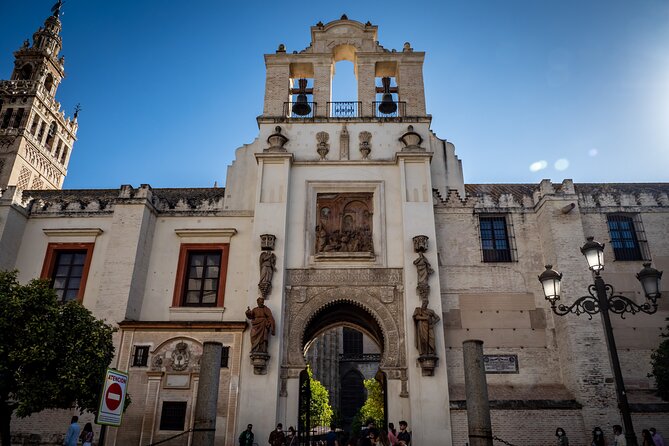
Most walking tours start with a map. This one starts with context, and that matters in Seville. Your meeting point is Plaza de Santa Cruz, which sets you up for what follows: the way multiple faiths and communities overlapped in the same city space over time. The tour frames Jewish life in Seville not as a single timeline, but as a set of changing neighborhoods, laws, and forced relocations.
You’ll also get an idea of how Seville’s history can be confusing if you only rely on guidebooks. Here, the guide connects dots you might miss on your own. For example, you’ll hear how one square could represent a mosque, a synagogue, and a church, all connected by the city’s layered past. That’s the theme of the whole walk: each stop is a chapter, and you leave with a storyline your brain can hold.
You can also read our reviews of more tours and experiences in Seville.


Murillo shows up where you least expect
Art fans get a small but smart payoff early on. The tour references remains of Murillo, and later it circles back with Murillo works inside Iglesia de Santa Maria la Blanca. You’re not getting a full art museum, but you are getting a “why it matters here” art moment, which is the best kind for a short tour.
City walls, Sephardim enclosure, and gates you can picture
After you leave Plaza de Santa Cruz, the route shifts toward the city’s defensive structure. You’ll talk about the walls and gates of Seville, and what the enclosure where Sephardim lived looked like in practice. This is one of those parts that feels slightly technical at first, then suddenly clicks when you start imagining where people moved and where they could not.
The tour also points you toward the necropolis in the story of this neighborhood. Even if you never go looking for ruins again, hearing about burial sites and how communities organized space gives you a fuller sense of what life meant beyond buildings and big monuments.
Then the walk turns to the Spanish Golden Age with a stop tied to Don Juan. Seeing that statue context in the flow of earlier medieval history creates a neat contrast. Seville didn’t just change rulers and faiths, it also changed its cultural language. Don Juan is a quick way to remind you that the city’s myth-making runs through centuries, not just one.
Iglesia de Santa Maria la Blanca: where the old synagogue becomes a living church
Iglesia de Santa Maria la Blanca is a standout moment because it’s not a ruin. The site is connected to an old synagogue, and you’ll also see plaques tied to the network of Jewish quarters across Spain, Caminos de Sefarad. These plaques help you understand that Seville fits into a bigger pattern, not an isolated story.
You’ll enter the current temple, and this is where the tour becomes practical. It helps you see what’s preserved and what’s changed. The stop includes free entry, so you can take a few minutes inside without worrying about extra costs or ticket lines.
Murillo works are exhibited here too, so you get an art and history double hit. That’s a great combination for a short, private walk. You’re learning the meaning of the building, and you’re also seeing the cultural side that Spain later turned into public art.
Courtyards, narrow lanes, and the aqueduct behind the scenes
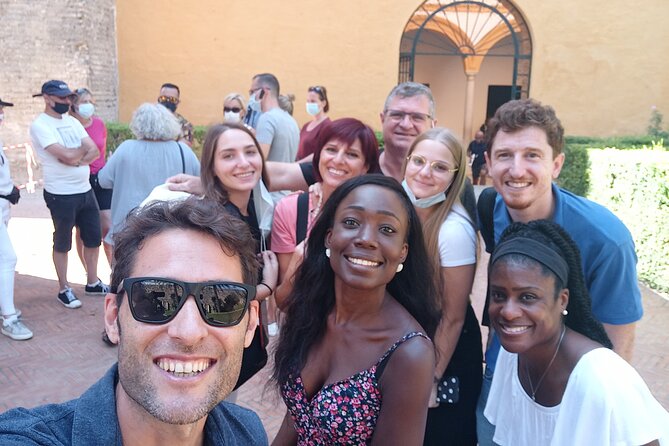
This part of the walk is pure Seville texture. You’ll move through courtyards and the tight alleys of the neighborhood. Expect narrow spacing, corners that force you to slow down, and those small glimpses that make you stop even when your brain wants to keep walking.
One of the fun, very Seville details is the narrowest street in the city mentioned on this route. You’ll also look out on Rosina’s balcony, linked to The Barber of Seville, so the neighborhood connects to opera in a physical way. If you love when places carry cultural references, this will land for you.
Then comes another practical surprise: the old Seville aqueduct. It’s easy to focus only on visible monuments, but aqueducts explain how a city stays alive. Hearing this detail while you’re surrounded by medieval streets makes the whole area feel more real.



Pogrom, expulsion, and Susona’s legend without losing the thread
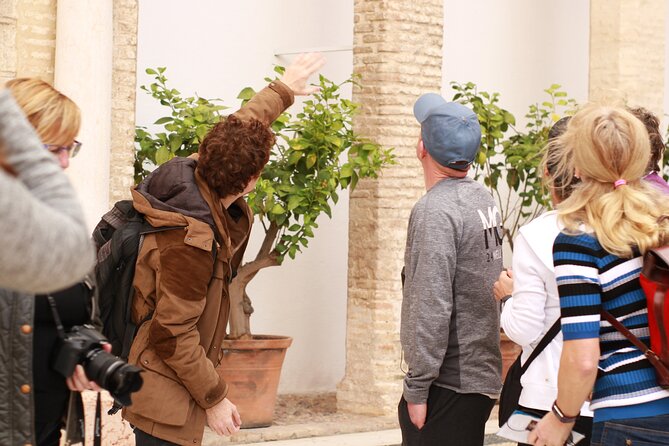
The tour moves into the 14th and 15th centuries, and you’ll hear about the hardest turns in the story: pogroms and the definitive expulsion of the Jews by the Catholic Monarchs. This is heavy material, and in a short tour you want a guide who can keep the story clear rather than overwhelming. The format here helps because the earlier neighborhood setup makes it easier to understand what these events changed on the ground.
Then you’ll learn about Susona, including the legend tied to her story. Legends can get dismissed as folklore, but in a place like this they serve a purpose. They show how a community processed fear, memory, and survival. You’re not just hearing dates, you’re also learning how stories stayed alive through time.
City of Opera energy in the Jewish Quarter streets
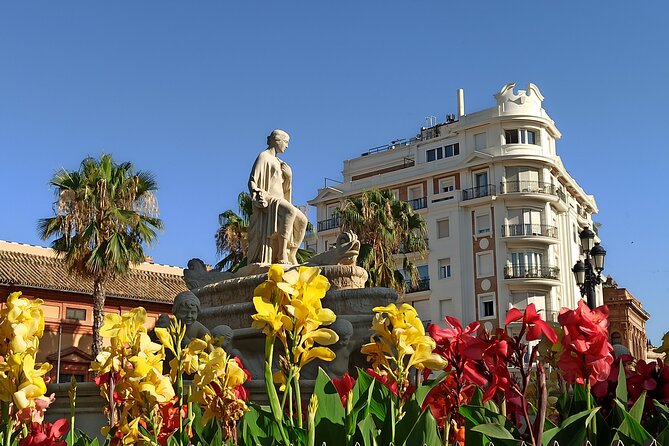
After the darker historical moments, the tour brightens into streets where artists found a stage. The route describes this as the most bucolic and picturesque neighborhood area, and it explains why European artists used it as a backdrop for novels and plays. You’ll also hear about the City of Opera connection tied to UNESCO.
This is one of my favorite types of stops because it helps you read the city like a cultural map. You start noticing why a balcony reference exists, why courtyards feel theatrical, and why the area has that constant “play set” feeling even when you’re just walking to Plaza de España.
If you love literature, theatre, and references, this section makes your walk feel like you’re stepping into more than one art form at once. If you prefer strictly historical facts, you can still treat this as a way to understand how Seville got marketed and remembered.
The big view: Cathedral, Giralda, Alcázar, and Archivo de Indias
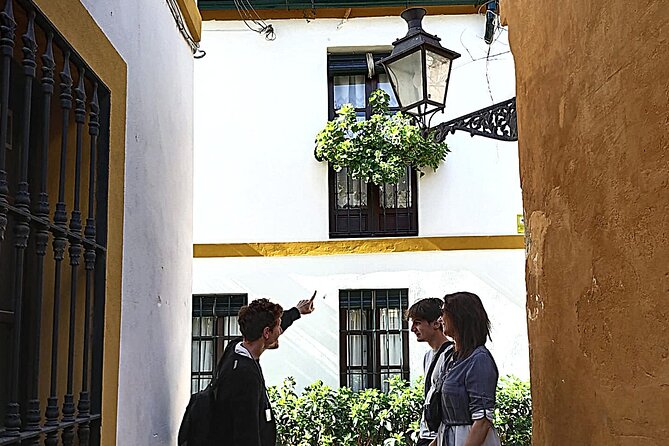
At some point the tour pivots from alleys to skyline. You’ll enjoy a viewpoint surrounded by major landmarks: the Cathedral, the Giralda, the Real Alcázar, and the Archivo de Indias, noted as UNESCO World Heritage. This is the payoff view that turns walking fatigue into satisfaction.
What you get here is orientation. After learning about smaller streets and neighborhood boundaries, the view helps you anchor where you are in the larger city. If you plan to explore on your own later, you’ll understand what direction everything sits in. Even if you don’t revisit those monuments, the view helps you connect the “old Seville” story to the grand centerpiece of the city.
Tower del Oro and the Ibero-American Exposition makeover
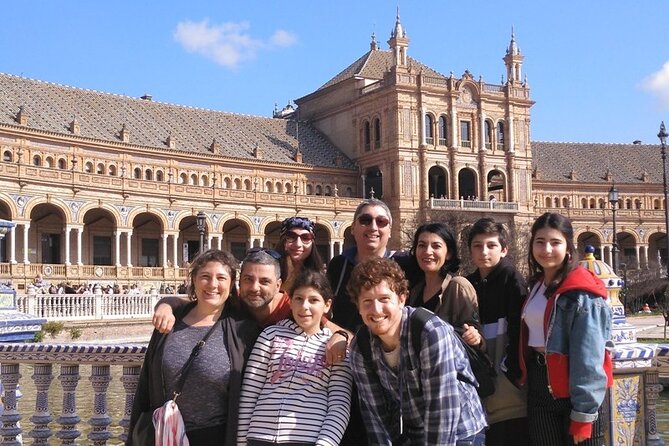
Once you leave the historic center, the tour tackles a different kind of Seville. You’ll understand the relevance of Torre del Oro and how the city’s configuration shifted in the early 20th century for the Ibero-American Exposition.
This is a smart move for a tour like this. Many short tours stay stuck in medieval time. Here, you’re also seeing Seville as a modern city that remade itself for international attention. You’ll hear about notable buildings such as the Alfonso XIII hotel and the layout of important avenues like the Constitution.
For you, this means the city doesn’t end when the Middle Ages end. You get a sense of how Seville presented itself, planned its movement, and built spaces for visitors. It also makes Plaza de España make more sense, since you understand the bigger exposition context behind it.
Royal Tobacco Factory and Carmen-inspired storytelling at Universidad de Sevilla
The tour then stops at Universidad de Sevilla, described as located in the old Royal Tobacco Factory. This part has a built-in pop culture hook. Mérimée is mentioned as the inspiration behind creating Carmen, and the tour connects French politics and manufacturing culture to how such factories became common under the Bourbons.
Even if you’re not a Carmen superfan, you’ll likely appreciate the explanation. It’s a reminder that Seville’s story is not only about wars and expulsions. It’s also about trade, labor, manufacturing, and the cross-border ideas that influenced Spain.
You also get “literary details” connected to French authors. The big value here is tone: the tour keeps the big story moving, so the walk does not feel like random stops. Every stop ties back to identity, work, culture, and how Seville got represented.
Parque de María Luisa, Forestier gardens, and the Plaza de España finale
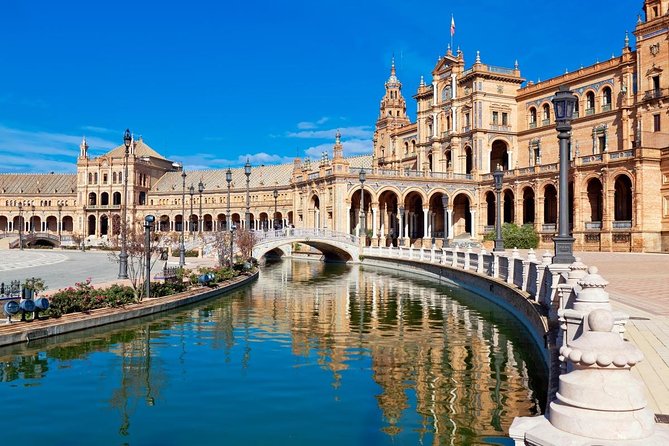
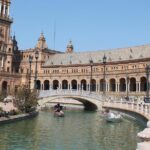
The ending lands in Parque de Maria Luisa, created through the work of French garden architect Forestier. This stop is where you slow down mentally because it feels different than the medieval lanes. The park also ties into the Ibero-American Exposition, which explains why you’re surrounded by old pavilions.
The Spain pavilion gives its name to the current Plaza de España. That detail helps you see the square as more than a photo backdrop. It becomes an architectural memory of that international fair and Seville’s effort to showcase itself.
The tour ends in Plaza de España’s gardens of María Luisa. This matters because the location makes it easy to continue your day. You’ll likely be ready for a coffee, a break, and then a proper lunch nearby.
Price and value for a private 2-hour Jewish Quarter to Plaza de España route
At $189.87 per group for up to 12 people, the price works best when you split with friends or family. If you’re traveling as a small group, private routing turns into an efficient way to see a lot of “Seville meaning” without the chaos of a large crowd.
Two more value notes. First, the tour includes free entry at key stops like Iglesia de Santa Maria la Blanca, and it also lists free admissions for Universidad de Sevilla and Parque de Maria Luisa. Second, you’re paying for a guide who helps you understand the city as a sequence, not a checklist.
So, if you want a shorter, higher-information walk that connects history, art, opera references, and big viewpoints, this is priced in the realm of “fair” for what you get.
Who this tour fits best (and who might want something else)
This tour is a great fit if you:
- Want Jewish Quarter context without getting lost in it
- Enjoy opera and literature references as part of place-making
- Like guides who can keep history readable and connected
- Prefer private group pacing over big-bus energy
It might not be the best match if you want deep, long museum time. This route is about 2 hours, so you’ll see highlights and understand why they matter, but you won’t have time for a slow museum afternoon.
What I’d watch for on the ground
Seville in warm months can feel intense, even on short walks. Plan for sun exposure and cobblestones, and bring a water plan. Also, the itinerary includes narrow streets and viewpoint moments, so you’ll want to move carefully when you’re taking photos.
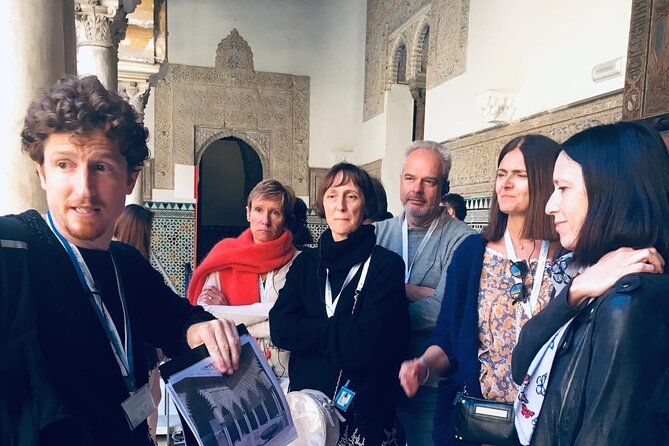
On the plus side, private format means you can slow down when you want. In past tours led by Víctor Fernández, the common pattern is relaxed pacing plus clear explanations, with frequent practical breaks and tips that make your next steps easier. Guides like Victor are also praised for adapting to what the group cares about, plus sharing helpful food bar advice after the tour.
Should you book this Private Jewish Quarter and Plaza de España tour?
Yes, if you want a compact Seville experience that ties Jewish history to real locations and ends with the city’s most photogenic grand finale. It’s also a smart choice for first-timers because you leave with orientation, not just facts.
I’d skip it only if you prefer to explore history purely at your own pace, or if you want long stops inside major monuments. Otherwise, this is a strong way to get meaning fast, walk comfortably for about 2 hours, and finish where Seville looks its best.
FAQ
What is the duration of the tour?
The tour lasts about 2 hours.
What is the meeting point and end point?
You meet at Plaza de Santa Cruz in the historic center and the tour ends at Plaza de España, in the gardens of María Luisa.
Is this a private tour?
Yes. It’s a private tour, and only your group participates.
What group size is included in the price?
The price is listed per group, up to 12 people.
What language is the tour offered in?
The tour is offered in English.
Is the ticket mobile?
Yes. It includes a mobile ticket.
Are any stops free to enter?
Yes. The itinerary notes free admission tickets at Iglesia de Santa Maria la Blanca, Universidad de Sevilla, and Parque de Maria Luisa.
What are the tour hours?
It runs daily from 10:00 AM to 12:00 PM.
Are service animals allowed?
Yes, service animals are allowed.
What is the cancellation policy?
You can cancel for a full refund up to 24 hours in advance of the experience start time. If you cancel less than 24 hours before, the amount paid is not refunded.
Is the tour physically demanding?
Most travelers can participate, and the route is a walking tour across historic areas. Comfortable shoes are a good idea due to the city streets and viewpoints.
More Tour Reviews in Seville
Not for you? Here's more nearby things to do in Seville we have reviewed





More Santa Cruz & Seville Jewish Quarter worth a look.
 ★ 4.9Small-Group Jewish Quarter Discovery Walking TourFrom $29499 reviews
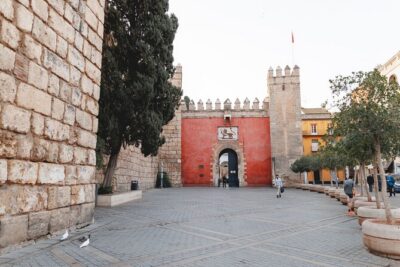 ★ 5.0VIP Guided Seville Alcazar Pre-Opening, Cathedral & Old TownFrom $138191 reviews
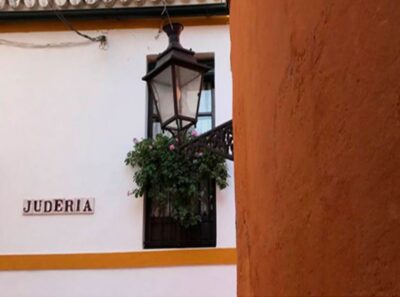 ★ 4.51-Hour Walking Tour Barrio de Santa CruzFrom $18131 reviews
 ★ 5.0Small Group Jewish Quarter Tour with Tapas & DrinksFrom $59119 reviews
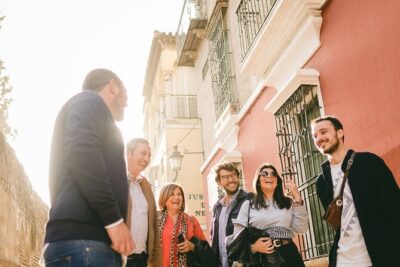 ★ 5.0Seville Jewish Quarter Small Group Tour with Tapas and DrinksFrom $71110 reviews
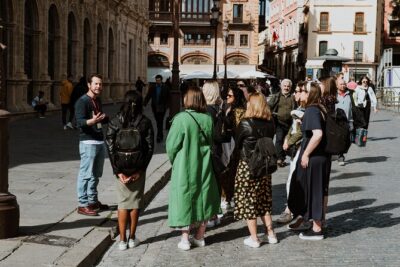 ★ 5.0Seville Former Jewish Quarter Walking Tour: Santa CruzFrom $18105 reviews
 ★ 4.8Seville Jewish Quarter walking tour: Santa Cruz DistrictFrom $15104 reviews
 ★ 5.0Seville Jewish Quarter Small-Group Walking Tour: History & GemsFrom $3296 reviews
Continue by place or experience