
REVIEW · SEVILLE PRIVATE GUIDES & CUSTOM TOURS
Private Tour with Local Guide to know the Seville Essential
A half day, then you own the city. This private Seville highlights walk gives you the context behind the big-ticket sights, so your free time afterward makes more sense. I like that it is built as a tight loop of major landmarks and neighborhood texture, with priority access handled by an accredited local guide.
Two standouts for me are the way the route starts at the Archivo General de Indias (trade and empire in one building) and the inclusion of Santa Cruz, where you get a real feel for Seville beyond monuments. The other big plus is the guide name you’ll see for this experience, Lorena, who is described as friendly and able to share hard to find, practical tips.
One thing to consider: entrances are not included for some of the most famous stops, so you should budget for tickets and plan your timing around those sites. Also, if you are relying on a pickup tied to cruise ports, double-check the pickup plan carefully before you go.
Key highlights you will care about
- Priority access with a local guide to cut down waiting at major sites
- Private group up to 6, which keeps the pace workable for a 3-4 hour plan
- A smart starter point at Archivo de Indias, a classic Seville anchor for understanding the city
- Classic royal and sacred stops: Real Alcazar and Seville Cathedral
- Time in the places that feel like Seville: Santa Cruz, gardens, plazas, and river walks
- You’ll see the link between work, women, and culture at Real Fabrica de Tabacos
A half-day “essential Seville” route that actually helps
This tour is designed like a crash course, but not a rushed checklist. In 3-4 hours, you cover world-famous landmarks, plus the streets and gardens that make Seville feel like Seville. The big advantage is that the guide stitches together what you are seeing, which makes later self-guided wandering more satisfying.
It is also a good value structure if you want the convenience of a private guide and you care about minimizing line time. You get skip the lines, priority access with the local guide for the stops where that matters, while the rest of the experience focuses on interpretation and direction.
The route mixes “inside” sights with “outside” breathing room. That is important in Seville, where midday heat and walking pace can decide whether a tour feels pleasant or exhausting.
You can also read our reviews of more tours and experiences in Seville.



Start at Archivo General de Indias, the smartest meeting point in town
Your tour begins at the Archivo de Indias on Av. de la Constitución, s/n, in the Casco Antiguo. The guide waits next to the fountain at the main entrance, so you have a clear landmark to find them quickly.
This building is more than a backdrop. The General Archive of the Indies was created as a former Merchant’s Market House, and today it holds documentation connected to trade with the Indies. Even if you have never read a word about Spanish empire trade, the archive gives you a lens for why Seville became such a powerful hub.
Also, this stop is marked at about 10 minutes with an admission ticket listed as free. That makes it a low-pressure start point that helps you get your bearings without burning your budget right away.
Real Alcazar de Sevilla: the palace that stayed in royal use
Next up is the Real Alcazar de Sevilla, the oldest royal palace still in use in Europe, based on what the tour description states. You get a quick orientation on how court life in Seville connected to the Andalusian period, and how different kings kept the palace as a residence over time.
What I like about this stop within the tour is the “why it matters” framing. Instead of treating the Alcazar like just another ornate site, the guide connects it to the long timeline of rulers and styles you will notice as you look around.
Keep in mind the Alcazar admission is not included. So while you get time here for context and direction, you will still need to buy a ticket if you want to go in beyond any exterior viewing your guide plans.
Seville Cathedral: a huge Gothic statement built on an earlier mosque
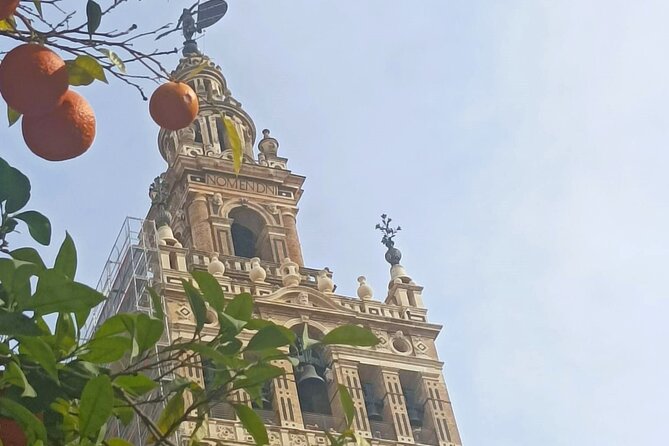
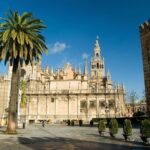
Then it is on to the Catedral de Sevilla, officially Santa Maria de la Sede. The tour description calls it the largest Gothic cathedral in the world, which is the kind of fact that changes how you look at scale. You also get the key detail that it was erected on the site of a former Aljama Mosque, and that its minaret still exists.
That overlap is one of the reasons this stop is so compelling with a guide. You see two layers of Seville in one place, and your brain stops treating the cathedral as an isolated “wow” moment.
Like the Alcazar, the cathedral ticket is not included, so plan for a separate cost and a bit of time spent entering if you choose to go in. The tour lists about 15 minutes here, which means you will want to prioritize what you want to see once you are at the door.
Santa Cruz: narrow streets, squares, and orange blossoms in spring
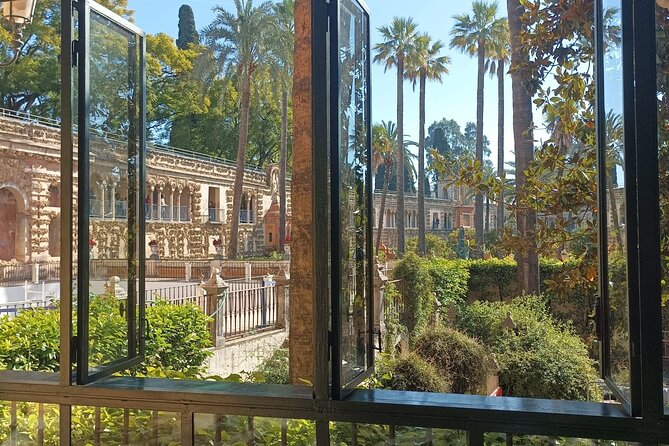
After the big monuments, the route shifts into neighborhood mode with Barrio Santa Cruz. This is the charming old quarter filled with narrow streets and squares, plus orange blossoms in spring, based on the tour info.
What you get at this stop is the story side of the scenery. You will discover the past of this ancient Jewry, with the description noting that it was not always as splendid as it looks today. That balance matters here because Santa Cruz can feel like a postcard. With interpretation, it becomes a real lived-in district with layers, not just a “pretty place to take photos.”
This stop is marked for about 20 minutes, with admission listed as free. That makes it a good reset for your legs and your mind, especially after indoor-heavy sights.





Murillo Gardens and Paseo de Catalina de Ribera
The tour then heads to Jardines de Murillo, located in the old orchards of the palace complex. The name connects to Murillo, and the description points out a specific highlight: the Paseo de Catalina de Ribera.
Catalina de Ribera is described as a noblewoman of vital importance to the city. That is the kind of detail that turns gardens into more than a breather. You can walk the paths with a sense of who the garden was tied to.
This stop is around 10 minutes and lists admission as free. The practical win is that it gives you shade and pacing without asking you to spend more money at another ticket window.
Prado de San Sebastian: a transport nerve point with dark echoes
Next is Jardines del Prado de San Sebastian, described as a key local transport point with renovations across the last century. The tour also makes a pointed historical note: you probably cannot imagine where the fires of the Inquisition stood.
That line is the whole reason I think this stop works in a guided route. It teaches you to read the city’s present layout against its past. Even if you do not go deep into documents, you get a mental map of why certain city spaces carry weight.
This stop is about 10 minutes and lists admission as free. It is short by design, but it changes how you walk away from it.
Plaza de España: regionalist design and trianera ceramics
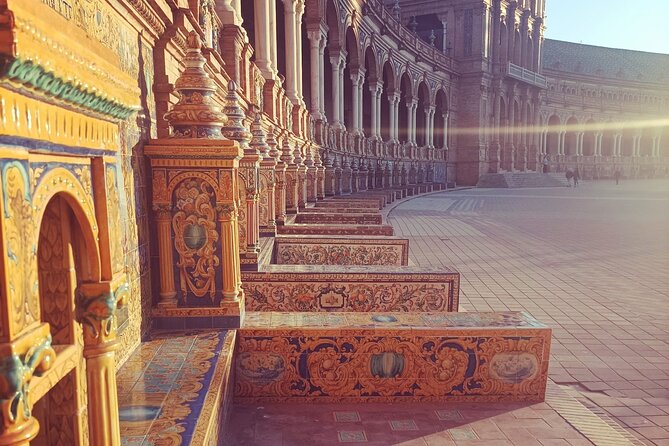
Now you hit one of Seville’s signature public spaces, Plaza de España. The description emphasizes it as a standout example of regionalist architecture and one of the city’s most beloved monuments for visitors and locals.
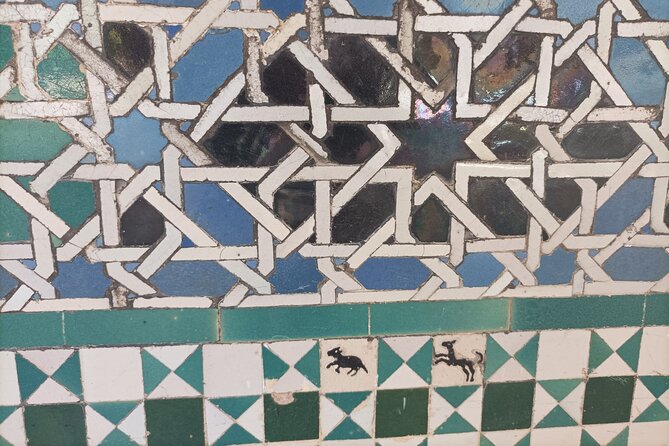
What you should look for here, from the tour framing, is the attention to ceramics, specifically an extensive sample of trianera ceramics. It is presented as a delight for the senses, and this is the sort of detail that an unassisted walk can miss. With a guide, you know what part of the architecture is “the story,” not just the backdrop.
This stop is about 20 minutes, and admission is listed as free. That gives you time for photos and slow looking without a ticket bottleneck.
Parque de María Luisa: where the “monumental” turns into strolling
From the plaza, the tour flows into Parque de María Luisa. The description ties it to Infanta María Luisa de Borbón, whose gift to the city ended the 19th century, turning palace gardens into a public space.
You also get a helpful positioning note: it forms a single space in front of the Spanish Steps. So if you later plan to wander on your own, you are not starting blind. You already know how these parts relate spatially.
This stop is about 15 minutes with admission free. It is enough time to feel the park shift the mood, from “sightseeing mode” to “walk mode.”
Real Fábrica de Tabacos: industry, women workers, and Carmen
Then comes Real Fabrica de Tabacos, the Royal Tobacco Factory. The tour description highlights its role as one of the continent’s most prolific and profitable factories, with cigars sold beyond Spain’s borders.
The most memorable angle is human, not just industrial. The description says the cigarette makers were brave and independent women, and that they inspired one of the most famous operas, Carmen. It also claims these women created Europe’s first women’s union, as presented in the tour details.
This stop is about 10 minutes with admission listed as free. Even if you do not enter buildings here, the guide framing gives you a reason to look twice at a place that you might otherwise treat as just another historic structure.
Palacio de San Telmo: Sevillian baroque that now houses government
The itinerary continues with the Palace of Saint Telmo, described as a jewel of Sevillian Baroque. It was the residence of Infanta Maria Louise de Bourbon and her husband Antoine de Orléans, Duke of Montpensier, and today it houses the seat of the Government of Andalusia.
This stop is useful because it adds a different angle on power. You have seen royal space in the Alcazar, sacred space in the cathedral, and industrial space at the tobacco factory. San Telmo adds administrative power and baroque design in one package.
The description also credits the design to Leonardo de Figueroa. Again, that kind of named detail helps you look for the style rather than just taking it as a generic beautiful building.
No admission detail is listed for this specific stop, so you will want to follow the guide’s lead on what is possible within your time window.
Torre del Oro: the Golden Tower and the walls of Seville
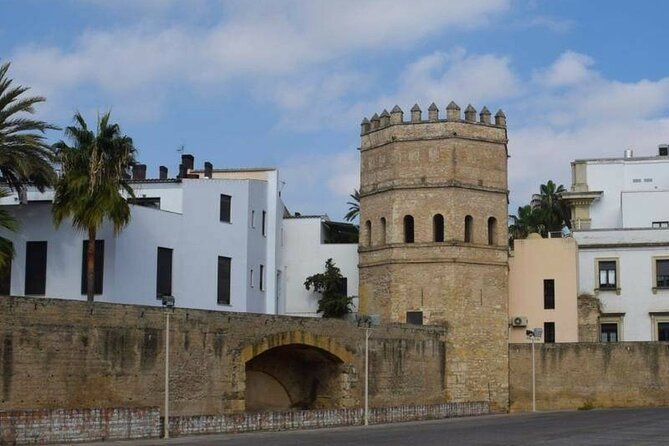
The next major landmark is Torre del Oro, the Golden Tower and one of Seville’s symbols. The description says it was built in the 12th century as a defense tower, part of the Seville Wall.
The tower also had different uses over the centuries, including jail for nobles and warehouse function, according to the tour details. That is a helpful reminder that historic buildings are often reused, not frozen in time.
The description lists the ticket as not included for this stop. So expect that if you want entry, you will pay separately. The stop is about 10 minutes, which means the guide will likely focus on exterior viewing, orientation, and what you should notice from the river side.
The Guadalquivir riverbank walk: wadi al-kabir to Puerto de Indias
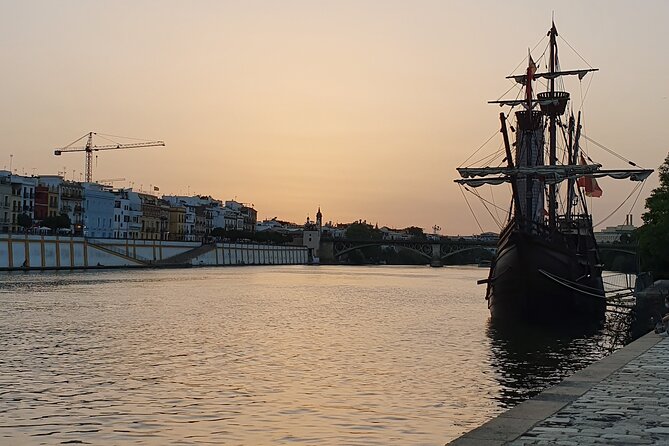
After the tower, you move along Paseo Alcalde Marques del Contadero, walking the riverbank. The tour description gives you an Arab name for the river: “wadi al-kabir,” translated as “big river.” It also mentions the river’s role as Puerto de Indias.
Then the story zooms out to maritime history, including the arrival of Elcano after more than two years of crossing at sea. Whether you already know the names or you are learning from scratch, having this narrative connects why the river matters so much in Seville’s identity.
Admission is listed as free, and this stop is about 15 minutes. That is a perfect length for a scenic stretch without turning the tour into a slow march.
Price and logistics: what you get for $312.41 per group
This private tour costs $312.41 per group, up to 6 people. In other words, you are not paying per person for the guide, which can make sense if you are traveling as a small family or a couple who wants private attention.
The value comes from three things mentioned in the tour details. First, it is a private tour, so you are not competing with a large bus group. Second, you get accredited local guidance with priority access. Third, pickup is offered if you are in the immediate vicinity of the area to be visited.
On the flip side, entrances are not included for several major sites, including Real Alcazar, Seville Cathedral, and Torre del Oro. So the “all-in” budget depends on how many sites you actually enter. If you plan to go inside most of them, you will spend more, but you will also get the most out of priority access and the pre-visit context.
One last practical note. The experience lists a mobile ticket, and you confirm details within 48 hours of booking, subject to availability. If you are doing a cruise connection or a complicated arrival plan, I strongly suggest you confirm the pickup point in plain language before you get on the road. A single mismatch can derail the day.
Who should book this Seville essential tour
I think this tour fits best if you want the short path to understanding Seville. It is a good match for first-time visitors who want structure, and it is also useful for repeat visitors who like story-driven stops.
It is especially smart to schedule early in your trip. When you understand the city’s themes up front, your later walks make more sense, and you tend to notice more details on your own.
Because it is private and capped at 6, it works well for small groups who want to move together without feeling like they are trapped in someone else’s tempo. If you prefer quiet pacing or you have questions, this format gives you space for that.
Should you book this private Seville essentials tour?
If you want a guided “big picture” route plus neighborhood texture, I would book it. The combination of priority access and a local storyteller angle makes the time feel efficient, and the stop choices cover both iconic monuments and places that feel lived in.
Just be honest with your expectations about entrances. Several top sights require separate tickets, and the tour is time-boxed at about 3-4 hours, so you should come ready to choose what to enter and what to observe from the outside.
My other piece of advice is simple: if pickup matters to you, confirm it carefully in advance and keep the meeting point instructions close at hand. When pickup and timing align, this tour is a very practical way to get your bearings fast and start exploring the real Seville right after.
FAQ
How long is the Seville essentials private tour?
The tour duration is listed as approximately 3 to 4 hours.
What is the group size limit?
It is a private tour for your group, with a maximum of up to 6 people.
What language is the tour offered in?
The tour is offered in English.
Is pickup available?
Hotel pickup is offered if you are in the immediate vicinity of the area to be visited. The meeting point is at the Archivo de Indias.
Where does the tour start and end?
The tour starts at Archivo de Indias, Av. de la Constitución, s/n, Casco Antiguo, 41004 Sevilla, Spain. It ends back at the meeting point.
What is included in the price?
Included items are a private tour, an accredited local guide, skip the lines with priority access with the local guide, and hotel pickup if you are nearby.
Are monument entrance fees included?
No. Entrance fees are not included for monuments like Real Alcazar de Sevilla, Catedral de Sevilla, and Torre del Oro.
What time is the Archivo General de Indias open?
The listed opening hours are Monday to Sunday, 9:00 AM to 5:00 PM, for the period shown.
Is free cancellation available?
Yes, you can cancel for a full refund if you cancel up to 24 hours in advance.
Are service animals allowed?
The experience notes that service animals are allowed.
More Tour Reviews in Seville
Not for you? Here's more nearby things to do in Seville we have reviewed







More Seville Private Guides & Custom Tours worth a look.
 ★ 4.8Private City Tour by Eco Tuk TukFrom $33963 reviews
 ★ 5.0Seville Private Walking Tour with Alcazar & Cathedral TicketsFrom $276332 reviews
 ★ 5.0Private Walking Tour Alcazar and Cathedral in SevillaFrom $171172 reviews
 ★ 5.0Alcazar and Cathedral of Seville Private TourFrom $241149 reviews
 ★ 5.0Private Tour Jewish Quarter, center and Plaza de EspañaFrom $189127 reviews
 ★ 5.0Private personalized Seville street tour of 2.5 hoursFrom $54116 reviews
 ★ 5.0Private Half Day Walking Tour of SevilleFrom $133101 reviews
 ★ 4.5Alcazar of Seville Private TourFrom $11693 reviews
Continue by place or experience